


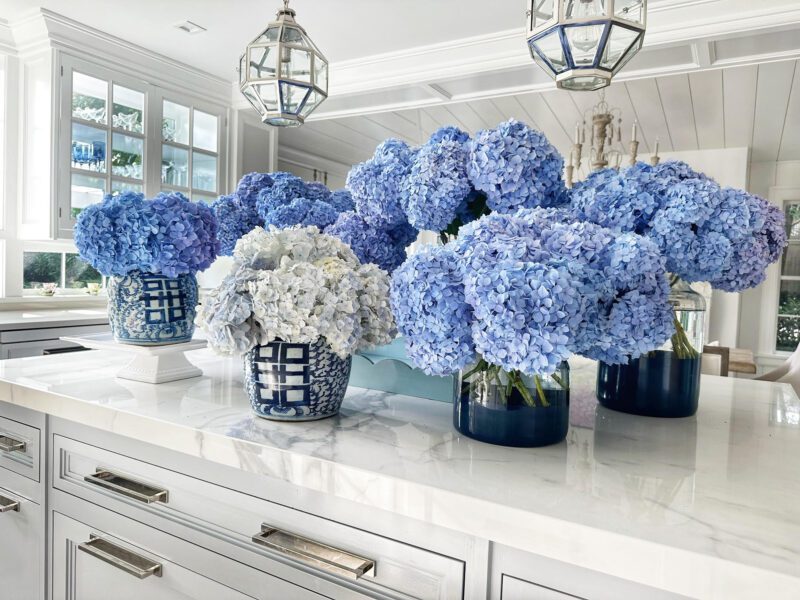
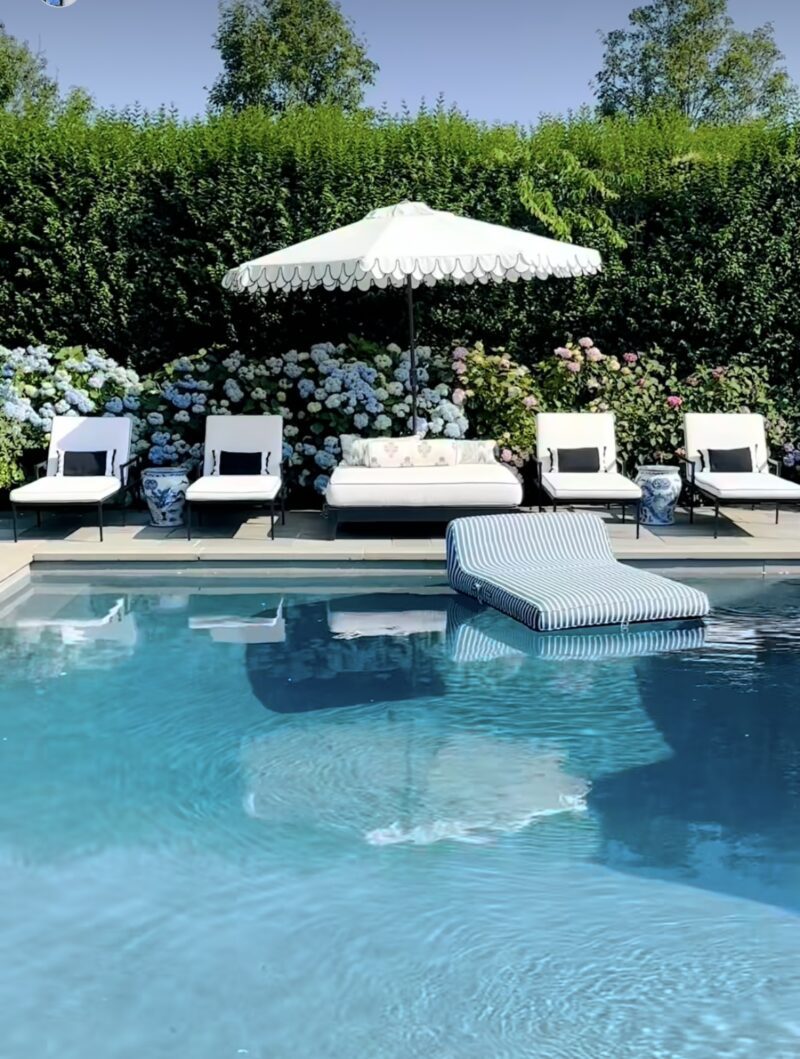
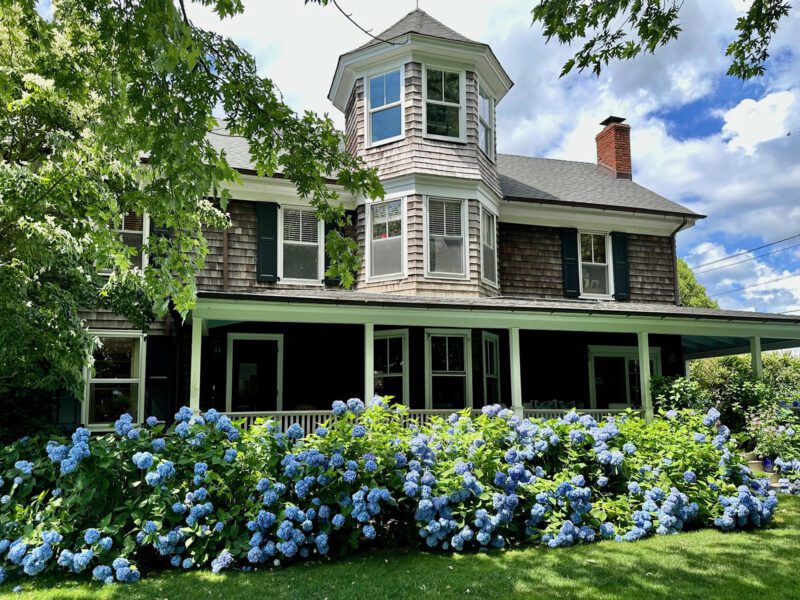
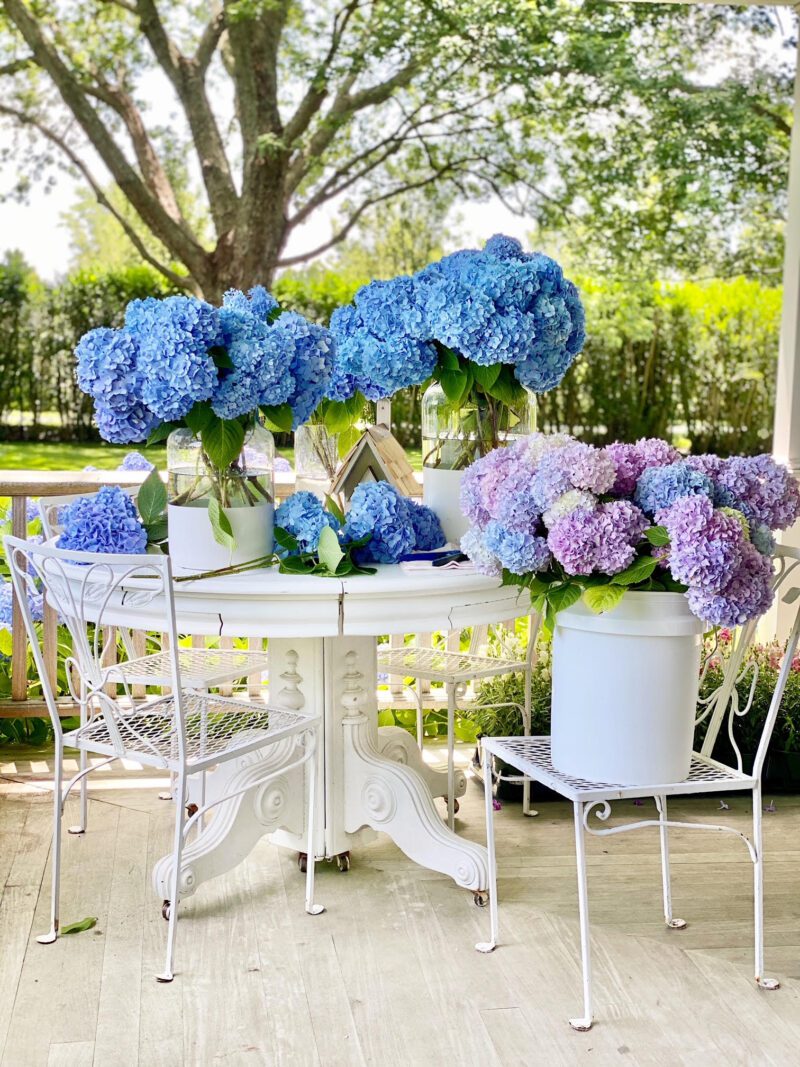
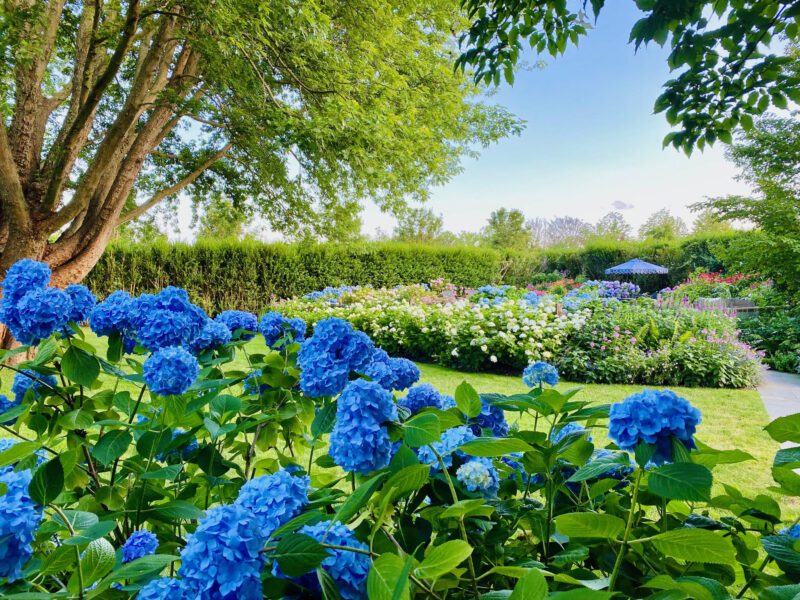
There is nothing that says “summer” more beautifully than hydrangeas, and we have fallen head over heels for the exquisite gardens surrounding the 19th century Hamptons home of Kelli Delaney Kot, editor of KDHamptons… The images she is posting on her Instagram account @KDHamptons are positively breathtaking!
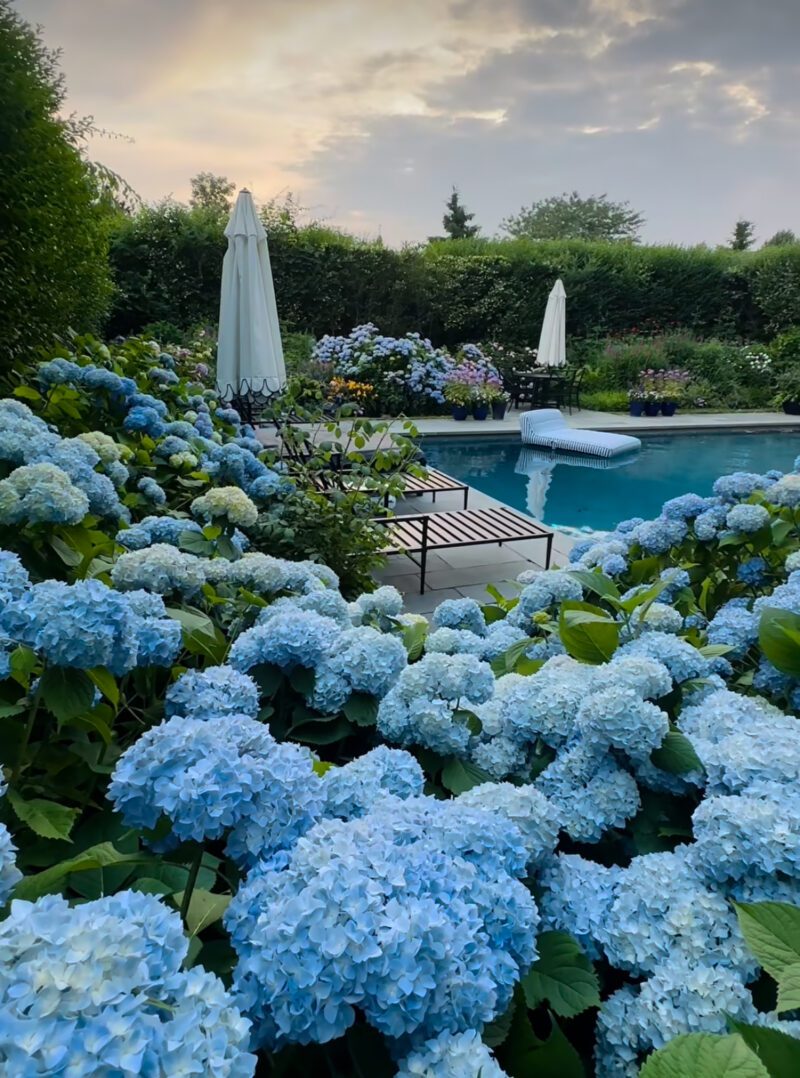
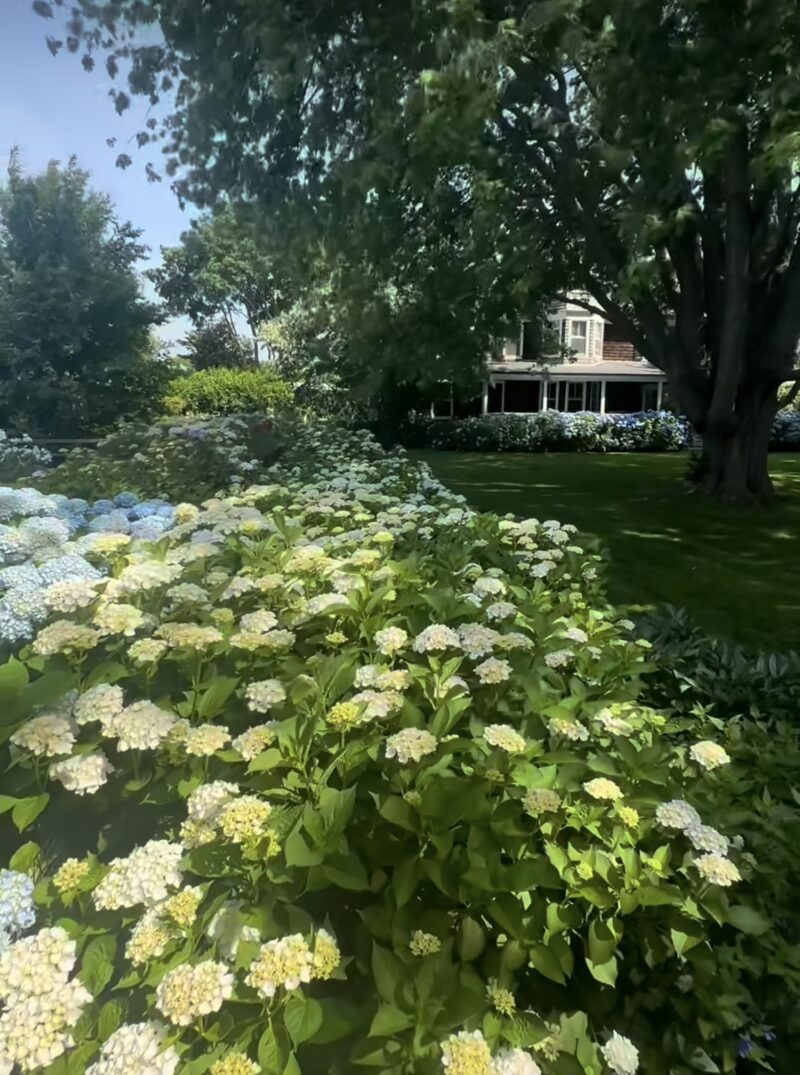
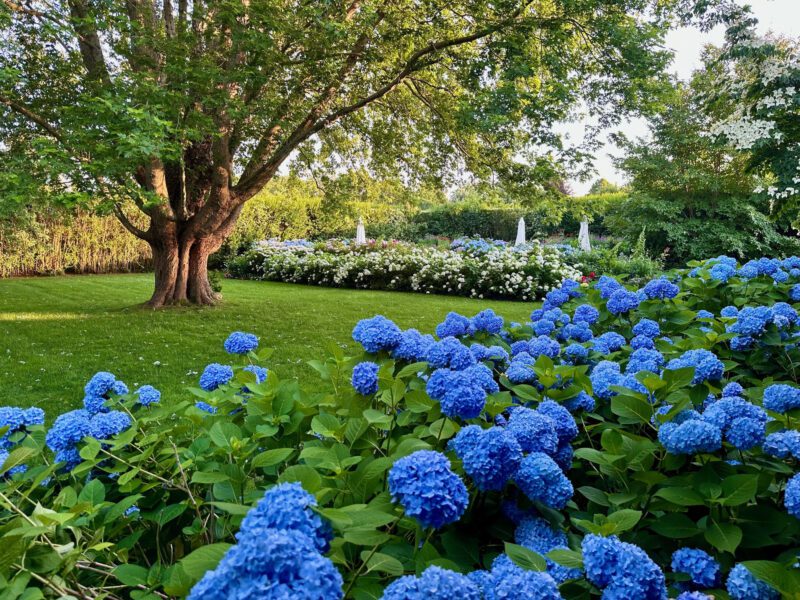
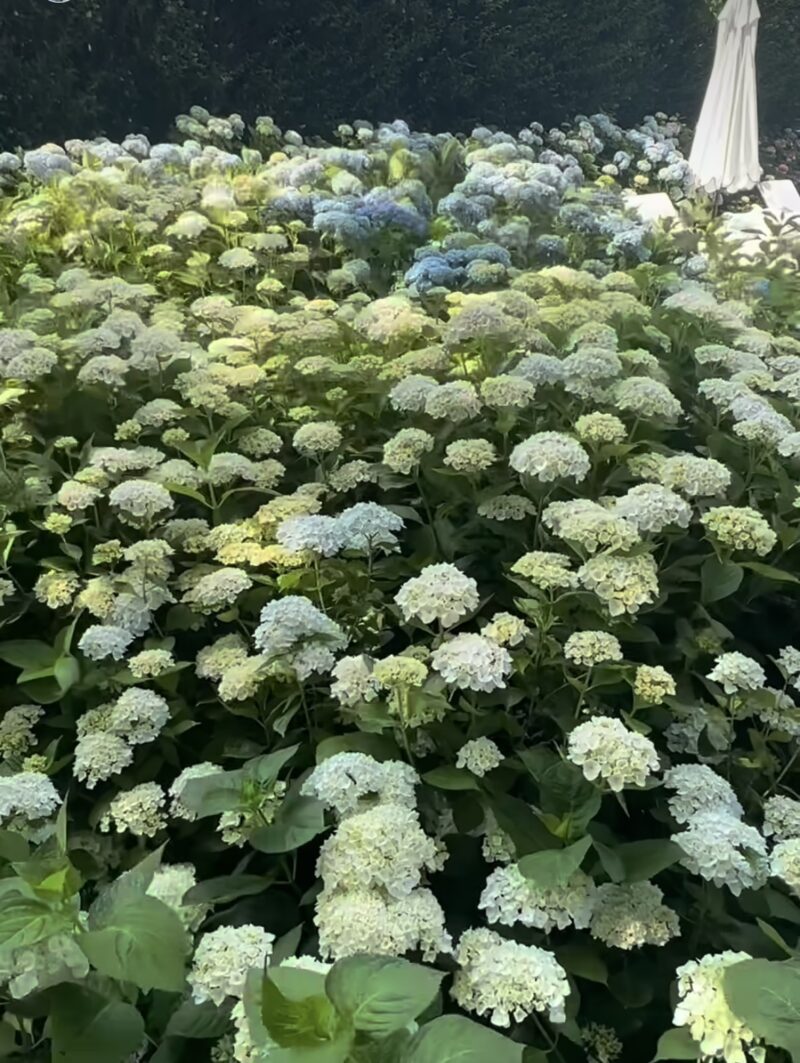
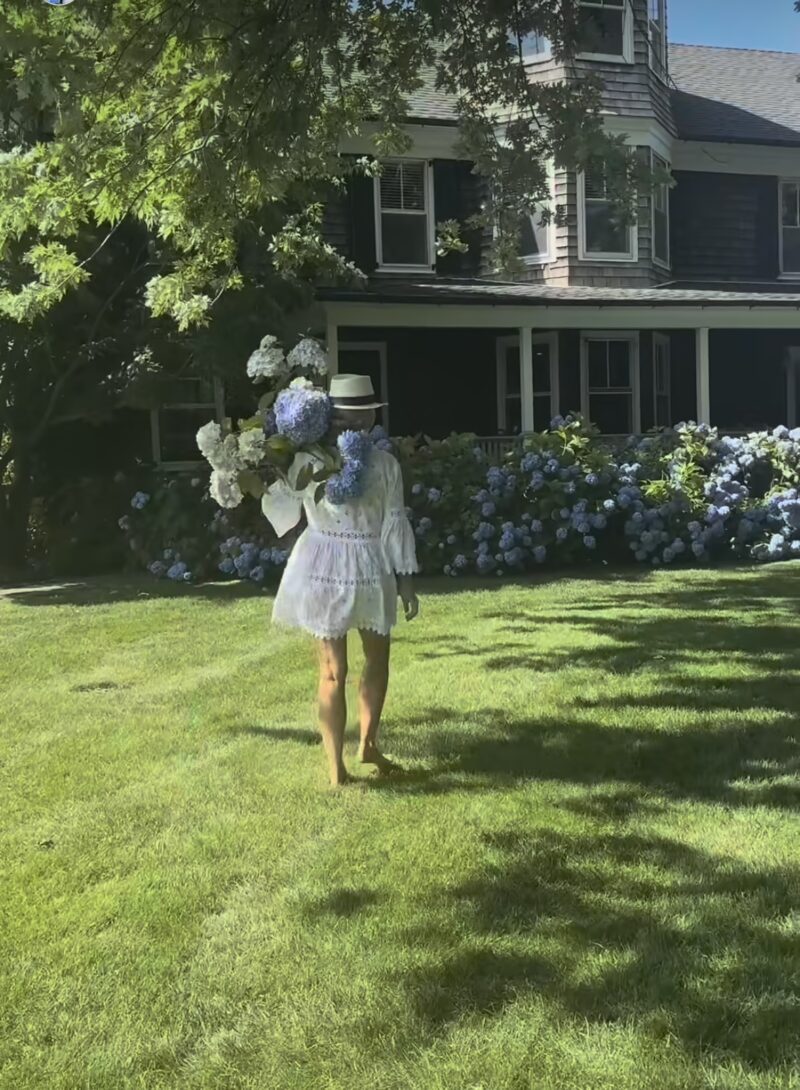
“It’s been a banner season for Hydrangeas in the Hamptons!” Kelli said. “We have 120 Endless Summer and White Wedding Hydrangea shrubs planted at our home, Maple Shade. They wrap around the porch of our 1880 Victorian farmhouse, our pool, and alongside the privet hedge.”
Intrigued to learn more about her boundless blooms, we asked Kelli to share her secrets… We are delighted to learn from Kelli today and take a peek inside her gorgeous garden. Welcome, Kelli!
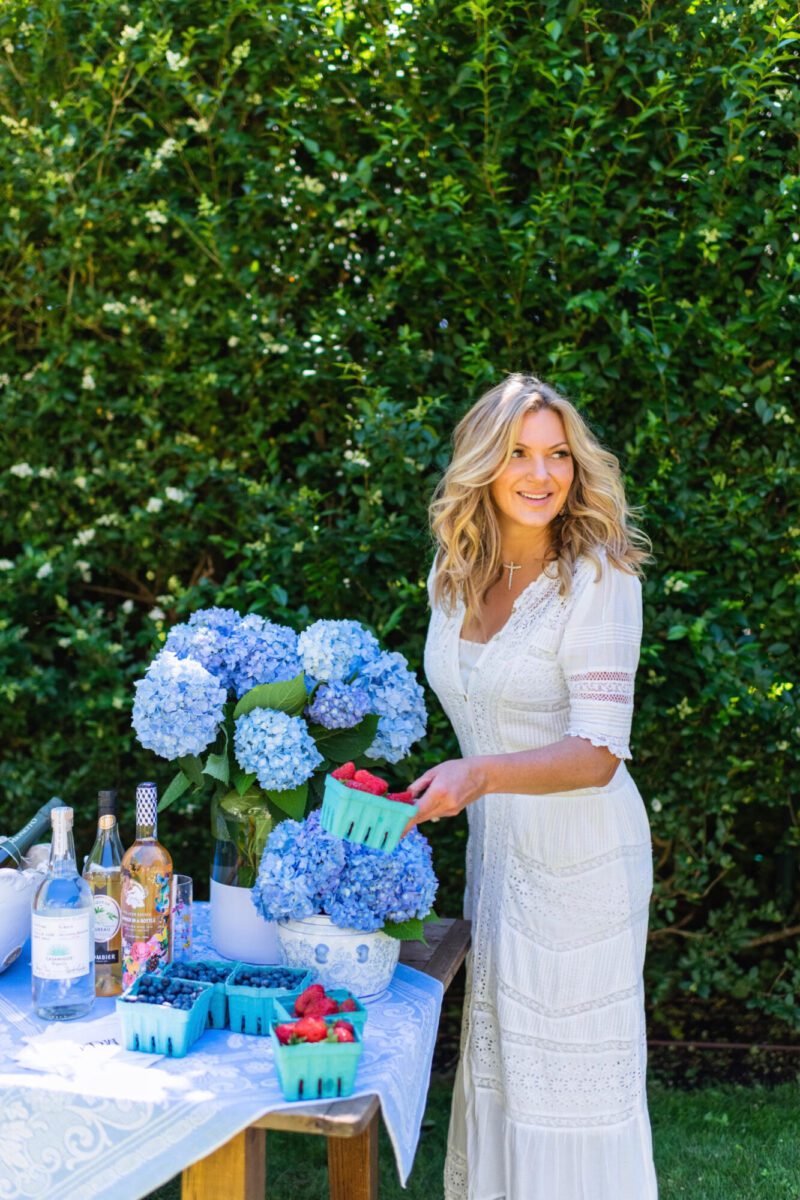
Caring for Hydrangeas, by Kelli Delaney Kot
Hydrangea flowers are stunning and deserve a prime spot in your landscape. To get the biggest blooms, give your hydrangeas the best care from the beginning. Choose a plant that will thrive in your garden’s conditions, and then follow up with proper pruning, watering, and fertilizing. Here’s how to grow beautiful hydrangeas.
Selecting hydrangeas
When planting hydrangeas, start by choosing the right plant for your garden. Consider the available space and whether you want a large shrub-like an oakleaf hydrangea or a smaller specimen for a landscape bed. Also, take note of the sun exposure in the planting area, as different hydrangea varieties have varying sun tolerance. Additionally, decide on the flower color you prefer and consider the soil moisture and your growing zone. If you live in a colder region, select a variety that can survive winter temperatures. For specific care information, refer to the plant listing on the website, where you can find details on the “care” and “overview” tabs to help you choose plants suitable for your garden’s conditions.
Planting hydrangeas
The best time to plant shrubs is in the fall or spring. Planting during these seasons allows the plants to grow healthy new roots without the stress of winter cold or summer heat. For the most part, hydrangeas grow best in full to partial sun in moist, well-drained, slightly acidic soils (though specific requirements may vary by variety). Some hydrangeas can tolerate less sun, a higher pH, or more moisture in the soil. To plant, dig a hole that is two to three times as wide as the root ball and just as deep. Remove the plant from the pot and place it in the hole. Place a spade handle across the planting hole across the root ball to ensure that the top of the root ball is level or just barely higher than the soil around the planting hole. Adjust the depth if needed, then fill in around the shrub with the soil that you removed. There is no need to amend the backfill. Water regularly to establish. Mulch around the base of the plant, taking care to pull the mulch away from the plant stems.
Pruning hydrangeas
Pruning is, for some people, the most frightening and mysterious of hydrangea care. Don’t be scared! At the very least, if you prune at the wrong time or remove too much of the plant, it will grow back.
Here are the secrets to pruning hydrangeas properly:
- Wait until plants start growing in the spring to prune back any dead wood. That is the only way to know which parts of the plant survived the winter. Hydrangeas can be slow to leaf out. Be patient.
- Know whether your hydrangea blooms on old wood (last year’s growth) or new wood (this year’s growth). There are a few varieties that bloom on old and new growth. As a rule of thumb, you’ll prune old wood bloomers right after they flower (usually in the spring or early summer). You’ll prune new wood bloomers in the spring after the plants start growing. Some of the newer, more compact varieties need little pruning except to remove dead or diseased branches.
Watering hydrangeas
Most hydrangeas need consistently and evenly moist soil. They don’t do well in bone-dry soils or with wet/dry/wet/dry cycles. Mulching helps conserve moisture. Water deeply and infrequently during dry periods to encourage deep root growth. Some varieties handle more water than others.
Fertilizing hydrangeas
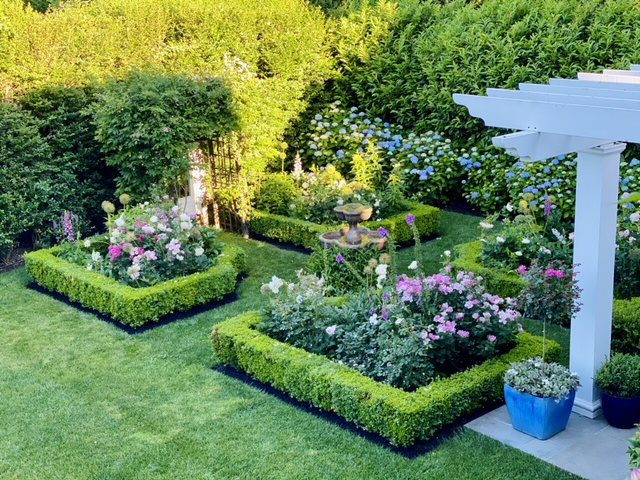
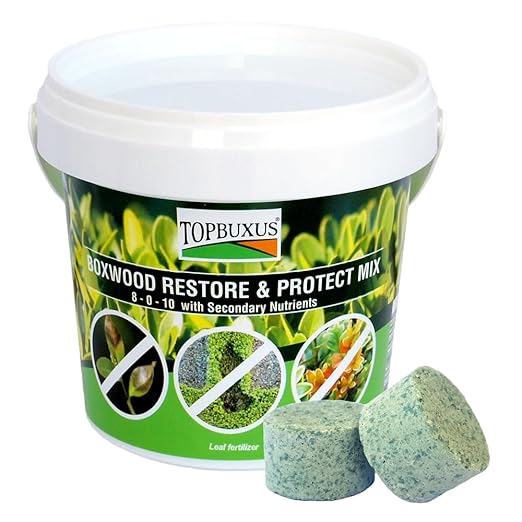
You will not need to fertilize hydrangea plants every year. Feeding hydrangeas too much nitrogen can result in lots of leaves and few blooms. You can err on the side of a “lean” growing plan and hold off on fertilizing unless the leaves turn slightly yellow in the centers. If the whole leaf turns yellow but the veins remain pronounced, the plant could have a problem absorbing iron. Test the soil pH. You might have to lower the pH by applying aluminum sulfate.
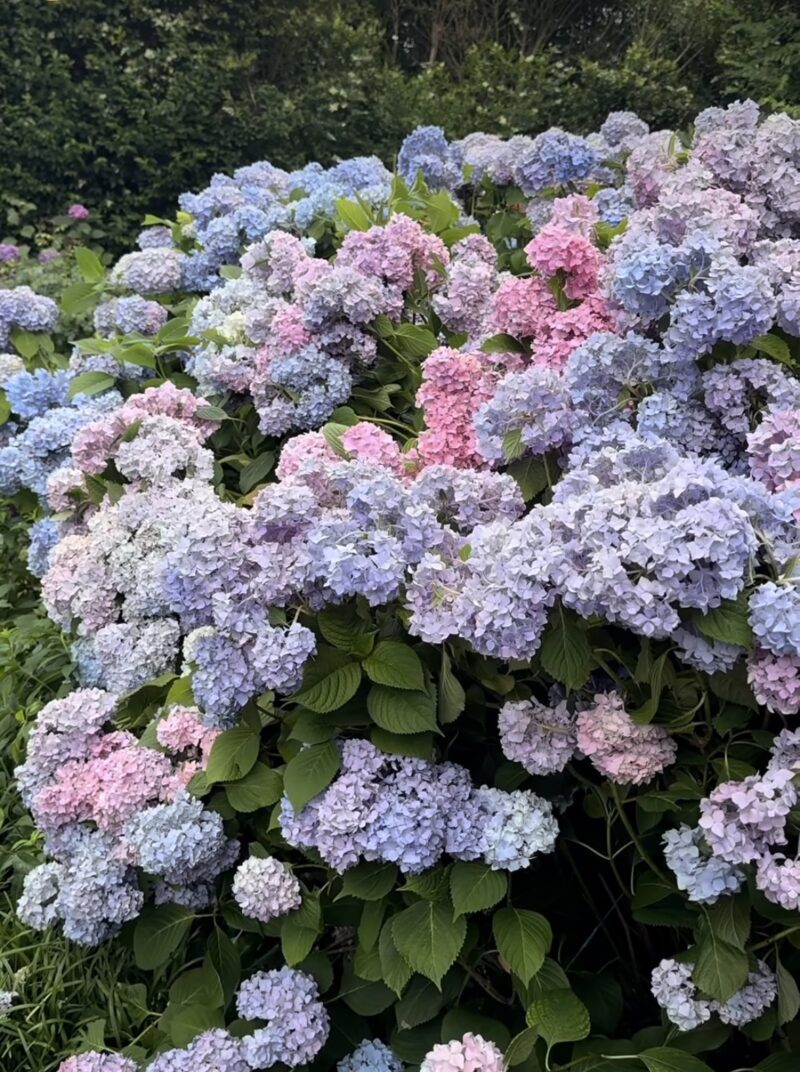
Related to fertilizing is the question of bloom color, which, on bigleaf hydrangeas (Hydrangea macrophylla), is influenced by pH. Low pH leads to blue flowers and a higher pH, pink flowers. Some cultivars stay pink, regardless of pH. It isn’t uncommon to end up with purplish flowers, as well.
Why Won’t My Hydrangea Bloom?
There are three main reasons why hydrangeas don’t bloom:
- Cold temperatures. Flower buds on bigleaf hydrangeas that bloom on old wood can be killed by winter temperatures, even though the rest of the plant survives. The only solution is to wait for next year. Some new bigleaf varieties bloom on old and new wood, making winterkill less of a problem.
- Too much shade. Most hydrangeas need some sun to grow and bloom. If temperature isn’t a factor, it could be sunlight.
- Pruning at the wrong time. If you prune hydrangeas that bloom on old wood (bigleaf and oakleaf, primarily) in the spring before they bloom you’ll cut off the flower buds before they open. If you prune shrubs that bloom on new wood too late in the spring or summer, you can cut off flower buds after they form for the summer, but before they open. Late pruning can keep these shrubs from blooming and re-blooming. Try to select hydrangea varieties that can grow to maturity without yearly pruning to maintain an artificially small size. There are so many choices now that you can find a plant that will fit your growing conditions without needing to resort to extreme pruning.

Thank you, Kelli, for joining us today and sharing these wonderful tips!
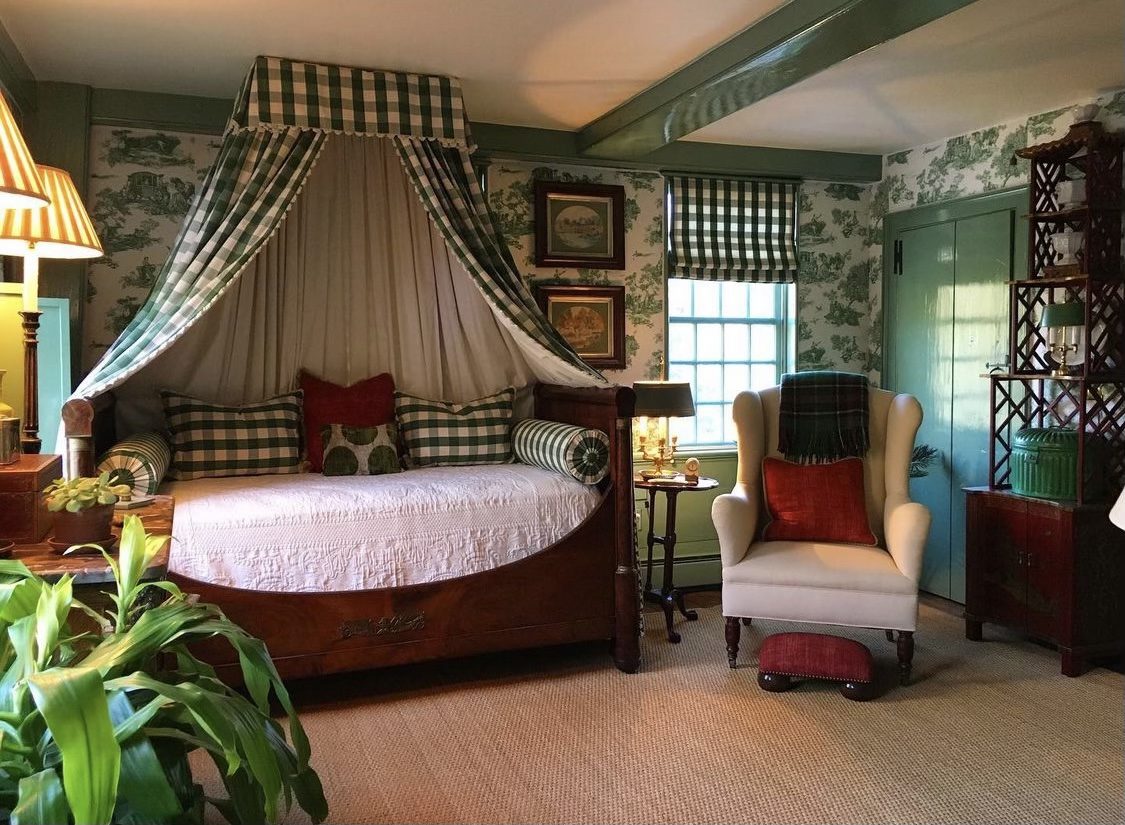
To learn more, please visit KDHamptons.com and follow @KDHamptons on Instagram. You can also tour the inside of Kelli’s dreamy Victorian farmhouse via One Kings Lane. And stay tuned, as we look forward to bringing you more inspiration from Kelli Delaney Kot!
Images are courtesy of KDHamptons.


Stunning beauty!
I do not have as many Hydrangeas as Kelli. Only 106 but 13 different kinds. I love them all. My favorite is the one I am looking at , at the moment. My husband calls our home here ,in the Hamptons , Hydrangea Cottage!
It may just be my imagination but this has been the Best Year Ever for my hydragenas. All of them bloomed — profusely! Hope next year is the same!
Have a nice day! I like flower
Absolutely stunning! The hydrangeas bring such a fresh, elegant charm to the Hamptons—truly captures the beauty of summer.
Kelli’s hydrangea expertise is truly inspiring! Her 120 shrubs at Maple Shade create a breathtaking landscape showcase. The comprehensive care guide—from selection through fertilizing—provides invaluable practical wisdom. Her emphasis on proper pruning timing, consistent watering, and understanding bloom cycles demonstrates deep horticultural knowledge. This beautifully written article perfectly captures why hydrangeas epitomize summer elegance in the Hamptons.