
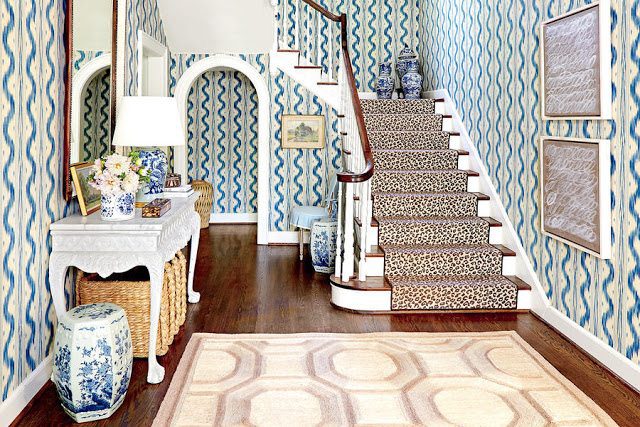
Palm Beach Inspired Art by Annechovie
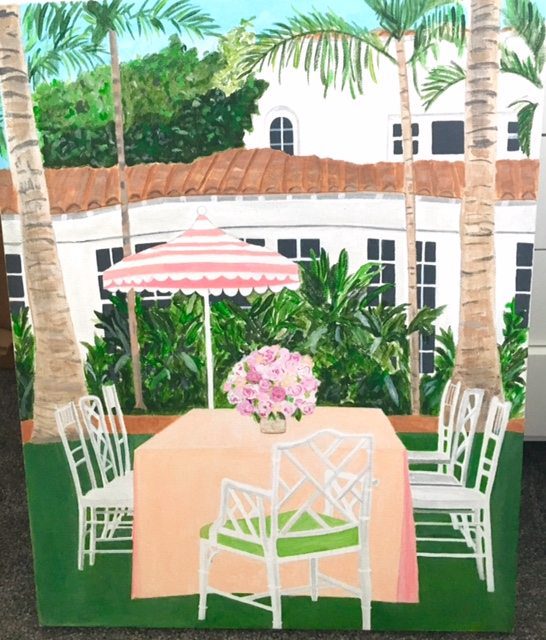
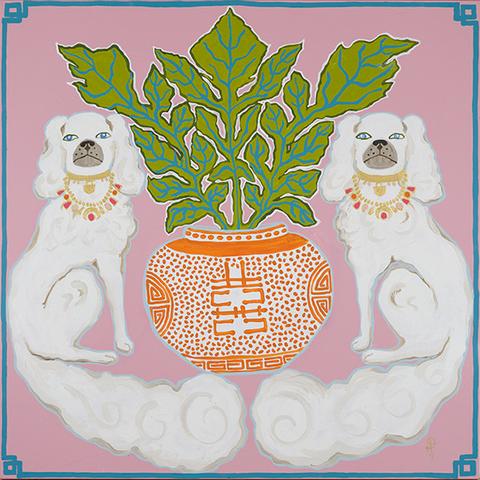
If you are not familiar with the work of Anne Harwell McElhaney, otherwise known as “Annechovie,” you are in for a treat! Anne is a fellow interior design enthusiast, lover of color, needlepointer, and Florida resident. She illustrated the book Elements of Style, and her work was featured on the set of the film “It’s Complicated.”
Anne sells all sorts of goodies in her Etsy store including matchbooks with monograms and ginger jars, Chinoiserie travel mugs, chic guest towels, notecards, and pillows. And she recently completed a fabulous new series of artwork inspired by Palm Beach that I cannot wait to share…
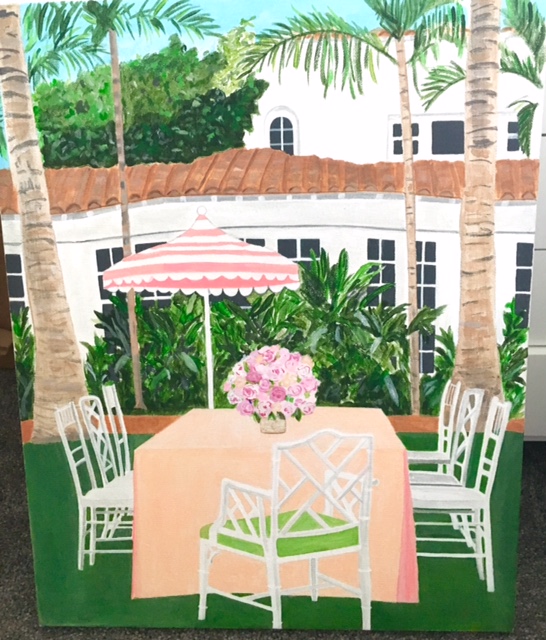
“My inspiration comes from living in Florida, love of the ocean, pools and outdoor living. I am also very inspired by photos I’ve collected via Pinterest, blogs and Instagram and the retro Palm Beachy-vibe I love so much. I like seeing a photo that sparks my imagination and taking certain elements from it, adding others and re-interpreting it for myself. There’s a certain simplicity in the kitschy-retro vibe of the 50’s, 60’s and 70’s in Florida that I find refreshing,” said Anne.
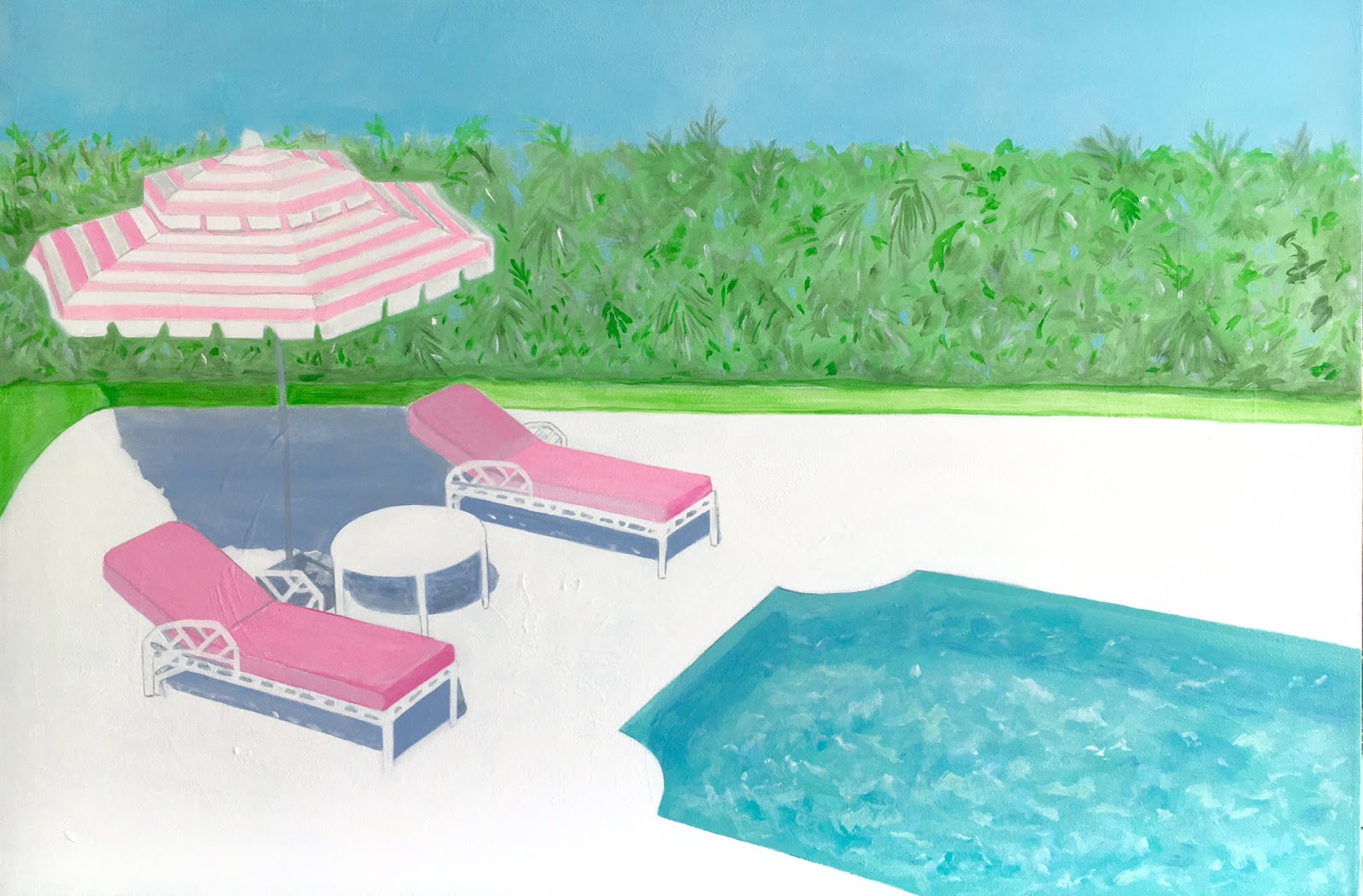

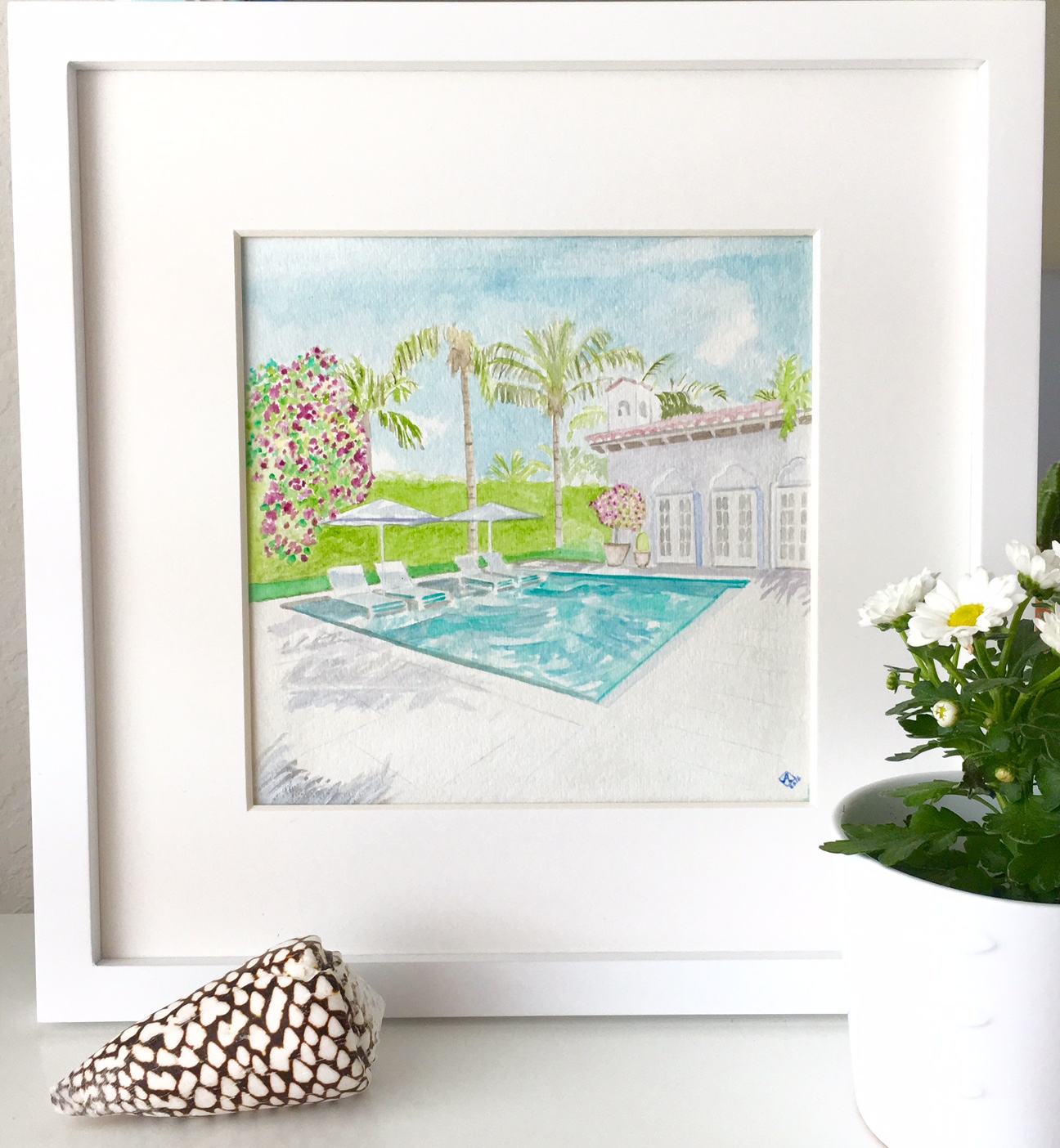


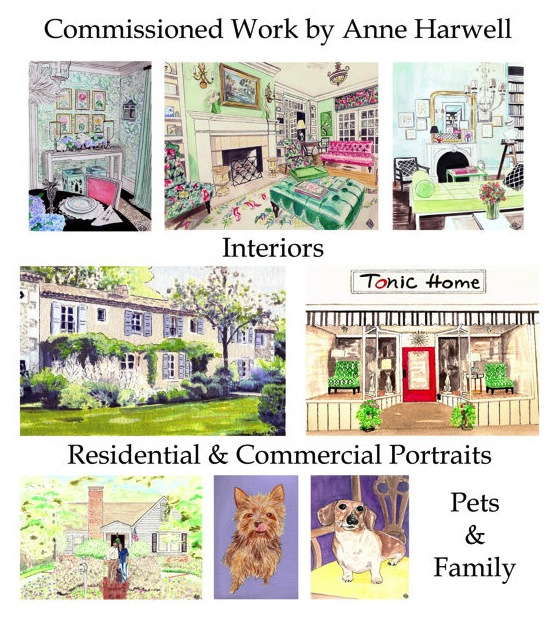
Anne’s work includes ceramics, watercolors, gouaches, collages, acrylics, decorative painting, and murals, and she designs china for the retail market. Her needlepoint collection can be found here. Anne also commissions pet, family, and residential portraits along with interior illustrations. For additional information and purchases, please visit the Annechovie Etsy store and website… You may use code GLAMPAD for 15% off!!
Carleton Varney Designs a Palm Beach Masterpiece
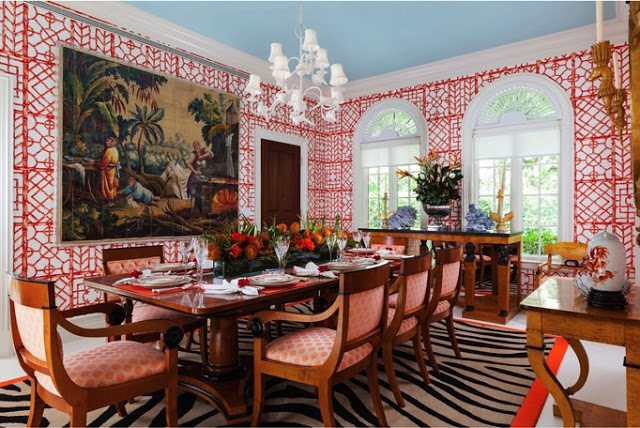
Legendary designer Carleton Varney, president of Dorothy Draper & Company, is known for his bold use of color and and whimsy, and his latest Palm Beach project is no exception. “Las Olas” serves as a tropical escape for its owners who enjoy the season in Palm Beach and hosting lavish parties. Carleton blended local elements from the South Florida area with his client’s treasures collected from world travel. The result is a perfect mix of classic antiques with a generous dose of whimsical fun.


Absolute tropical perfection! Las Olas has been submitted for the 2016 International Design & Architecture Awards. If you love this home as much as I do, please take a moment to submit your vote for Dorothy Draper & Co. in the Residential £20 Million Plus category.

Cheeky Needlepoint
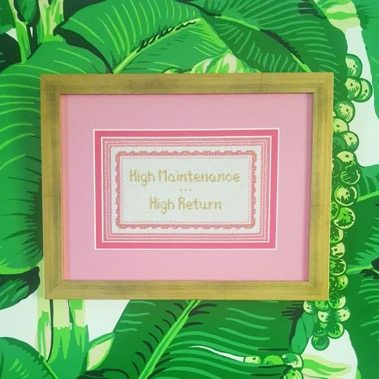
This spring, I had the privilege of meeting needlepoint designer Jessica Chaney of Lycette Designs, who has since become a dear friend. Jessica and I both live in South Florida, and I was fortunate to have her teach me how to needlepoint, which I wrote about here. Needlepoint has quickly become my favorite hobby. I am positively addicted, and Jessica is a self-proclaimed “needlepoint enabler”… In addition to her needlepoint design, Jessica is on a mission to bring the needlepoint community together through various channels including Instagram and her blog where she highlights needlepointers of interest in her “Women on Point” series.
One of my favorite things to needlepoint is what Jessica has coined “cheeky needlepoint” (search #cheekyneed lepoint on Instagram.) Historically, needlepoint has had a rather prim and proper reputation, yet a touch of #cheekyneedlepoint can add humor to your decor with a dash of irreverent whimsey. Today I am thrilled to have Jessica guest post her favorite examples of #cheekyneedlepoint!
By Jessica Chaney, Lycette Designs:

Canvas by Stitch-Its.
It is no secret that needlepoint is a staple of classic interior design. Esteemed interior designers such as Mario Buatta, Anthony Baratta, and Holly Holden (amongst many others) incorporate needlepoint in their classic, elegant rooms. Traditionally, needlepoint is found on bell pulls, brick covers, pillows and ottomans. The subject matter usually consists of geometric, floral, or animal designs. However, sometimes playful and sassy needlepoint pops in, like Mario Buatta’s cheeky “Not Tonight” needlepoint pillow below.

A “Not Tonight” Needlepoint pillow in a bedroom Mario Buatta designed. A similar canvas can be found through Stitch-Its.
“They (needlepoint pillows) last for years and give any room in which they’re used a warmth and individuality you just don’t get from plain old pillows.”

I refer to sassy and playful needlepoint sayings as “cheeky needlepoint.” I have always been a fan of cheeky needlepoint, and knew when I founded Lycette that I would incorporate cheeky sayings in my catalogue of designs. To me, cheeky needlepoint is an elegant way to integrate sassy wit in your living space. Think Mario Buatta meets Oscar Wilde. Colorful, Cheeky, Classic.

Always china over Dixie Plates, available here.

A cheeky take on the classic Serenity Prayer, available here.

The Queen runs the roost, available here.
Cheeky needlepoint is always sassy, but never trashy! When feathering your nest with cheeky needlepoint stick to witty sayings, and avoid anything too vulgar or profane. Cheeky needlepoint is meant to spark conversations, not shock visitors into awkward silence. However, if you must curse do so in cursive!

Lycette’s “ladylike” cursing in cursive! Available here.

Cheeky needlepoint is not just adored by interior designers, but also socialites such as C.Z. Guest and Bunny Mellon. Here is C.Z. Guest’s collection of cheeky needlepoint, purchased by the gents of Madcap Cottage.
Past and present fans of cheeky needlepoint include Mario Buatta, C.Z. Guest, Elsie de Wolfe, Jennifer Boles from “The Peak of Chic,” and KK Strand. If you want to incorporate cheeky needlepoint in your home, you’d be in the best of company!

Cheeky needlepoint is for everyone, including the baby! Image via The Needlework Finisher.

Wise words, via The Classic Baby.
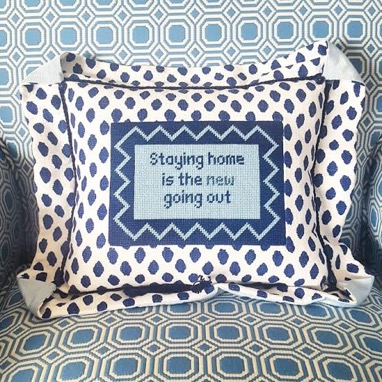
For all the introverts, available here.

Cheeky needlepoint doesn’t just include sayings. Check out Babs Horners’ (coauthor of Sophistication is Overrated) humorous spin on a family crest!
If you would like to needlepoint your own cheeky needlepoint, please check out the designers below!
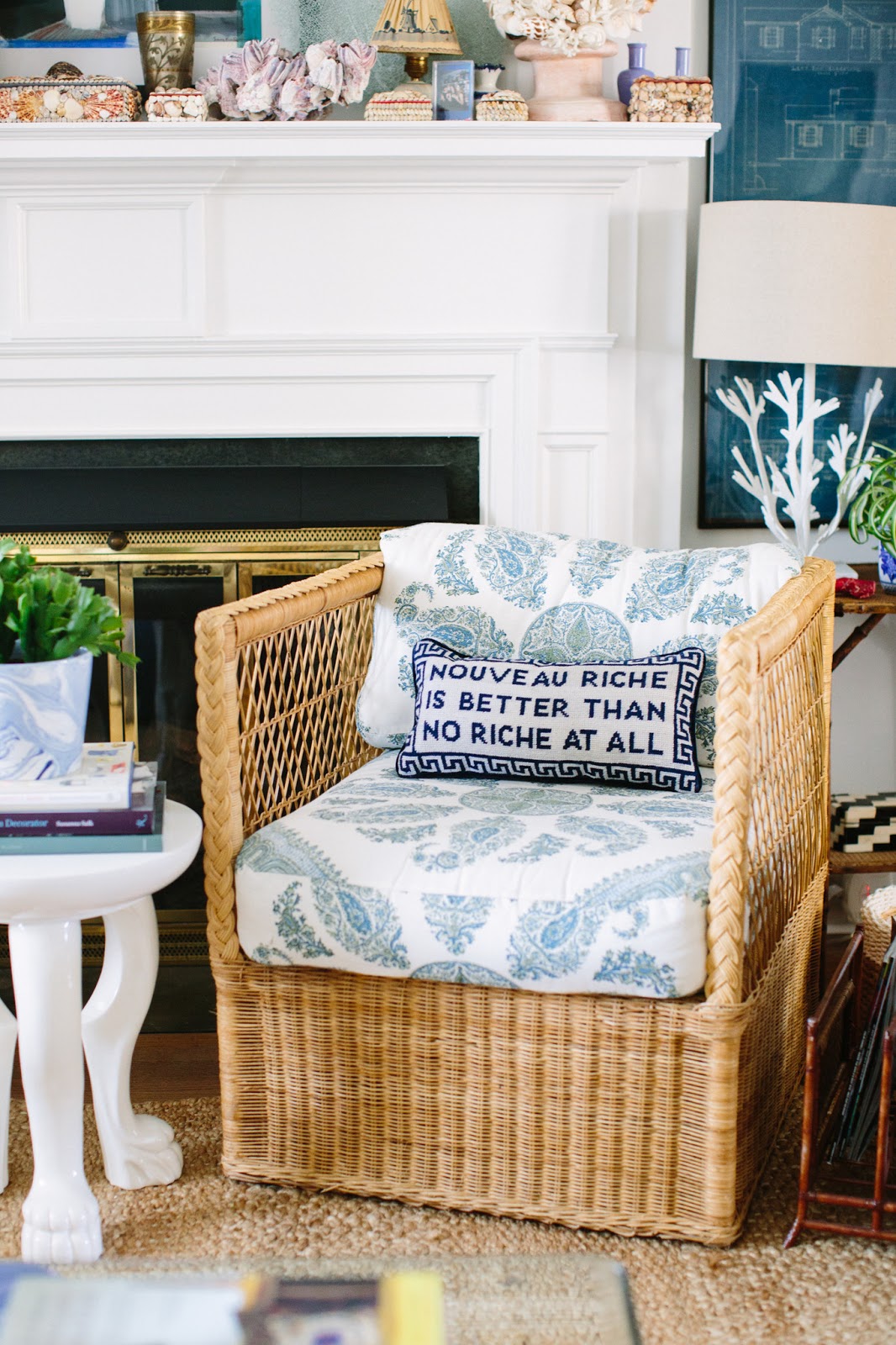
If you would rather purchase cheeky needlepoint completed (I won’t tell) check out Tory Burch, Jonathan Adler, and Furbish Studio.
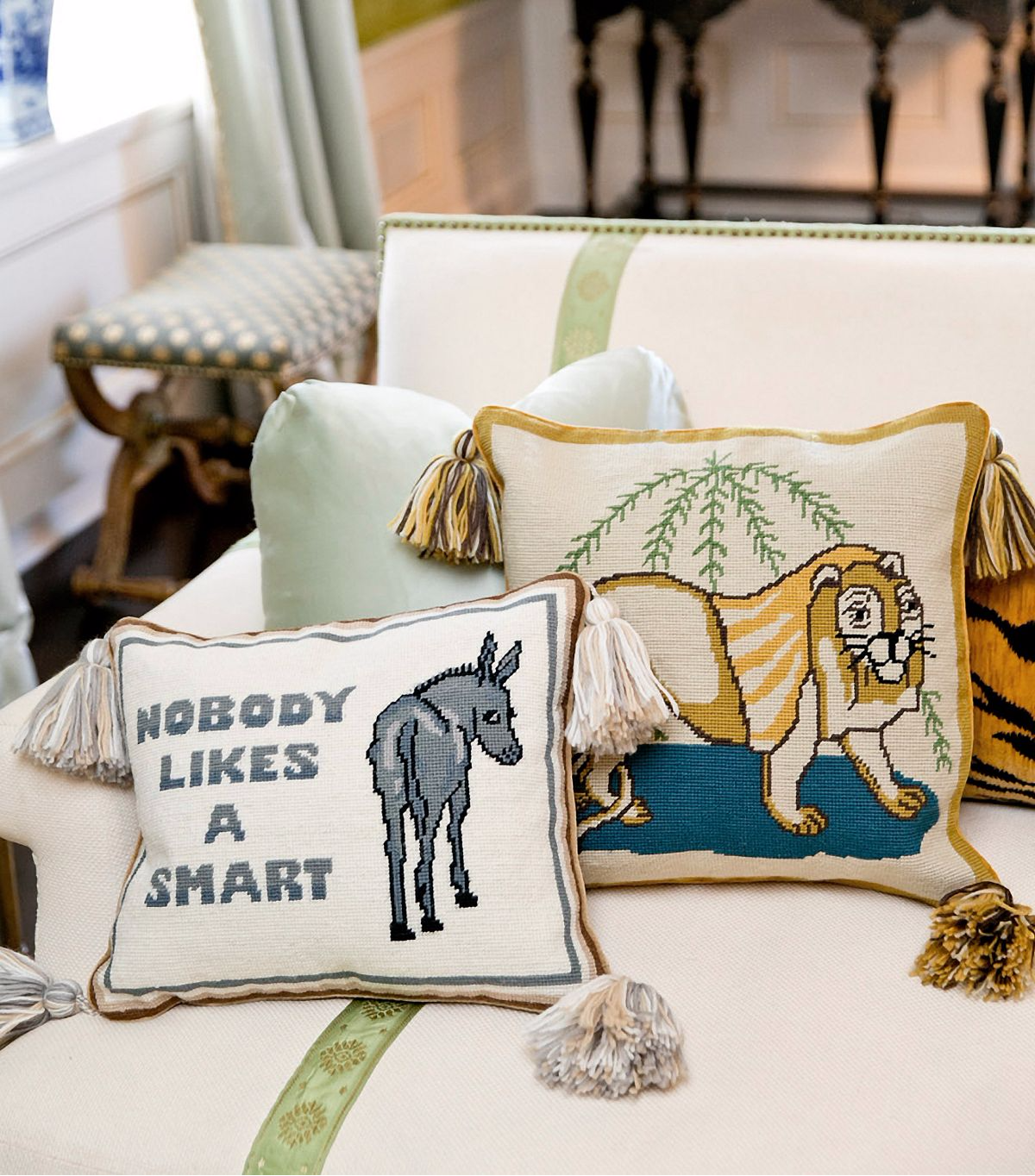
Tory Burch, available for purchase here.
Resources:
Thank you so much Jessica for this wonderful post!! Do you have a cheeky saying you would like to see on needlepoint? Jessica would love to make it happen! Leave your cheeky needlepoint idea in the comment section below… The winner will collaborate with Jessica on a canvas that they will receive, and it will be integrated into the Lycette line! Please keep submissions PG-13. We also want to see cheeky needlepoint in your home, so don’t forget to use hashtag #cheekyneedlepoint and tag @lycettdesigns when posting your witty needlepoint designs to Instagram.
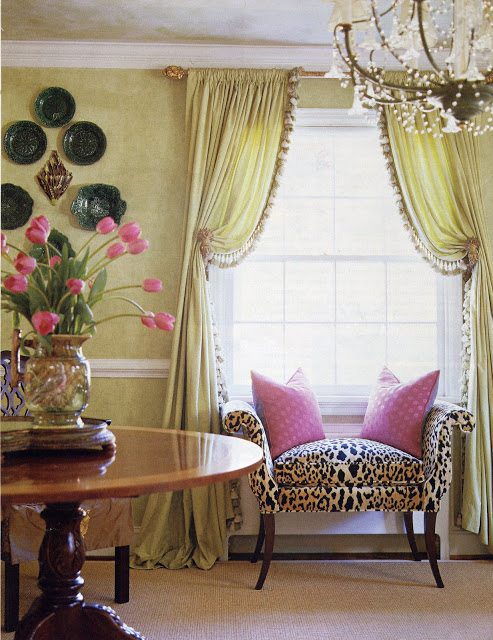
Leta Austin Foster Designs A 1930s Oceanfront Masterpiece
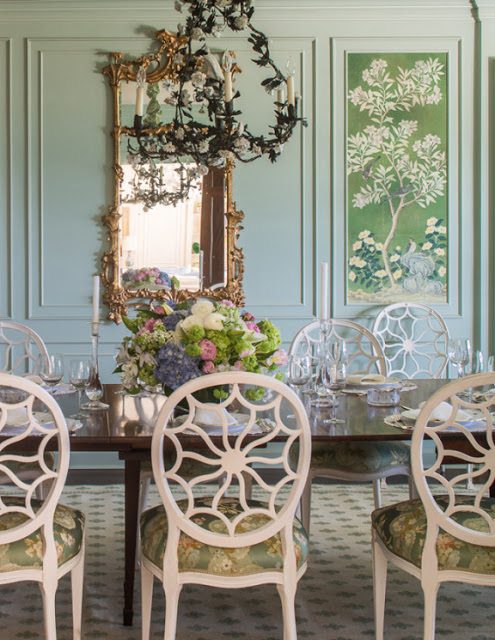
Leta Austin Foster is hands down one of my favorite interior designers, and today I am delighted to feature one of my all-time favorite homes by the Palm Beach-based designer. This 1930s Jupiter Island manse boasts exquisite ocean views which served as inspiration for the color palette. The result is a masterpiece that exemplifies Leta’s signature timeless, elegant style… infused with a touch of Palm Beach whimsy.
Unless otherwise noted, photography is by Erik Kvalsvik from Traditional Interiors: Leta Austin Foster, Sally Giordano, & India Foster by Brian D. Coleman. Reprinted with permission from Gibbs Smith.
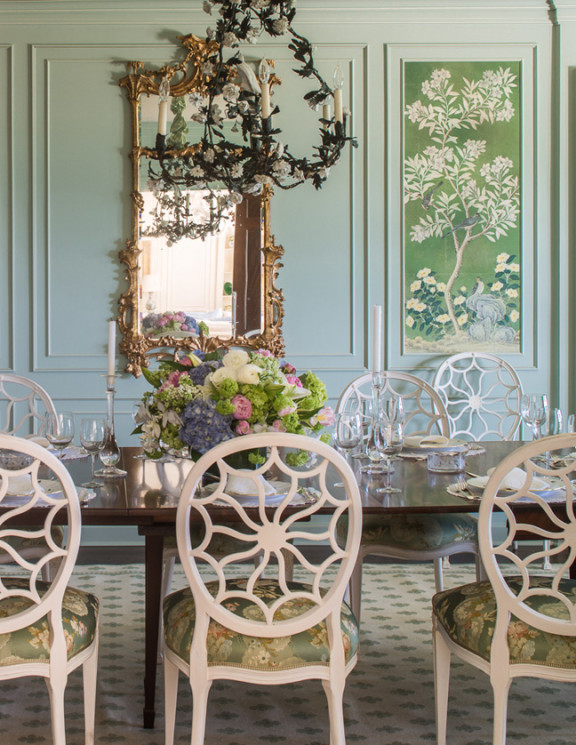
Hand-painted panels of Gracie wallpaper were designed to fit the panels of the dining room, one of Leta’s favorite design tips. Spider back chairs are a whimsical touch.
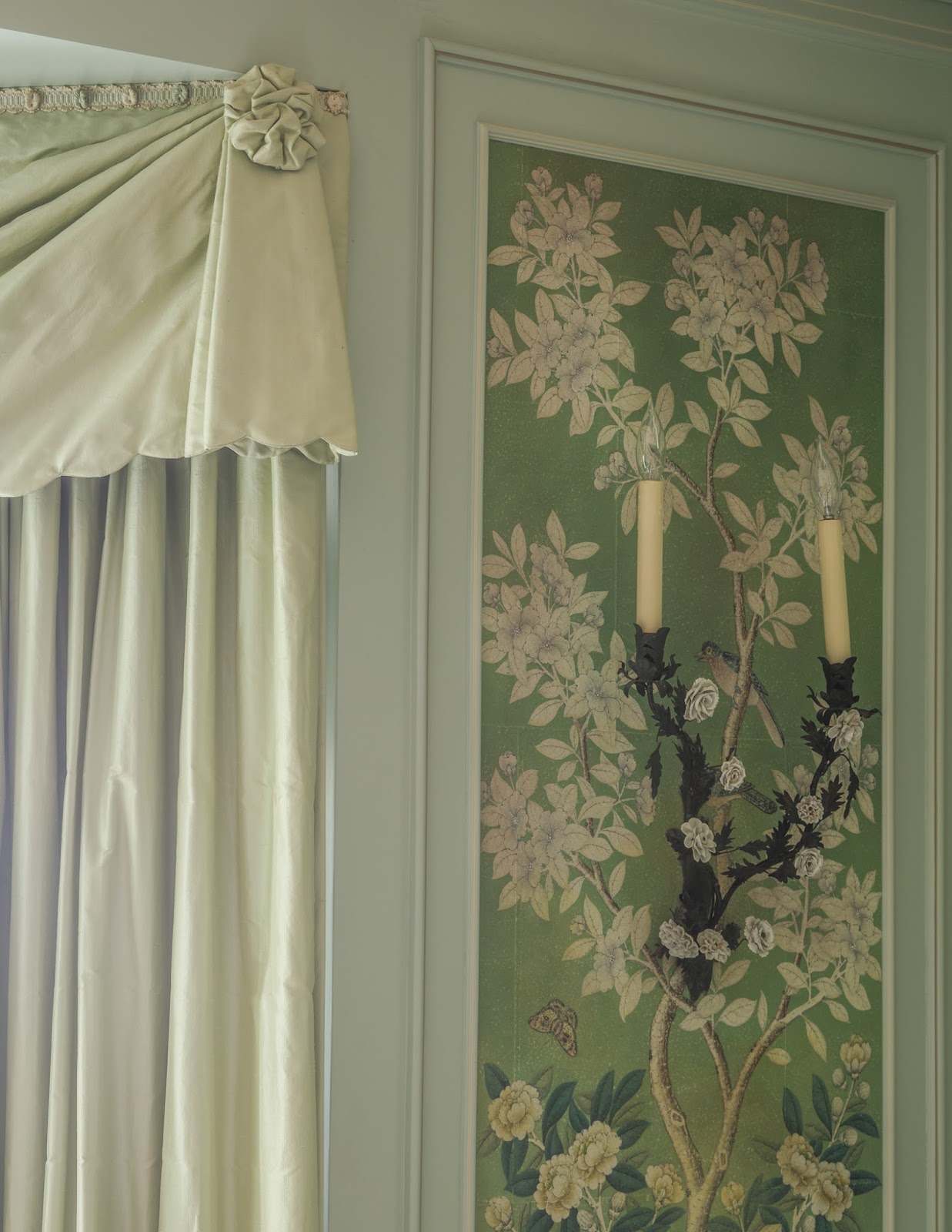
Leta is truly an artist when it comes to the details… Here, scalloped silk pelmets are finished with a jabot and chou on each end, creating an elegant complement to the wallpaper panels.

Leta commissioned Thomas Messel to create the the Chinoiserie black lacquered chest, which beautifully displays the homeowner’s collection of antique English porcelain.

The drawing room was painted a beautiful aqua blue – Skylight by Farrow & Ball – with hand-painted Gracie panels as accents.

The homeowner has an extensive collection of French and English antiques, which Leta showcased to perfection.

To create a truly one-of-a-kind room, the trellised walls with stunning shell accents were designed and painted by Zenon Toczek. The furniture is upholstered in a linen from Bennison.

Linen curtains with white coral trim frame ocean views. Tromp l’oeil treillage is painted around the perimeter of the ceiling.

The shell and coral encrusted chandelier and sconces are by Thomas Messel.

Artist Zenon Toczek painted this antique chest, inspired by Chinese watercolors.

Ribboned appliqué from Penn & Fletcher accents the headboard, bedskirt, and sofa in the master bedroom. Sheer dotted-swiss panels surround the bed.

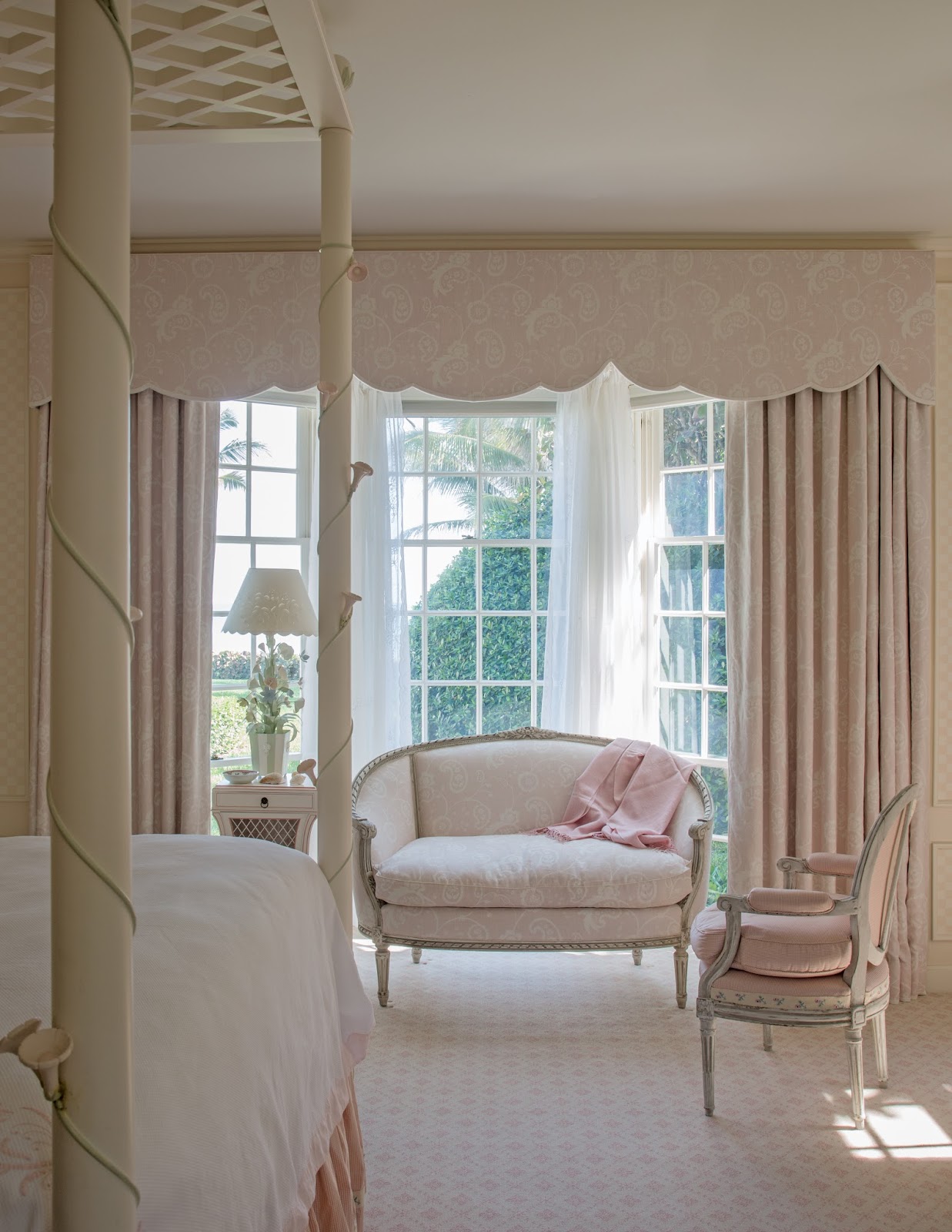
A delicate pale pink bedroom features custom-dyed linen from Raoul Textiles and a custom bed with a trellis canopy and carved flowers winding up its posts.

Image by Daniel Newcomb

A whimsical hand-painted trompe l’oeil tenting ceiling sets the tone of elegant fantasy in the entry hall.

And of course, I adore a Pagoda-shaped pool house!
Image by Daniel Newcomb
This Florida home is featured in Leta’s exquisite book, Traditional Interiors (aka my design Bible), and in the Spring 2016 issue of Southern Home. Isn’t it an absolute dream? I think what I love most about Leta’s style (and there is SO much to love) is the true timelessness of everything she does. These are rooms that will never go out of style. She stated via her fabulous blog, Decorating With Sheets…
“And that brings me to my philosophy. Houses are NOT fashion. They are not done with tricks. No matter how many cunning articles (“101 ways to Use Aqua in Your House” “Fun Tricks with Aqua as shown by a Master”), a house should be decorated to last a l-o-o-o-ng time. Decoration, especially good decoration, is just too expensive to try and be fashionable.”