Inside England’s Seend Manor with Amanda Clark
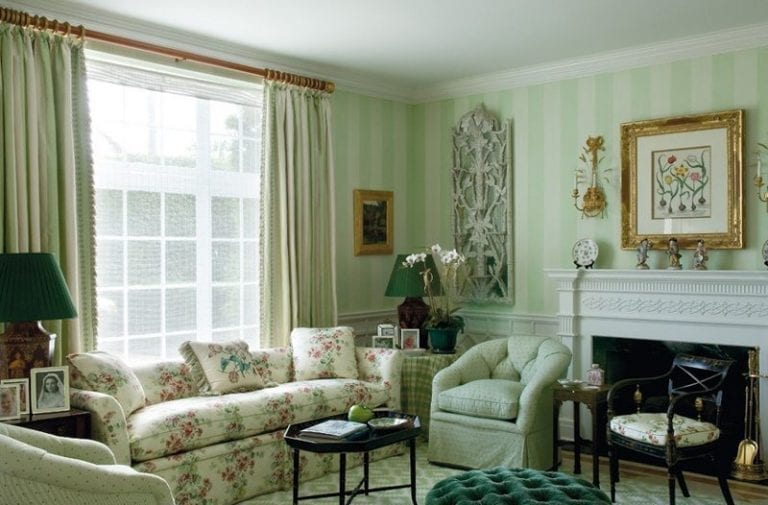
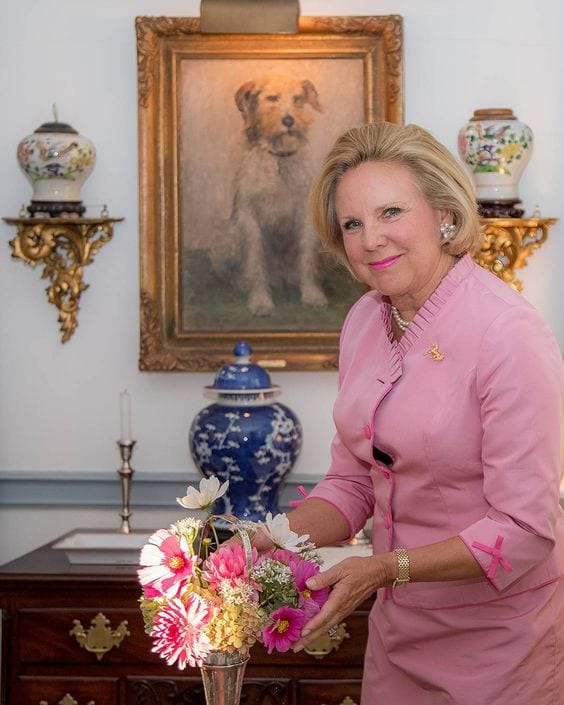
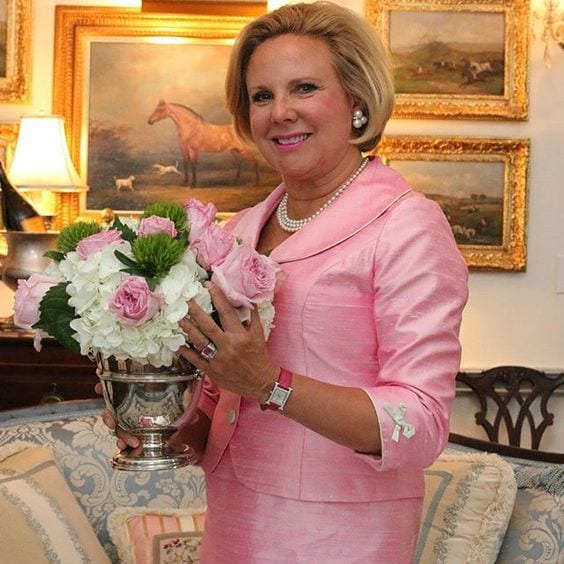
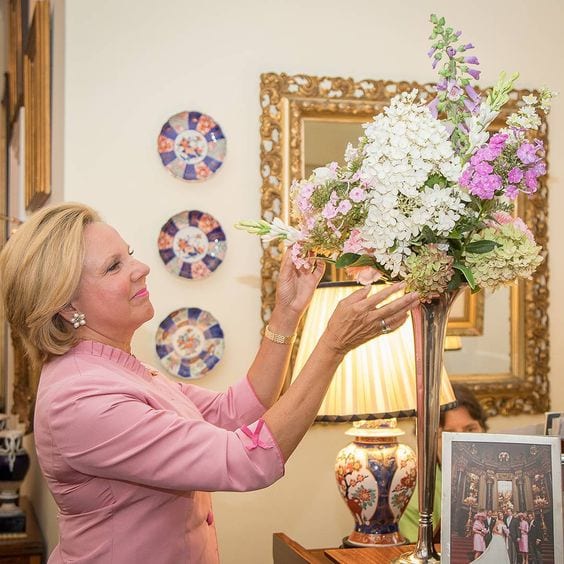
Amanda Clark and her husband Stephen are the owners of Seend Manor in Wiltshire, England. The spectacular gardens within Seend Manor’s 28-acre grounds were designed by Julian and Isabel Bannerman, who have worked with clients including John Paul Getty and the Prince of Wales.
The couple bought Seend Manor, their first home in the English countryside, in 1998. The renovation required on its house and grounds – including the one-and-a-half-acre walled garden to the side of the manor – was substantial. Since Amanda and Stephen spend a lot of time traveling the world, they decided to design the garden with geographical themes. “England; Africa, because Stephen was born and grew up in Kenya, and lived in South Africa; Italy, simply because we love it and have had many happy holidays there; and China,”said Amanda.
The Clarks divide their time between England and Hong Kong. Stephen is a founder and managing director of the Anglo Chinese Group, an investment and corporate advisory company, and Amanda, who grew up in Hong Kong, is a director of Altfield Gallery. Established in 1982 by Amanda and David Halperin – a Harvard educated American lawyer – Altfield Gallery is one of Hong Kong’s leading dealers in fine antique Chinese furniture, Southeast Asian sculpture, and decorative works of art.
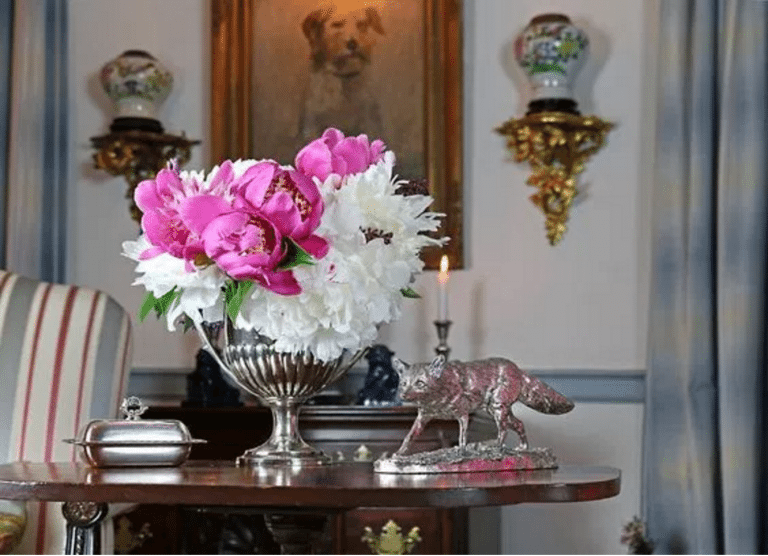
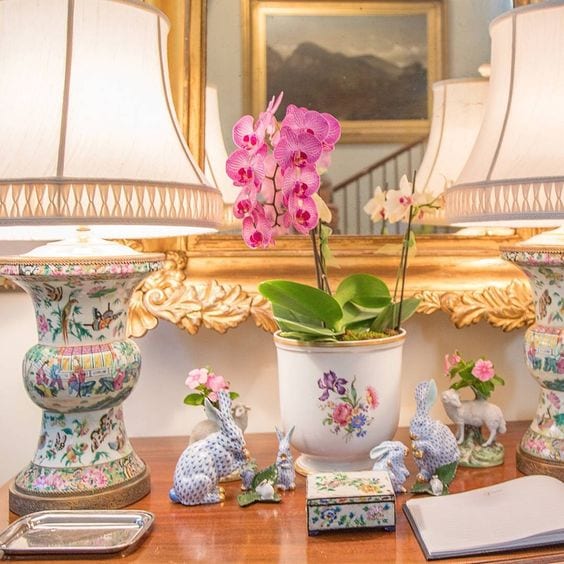
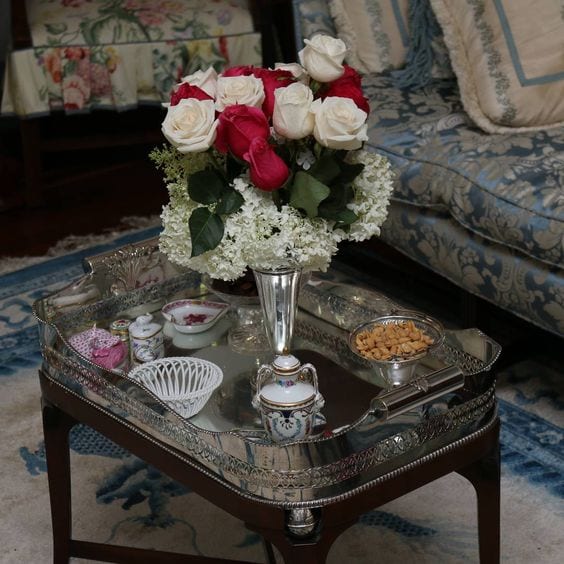
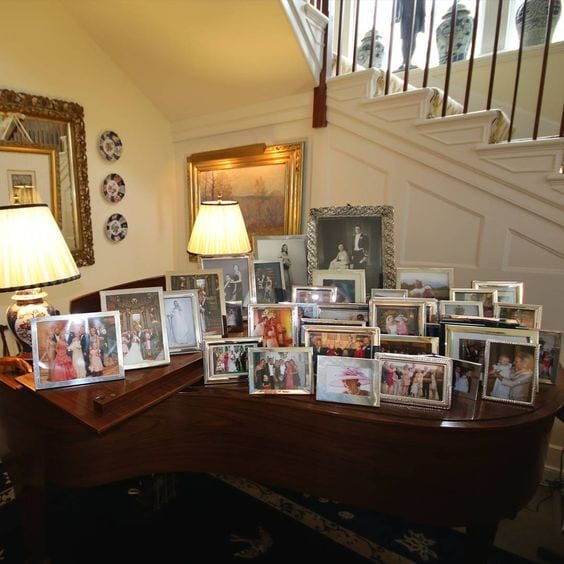
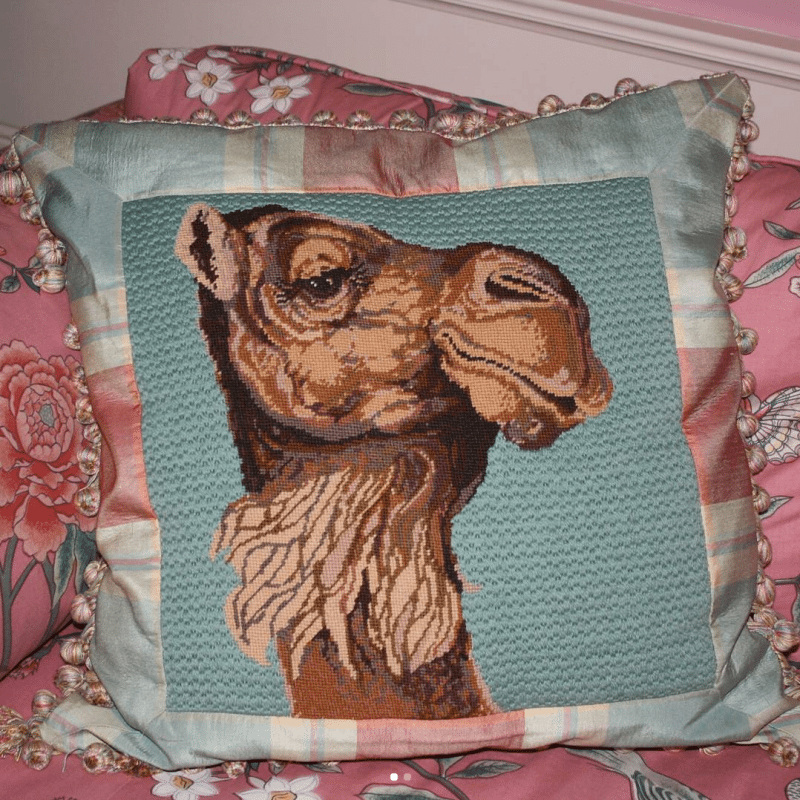
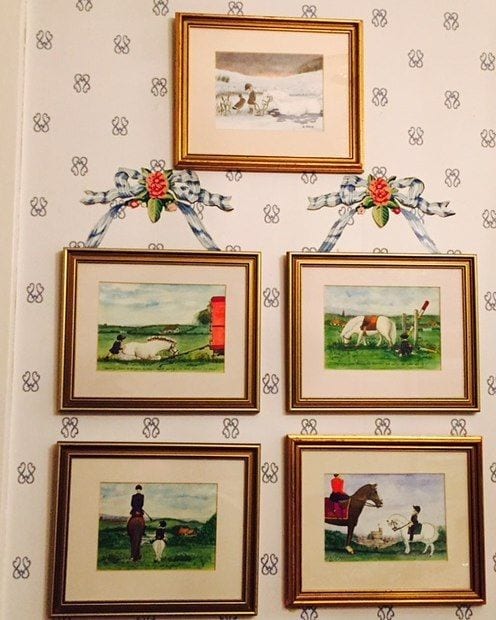
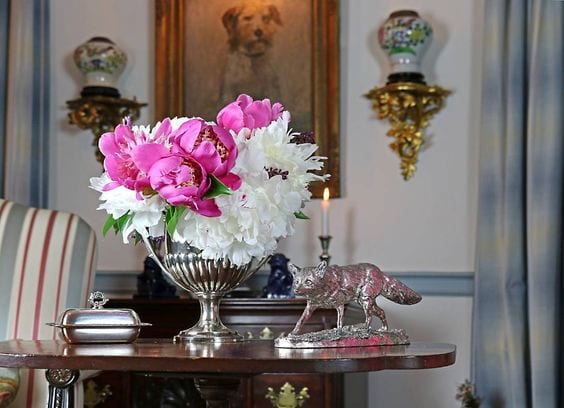
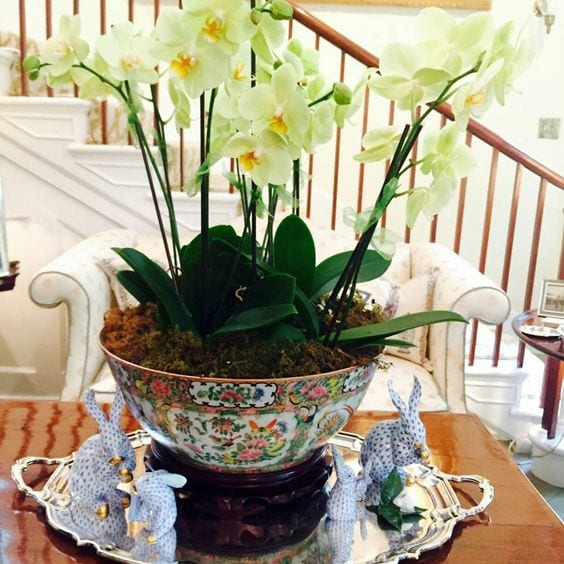
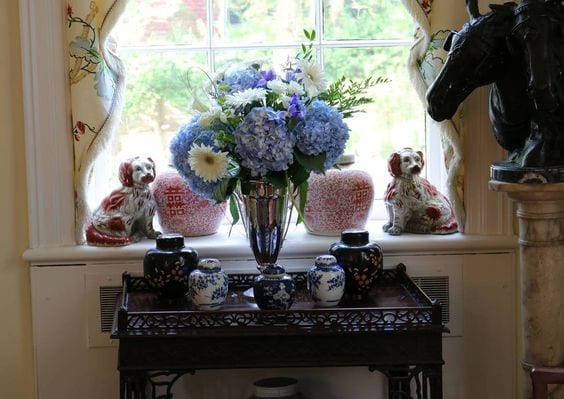
I am delighted to welcome Amanda Clark to The Glam Pad for a Q&A, and for a glimpse inside her beautifully decorated home and landscaped gardens with images via her Instagram account.


Q: How did your love for antiques begin and subsequently evolve into Altfield Gallery & Interiors HK?
A: I grew up in HK where my father was part of the Colonial Civil Service, and actually am the fourth generation of my family to have some strong connections with HK. My mother was born here while her father worked here, and my grandmother also spent time here as a youngster when her father was posted here with the Royal Navy. Not unusual in the British Empire days as many families had strong attachments to the East, or India, or Africa! Anyway, aside from boarding school and university studies in England, I spent my earliest years and then holidays here in HK. My mother was an incredibly elegant woman and I credit her for making a marvelously stylish home and as both she and my father had a very keen interest in art and antiques, much of my childhood was spent searching around antique shops and markets, visiting museums and going to lectures and exhibitions. I thank them daily for the fact that they passed on that interest and inspired me to be open to the different aesthetics and traditional skills around the world.


Q: Please tell me how your career in interior design began, and how do you incorporate it within your business today?
A: Crazily I had been encouraged to do sciences at school and obtained a BSc in Psychology. It was when I left university and was free to pursue my own passions that I realized that I simply had to have real creativity in my life – and only then did I realise that you could earn a living working in design. I met as many people in the industry that I could and they all advised that I should try to get a job, any job, in a design firm to see what was really involved and see if the fit was right, rather than immediately go off and do another degree. I am not sure that is the advice I would give someone today when so much technical work is demanded and the IT part of the business had become so complex but it worked for me back then. I joined a boutique design firm in Mayfair, London and as it was small I was swept up into every aspect of the business. It was the perfect education as I became involved in the business and logistical parts of the business as well as the creative parts. I am so grateful for that time. We focused on huge high-end residential projects, mainly for foreigners and so it was a wonderful opportunity. After a couple of years, when it was time to move on, I went out to HK for a brief summer holiday to see it for the last time, but ended up meeting my business partner David [an American lawyer] and staying to set up Altfield Interiors, and our antique and art gallery Altfield Gallery… I met my husband Stephen here, and here I am 30 years later! By the way Stephen was also a Colonial child, growing up in Kenya, we are the last generation to be such… Although he is in corporate finance, he is an extraordinarily talented artist who draws like a dream and studied fine art at university, only later going on to business school, so we have a great shared love of art and design. His great collecting passion is old master drawings as they express the real ‘hand’ of the artist, so in all our homes, the walls are basically his [and he would add the gutters, roof etc] while the rest is mine…I think we make a good combination!


Q: How does splitting your time between Hong Kong and England inspire you and your work?
A: Hong Kong is rather like New York in Asia. Everything is quick and focused and there is a very strong work ethic and buzz of activity all the time. Wonderful for work and it means everything happens at a fast rate. A normal working day for me is 9-7 when here, so I am finding that as I get older I need more periods of calm! So the regular visits back to England to live in our Georgian manor house in the middle of the countryside allows for the recharging of batteries. I need the two worlds to be creative and balanced and feel very blessed that at this time in my career I have a wonderful team to support me and allow this to happen. We usually have four periods back in England – Easter/Spring, Summer, Autumn and Xmas/Winter so we have a part of all the four seasons which is incredibly fortunate.


Q: Your garden at Seend Manor is positively divine. I would love to hear more about the it and about life in the English countryside.
A: The garden at Seend Manor has been a shared passion between my husband Stephen and me. We bought the house 19 years ago and worked with the fabulous garden designers Isabel & Julian Bannerman over a period of 5 or 6 years crafting the space in the one and half acre walled garden. One of the most important things we learned with the Bannerman’s was the importance of height and scale – we were very brave! When they laid out the parterre in the “English” quadrant of the walled garden we realized we needed to be brave with the height of our supporting trellis work for example and in the end Stephen designed the 12 foot trellis obelisks, gazebo and arbors – all of which have almost 4 feet underground to ensure they don’t rock in the wind. A designer friend living in Thailand helped to have them made of teak at a Thai workshop and two containers finally arrived….. as a result you walk around looking up at the roses and clematis and there is a joyous exuberance which a normal 6 foot obelisk would not give! The other important tip for anyone creating a garden by the way would be to ensure that you put seating in every section. If you have seats, you linger, sit, look, have a coffee or a drink at night and you use every part of the space. If you don’t have somewhere to sit you simply walk through!


Q: I am absolutely in love with your Chinoiserie dining room in Wiltshire. What was your inspiration for this room, and what elements were utilized in its construction (mouldings, wall coverings, antiques, etc.)?
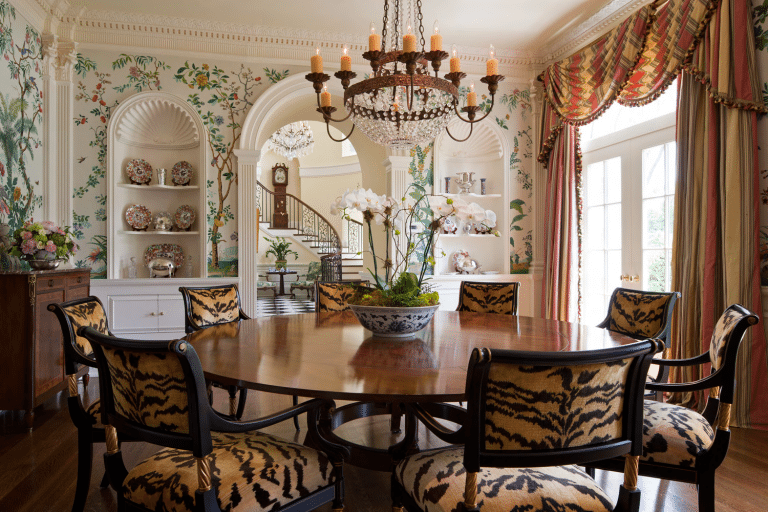
A: Chinoiserie Dining Room is my homage to the Brighton Pavilion! From the start of our business Altfield, we realized that fine contemporary versions of the antiques we were selling in our retail showroom could be made with talented Asian artists. I adore Chinoiserie, and one of the first things we did was set up a studio to do hand-painted watercolour panels and screens inspired by the China Trade of the 17th and 18th centuries. For many years I created artwork collections for private label retail clients in the US, and even worked with Scalamandre on a collection of fabrics/wallpapers some of which are still available. When we bought the house, I had a chance to put my passion for Chinoiserie into the house and the dining room became a canvas for me. Our workshop in China made the solid wood door toppings, chimney piece and mirror, and the lantern above the table while my artists created the scenic paper. I used antique Chinese bamboo furniture to accent the walls, and have a huge antique camphor wood cabinet at one end which is filled with linens. The English mahogany table has a set of chairs – all of them with arms, so everyone is comfortable and lingers at the table… Every meal in the room whether the simplest soup and cheese lunch, or a more formal dinner, is a joy and delight!


Q: What are five luxuries you simply could not live without?
A: a]June in England when the peonies and roses are in their first flush and it is heaven on earth! b] Access to nature wherever we are – it is true that God can be found in a garden c] Friends and family around the table sharing stories and breaking bread d] books and music e] pencil and paper


Q: How do you go about creating a beautiful life? In an increasingly hectic world, how do you embrace this beauty on a daily basis?
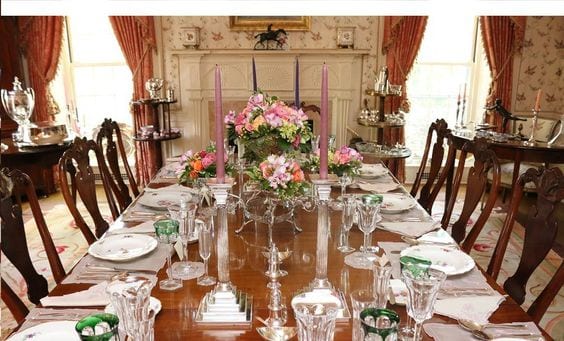
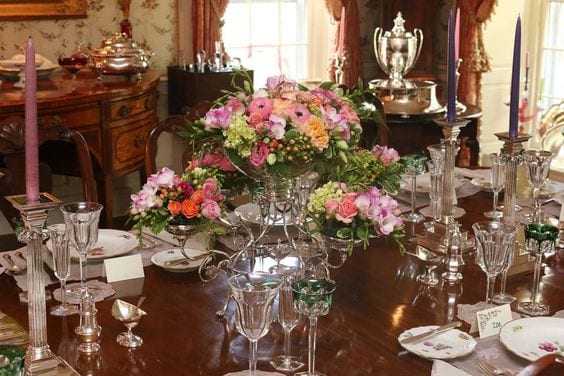
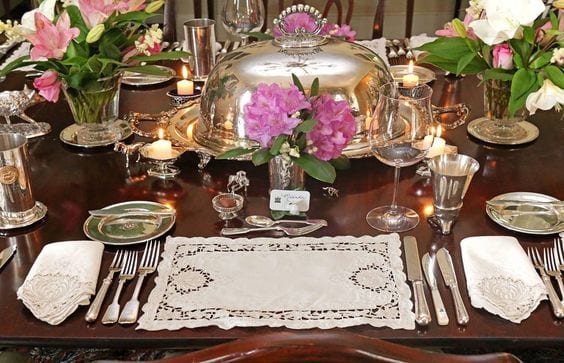
A: I learned early that you get out of life, what you put into it. I mentioned that my mother was stylish and I thank her for opening my eyes to the beauty that is all around us. It is the small things like laying the table beautifully for every meal – whether for one person or many. The effort is always worth it. Also I don’t believe in putting things away in cupboards for ‘best’ occasions, use your lovely china or glasses, enjoy them daily, make every cup of coffee special by using a lovely cup, it all adds up to a stronger sense of enjoyment. I would also say bring nature inside too. It calms us down and gives joy. Whether it is just some greenery from a shrub or one perfect flower, just something natural will automatically make a space seem happier. Put on the music and turn off the digital devices….easy to say, difficult to do, but I realise that it is more and more important to just create space and empty time to sit and be – so am trying my best to get on top of that part of life! I am also lucky that my husband enjoys cooking – and I have to say is a far better cook than me. Again, a little bit of effort pays off with the enjoyment of sharing good food. We are a little obsessed at the moment with Turkish and Lebanese food – and after our recent trip to Israel with their food also – one forgets that it has such a fabulous Mediterranean tradition. Stephen says if you eat something delicious three times a day, how unhappy can you really be! He is right! Make the effort, don’t just open a tin!


Q: Please tell me more about your favorite collections, including your blue and white and Chelsea porcelain.
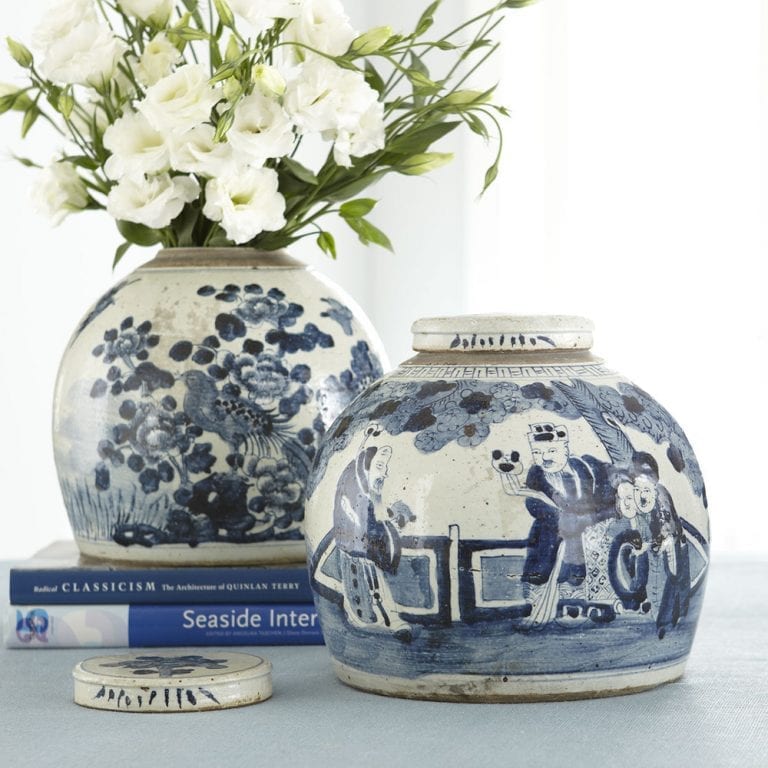
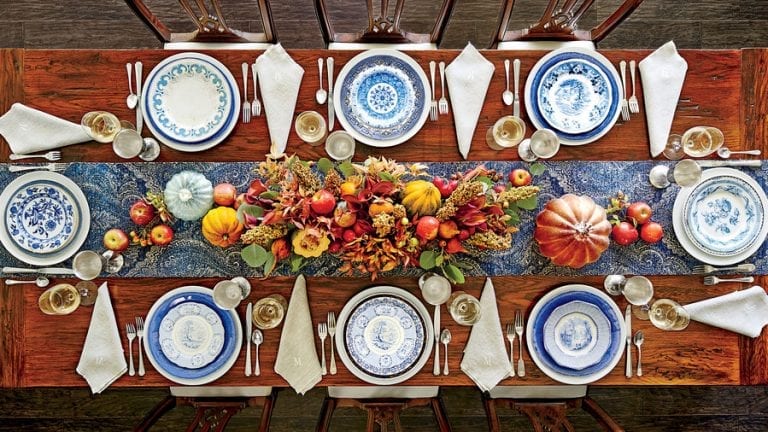
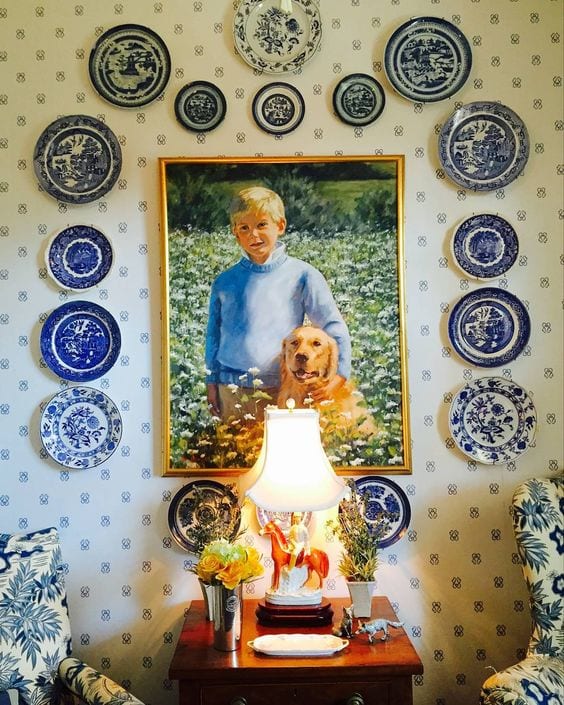
A: As an antique dealer, a piece of advice I give to lots of young people starting to collect is to take it slowly, and buy things that really speak to you, and when possible buy the best of what you can afford…a few really special pieces is better than dozens of uninteresting pieces. That doesn’t mean expensive pieces, but pieces that you really love. You will then have them all your life. I remember when I got my first job, I came across some modern Japanese rice bowls at Peter Jones in London. I loved them! But I really had no money, so I went every week for five weeks and bought 2 bowls at a time, which was all I could afford. I still have them and use them often for soups and puddings. I love them as much today as I did then, and as much as some of the finest antiques I have ever bought. My blue and white collection started the same way and has built up over time. I mix it up, old and new as I think if the pieces are well painted they can mix perfectly well, but for the old pieces I have focused on collecting what is known as Kraak porcelains as a special period I particularly like; they were made for the export market in the Ming period, mostly being traded through Amsterdam and hence the name. I do have wide ranging tastes though and get just as much pleasure from a collection of a dozen or so old village style blue and white “fish” design pottery dishes, I use in our house in the country in HK. The price point doesn’t determine the pleasure that things give us!


Q: What inspires your beautiful tablescapes and flower design?
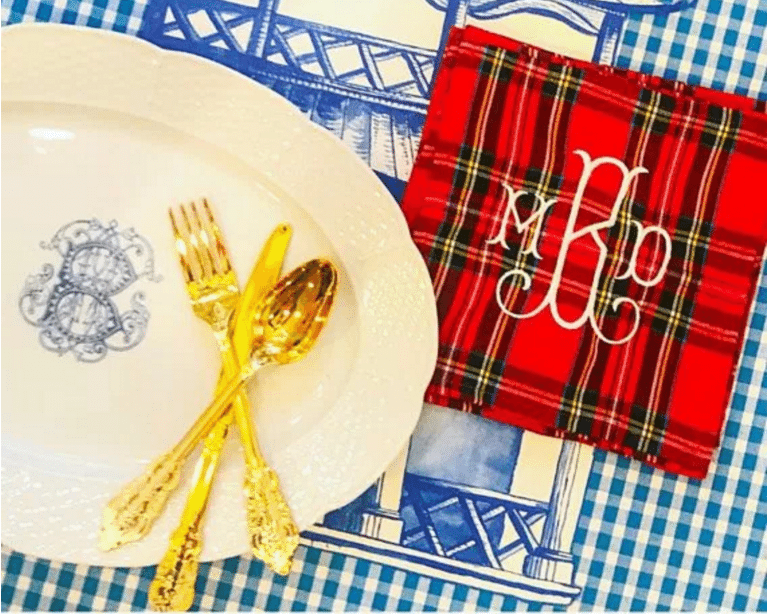
A: I am mad about table settings – and have to own up to the fact that for many years we had a retail tabletop shop– I only gave it up when the interiors part of our business just became too large and serious to be distracted by lots of other things – which means I have bulging cupboards now of some of the unsold stock! I may be mad, but I just love laying a table and mixing up all the different elements that are to hand. Again, one of the most wonderful things about the American market in particular is that there is fabulous design available at every price point. Whether from Wallmart or Bergdorfs there are wonderful things on offer. I just discovered how fabulous the table ware and linens are at Zara Home for example. How I would have loved to have access to all that is now available when I was 20! My addiction began early, I remember doing without lunch for days to be able to buy a huge book by John Loring, of Tiffany Table Settings, back in the early 80’s – I must have studied every inch of every page a hundred times! It was SO inspiring… Now we are so blessed to have access through Pinterest and Instagram of a million images anytime we want, but perhaps we don’t look as long and carefully as we should…


Q: You posted the most scrumptious salad Nicoise a while back. I would love the recipe!
A: The secret is that the herb dressing is HOT…. I cannot tell you how much difference that makes, it just Zings! Enjoy it!


Q: Which designers and/or style icons most inspire you?
A: When I started out in the business, I really was inspired by some of the American/Californian designers such as Kaleef Alaton, whose mantle I think has been taken up by Michael Smith today. I was also greatly influenced by John & Elinor McGuire whose beautiful home at Stinson Beach was one of the most lovely modern homes I have ever visited… I love the way they all mixed the very best of classic Asian style in a modern glamorous way mixing fine antiques with natural fibers and textures such as lacquer and bronze and monochrome ceramics, all within contemporary architecture and layering it all in a new way. My own home in HK is very much a mixture in that idiom. Our English home being Georgian demands a different style and is much more chinoiserie [ a western fantasy of the East] and is European in flavor and colouring! It is amazing how the “place’ can determine what seems right and comfortable in terms of how to treat the space and decorate! For that more colourful and undeniably comfortable look I think both Charlotte Moss and Alessandra Branca are current day masters, in the US and my friend Emma Burns [of Sybil Colefax] and Paolo Mochino are similarly wonderful in London.


Q: What design advice would you give someone looking to create an elegant home that incorporates beautiful antiques?
A: Creating a home…..surely the best advice is “Take your time”. A stylish real home is built over time, with the slow accumulation of pieces, as you can afford them, which have meaning. Objects picked up when travelling. Books you have actually read. Don’t follow trends, actually buy things that resonate with you and really make your heart sing. If you buy well, you will have things for your whole life, and your possessions will reflect your life journey. It really saddens me that so many young people think a slick modern hotel room is the ultimate design statement – it’s meant to be an empty stage for you to slip into and out of. It is never meant to be a home, yet so many think that is “living”. Your home should reflect your interests and passions and be totally unique – it should reflect your own individual life…. We live in an amazing time in terms of access to information, affordable travel, incredible restaurants and hotels that give us extraordinary experiences and so on… but at the end of the day what we all really need is a place called home where the heart is really comforted and at peace, and friends and family to share it with. I remember reading somewhere [sorry cannot remember where!] that Churchill once said “All great things are simple; many can be expressed in a word, freedom, justice, honour, duty, mercy, hope….” to which they added beauty, friendship, family and love…. Which sums it all up pretty well I would say… In friendship, Amanda

Thank you so much, Amanda for sharing with us this beautiful glimpse into your enchanted and fascinating world. You are truly an inspiration! To read more about Seend Manor, The Telegraph has written a lovely feature, and for daily inspiration, please follow @amandaseend via Instagram.
A Glamorous yet Kid-Friendly Dallas Home
One of my favorite things about Instagram is discovering kindred spirits with similar design aesthetics. I recently “met” Lindsay, a fellow Texan who lives in Dallas with her husband and four children (three boys and a little princess) when her daughter’s Lilly Pulitzer themed bathroom was featured by The Beaufort Bonnet Company. Lindsay has no formal design training, but her grandmother was a decorator, s0 Lindsay was exposed to fine antiques and fabric stores from an early age. This sense of style was passed along to her mother, and now to Lindsay as well. Eager to see more, Lindsay has graciously agreed to take us on a tour of her elegant home while sharing her tips on how she also made it kid-friendly…

Q: How would you describe your style?
A: I would describe my style as formal French and traditional.


Q: Please tell me about your home (what year was it built, etc.) and your design process.
A: Our house was built in 2000. We bought it in 2013. When our third child was born in 2012, we were living in a small home, and busting at the seams. Originally, we were going to build a new house. We found and bought a pretty wooded lot with an old house, which we tore down. We spent a year drawing up architectural plans to build a formal French house. A few days before we broke ground, the neighbor, also new to the street, complained to us that there was a cabinet maker one block away making loud constant noise. It was highly likely the noise would be heard inside once the house was built. We abandoned ship, and we were disappointed.. I believe things always happen for a reason. We began to search for alternatives, whether it be another lot or another home. I found a house nearby for us to look at. I knew the second I stepped foot in this house, it was the one. Amazingly enough, the layout and style were very similar to our plans. We spent 4 months renovating before we moved in. The house had a lot of outdated dark wood, we painted it all a creamy white. We moved in February 2014, and have not stopped renovating since. My 2 year old daughter knows the painters by name. We are almost finished, hooray! None of the furniture from our old house would work well in the new. Basically, I was starting from scratch. I worked slowly, and took my time with each decision. For example, if we needed a light fixture, I would painstakingly scour the internet finding the perfect one. Since I took my time, I feel like I made less mistakes and really allowed myself to cultivate my style. I started with basic things such as a khaki linen sofa, and layered along the way. There was a long time we only had a few sofas, tables and chairs, and beds. This has definitely been a process. Our most recent projects have been the kids’ bathrooms. I gave each bathroom it’s own personality that tied into the room. I had fun picking out all of the details, especially the wallpapers. In my big boys’ bathroom I did a blue background Thibaut grasscloth, with herringbone wood tile floor. Their room has navy wallpaper with maps printed on it. In my 5 year old’s bathroom I had the cabinets lacquered the same blue as the wallpaper from his bedroom. In my 2 year old girl’s bathroom, I went crazy with pink Lilly Pulitzer for Lee Jofa wallpaper and fabric.


Q: When did you become interested in interior design, and where do you find inspiration?
A: My grandmother was a decorator. She loved beautiful antiques, fabrics, and rugs. I grew up visiting my grandparents in their gorgeous home filled with unbelievable collections. My parent’s house is very similar in style. I remember being dragged to antique malls and fabric stores from a young age, it was just part of life. It’s funny though, as a child my mom insisted on dressing me in traditional Southern smocked dresses, I hated it! Everyone else got to wear cool funky clothing. I would say I am never going to make my kids wear that type of clothing. As a teenager, I would also say I am never going to decorate my house like theirs, I wanted a modern home. Well, here I am now dressing my children traditionally, and decorating my home just like my grandparents and parents. I find inspiration in many places. I am inspired by the palaces of Europe. I get inspiration from books, magazines, Houzz, and Pinterest. I can get lost for hours on end perusing Pinterest.


Q: Who are your favorite interior designers (past and present)?
A: My favorite designer is Bunny Williams, I think she is a genius. It amazes me how things she did 10 years ago, are on trend now. She has a way of putting magnificent rooms together layer by layer. For formal French I like Betty Lou Phillips, and Charles Faudree.


Q: Do you have any professional interior design training or experience?
A: I do not have any professional interior design training, and the only experience I have is with my own home.


Q: What are the most important considerations when designing a home filled with young children?
A: First off, we are very laid back. We love to entertain family and friends, which means our house is always filled with kids. I know that it is a possibility with kids running around that things will get broken or stained. It happens. With that said, I picked stain resistant fabrics like Perennials. I did all of the sofas in slipcovers that can be washed. Also, Oriental rugs especially Heriz (my favorite) hide everything. We have a no ball throwing in the house rule, you can imagine with three sons how hard that one is. We tell our kids when they have their friends over, it is their job to make sure their friends respect our house. Their favorite in house game is hide and seek, we have some amazing hiding spots.


Q: Are there any treasures you enjoy collecting? Do you like hunting for vintage and antique pieces, or do you prefer new?
A: I frequent two nearby Antique malls. I collect Rose Medallion for my formal living room, Imari and Mason’s ironstone for the library, and Blue and White pottery for the kitchen, breakfast room, and den. I also collect Staffordshire and Majolica. Some of the furniture in my house is new reproductions of antiques. For tables, I chose many from Theodore Alexander, and Decorative Crafts. For mirrors and sconces I had luck with Friedman Brothers My rugs are a mix of new and antique. I find rugs lend a great deal of personality to each room.

Q: Do you have any additional projects in store for your home?
A: I do! A few months ago we bought a ranch about 40 minutes away. I have had the best time decorating it. The house is Mediterranean on the outside and Modern on the inside. Although this wouldn’t be my go to style, I am having fun playing off of the clean lines. I’ve incorporated traditional fabrics and wallpapers, think all things F Schumacher and some Brunschwig & Fils. I am using a lot of Bungalow 5 furniture. I am adding equestrian accents to give it a ranchy feel, and of course Chinoiserie everywhere (because that’s ranchy right?!)


Q: What do you enjoy doing in your free time?
A: In my free time I enjoy playing competitive tennis, I play on a team with a bunch of friends. I love shopping, I have a passion (obsession) for dressing myself and my family. I enjoy cooking, after all I am a professional pastry chef. I went to culinary school for 3 years. I read voraciously, I love a good fiction book. Lastly, I enjoy traveling, specifically to Europe or the beach.

Q: Anything else you would like to add?
A: Although it is nice having a beautiful home filled with beautiful things, the most important thing inside it is the family, and I never want to lose sight of that.

Thank you Lindsay, for inviting us into your gorgeous home! You are such an inspiration!! For an additional glimpse into Lindsay’s beautiful world, please follow her on Instagram.
A Place to Call Home by James Farmer
Designer James Farmer‘s elegant new book, “A Place to Call Home – Timeless Southern Charm” will be released for sale this month, and this is one you will not want to miss. An unabashedly Southern gentleman, Farmer’s interiors respect Southern heritage while freshening the look for today. A Place to Call Home tours 11 beautiful homes in the deep South including a home with antebellum roots, a Georgian-style house in the suburbs, a country farmhouse, a Sea Island retreat, and Farmer’s own family home. Woven alongside beautiful photography are personal stories Farmer shares about living in the South, the people in his life, and how he fell in love with a career of making houses into homes. Photography by Emily Followill for Gibbs Smith.


James Farmer is also the author of A Time to Plant, A Time to Cook, A Time to Celebrate, Porch Living, and Dinner on the Grounds. His company, James Farmer Inc, is a full-service design company including interiors and landscape. He lives in Perry, GA. For daily inspiration, please follow @jamestfarmer on Instagram. A Place to Call Home is available through Amazon and James Farmer Inc. All books sold through jamesfarmer.com will be signed and shipped the week of August 21.
Le Mas des Poiriers – A Farmhouse in Provence
For years, American expatriates Shauna Varvel and her husband enjoyed spending summers with their five children in Provence. In 2014, kismet led them to rent the home that is now Le Mas des Poiriers, an 18th century farm house nestled among 65 secluded acres including working pear orchards. The family fell in love, and a year later when the property became available for sale, they decided to buy it. Le Mas des Poiriers underwent extensive renovation by the esteemed Alexandre Lafourcade. Landscape architect Dominique Lafourcade transformed the gardens, and Susan Bednar Long redesigned the interiors using Pierre Frey fabrics exclusively. Every inch is true to the spirit of Provence.
Le Mas des Poiriers is available for rent, and I am fantasizing about a dream vacation in Provence! In the meantime, I am delighted to welcome Shauna Varvel to The Glam Pad today for a virtual holiday…

Q: How did Le Mas des Poiriers receive its name, and what is the English translation?
A: Our farm, Le Mas des Poiriers, produces 60 tonnes of pears annually and the house sits adjacent to the pear orchard. The actual and original name of the house is Grange Neuve, which we use, but we have named the farm Le Mas des Poiriers, which translates as “The Pear Trees Farm House.”
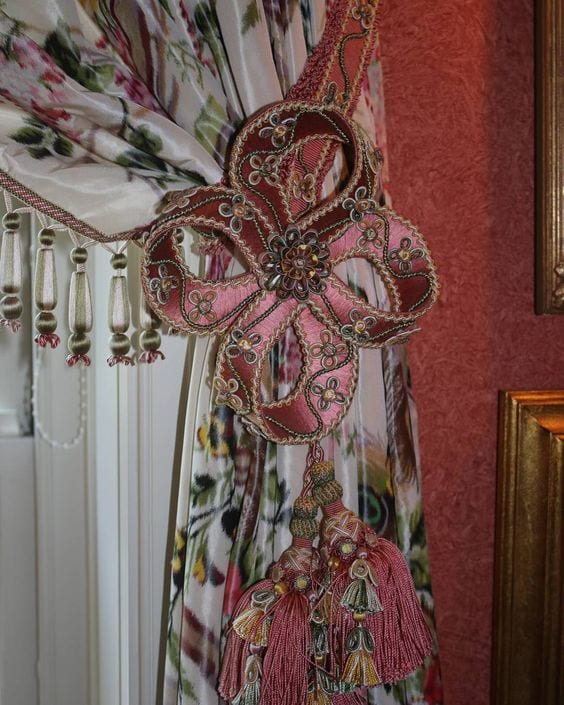


Q: In what year was Le Mas des Poiriers built, and what is its history?
A: The house was built over 200 years ago as a farm house, or a “Mas.” The Rhone River divides near Avignon and the Palace of the Popes and the farm sits between the two arms of the Rhone, on an island. Thus the property’s land is very fertile and green, which is unusual in this dry and rocky region. The farm was formerly in a flood plan and had a high platform near the barn that served as a place to put the animals during during a flood.
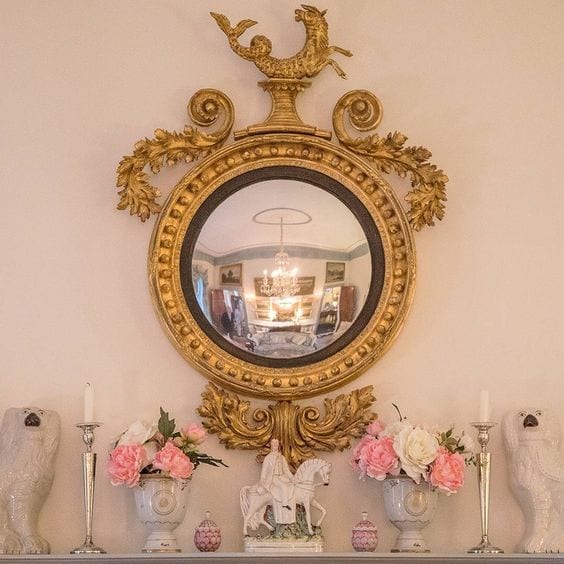


Q: What inspired you to purchase this beautiful property?
A: Provence has been a passion of mine for many years. When my five children were young, we would rent a house for a month or so in the summertime, spending our mornings at the markets or visiting ancient Roman ruins, our afternoons by the pool, and our evenings making dinner together and eating al fresco in the garden to the tune of cicadas. We created beautiful memories as the children ran around in the Provencal sun without the distractions of everyday life, picking grapes and pears and enjoying the beauty and serenity of the region. In the summer of 2014, we rented the home that is now Le Mas des Poiriers and fell in love with it for its uniquely large structure and distinct location, being within minutes from the charming city of Avignon and yet in a secluded world of its own on a fertile island within the Rhone River. We were thrilled a year later to discover that the property had been listed for sale. We knew that we loved having 10,000 square feet in one building to fit our large family (many properties in Provence connect small buildings together to make one), the high volume in the ceilings and the flat and green land surrounding the property. We also knew that it would be a lot of work but we felt that in the end, the effort and investment would pay off in a way that it couldn’t in other properties.


Q: Please tell me about the architectural, interior, and landscaping renovations you have overseen.
A: We hired the Alexandre Lafourcade architect team for the renovation. They are the clear specialists in this region for these kinds of old houses. Through their vision we were able to re-organize the exterior, adding a new front door in a new location, tearing out ceilings and staircases to make a new beautiful front entry, add a new master bedroom, family bedroom, living room and mud room in a space that had formerly been a barn, with a dirt floor. We tore out floors, walls, all bathrooms, added antique fireplaces, new floors throughout, etc. We used finishings that would have been used traditionally in the house, like Dordogne stone floors, on the main level, reclaimed antique terracotta floors on the upper level and traditional marble cut in a Provencal style in the bathrooms. We completely changed the landscape working with the famed Provencal landscape designer, Dominique Lafourcade. We moved the swimming pool from the south side of the house to the west, the kitchen side of the house which made more sense to us. We added a tennis court adjacent to the swimming pool and Dominique designed a charming tennis court house on the east side of the court, painted a beautiful French blue. The property boasts 75 200-year-old plane trees in three allées, which were cleaned and pruned to highlight their beauty. Additionally, we added very tall cypresses to form a cypress allée coming off the center axis of the house. We added a wisteria covered arched walkway to the pool and also a beautiful rose covered archway off of the living room. The tennis court is surrounded by old olive trees, lavender and plants that would be found in the Luberon valley, giving it a distinct feeling that is different from the rest of the property. There was an old decrepit barn on the property that we renovated to house two staff apartments with a two-bedroom apartment upstairs and a one-bedroom apartment downstairs. On the east side, there is a view of Mount Ventoux and we have a large room that can be used as a rec room or a staff room.


Q: What was your vision for the beautiful interiors, and were you able to work with antiques original to the home? How did you decide to use Pierre Frey fabrics exclusively throughout?
A: The house is very large and could have been decorated and finished to feel more like a Bastide or a Villa, but I felt strongly that it should maintain the feeling of the country farmhouse that it is. I absolutely love and was inspired by the La Mirande Hotel that is just across the river from us. The La Mirande is a city hotel and is very elegant but we took inspiration from their fabrics, bathrooms and from their Chef’s Table kitchen, in the basement of the hotel. In fact, our kitchen, was built by the son of the gentleman who built the Chef’s Table kitchen years ago. We did inherit some antiques with the house and have used them in a few places. We inherited some lovely hunting dog paintings that feature in the entry and living room and two small desks that are in the living room. Additionally, I travelled between Paris, shopping on the left bank and at the weekend market, Isle sur la Sorgue in Provence and London for the Decorative Antique Fair, every few months collecting antiques and art. It took the full two years to find all of the pieces needed to fill the house.


Regarding Pierre Frey, I have long loved their traditional French country fabrics and was thrilled to be able to integrate them here. I worked with a decorator, Susan Bednar Long, with whom I have had a long professional relationship. We worked together on this project and sat in the Pierre Frey showroom in Paris for two days straight pulling fabrics and creating fabric schemes for each room. The manager of the Paris showroom, Eleonore, came to the house several times during the project and recommended the seamstress and upholsterer that Pierre Frey uses in Paris.


Q: For a guest staying at Le Mas des Poiriers, what does a typical itinerary look like for a long weekend visit? And for a week or more? What activities do you recommend?
A: We rent the entire house for approximately 4 – 5 weeks a year on a weekly basis. In a week, you could cover many of the famous Provencal villages in the area and visit some of the most popular markets. There are a myriad of sites and markets to visit in Provence. We recommend that you take it slowly and balance days out with days lounging by the pool or playing tennis, touring the gardens, sunflower fields or pear orchard at Le Mas des Poiriers attended by our thoughtful and professional staff. Gordes is a favorite among most visitors along with the other hilltop villages in the Luberon Valley such as Bonnieux, Lacoste and Menerbes. When visiting Gordes do not miss the lovely Abbey Senanque with its lavender fields, just beyond Gordes in a beautiful canyon. Avignon is just ten minutes away and is home to the Palace of the Popes, one of the largest and most important Medieval Gothic buildings in Europe, and a UNESCO Heritage Site. Pont du Gard, the highest and one of the best preserved Roman Aqueduct and another UNESCO Heritage Site, is just 30 minutes away to the west. St Remy and Eygalières are very popular market towns with markets Wednesday and Friday mornings. Arles boasts a beautiful Roman Coliseum that rivals the famous coliseum in Rome and Nimes is home of the beautiful Roman Maison Carree.


Q: Your culinary team sounds amazing, please tell me about dining at Le Mas des Poiriers.
A: Our culinary team are state of the art with experience from New York’s Park Avenue to fine French kitchens. They are on-hand to create a personalized menu for each meal during your stay, moving your dining experience from our patio to the plane tree allée, the cypress allée or by the pool for a beautiful and varied experience at each meal.


Q: How many guests can Le Mas des Poiriers accommodate at one time? I would imagine this would be an ideal venue for a destination wedding!
A: We have nine double bedrooms and have a maximum sleeping capacity of 18 guests. Le Mas des Poiriers is a perfect wedding venue and we collaborate with the incredible talented team of Matthew Robbins Design to coordinate events.


Thank you, Shauna, for sharing your enchanted home with us today! Le Mas des Poiriers is now at the top of my bucket list.
With seven bedrooms in the main house and two additional bedrooms in the guest house, Le Mas des Poiriers offers the utmost in seclusion and luxury. The property boasts a tennis court and swimming pool, and it is professionally staffed with a culinary team of two chefs and two waiters, as well as full-time housekeeping. Within easy reach of Avignon, Chateauneuf-du-Pape, Gordes, St. Remy, and Aix-en Provence, Le Mas des Poiriers is ideally situated to access all that the region has to offer, should you decide to spend a day away from the peaceful property.
For additional information, please visit Le Mas des Poiriers and follow @provencepoiriers on Instagram for daily inspiration.
D. Porthault: The Art of Luxury Linens
This month, D. Porthault will release its long-awaited first book, D. Porthault: The Art of Luxury Linens… and it is a veritable feast for the eyes. Founded in Paris in 1920, Porthault has developed a loyal following that has included royalty and celebrities such as Charles de Gaulle, Sir Winston Churchill, President and Mrs. John F. Kennedy, Lee Radziwill, the Duke and Duchess of Windsor, Grace Kelly, Coco Chanel, Audrey Hepburn, and Elizabeth Taylor. The Art of Luxury Linens takes us inside some of the most beautiful homes in America, revealing why D. Porthault has been the favored French luxury brand for linens and other fabrics for nearly one hundred years. Below are a few of my favorite images from this incredibly lovely book…
Photographs by Erik Kvalsvik from D. Porthault: The Art of Luxury Linens by Brian D. Coleman, reprinted by permission of Gibbs Smith.


With cheery bedrooms, sweetly decorated nurseries, beautiful bathrooms, and elegant tablescapes, the entire book is full of scrumptious eye candy… You will want to order your copy today! D. Porthault: The Art of Luxury Linens is available through Gibbs Smith and Amazon.