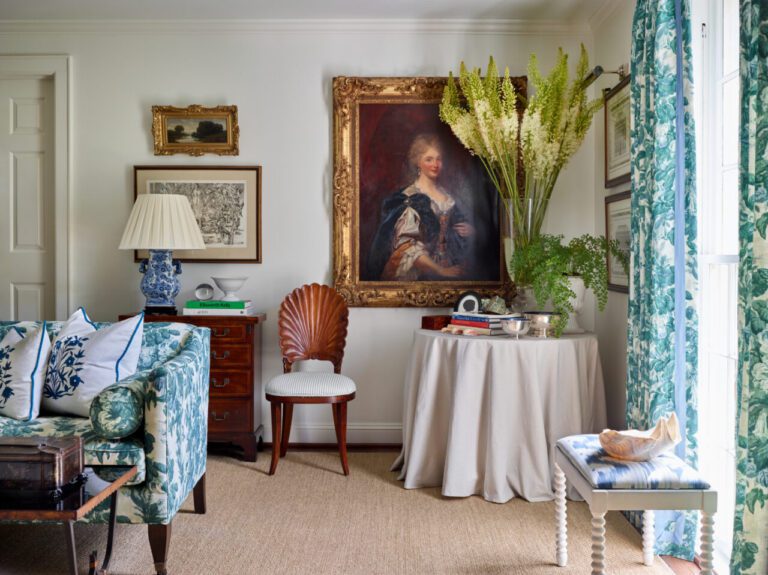
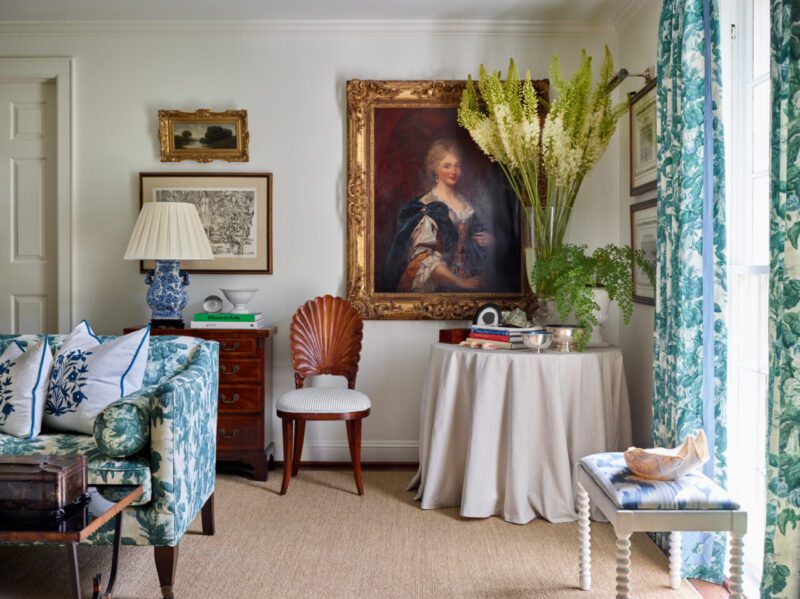
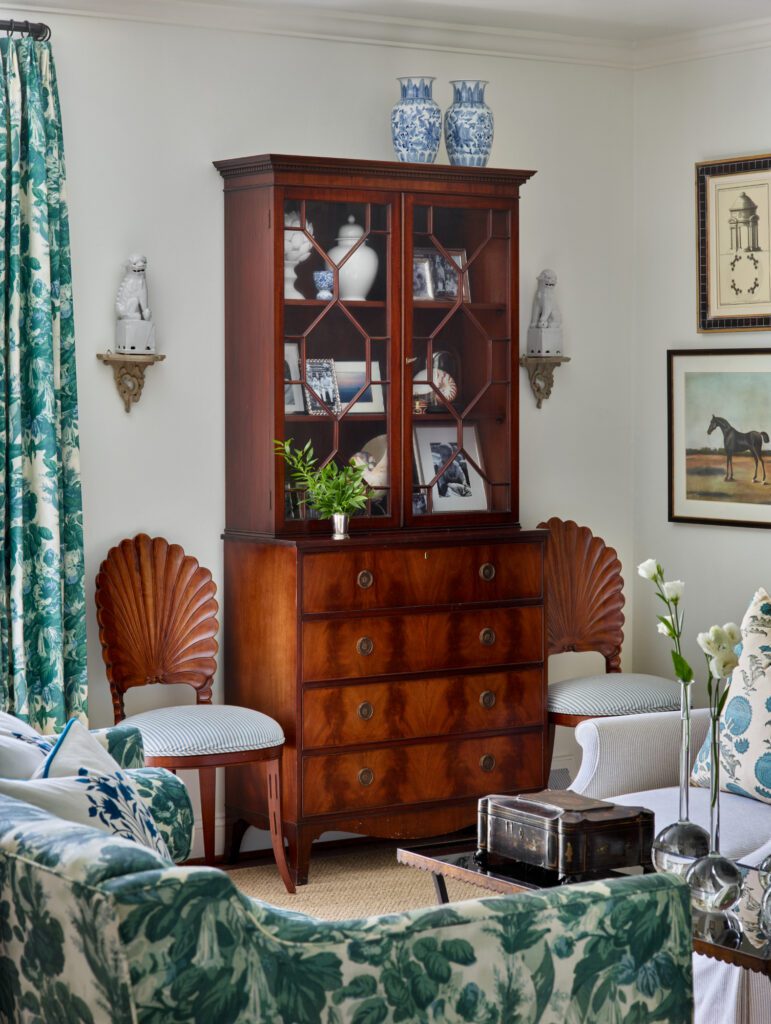
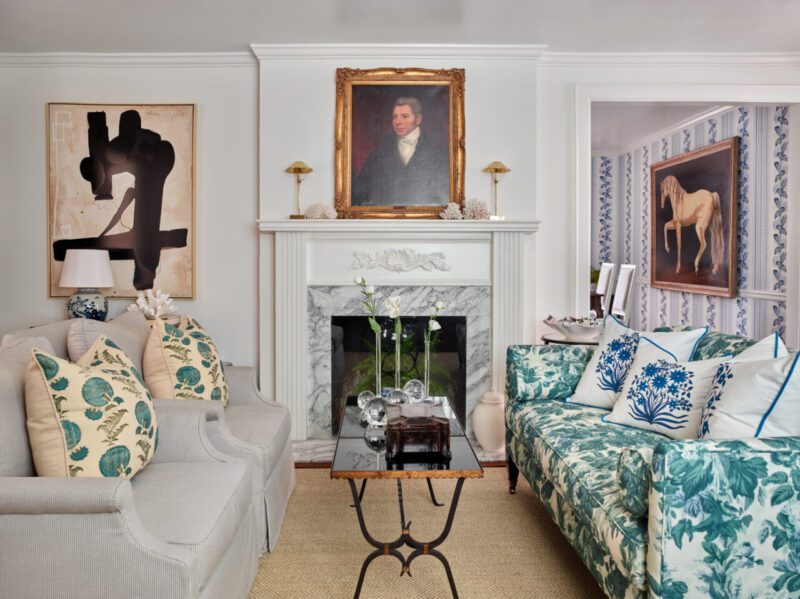
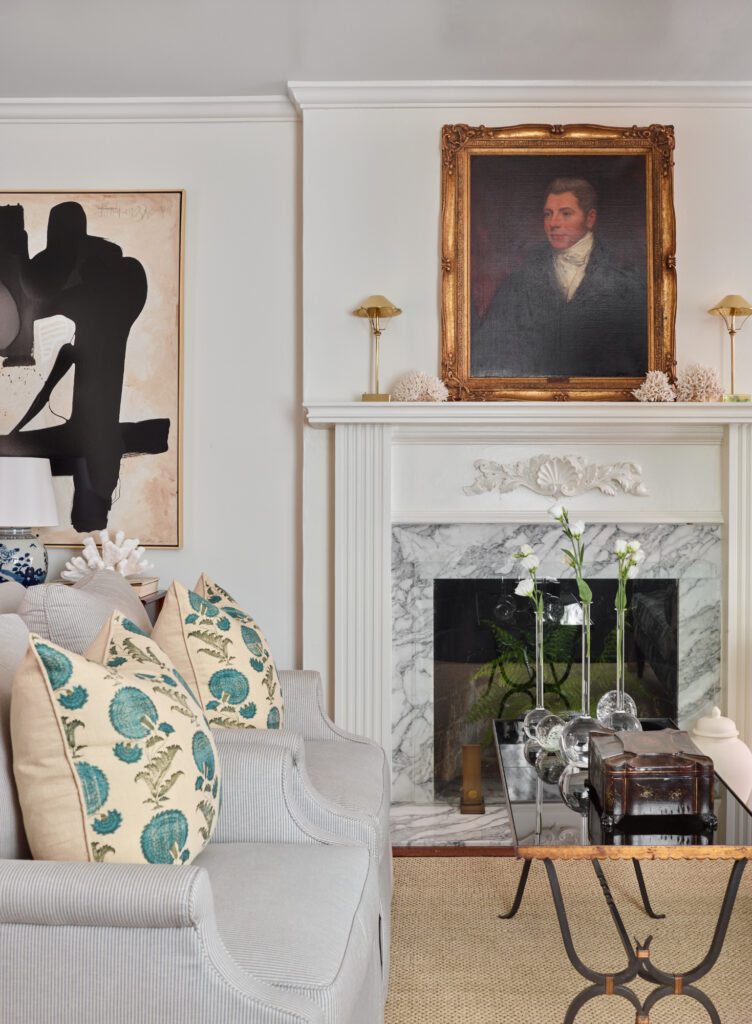
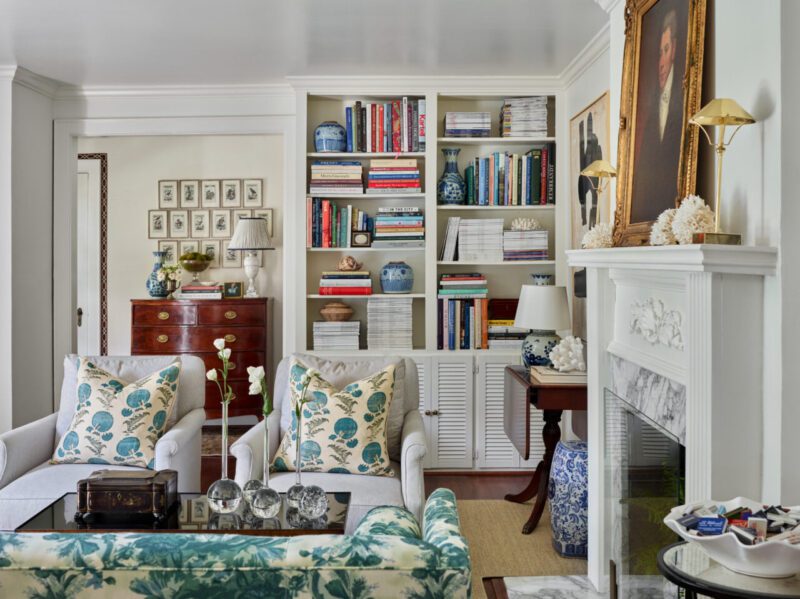
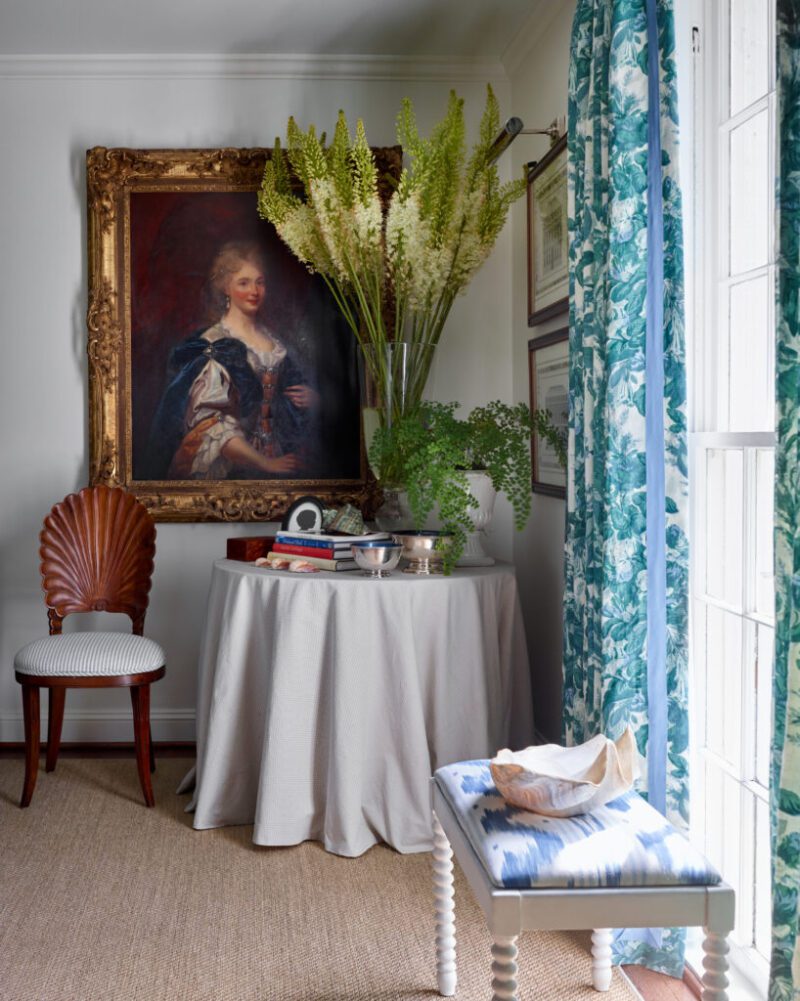
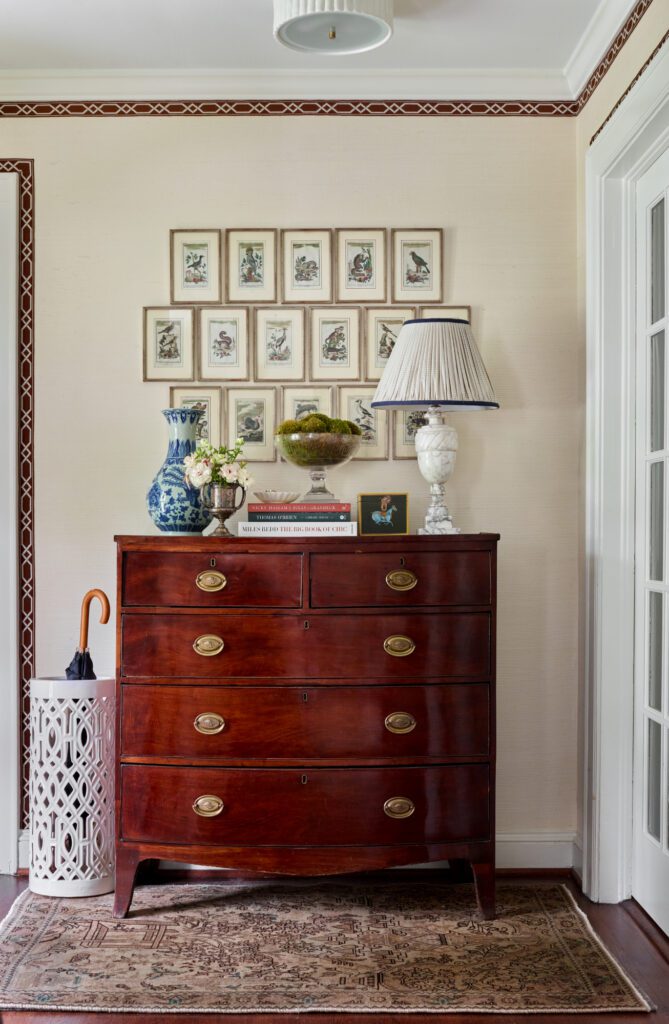
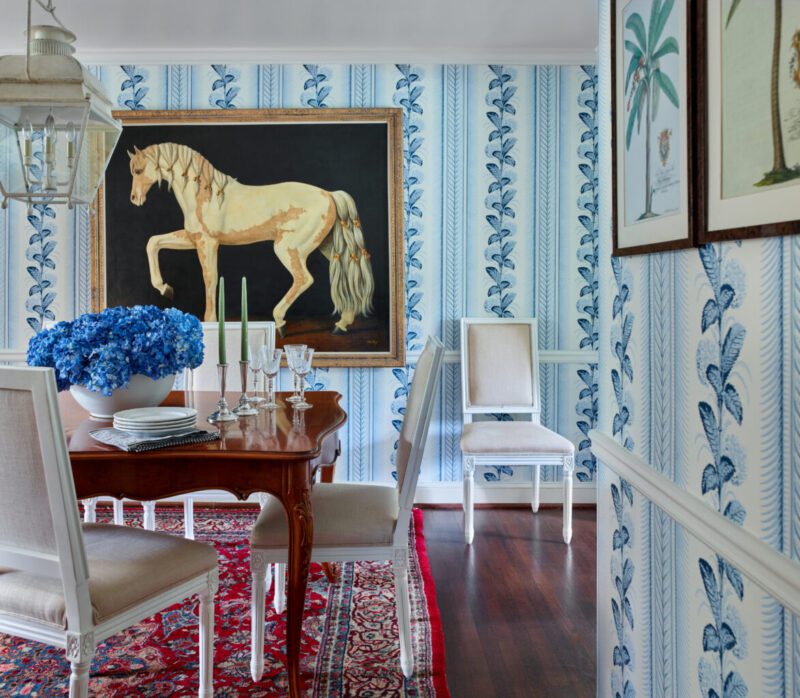
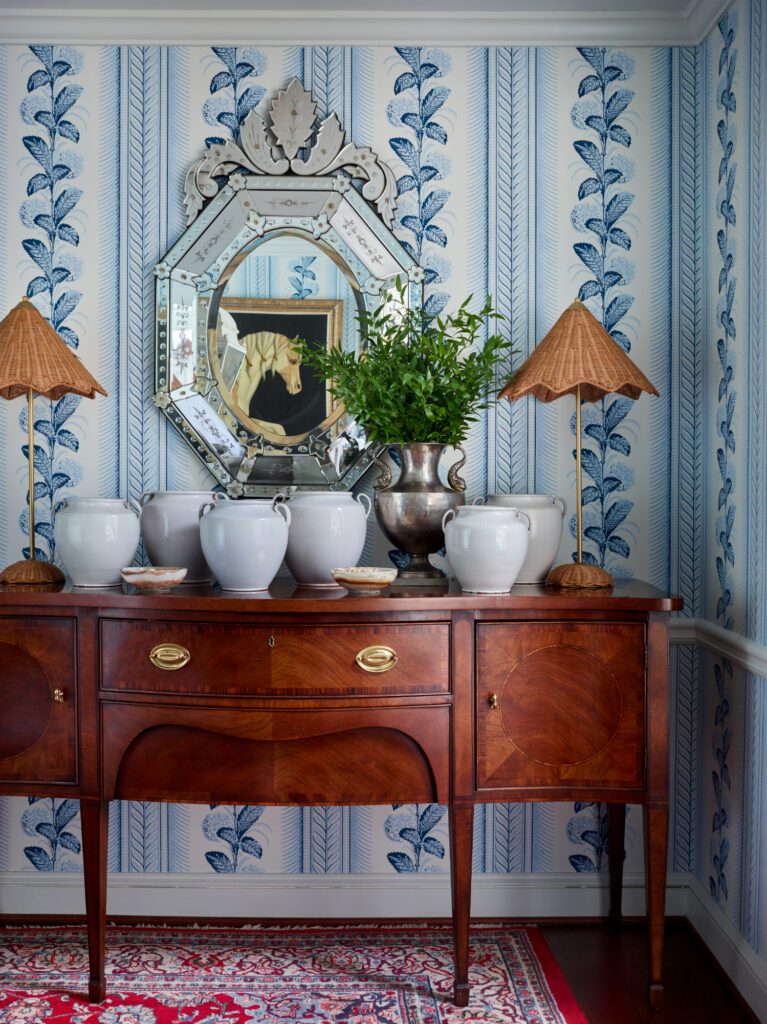
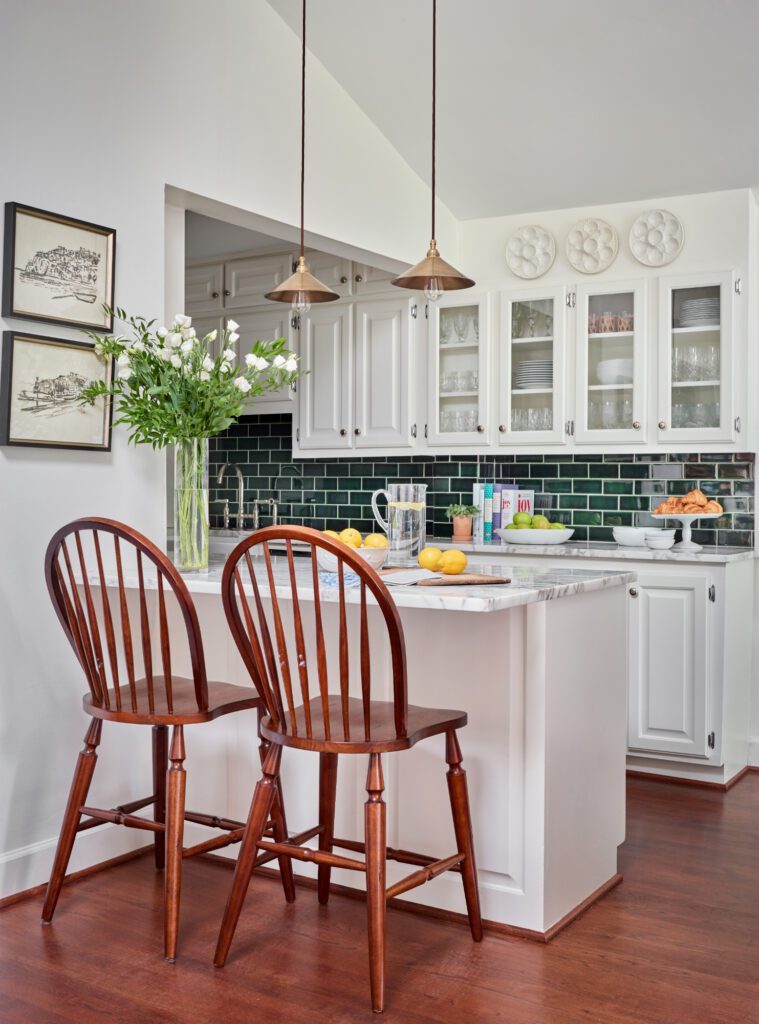
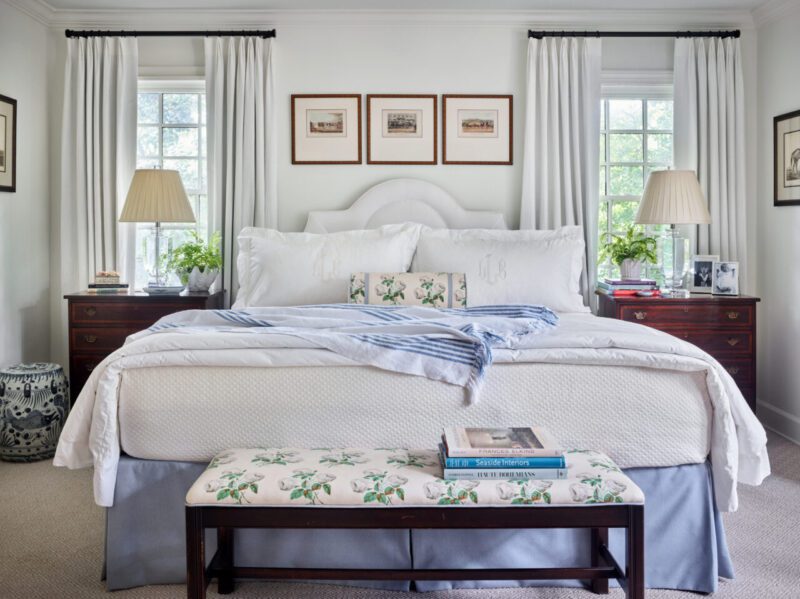
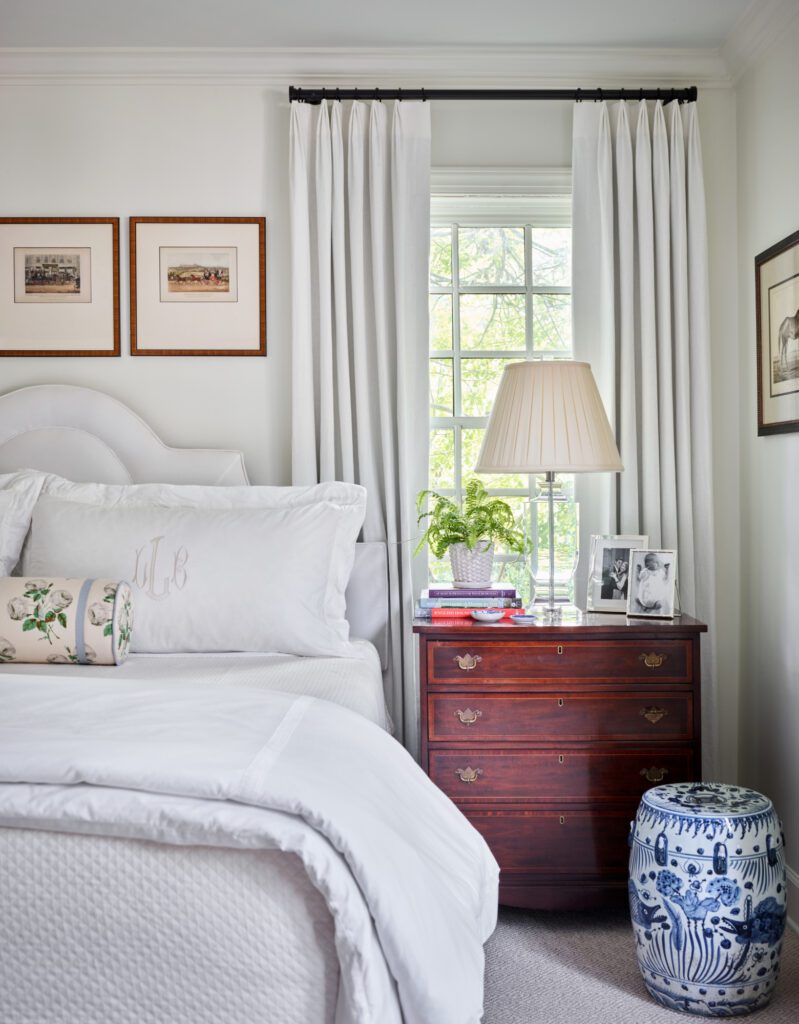
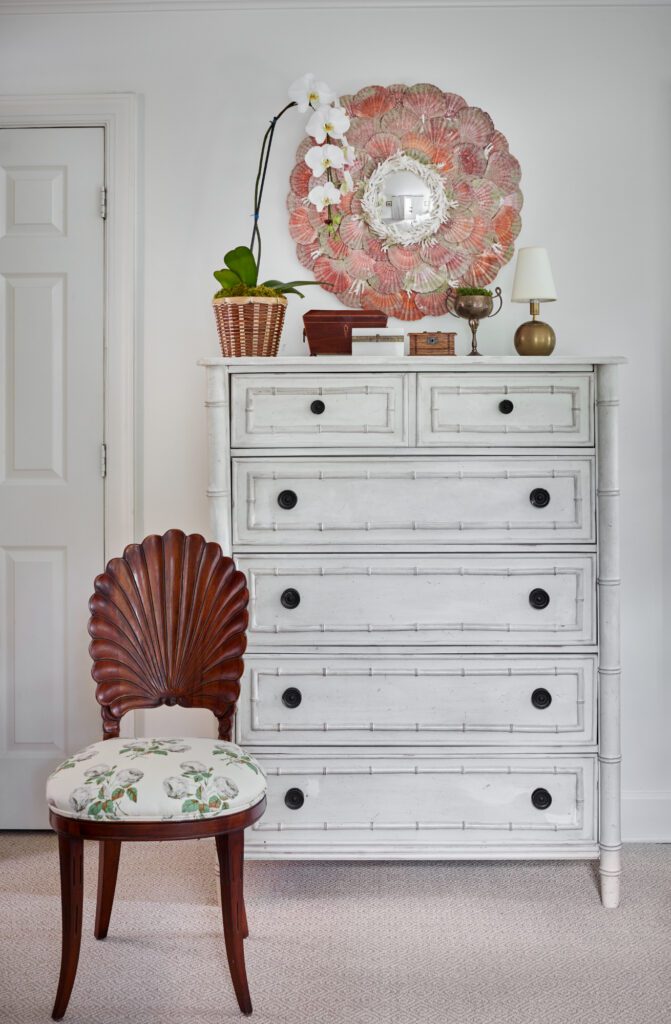
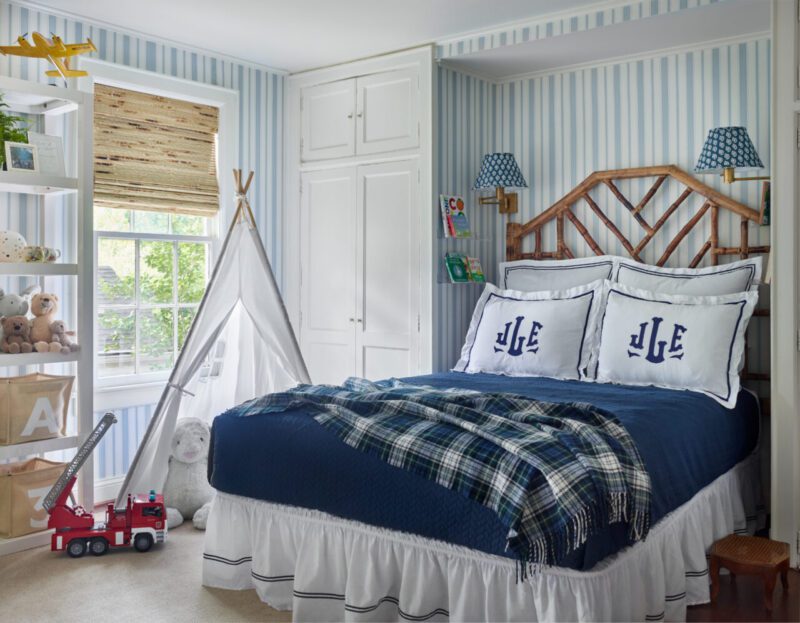
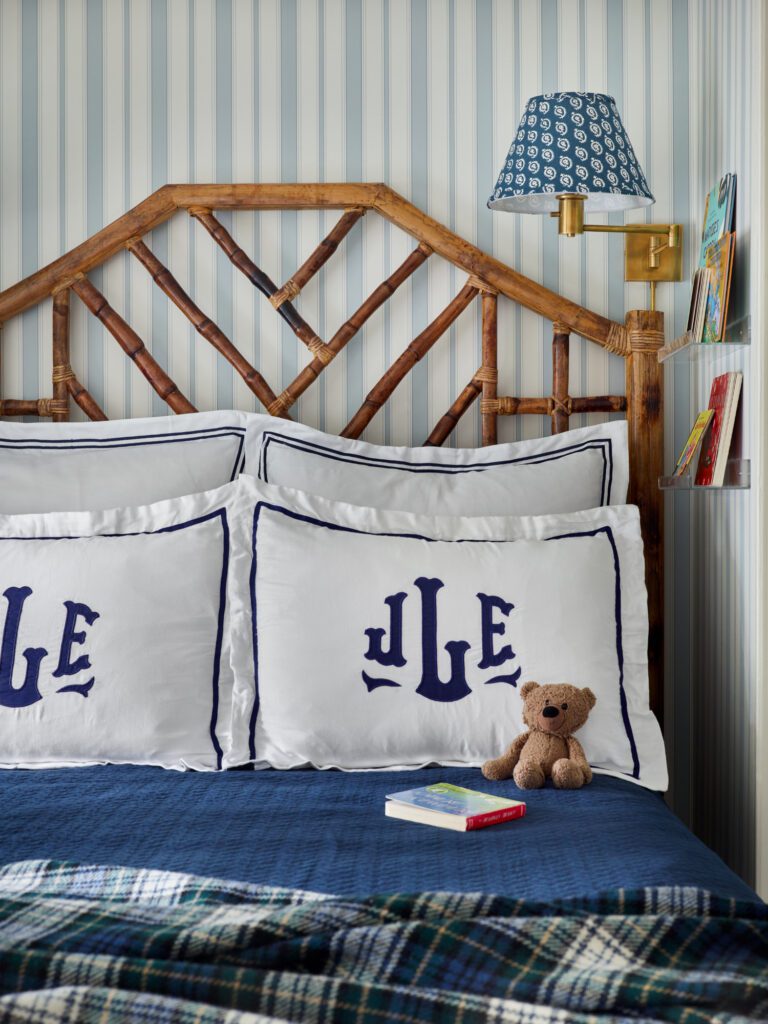
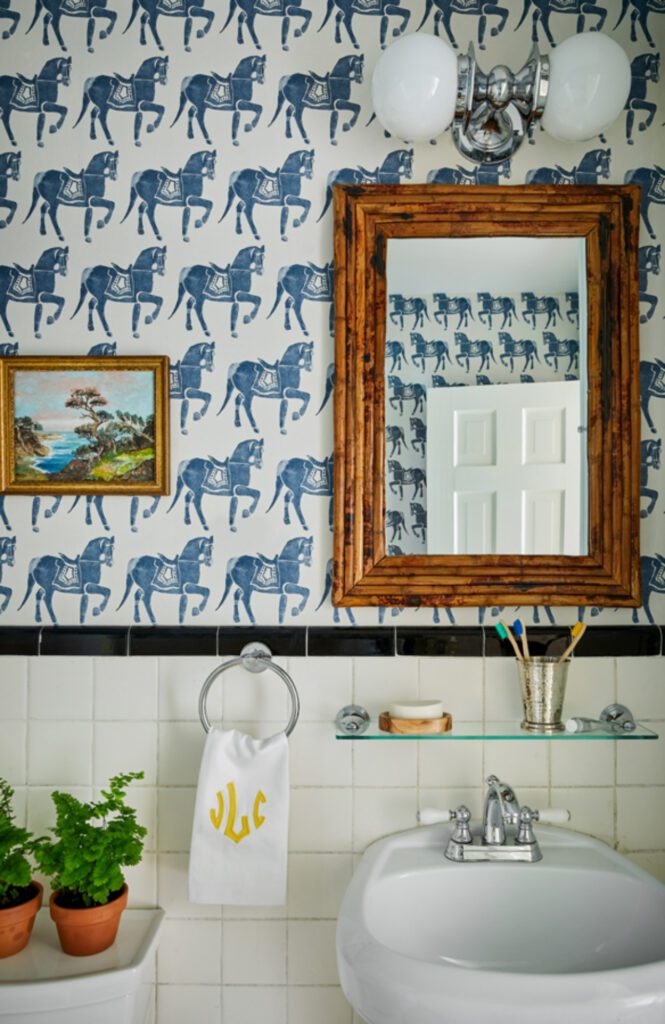
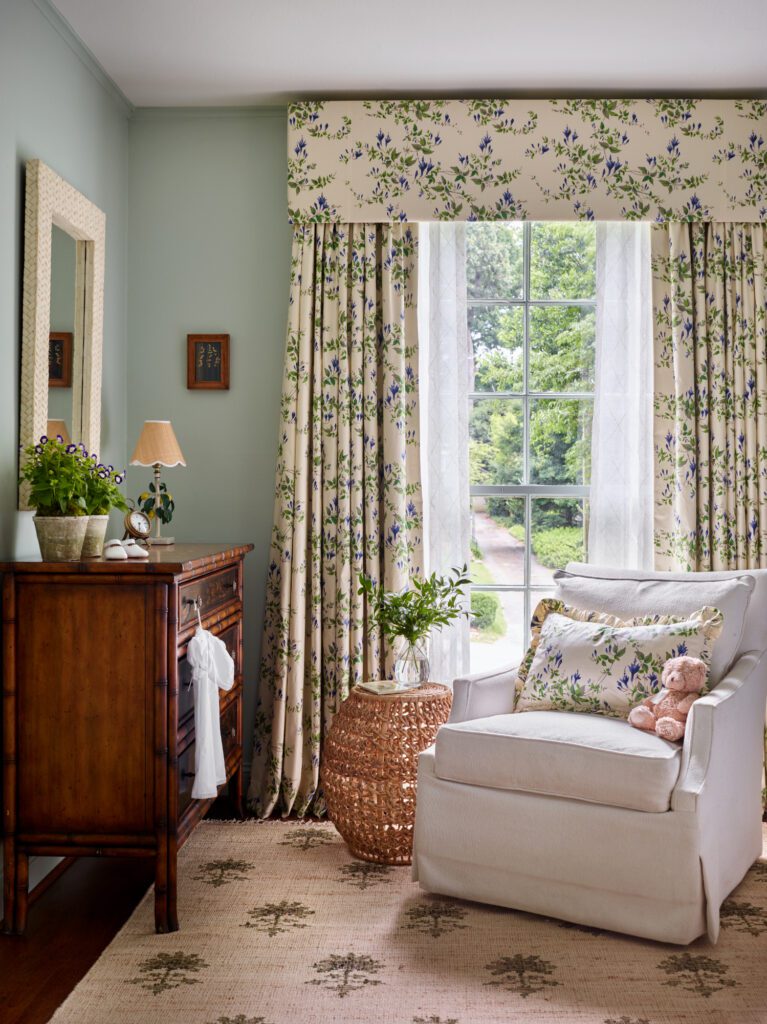
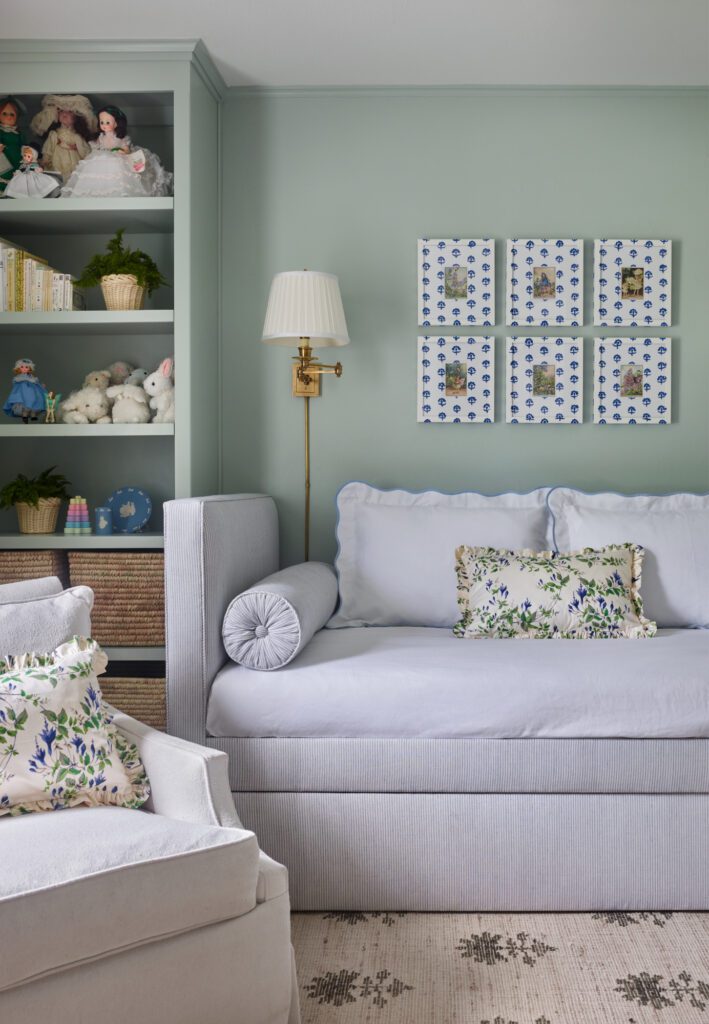
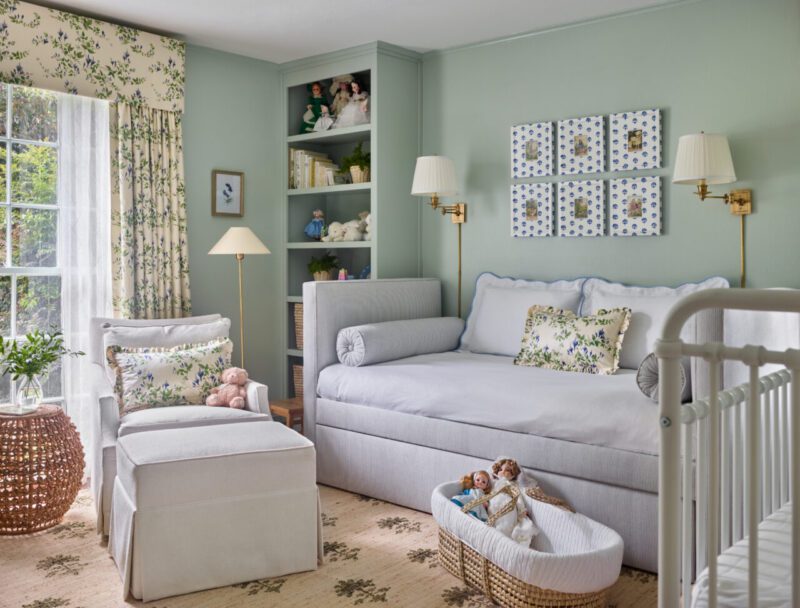
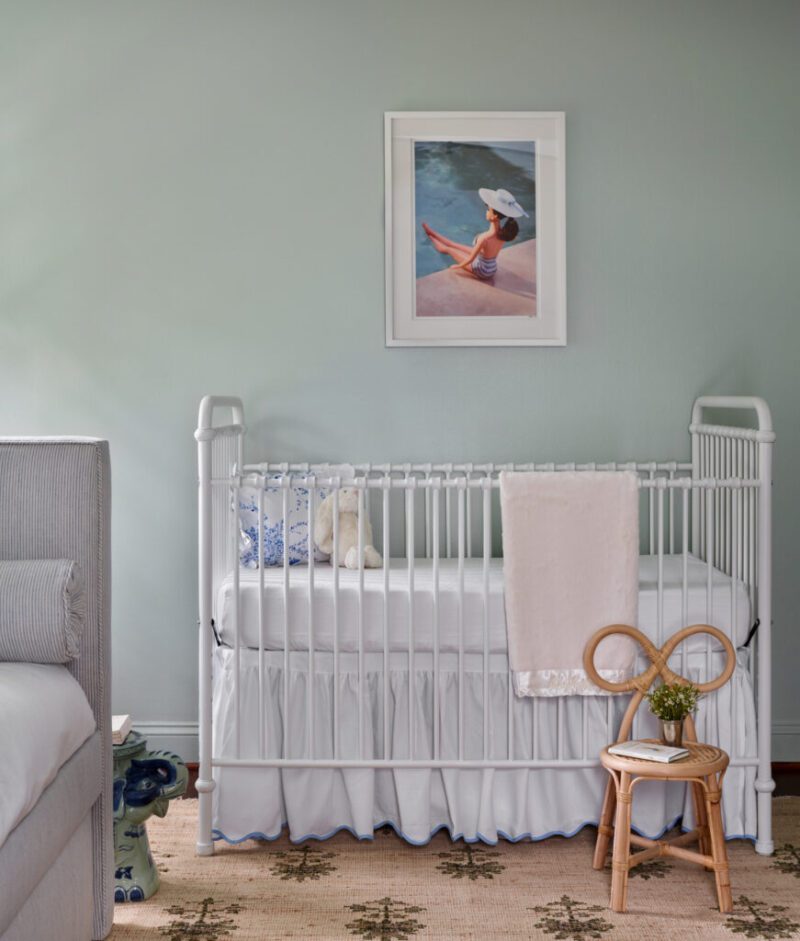
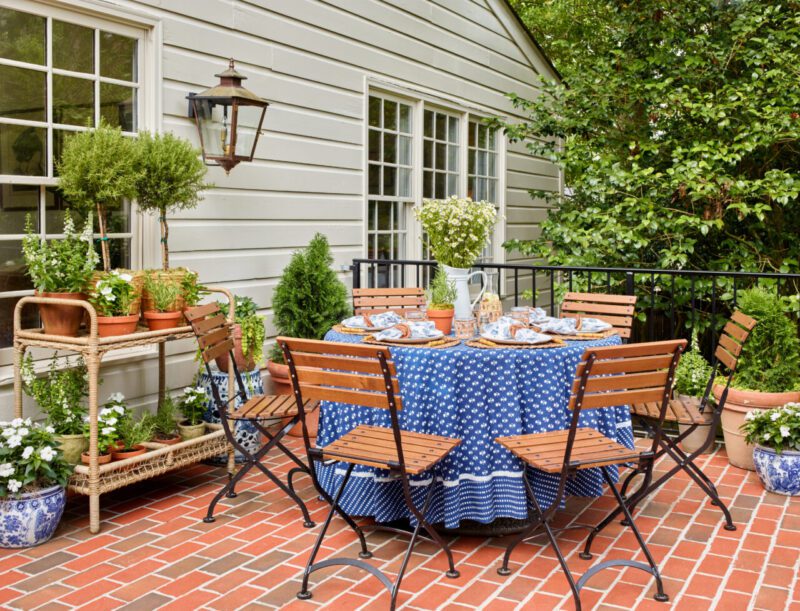
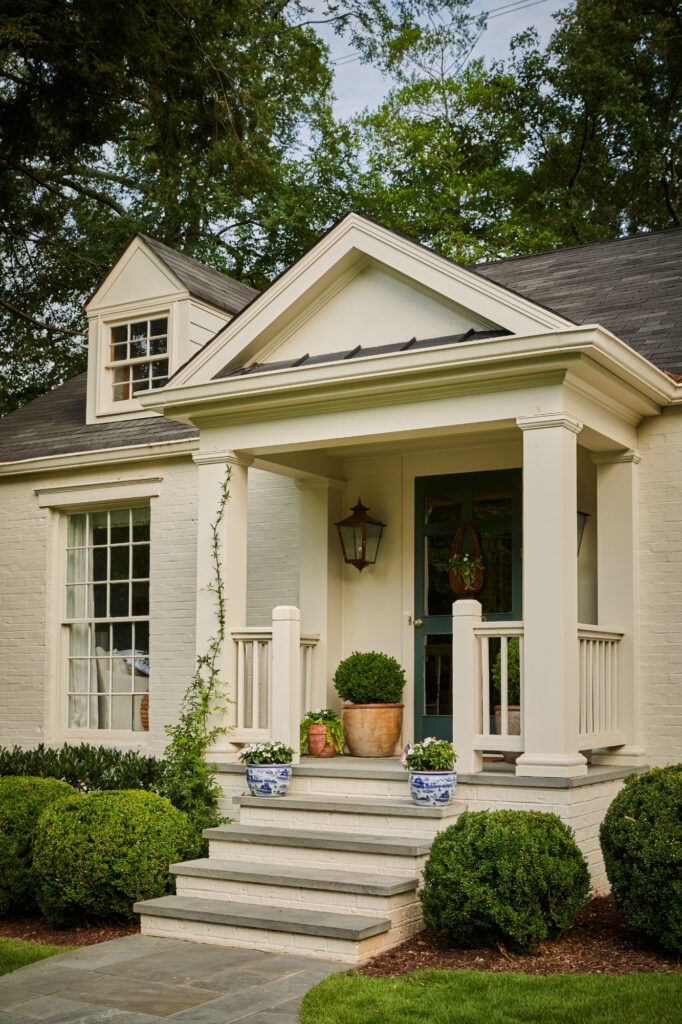
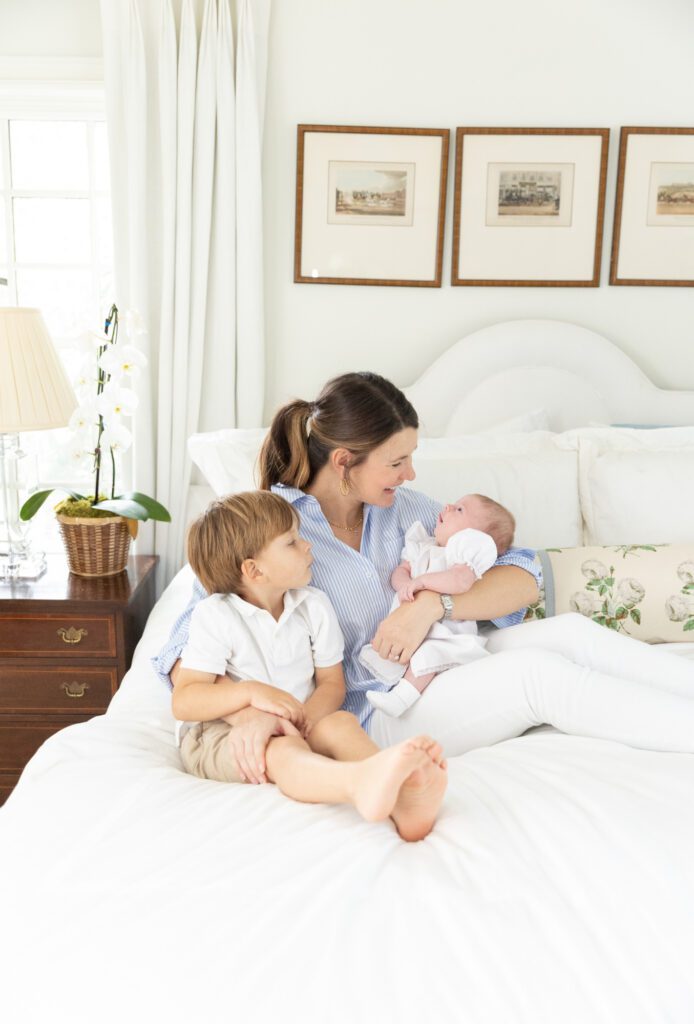
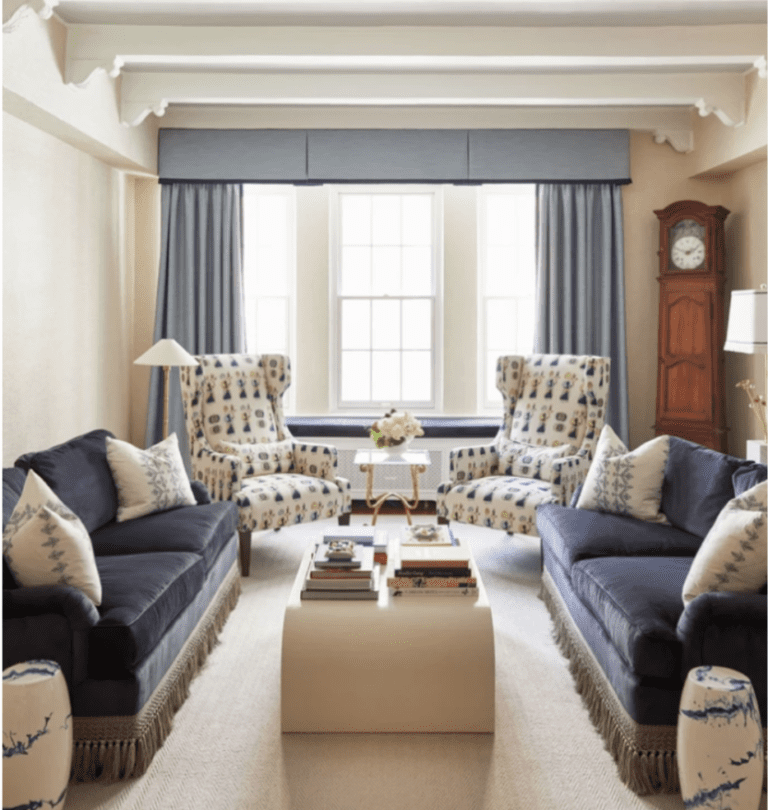
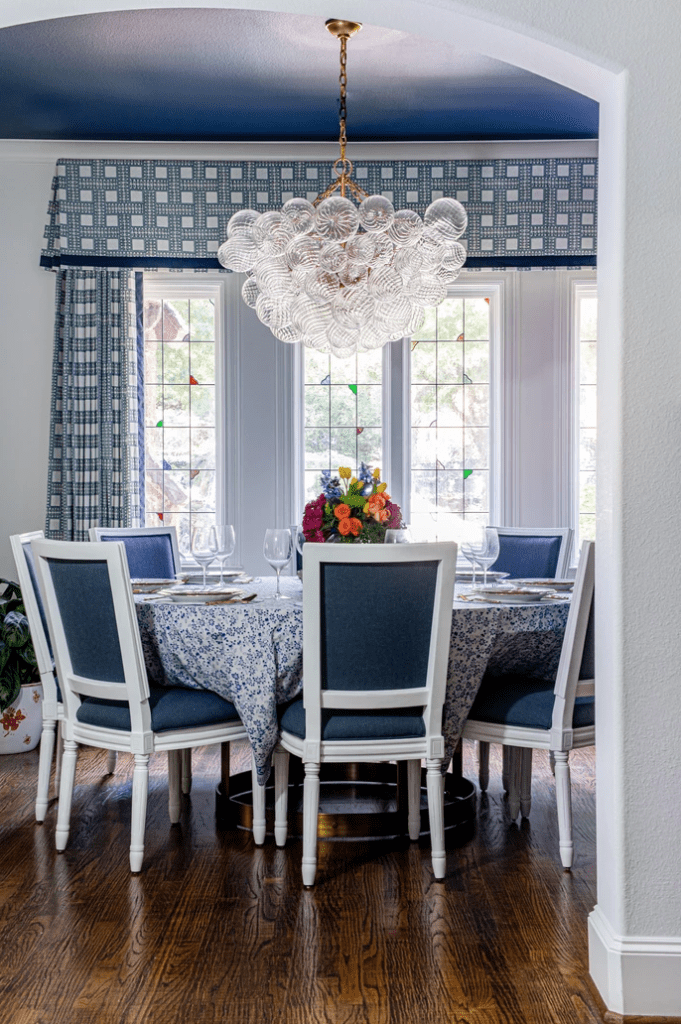
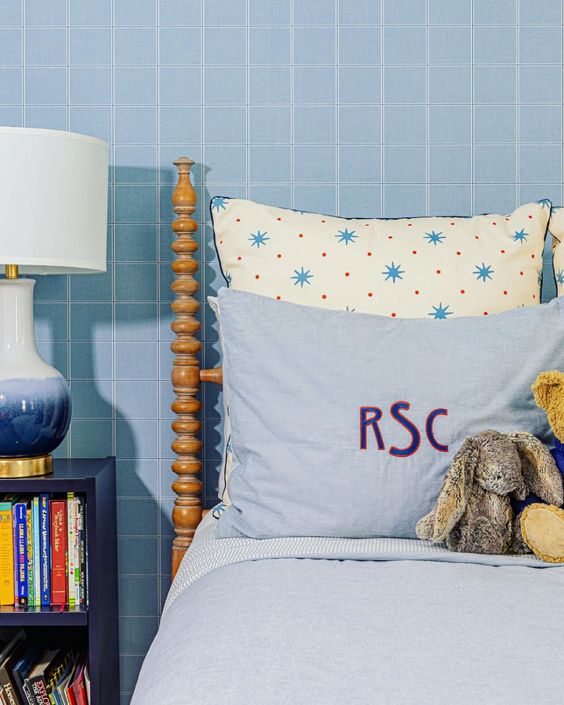
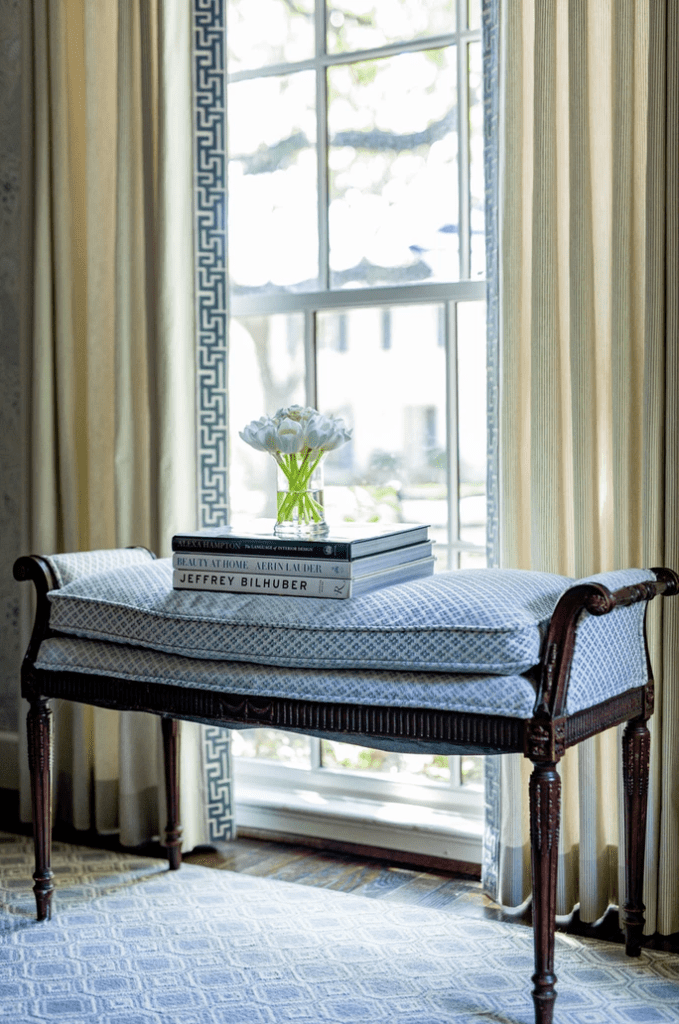
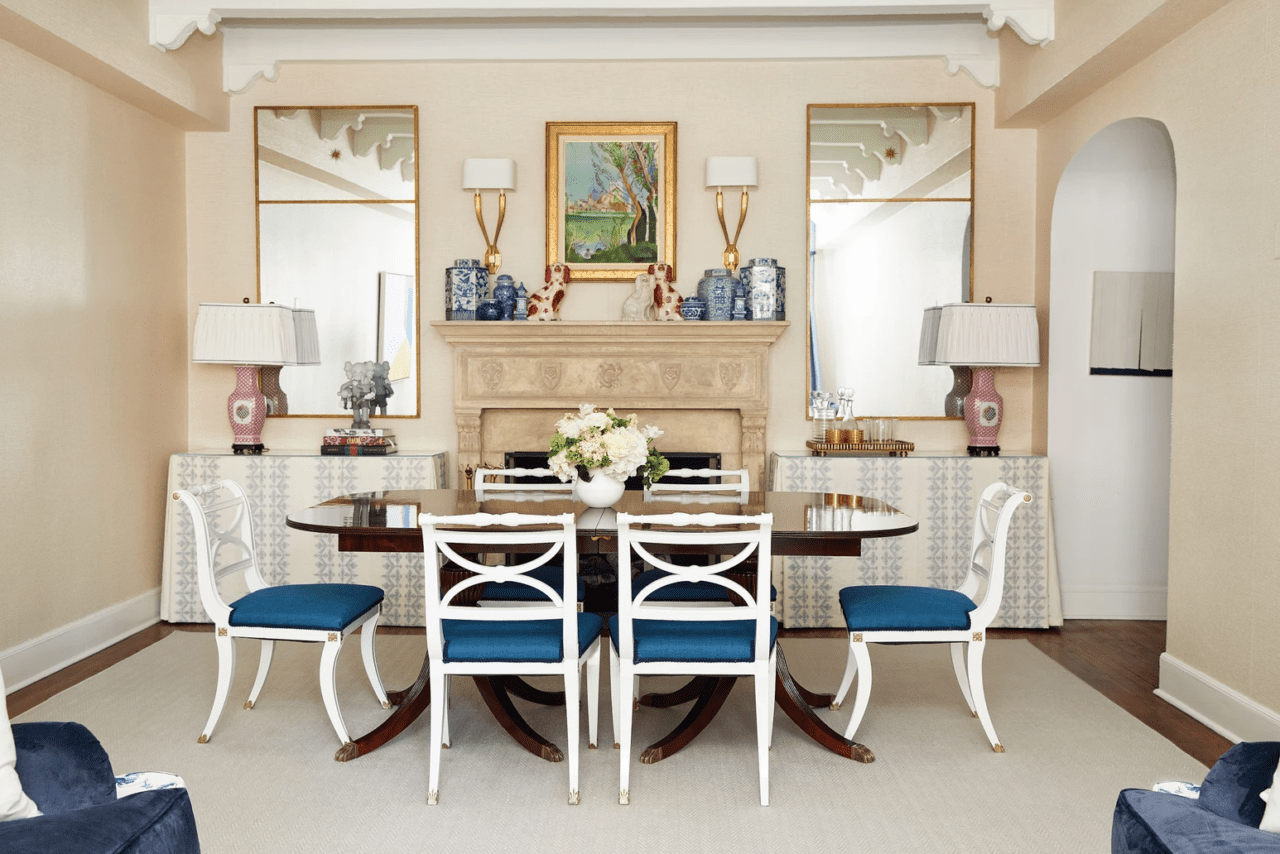
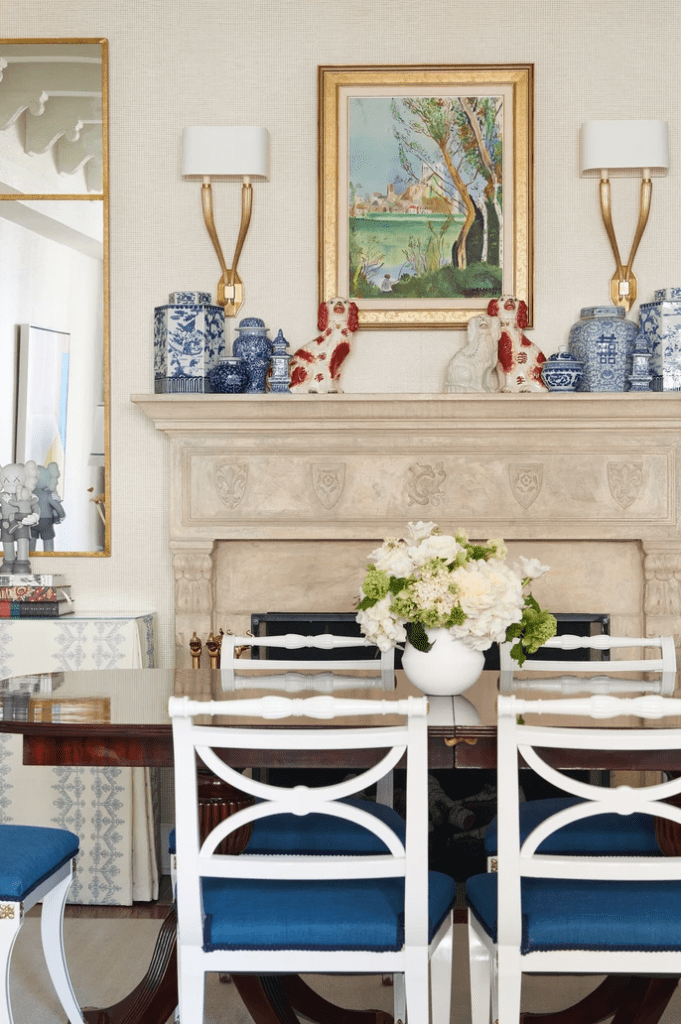
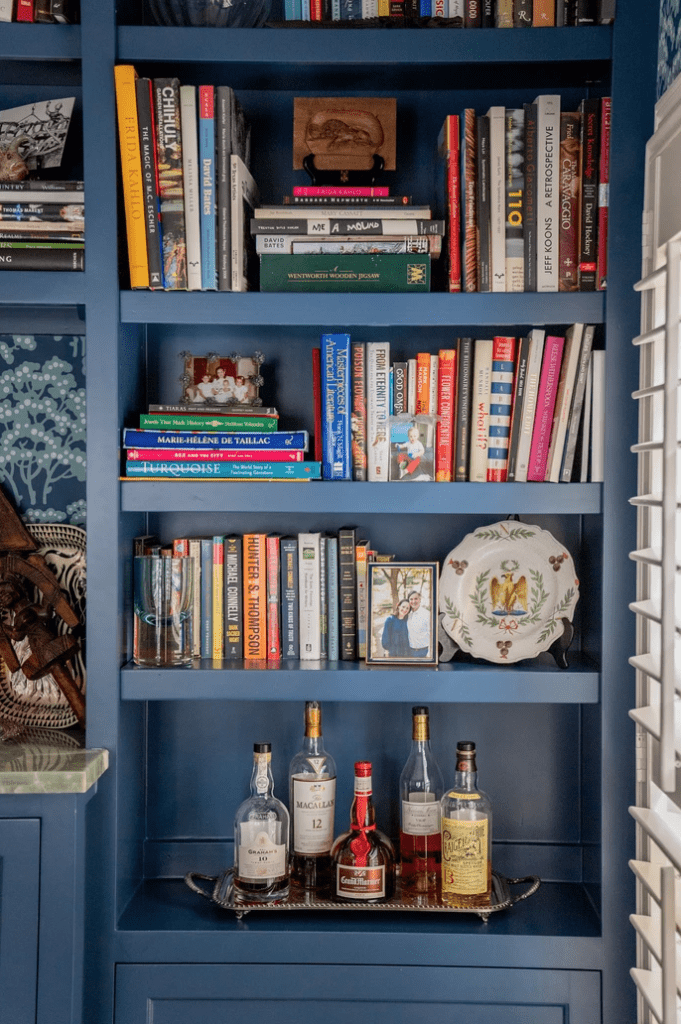
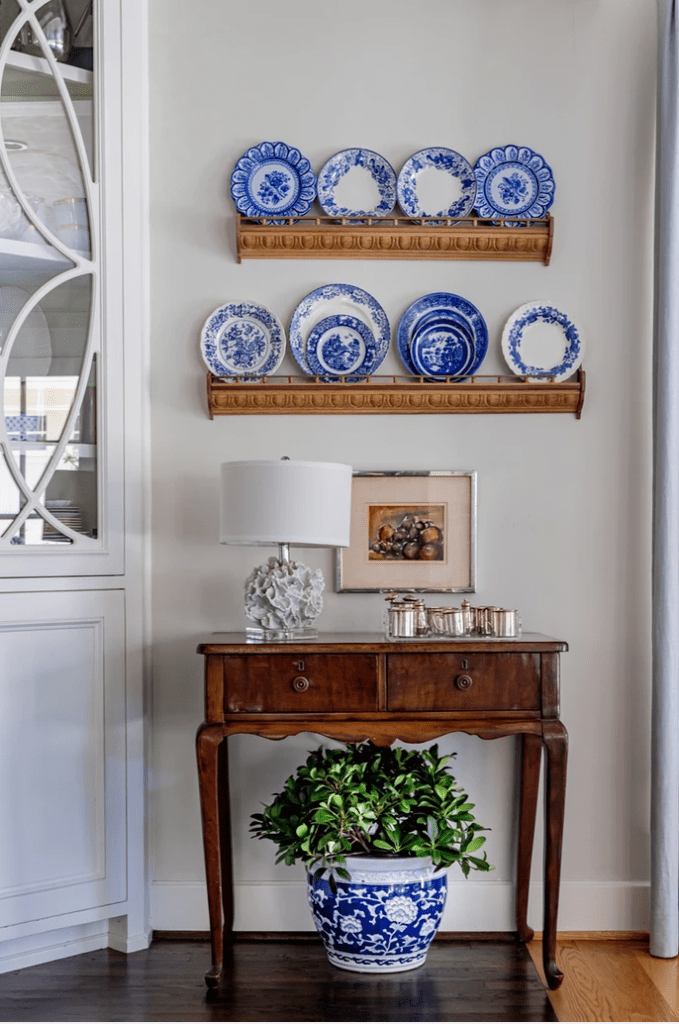
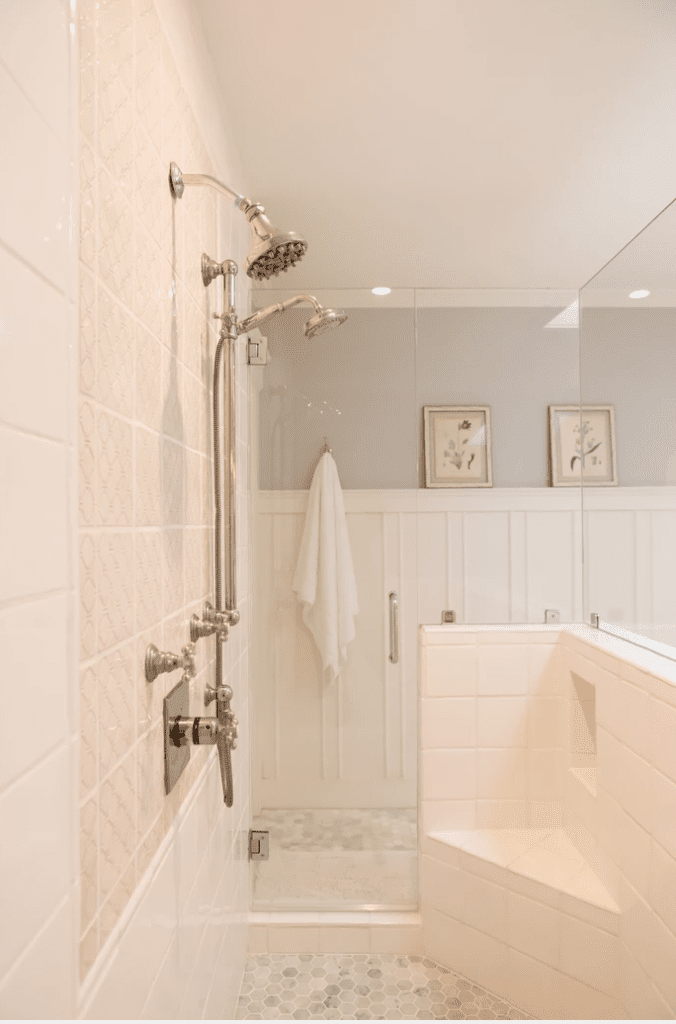
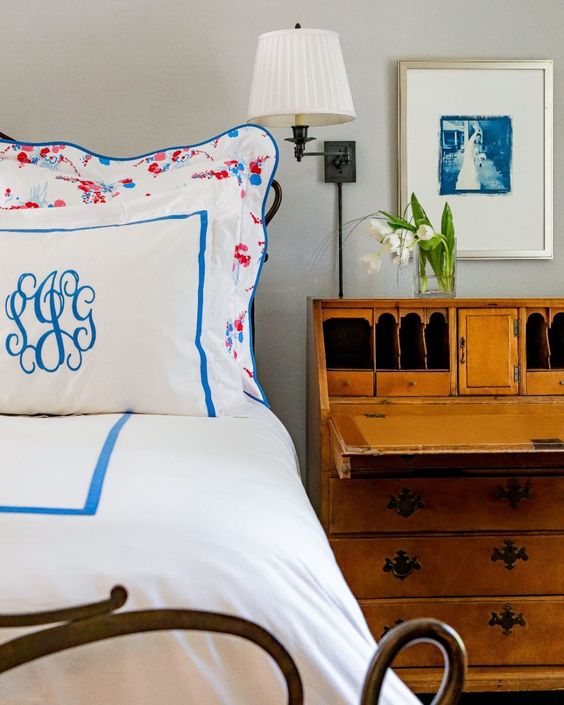
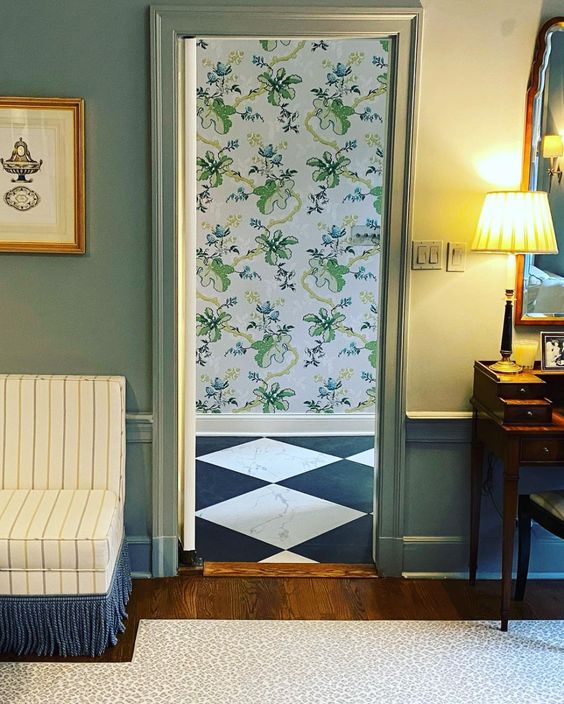
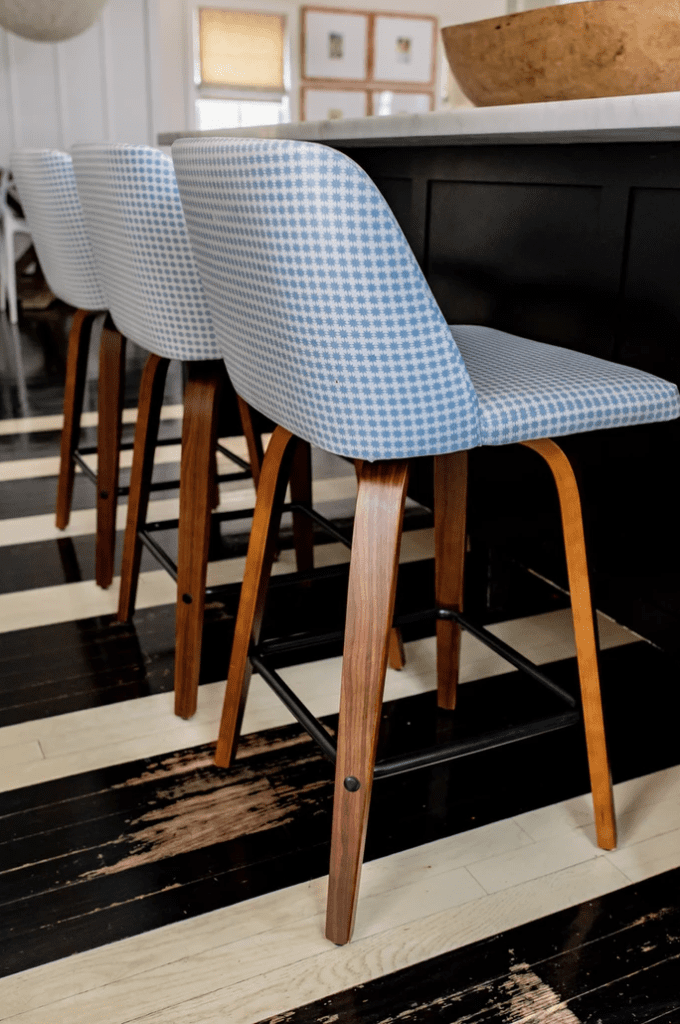
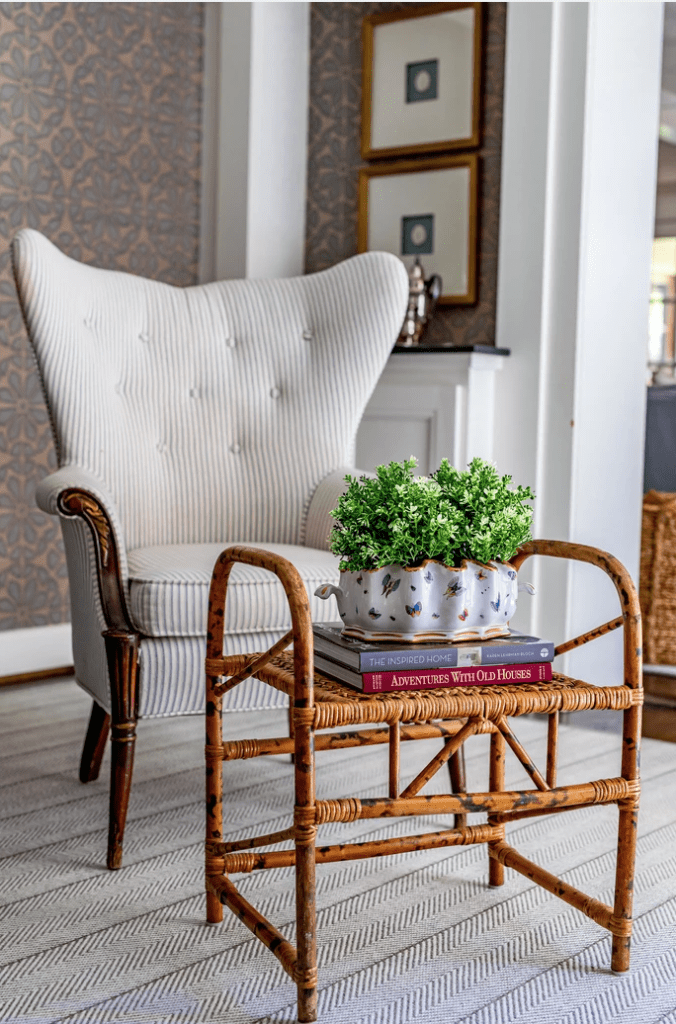
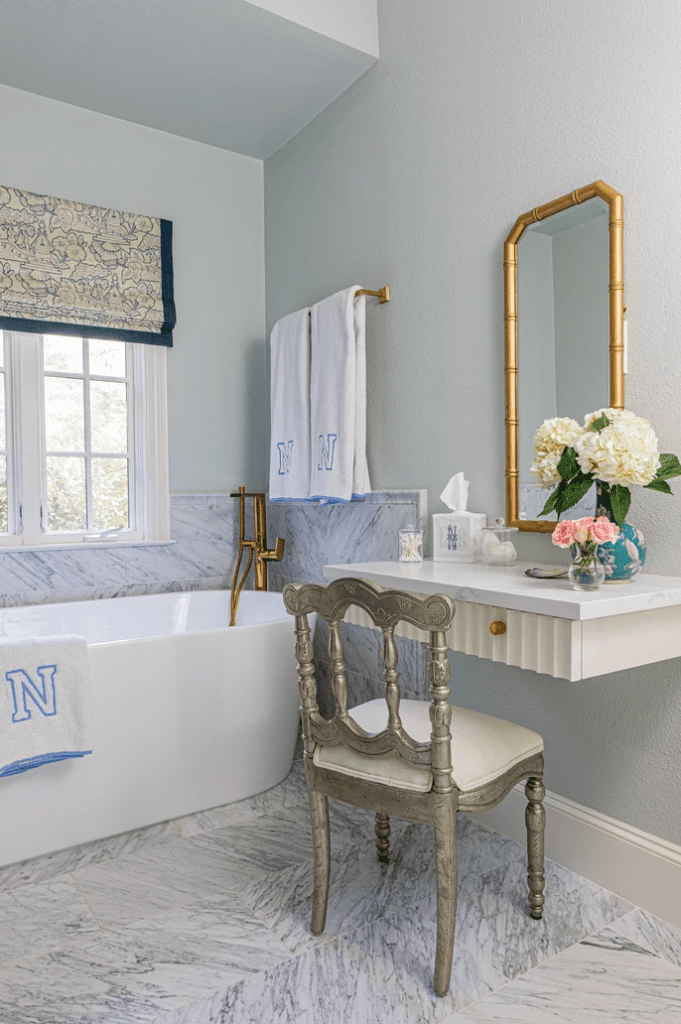
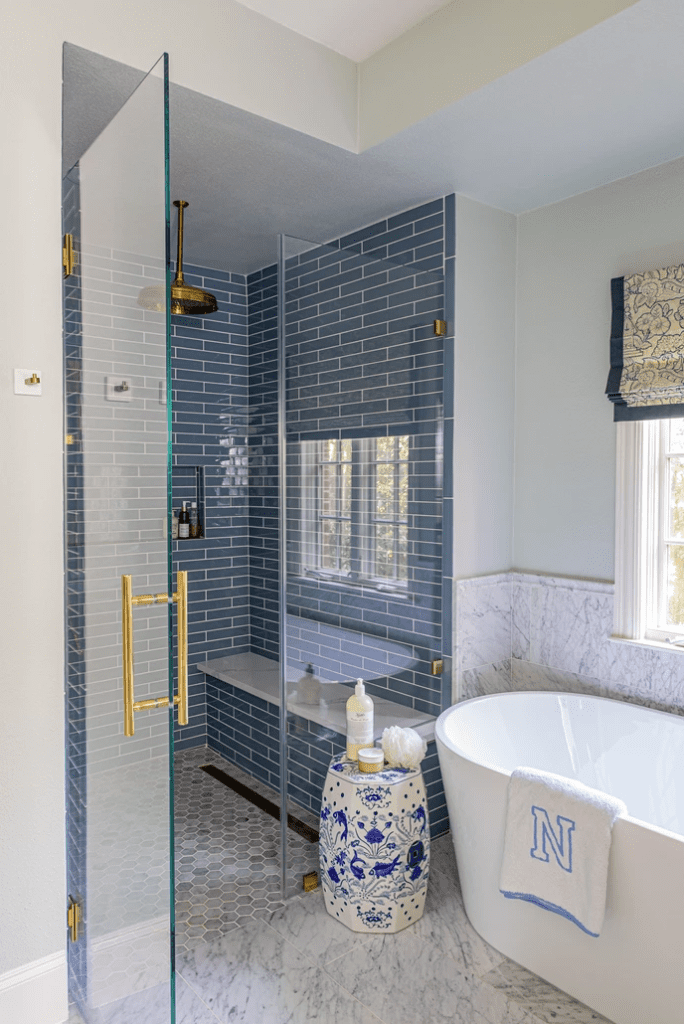
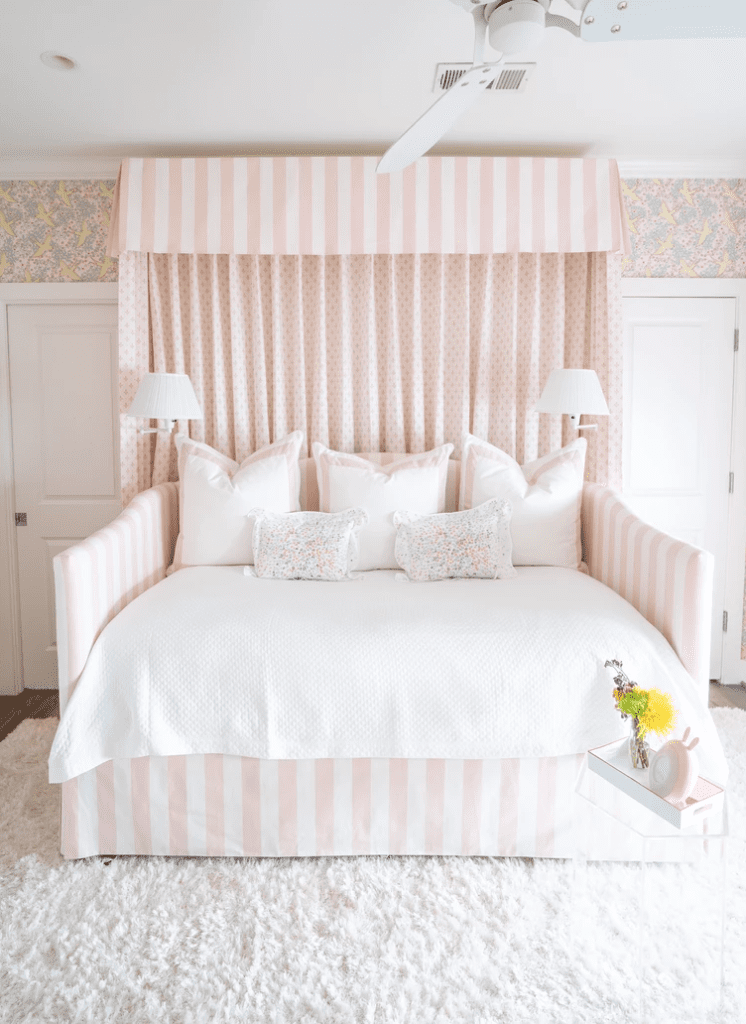
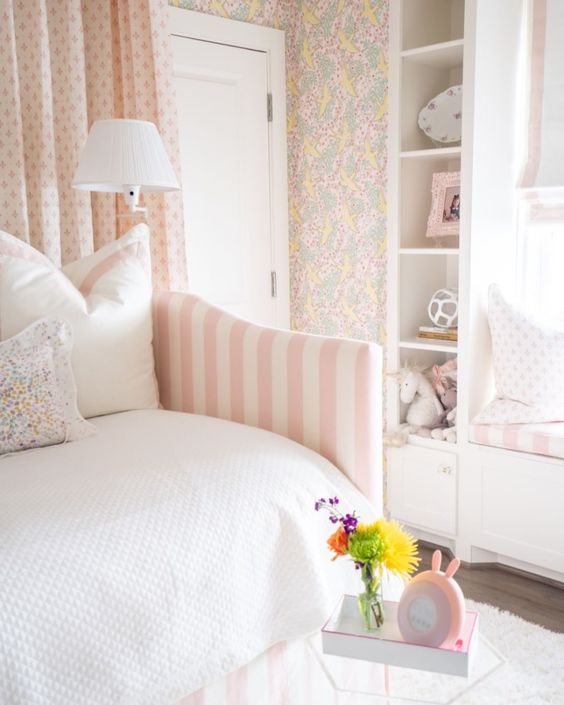
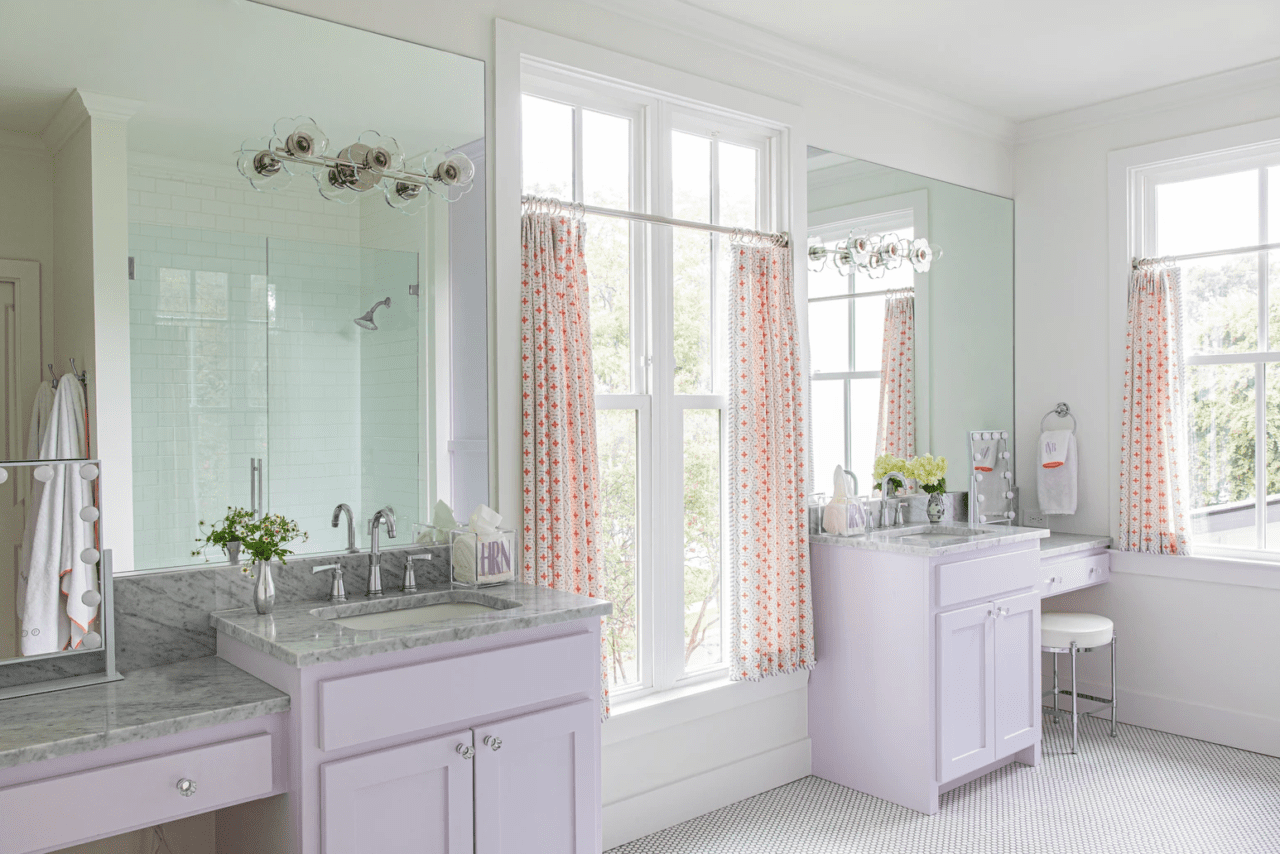
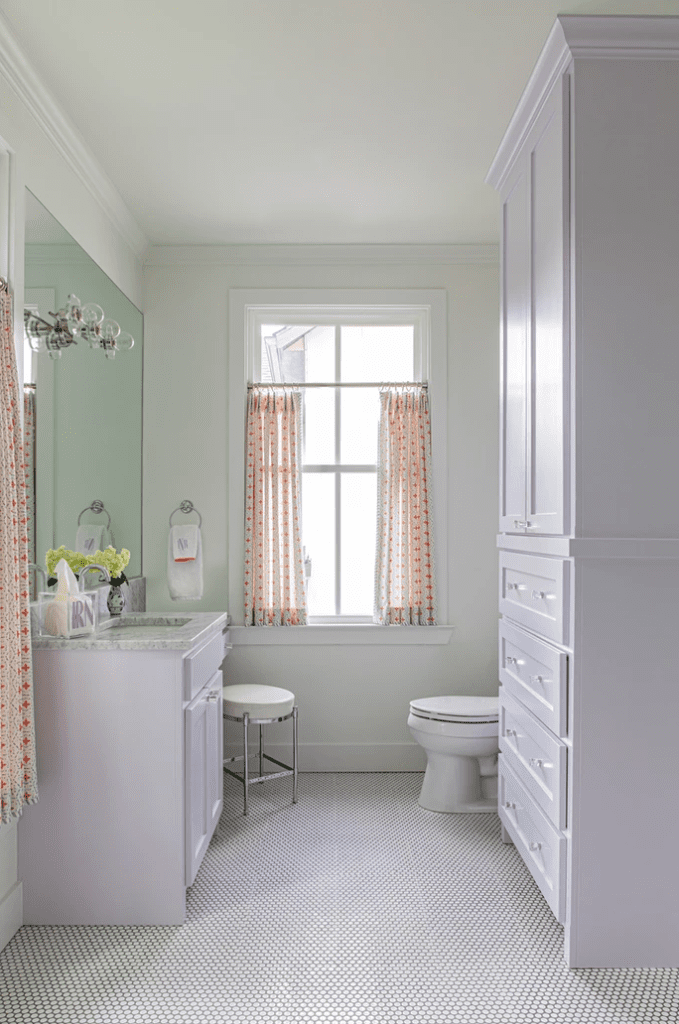
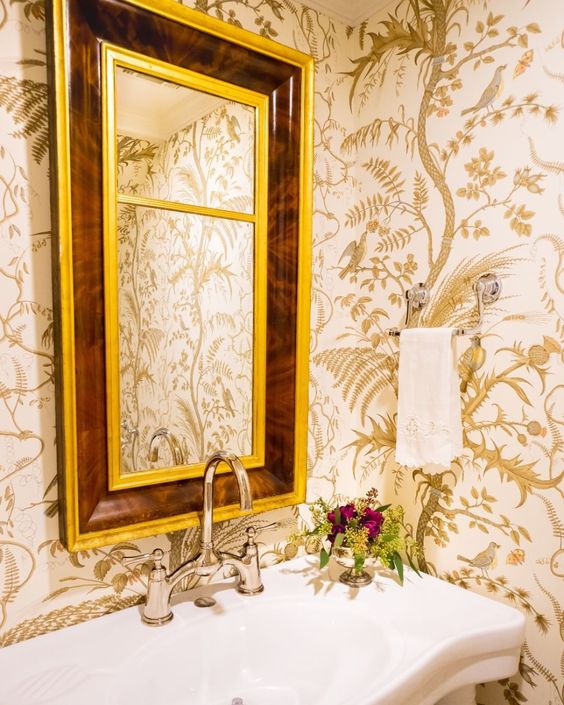
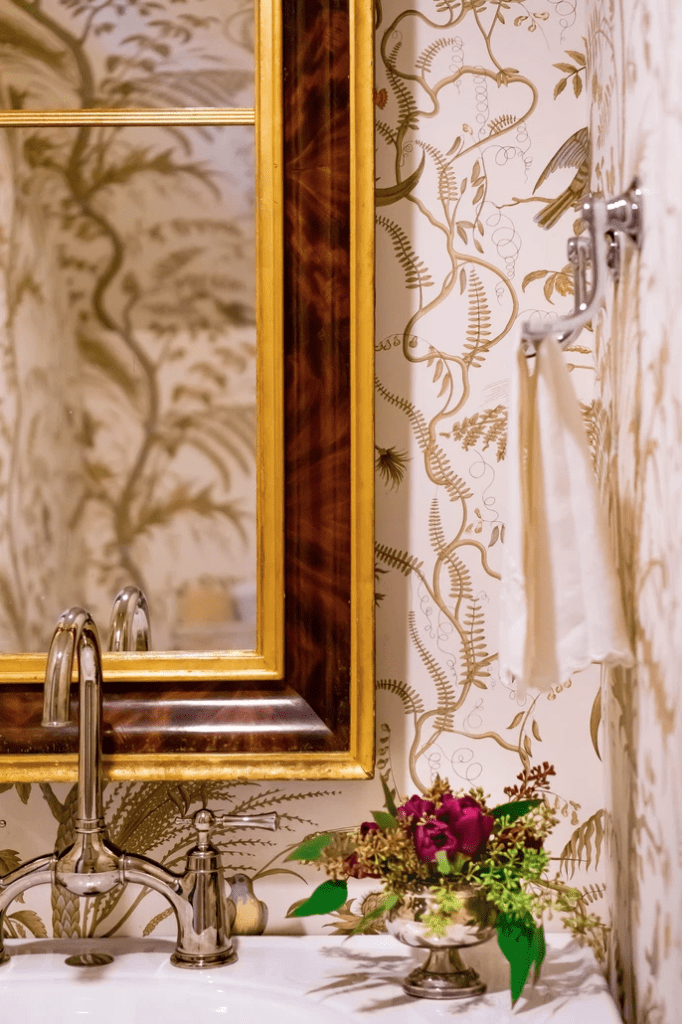
Last summer we featured the work of Atlanta-based designer Lauren E. Lowe, founder of Lauren Elaine Interiors, for a Style Profile Q&A. We are huge fans of her classic, Grandmillennial style and were delighted to see her new home featured earlier this year in House Beautiful! Today, Lauren is sharing some extra, previously unpublished pictures with The Glam Pad!
One of the first things Lauren did was to add a lot of bright white paint and add windows to bring in natural light. She sorted through her previous home’s furnishings, editing and filling in with other pieces she had collected over the years. Lauren layered the rooms with a mix of antiques, vintage furniture, contemporary and traditional art, and antique Persian Rugs. She added lots of color with fun prints and patterns, creating a kid-friendly, Grandmillennial paradise.
Let’s take a tour with photography by Emily J. Followill.
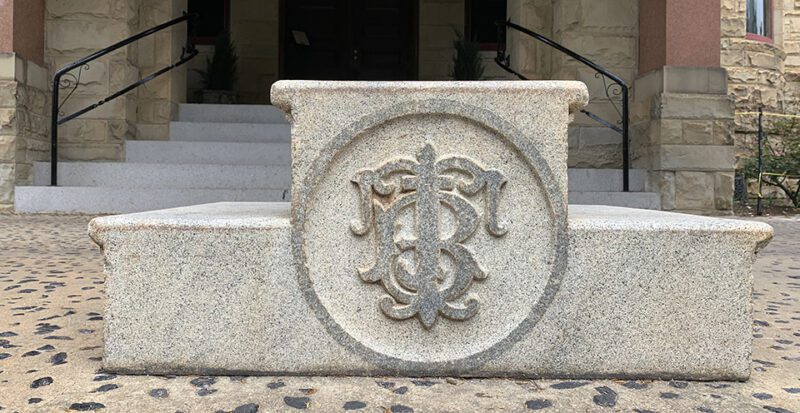
Reese Witherspoon has famously said, “My sheets are monogrammed, so is my silverware and pretty much everything else I own. My rule is, if it’s not moving — monogram it!” From their ancient beginnings to modern times, monograms have played an integral role throughout history.
As early as 350BC, many of the early Greek and Roman coins were marked with the ruler’s monogram as a form of authentication. Royalty and military leaders symbolized their position and influence by using monograms to mark government buildings, identify objects belonging to the ruler in power, authenticate official documents, etc. In the Victorian era, aristocratic families began using custom monograms to mark their table linens, cutlery, and other household goods as a sign of prestige. Soon every household boasted their own form of monogram styles from embroidered monogram letters for noblemen to simple personalized stamps for the lower class.
Today, technology has made monogramming affordable and accessible to almost everyone. While aspiration may still play a role, monogramming is now considered a personal creative expression having very little to do with social position or wealth. Thanks to mass production, they have become ubiquitous. You no longer need to be an artisan to monogram, just plug your initials into the computer and go. This left me wanting something more unique… Something personal I could use that no one else would have. So when I met Nancy Sharon Collins, I immediately knew I simply had to have her create my very own bespoke monogram.
Nancy Sharon Collins is the country’s leading expert on engraved social stationery and founder of the eponymous Nancy Sharon Collins, Stationer LLC. She fell in love with etching while taking a printmaking class as an undergraduate and went on to receive a BFA and MFA in graphic design.
The unfolding field of digital graphic design in the 1990s broke her heart, she says. “Imagine: there I was in my Soho, NYC studio when the methods and procedures, materials and supplies, the business relationships I’d assiduously studied, garnered, and learned developing my career became suddenly obsolete. Whole industries such as typesetting, film photography, film and print retouching, color separating, plate-making, and engraving were literally put out of business by desktop publishing. Sad but true.”
Realizing she had to adapt or perish, Nancy began offering digital graphic design catering to clients such as MOMA, Bergdorf Goodman, Williams-Sonoma, and Clinique. But to save her creative soul, by night she turned to Nancy Sharon Collins, Stationer, specializing in bespoke hand engraved social stationery.
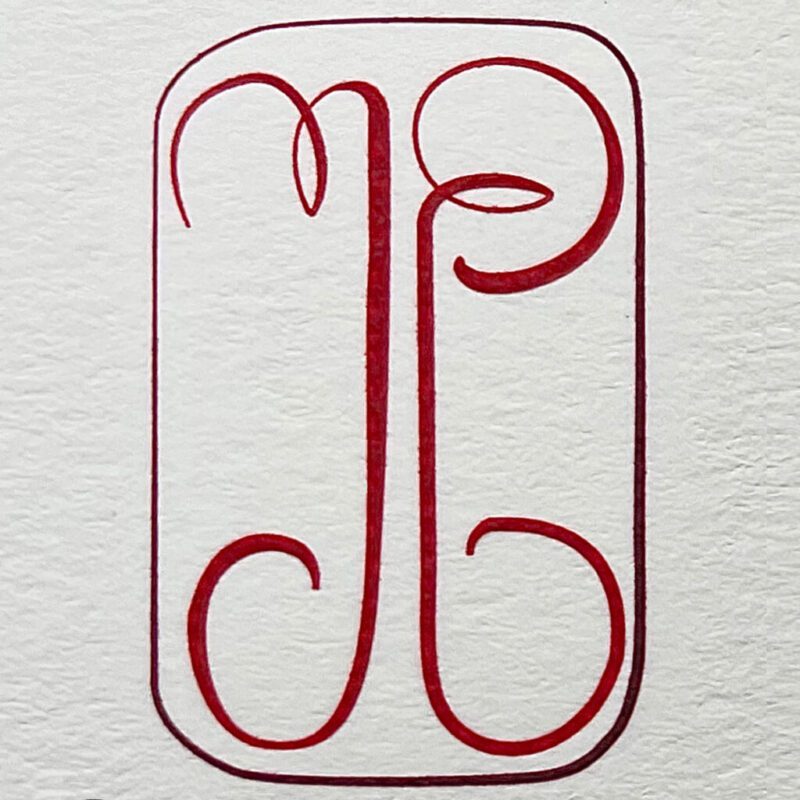
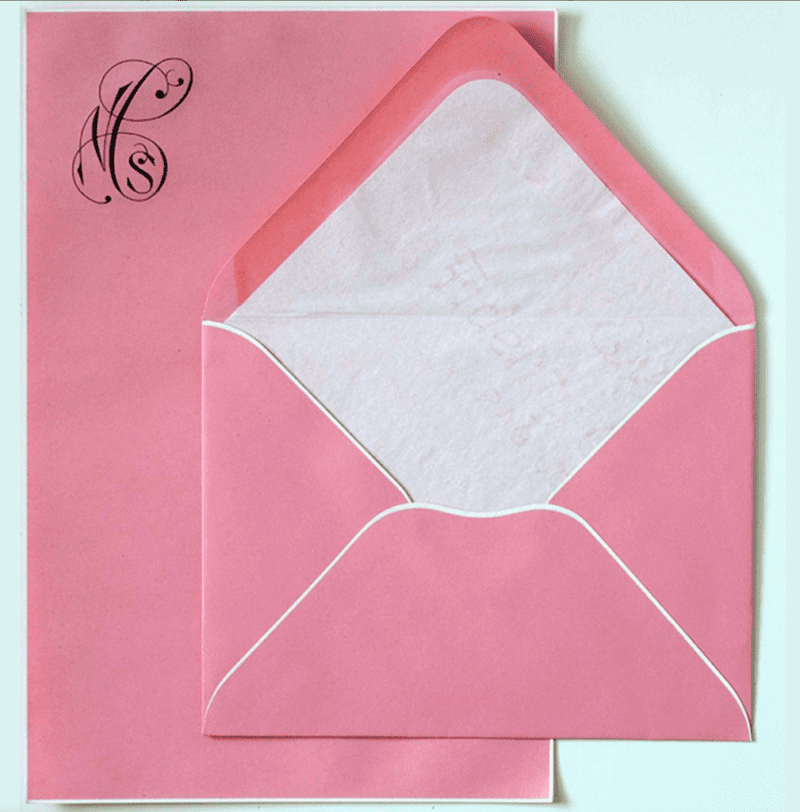
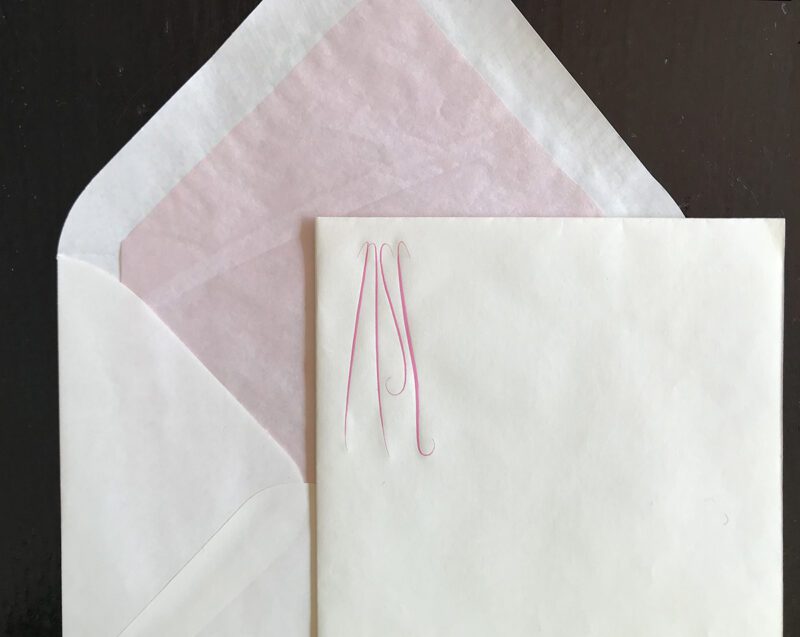
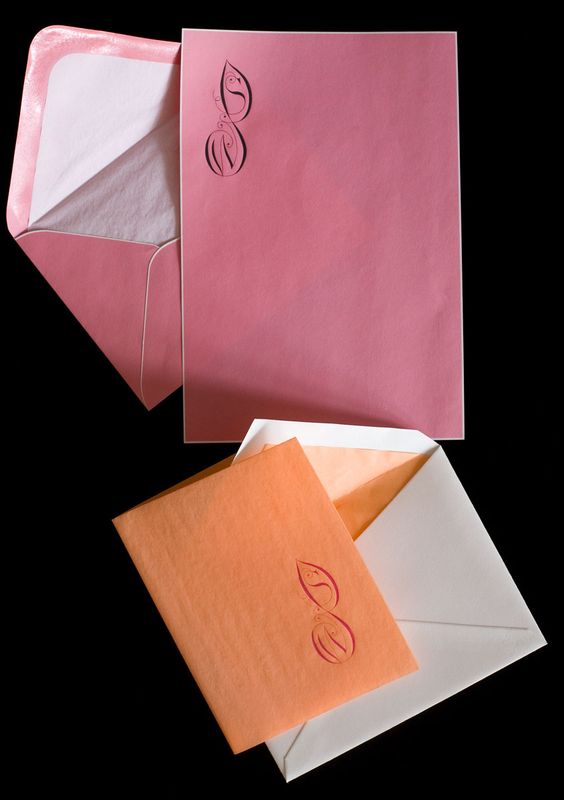
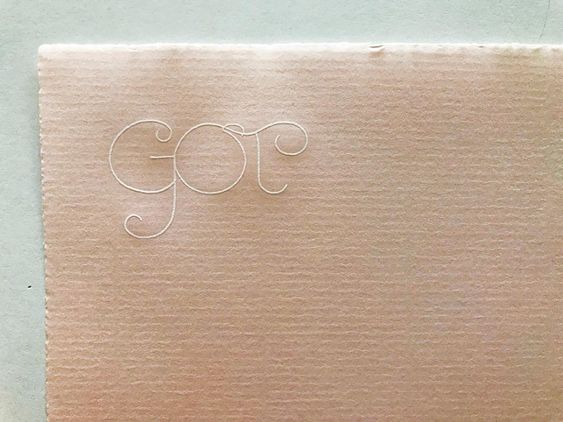
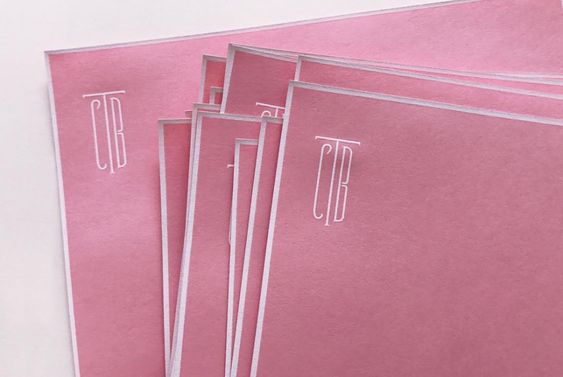
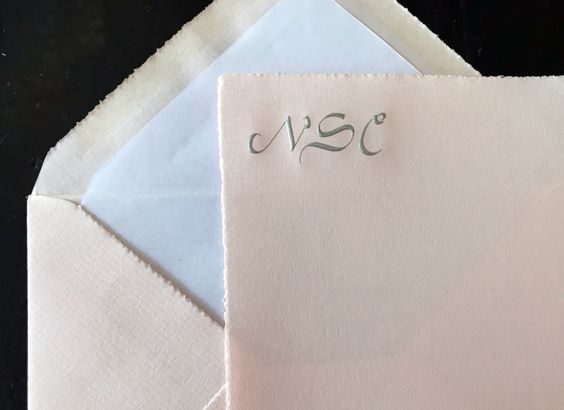
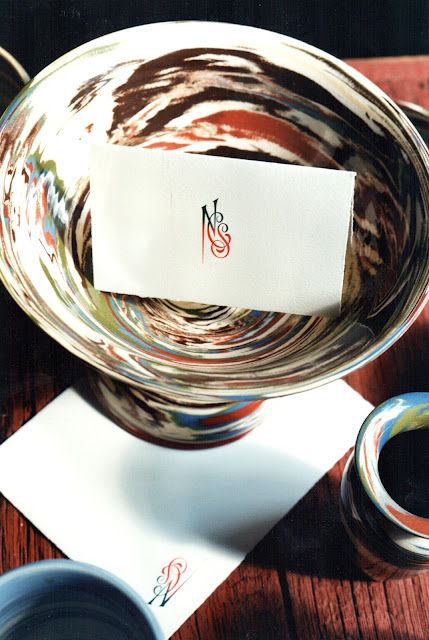
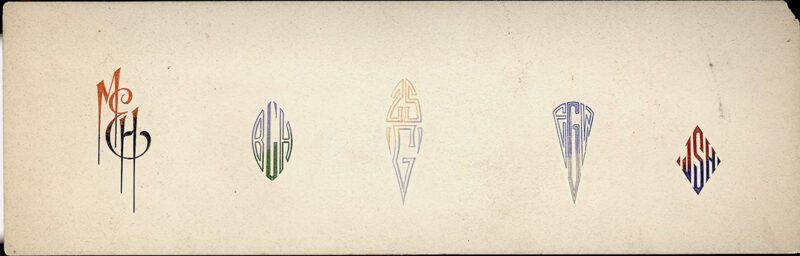
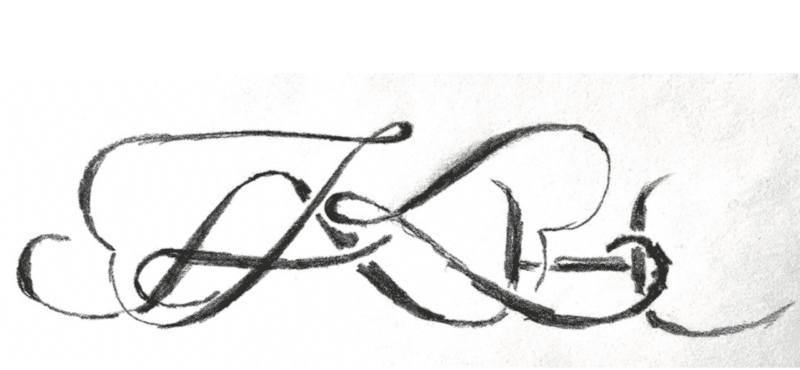
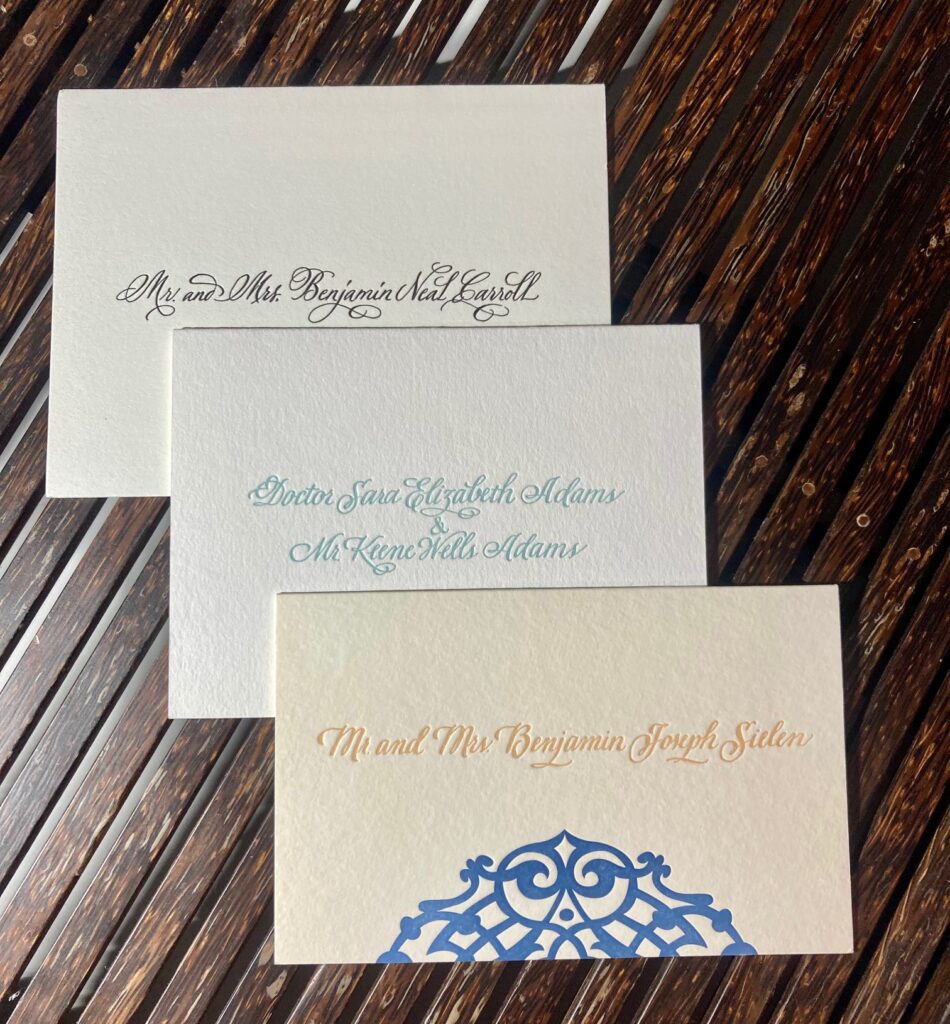
Not only does Nancy create beautiful custom stationery, but she also creates the absolute most exquisite monograms and ciphers handmade from scratch… Literally scratching with a graphite pencil on tracing paper. You can learn more about her highly interactive process here.
Over the years, many fashion labels have created their own monogram of their company initials, such as LV of Louis Vuitton, YSL of Yves Saint Laurent, the mirrored “C”s of Chanel, and Gucci’s double “G”s. These easily recognizable custom monograms are an easy way for fashion houses to brand themselves and differentiate their products from competitors. And custom monograms can now be used to create your own unique brand. Monograms are an increasingly popular branding design trend in 2022. Of course, Nancy offers corporate branding expertise, but in today’s digital, social media-driven world, creating a personal brand is more important than ever. Distinguishing yourself with a bespoke one-of-a-kind monogram is a cutting-edge, yet nostalgic, way to stand out from the pack.
“The idea is that the Bespoke Monogram (from me) is an investment. In time and cost. It should be used for everything,” said Nancy. “Back in the day, it was the one single mark to identify one’s possessions. Artists have one mark that is called an artist’s monogram. Kings and queens and monarchs had and have theirs on everything from saddles to linens to carriage stones! Think napkins and tablecloths and hankies and fine china and silverware and even Hermes handbags… One’s monogram should be the forever mark on everything!”
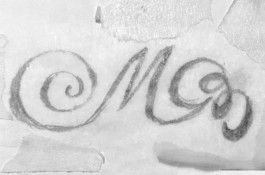
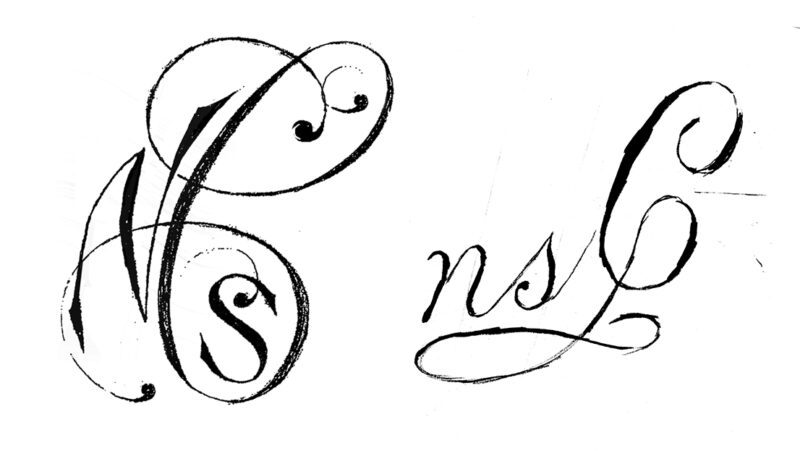
Here is one example from Richmond, VA sent to Nancy yesterday…
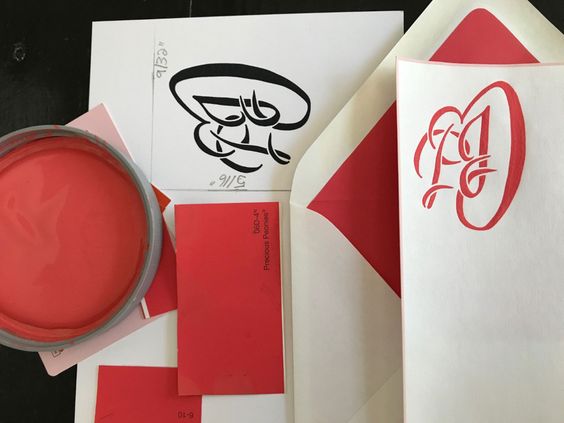
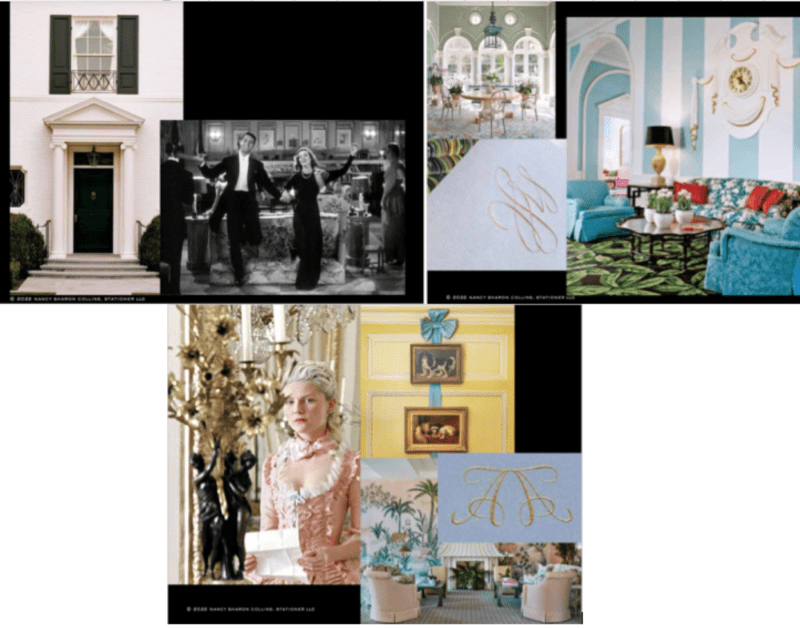
Click here to learn more about commissioning a bespoke monogram from Nancy. And in closing, I am thrilled to share the stunning monogram she made for me, which I simply could not love more! First, here are some mood boards Nancy created after I completed her “13 Questions” exercise.
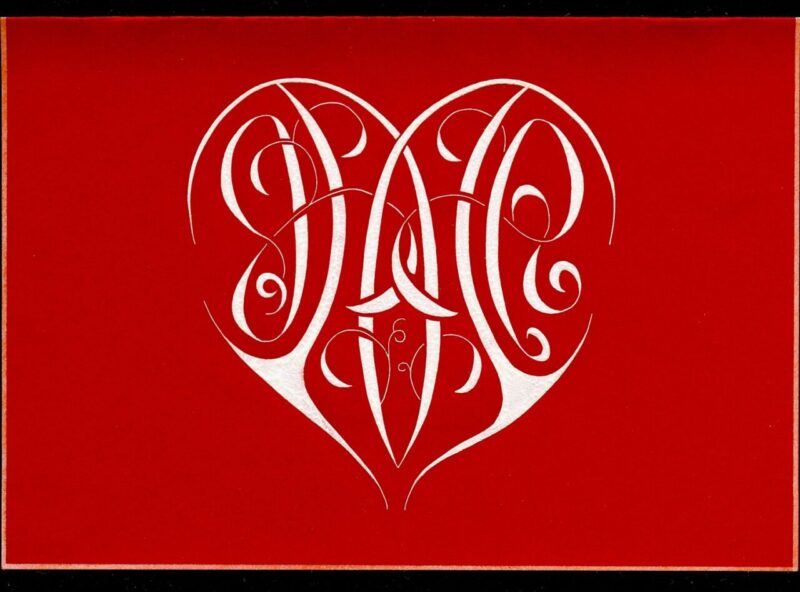
And my gorgeous monogram!! It is truly a work of art, and this just the initial sketch… Next it will be turned into a Vector design graphic, and then engraved upon a copper plate. 🙂 The design was inspired by an Austrian design from the 1920s. I’m obsessed with the “hearts”!
Thank you, Nancy, for creating this treasure for me that I will use on everything for the rest of my life! Having something so beautiful, made just for me, makes me feel like a Queen.
This concludes our six-week letter writing series.
THE GLAM PAD’S LETTER WRITING SERIES
Below is an outline of The Glam Pad’s six-week series on the art of letter writing, and all that is related to the subject…
APRIL 8: Why hand-written letters and fine stationery (and calling cards!) are making a comeback, particularly among the Millennial generation. CLICK HERE TO READ
APRIL 22: An overview of resources for fine stationery. What pieces do today’s letter writing enthusiasts need in their wardrobe and why? CLICK HERE TO READ
April 29: A fabulously fun trend… Vintage stamps! How to begin a collection and use them to personalize your correspondence. CLICK HERE TO READ
MAY 6: Why cursive handwriting is making a comeback, and what you can do to learn or improve. CLICK HERE TO READ
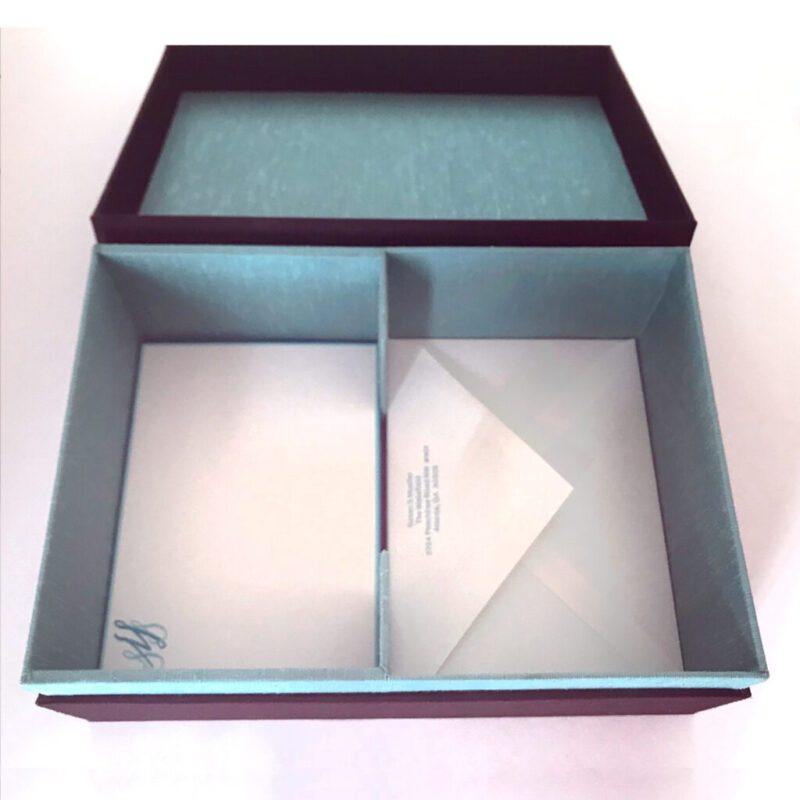
MAY 13: The ultimate in customization – A bespoke monogram and stationery created by Nancy Sharon Collins.
Welcome to TGP Tidbits where we round up the happenings and our musings of the design industry this week.
It is not every day an icon of design shares their insider approach but thanks to Schumacher, industry legend Bunny Williams has revealed her tips, tricks, and favorites on bed making. An often-overlooked art, Bunny shows how to arrange a perfectly coiffed bed all while mixing and matching linens. Recently released through Frederic Magazine’s series Tricks of the Trade, the “bunny” bed comes to life.
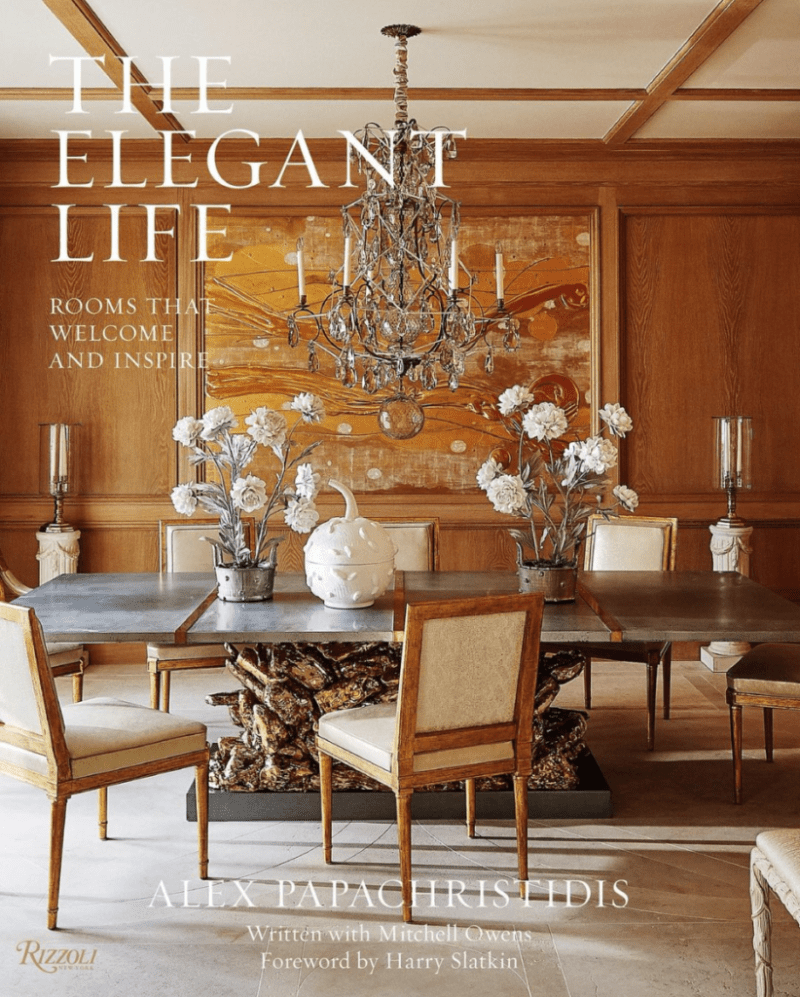
We also loved learning design legend Charlotte Moss’ favorite roses via Veranda. Her top pick, Belinda’s Dream, is our founder Andrea’s favorite too. And if you don’t have it already, we highly recommend Charlotte’s recent book, Flowers… it is a visual feast for the eyes.
May 10th through May 20th NYC x Design will be in full swing. Entering its 10th year, NYC x Design showcases top New York-based artists and designers. Through creative events, parties, and other gatherings, the festival boasts exciting new ideas, products, and concepts. If you seek the pulse of the industry, NYC x Design will be a must.
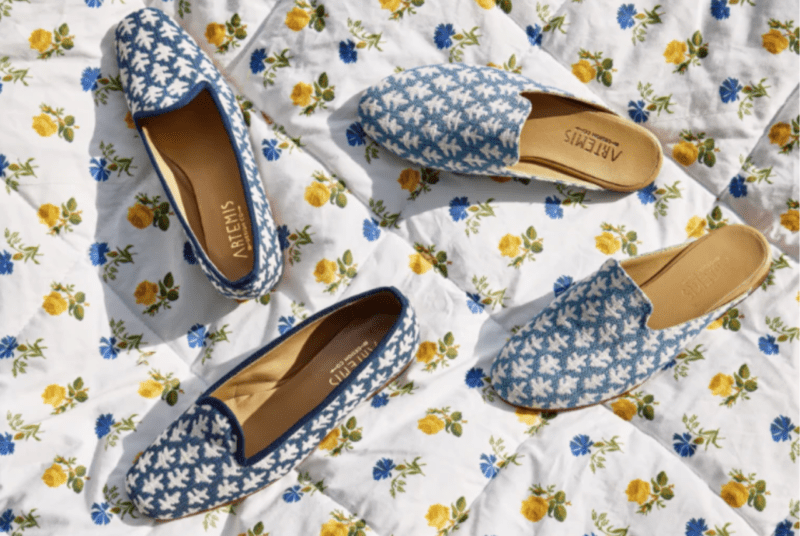
We’re loving the new Sister Parish Design x Artemis collection of shoes and totes. Iconic Sister Parish patterns in ultra durable performance weaves are featured in a very special limited edition collaboration. Click here to shop.
Charleston based design and lifestyle expert Julia Berolzheimer has launched her much-anticipated collection with Pottery Barn, Julia Berolzheimer x Pottery Barn. Each piece perfectly encompasses Julia’s impeccable and effortless style. With superb outdoor pieces, tableware, furniture, and bed linens, the collaboration blends in seamlessly within itself. Each item is ideal for Spring spruce up around the house. We cannot wait to get our hands on every piece!
In a nail-biting race on Saturday evening, the Kentucky Derby has come and gone once again. As much as we loved watching, we adored gawking at the fabulous fascinators and hats much more. The spectacle has us inspired to get back into headwear. Shop some of our favorite hats of the season below.
It’s hard to believe it has been almost three years since my family and I moved back to Dallas after an eight-year stopover in Florida. There are so many incredible interior designers in Big D, and it has been so much fun getting to know them and exploring their portfolios. Today, The Glam Pad is delighted to welcome Sara Johnson, founder of Sara Johnson Interiors, for a Style Profile Q&A. Despite being a native Texan, Sara’s classic style offers a nod to the East Coast, an homage to her family’s roots. She loves blending items, both old and new, and layering in textures, patterns, and colors to create a rich, revived, and edited look. Fun Fact: Sara and I both began college at SMU as journalism majors before making our way into the world of interior design. 🙂 Welcome, Sara!
Sara Johnson
Q: When did you know you wanted to pursue a career in interior design, and what did your career path look like?
A: I have always had an eye for design and architecture throughout my childhood. As a matter of fact, I chose SMU because of its architecture and the architecture and gardens of neighboring homes. Crazy but true! At SMU, I majored in broadcast journalism with high hopes of becoming the next Katie Couric, all the while keeping my dorm and off campus housing perfectly designed. After I graduated, a real estate opportunity arose to flip some condos near SMU, and the success of this endeavor solidified for me that my true love is in home design and decor. I sold homes for many years before forming Sara Johnson Interiors, focusing on design but always keep real estate assets in mind.
Q: How do you define your style and how has it evolved over the years?
A: I have always been very inspired by New England architecture and design. I spent my childhood summers in Stonington, CT, where my grandparents lived. The coastal, Connecticut homes influence my design and always create a sense of “home” for me. My style is comfortable and livable; traditional and a little modern; a mix of old and new; tailored and sophisticated.
Q: How do you ensure that your designs stand the test of time?
A: Design should always stand the test of time. Ideally, I like to incorporate as much existing furniture, artwork and/or collections a client has; especially if it has sentimental value or tells a story. I can easily breathe new life into existing furniture, and the story it tells or the sentiment it brings is what stands the test of time.
Q: Who are your favorite interior designers, past and present?
A: Jeffrey Bilhuber, Alessandra Branca, Andrew Howard
Q: Do you have any favorite go-to paints, wallpapers , linens, artists, etc.?
A: Thibaut wallpapers are usually my go-to as they are a good price point, which my client’s appreciate, there are a lot of choices, and installation is not complicated. For a high-gloss paint, I turn to Fine Paints of Europe. For tried-and-true paint colors, I love Farrow and Ball. Linens I typically keep simple, but a pop of D. Porthault is always fun! And for art, I like to commission pieces by up and coming artists.
Q: Has Covid changed the way your clients live, and what requests are you receiving as a result?
A: Definitely! For a long time, “open concept” living areas has been preferred, but with so much togetherness during COVID, clients now appreciate more defined and intimate spaces. And, not surprisingly, the home office is becoming a must have.
Q: What are some of your favorite collections and treasures within your own home?
A: My great-grandmother’s Baccarat chandelier that we transported from Connecticut and resized to fit in my dining room; a collection of sterling silver baby cups that were mine and my boys’, artwork we purchased from a local artist in Taos, NM, where we used to own a mountain home; and our beautiful wrought iron bed that we received as a wedding gift from my parents.
Q: What are 5 everyday luxuries you could not live without?
A: Down filled pillows, a steam shower, a turfed backyard so no more muddy shoes from my boys, Nest thermostat, and Amazon.
Q: When you aren’t busy designing, what do you enjoy doing in your free time?
A: Estate sales and treasure hunting, afternoon naps, and watching my boys in their sports.
Sara’s beautiful 1930s Highland Park home she and her husband lovingly restored.
Thank you, Sara, for joining us today! Such a beautiful, timeless, and inspiring portfolio. To learn more about Sara Johnson Interiors, please visit sarajohnsoninteriors.com and follow @sarajohnsoninteriors on Instagram for ongoing inspiration.
In the first installment of our series on letter-writing, I made quite the confession. I do not know how to write in cursive. Much to the shock and horror of those my elder, I was never taught. A misfortune of modern schooling, cursive is no longer a taught subject and is even looked upon as passe. I suppose it was once imagined children of my generation would never need to use a pen and paper. Oh, l’ironie!
Throughout my childhood and teenage years, this posed no issue. My fingers are quick as lightning on a keyboard, and I can troubleshoot just about any technological malfunction. Now in my early adult years, I am utterly embarrassed by my penmanship. I recall the exact moment in which I realized the profound impact of my poor script. In the early days of my career, I was an intern at John Rosselli & Associates. The holidays were quickly approaching, and I was tasked with penning each Christmas card to be sent around the globe to various industry leaders and patrons alike. My stomach dropped and a sweat overcame my entire being. Giving it my all and many a deep breath I inscribed the first few notes. They were pitiful! With one glance from my supervisor of my grisly script, I was pulled from the chore.
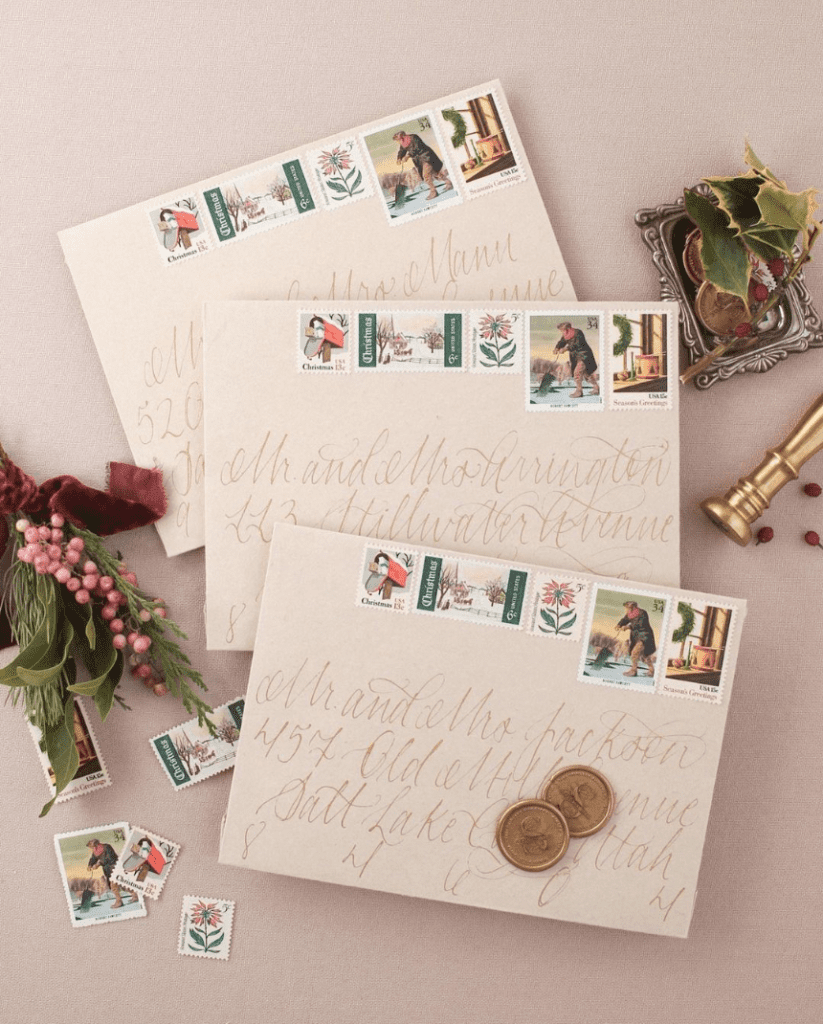
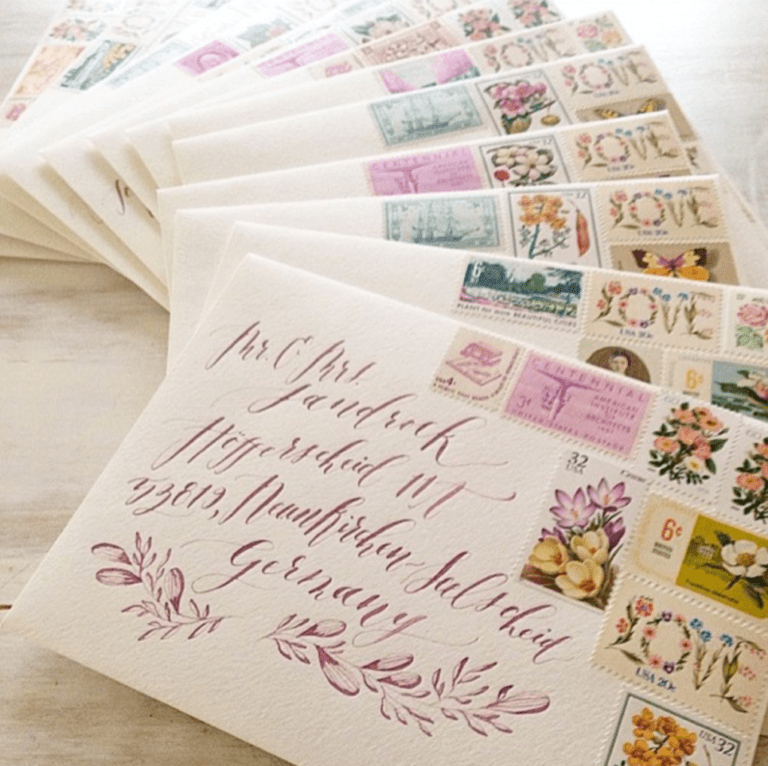
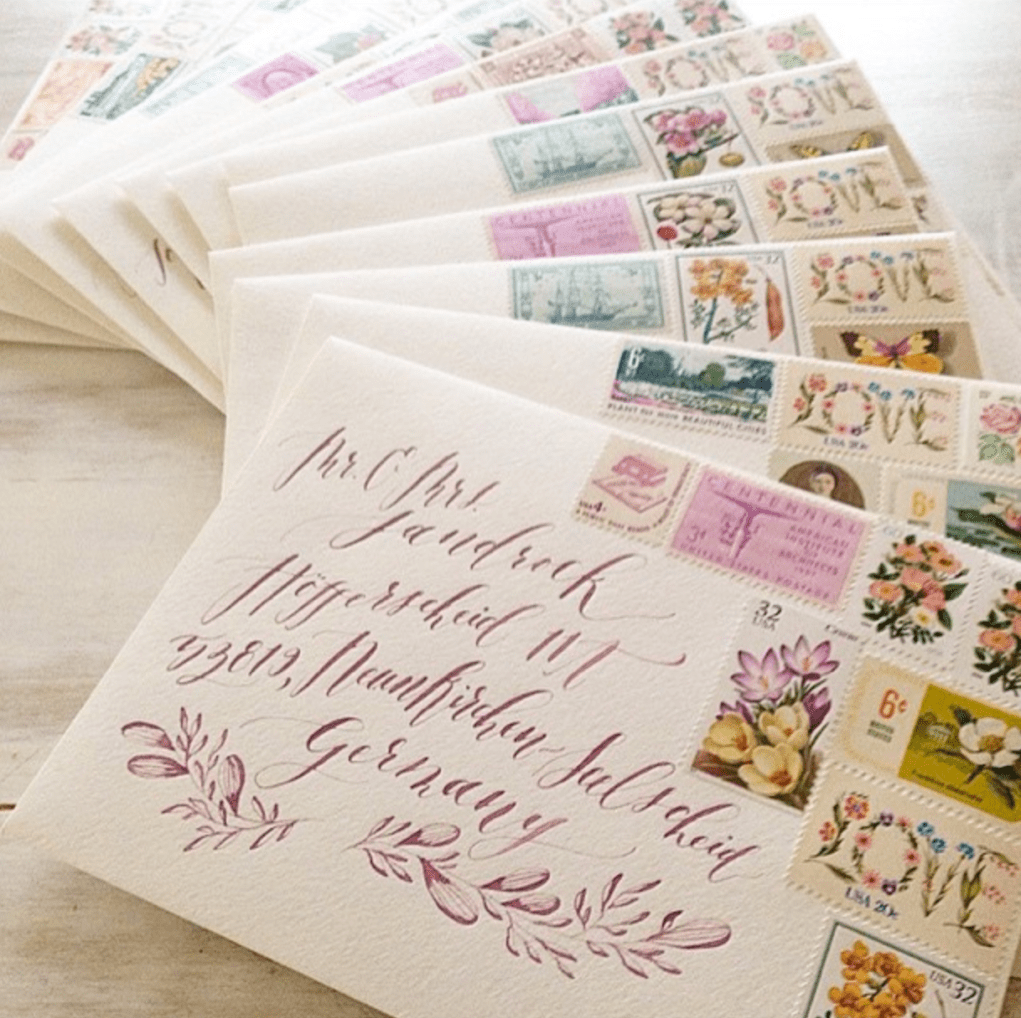
image credit: @inkandpressco (learn more about the popularity of vintage stamps here)
Since this moment I have made a fierce point of improving my penmanship. With my newly found gravitation towards letter writing and the resurgence of its use, my efforts have rendered beneficial. Altering one’s handwriting and acquiring a cursive skillset is no easy task.
Through my assiduous attempt at improving my longhand, I have picked up a few tricks. Take a peek at my top tips…
If you are a young adult like me who never learned cursive or maybe, you seek an improvement I encourage you to print out a stack of children’s letter trace worksheets. They are a godsend.
Repetition is key! It may seem abecedarian to repeatably pen the letters of the alphabet, but this is the progress that engrains muscle memory. I now find myself writing out each letter on scrap paper or in my notebook while on the telephone.
Find a style of cursive that captures your eye and adopt it. Over time your hand will adjust and it will become your own.
If I have not yet convinced you to pull out a pen and a pad of paper, then let’s turn to cursive expert Younghae Chung of Logos Calligraphy. Younghae is the author of Classic Calligraphy for Beginners (pre-order now) and is a highly sought calligraphy and cursive teacher with nearly 120K followers on Instagram. The Glam Pad had the good fortune of connecting with Younghae for a Q&A, and she is here to answer our burning cursive questions…
Welcome, Younghae!
TGP: Please tell me about your mission to keep cursive alive, and why it is important.
Younghae: “Handwriting is an imprint of the self on a page” – Dr. Rosemary Sassoon
Although modern technology is increasing and rapidly growing in our society today, I believe it cannot replace the value and benefits of handwriting. Studies have linked handwriting to fine motor skills, brain development, creativity, composition, and more. As a mom of 3 boys, not only have I personally seen these benefits in teaching cursive to my kids, but I find that cursive can be enjoyed through ALL generations (children, parents, grandparents).
I recently received a message that said “She (a middle school student) was telling me how she loves handwriting notes because, in middle school, everyone uses laptops”. Perhaps with the decline in teaching cursive in schools, it has also piqued a greater interest in the younger generation!
TGP: What do your clients typically seek to gain from your services?
Younghae: Currently, I offer online calligraphy courses, resources (downloadable workbooks, practice pads), and workshops to help promote and share my love for penmanship and arts.
Since 2016, I’ve had the opportunity to teach thousands of students ranging from their 20s to 70s from all over the world. On occasion, I will work with clients and brands to offer custom commission pieces.
TGP: How does one who only knows print begin? How about someone who knows cursive but is rusty and wants to improve?
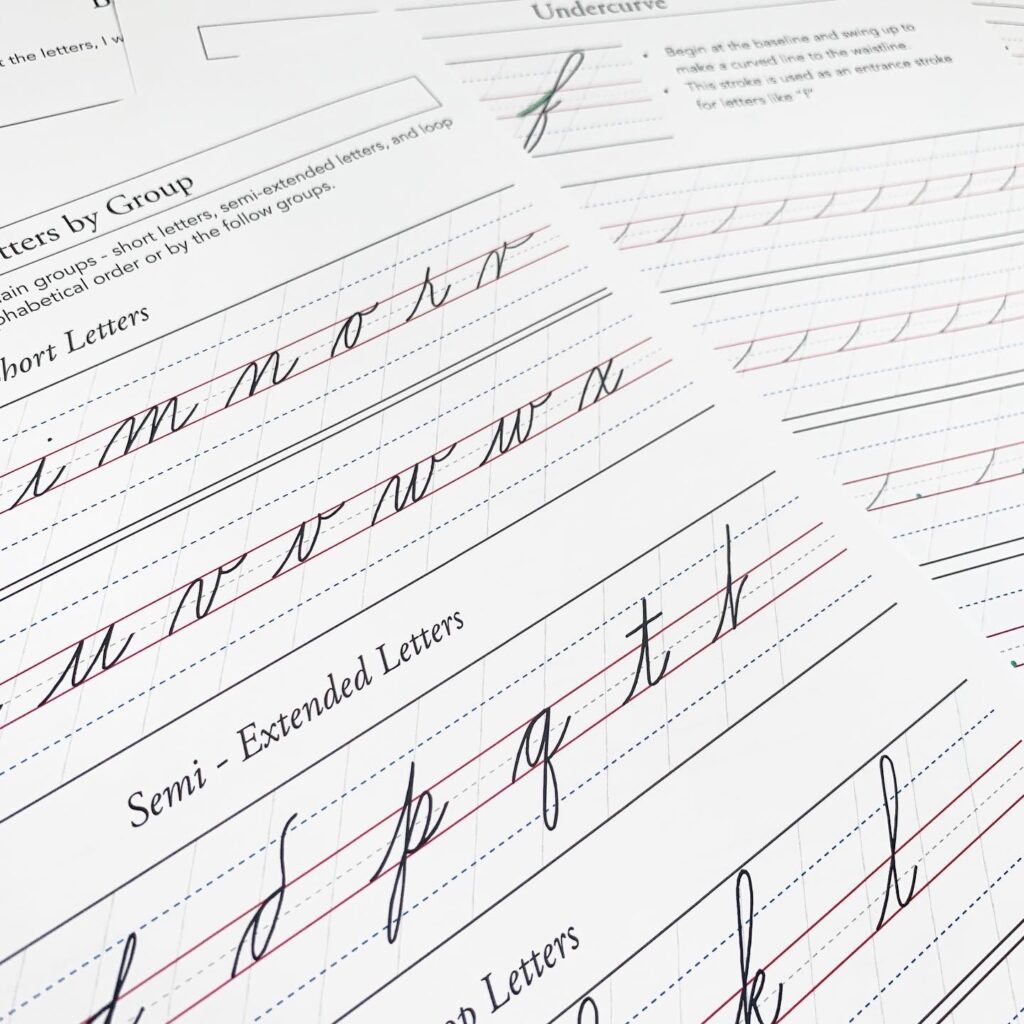
Younghae: Whether you are an absolute beginner or want to improve your cursive, you can get started now with my cursive digital workbooks. These extensive self-study cursive workbooks include an introductory guide (history of cursive, basic strokes, exemplar, how to use guide sheets), 60+ pages of traceable sheets with instructional notes to guide you through the letterforms and practice words/numbers.
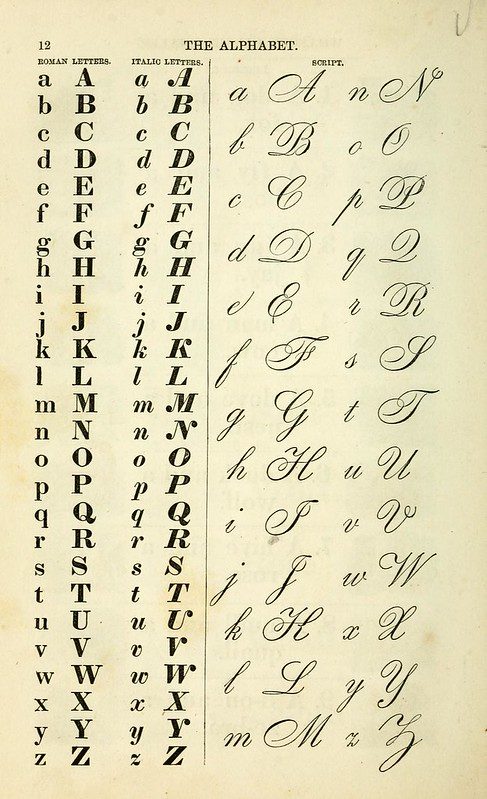
*Note – The cursive letters that I teach are a simplified form of Spencerian and were developed by Austin Norman Palmer in the late 1800s. The letters will be on a 52-degree slant with a 30-degree connective slant. Because the letters are similar, learning cursive will be a great springboard to learning Spencerian.
TGP: How do you decide between which course to take – cursive, Spencerian, or Copperplate?
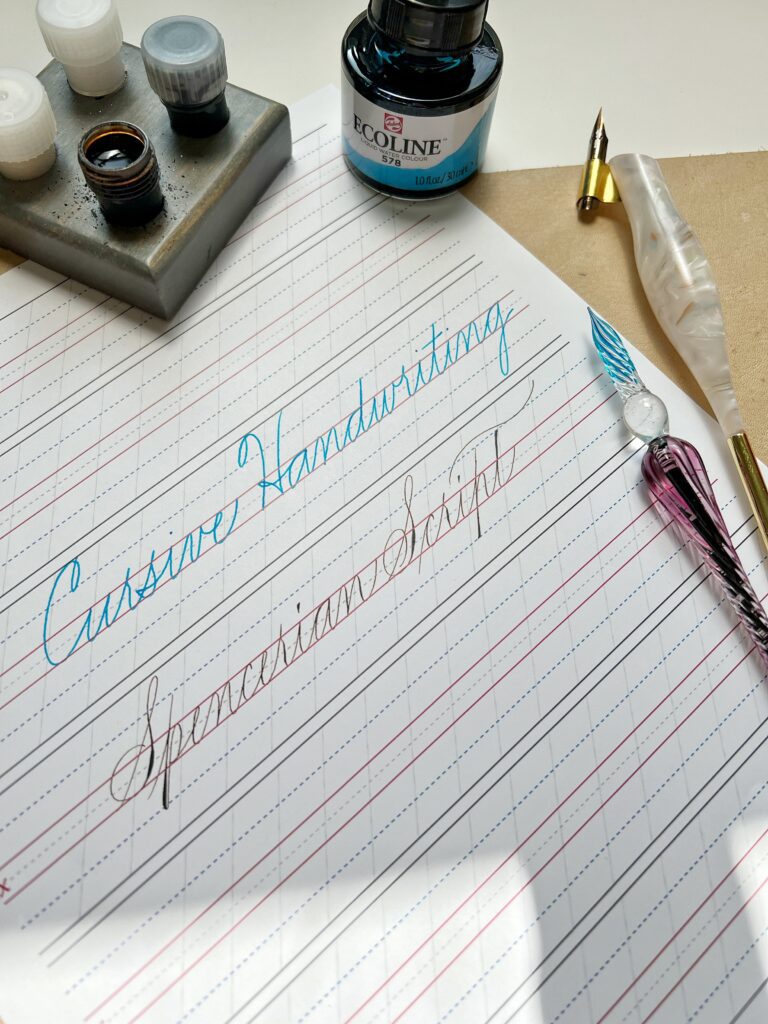
Younghae: Cursive is a monoline script that can be written with any writing tool (pencil, pen, marker, fountain pen, glass pen) whereas Copperplate/Spencerian are pointed pen shaded calligraphy scripts. With Copperplate/Spencerian, we will be writing with a metal, pointed, flexible nib to create beautiful thicks and thins.
Comparison between Cursive & Spencerian, image credit: Younghae Chung
I would encourage you to look at each one and see what script you are drawn to! Copperplate/Spencerian will have a slightly bigger learning curve if you have no experience writing with a pointed nib.
TGP: Which course would you recommend for someone who simply wants to improve their letter/correspondence writing skills, and what pens/tools do you recommend?
Younghae: If you want to improve your handwriting for correspondence, I encourage you to begin with cursive! I recommend either a 0.5 or 0.7mm mechanical pencil or gel pens to start.
Thank you Younghae for your expertise. And now, get those pens moving!
x Natalie
Side Note: There is good news that in many states across the U.S., cursive is experiencing a resurgence in the classroom. If you are interested in further explanation as to why cursive was eliminated from schools, the arguments for and against, and what is being done to bring it back, Reader’s Digest published an excellent primer in March 2022, which you can read here.
Please tune in next Friday for our final installment of our six-week series on letter-writing!
Below is an outline of The Glam Pad’s six-week series on the art of letter writing, and all that is related to the subject… Stay tuned next week as Natalie shares tips on cursive handwriting!
APRIL 8: Why hand-written letters and fine stationery (and calling cards!) are making a comeback, particularly among the Millennial generation. CLICK HERE TO READ
APRIL 22: An overview of resources for fine stationery. What pieces do today’s letter writing enthusiasts need in their wardrobe and why? CLICK HERE TO READ
April 29: A fabulously fun trend… Vintage stamps! How to begin a collection and use them to personalize your correspondence. CLICK HERE TO READ
MAY 6: Why cursive handwriting is making a comeback, and what you can do to learn or improve.
MAY 13: The ultimate in customization – A bespoke monogram and stationery created by Nancy Sharon Collins.
Welcome to The Glam Pad’s first edition of TGP Tidbits where we round up the happenings and musings relevant to the design industry each week…
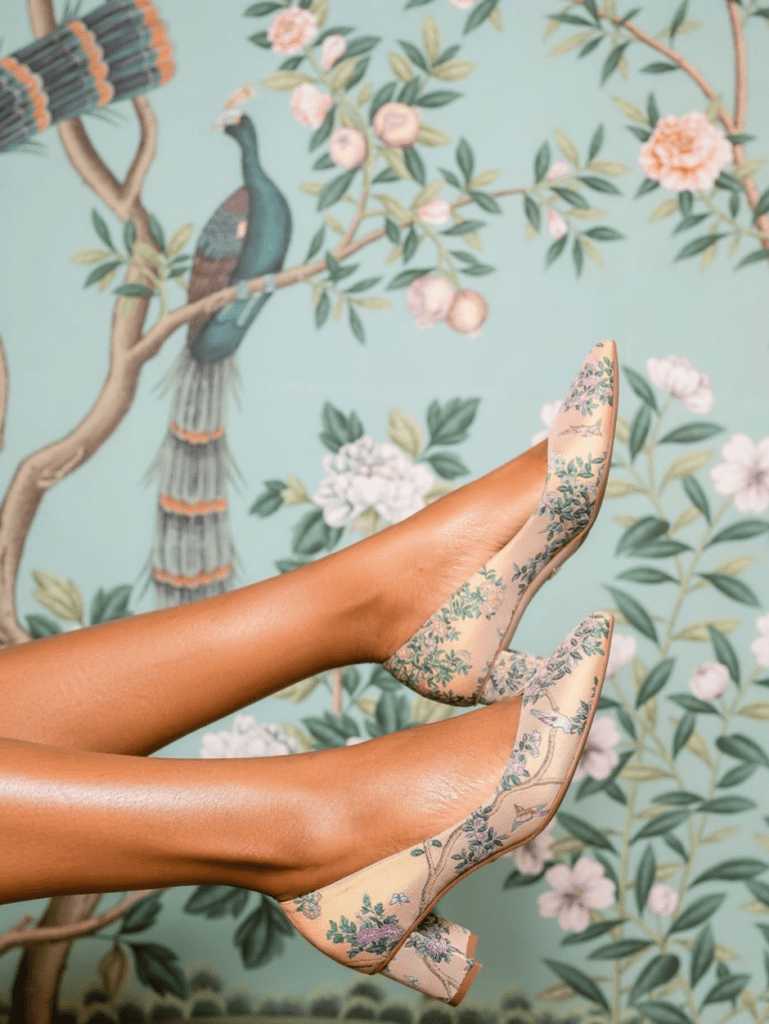
Sarah Flint and Gracie have collaborated to create a match made in heaven…. the Sarah Flint x Gracie collection of shoes showcasing exquisite Chinoiserie patterns from Gracie. There are four styles and two colors available: gold and peacock. Shop quickly, because these are selling FAST!
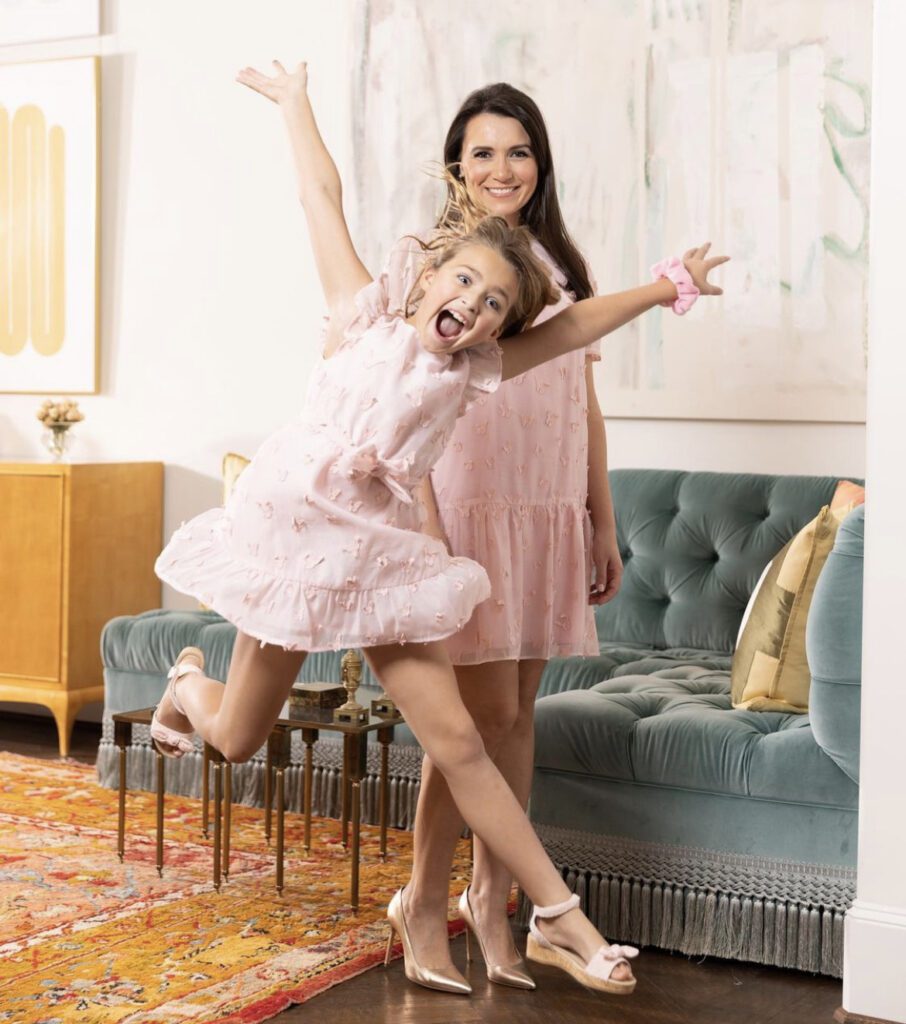
Kimberly Schlegel Whitman unveiled her new partnership with Dillard’s this week. To no surprise, we would like one of everything. This collection boasts classically feminine silhouettes in stunning floral prints and springy hues for women and girls. Just in time for the warming weather!
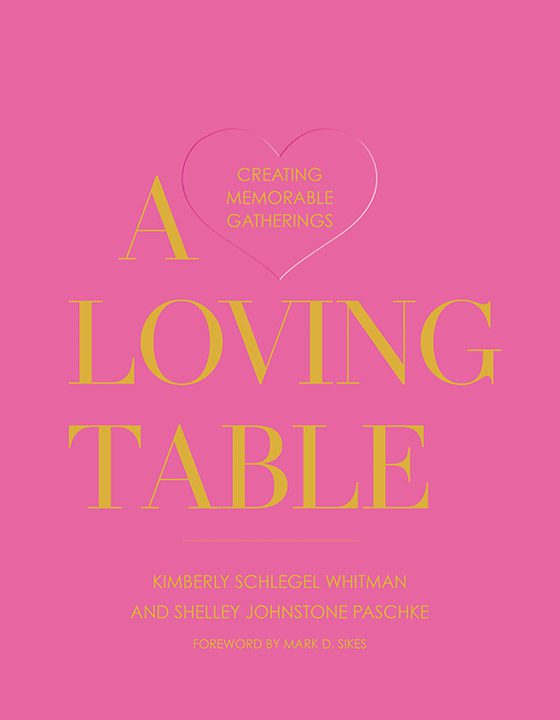
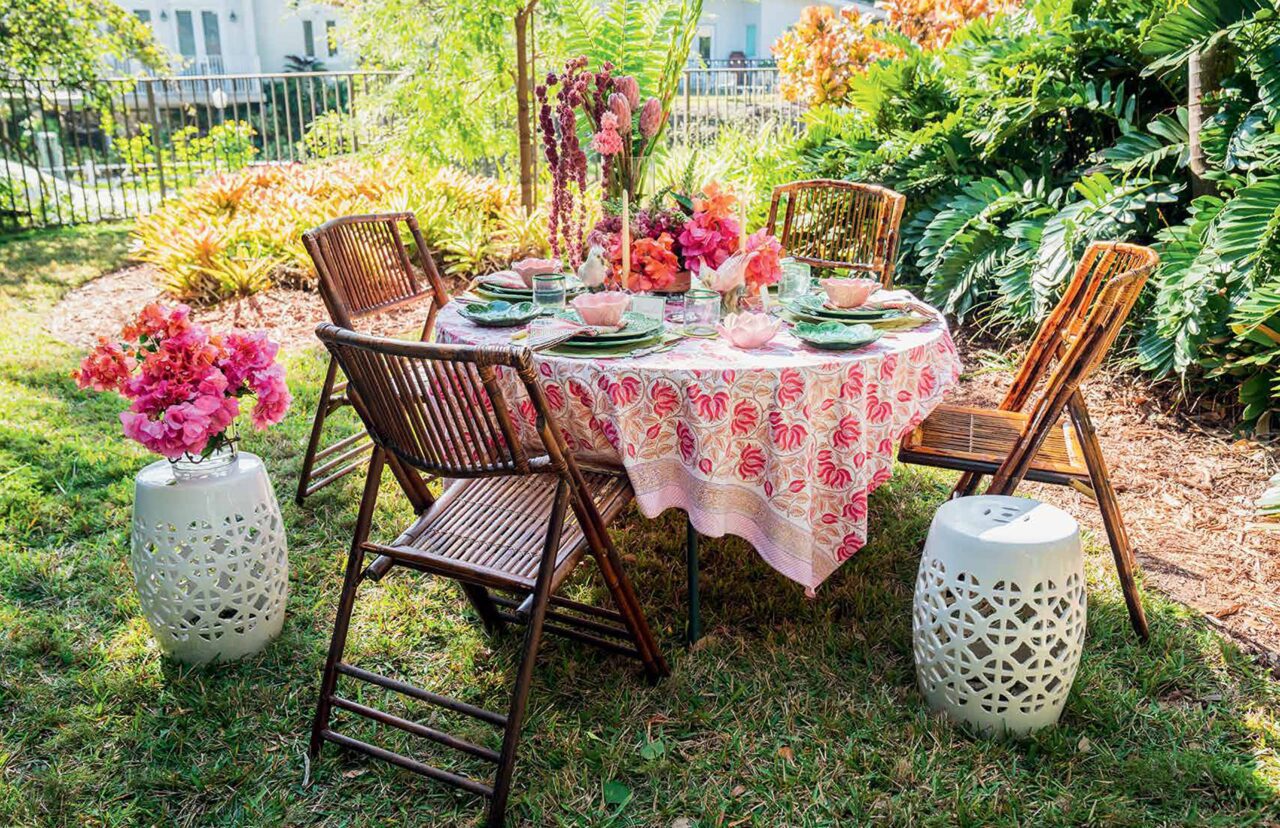
If that was not stellar enough, Kimberly also launched her latest book with co-author Shelley Johnstone, A Loving Table: Creating Memorable Gatherings. If the stunning Shocking Pink cover doesn’t draw you in, the contents certainly will! Stay tuned for our review.
Mark Sikes’ new partnership with Anthropologie has been on our mind all week! With festive gatherings of friends and family on the horizon we are clamoring for new tableware and décor to spruce up the home. Mark’s collection packs a punch while remaining true to his stylistic roots.
Hosted by the Cultural Counselor of the French Embassy and Galerie Kugel, Villa Albertine presents Tastemakers: The 18th Century French Luxury Market and the Global Art Trade. On view from May 4th – May 8th in the historic Payne Whitney Mansion located on the Upper East Side of Manhattan, the exhibit features 18th Century treasures unlike any other.
The Annual Park Cities Preservation Home Tour 2022 kicked off on May 2 with a bang. Offering a glimpse into some of the most beautiful homes, the event works to support the preservation of neighborhoods in the Park Cities area. From small cottages to larger estates, the annual home tour shares common value with The Glam Pad: appreciation of history, tradition, and beauty. The tour is online only and is in full swing May 2 – 8. Click here to learn more and purchase a ticket… with the online format, you can join the tour from anywhere in the world!
We could not report on the first week of May without including The Met Gala. Much too our dismay, we were rather disappointed in this year’s red-carpet assemblage. Une terrible misère! Check out the video below for a recap of the good, bad, and ugly.
Have an idea for an upcoming edition of TGP Tidbits? Click here to submit!
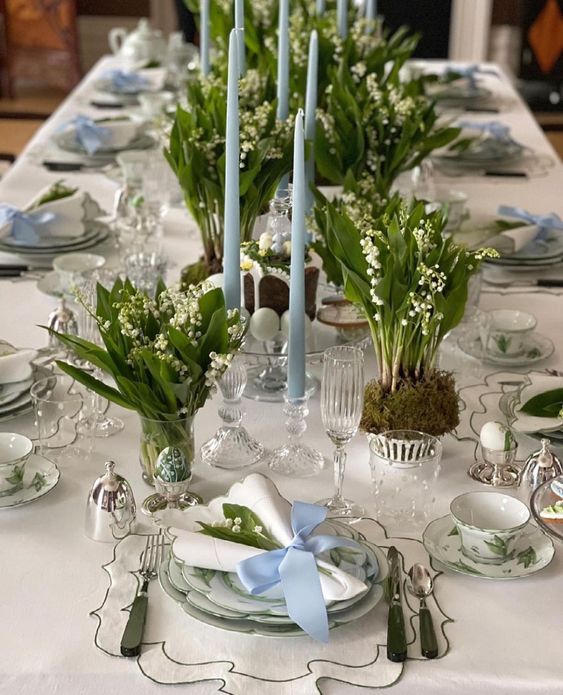
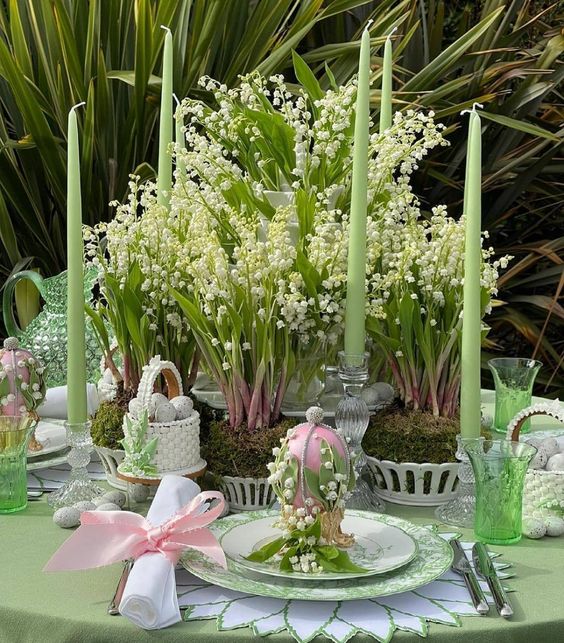
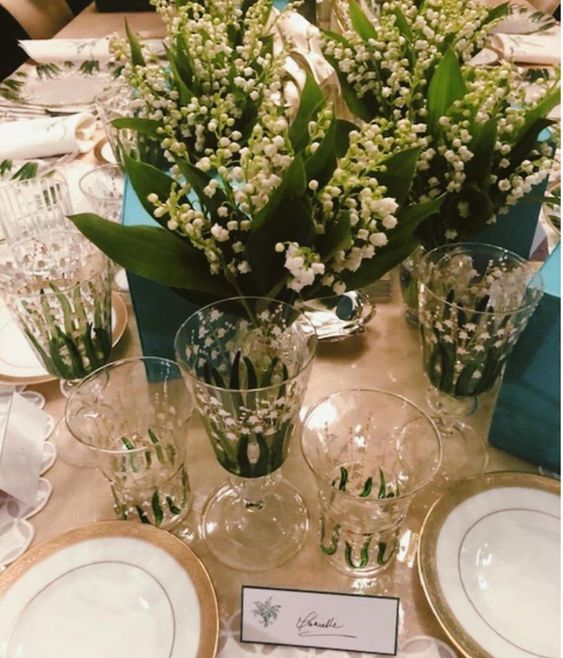
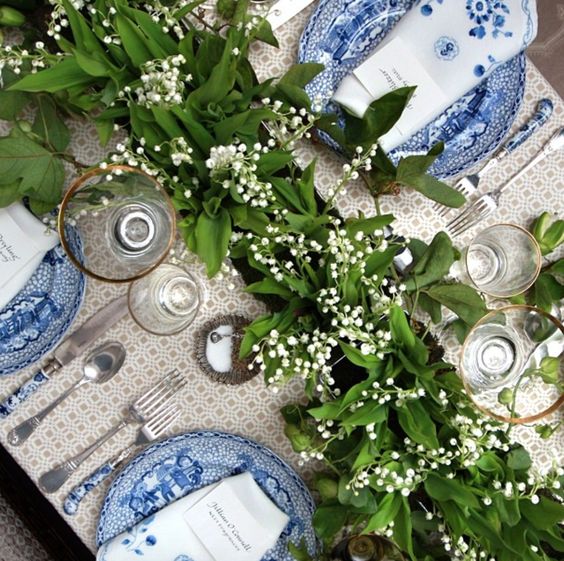
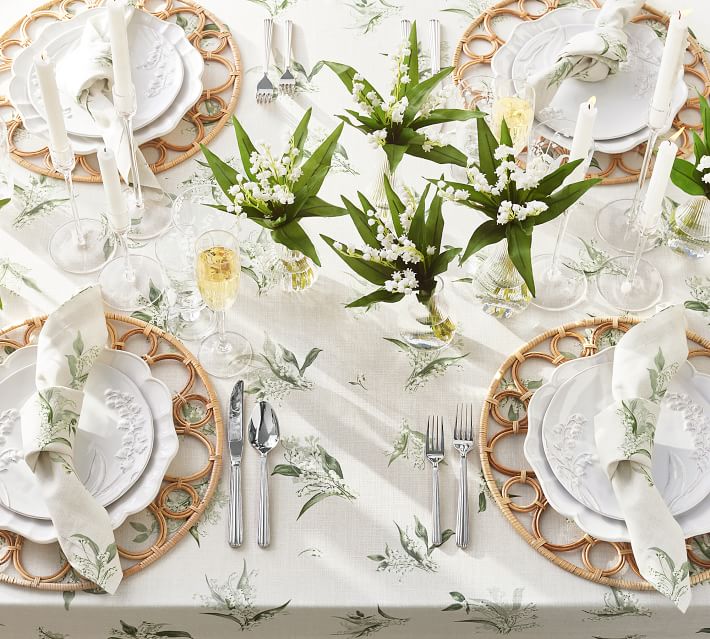
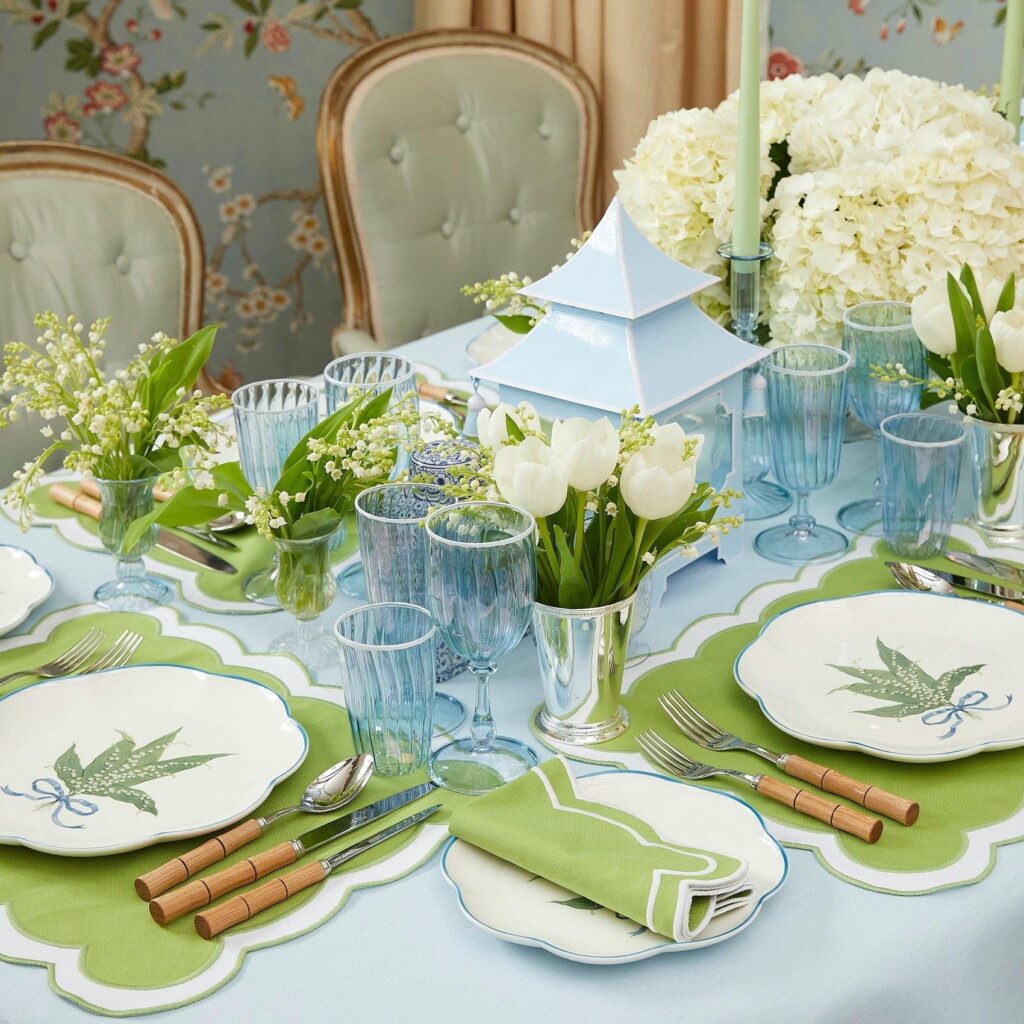
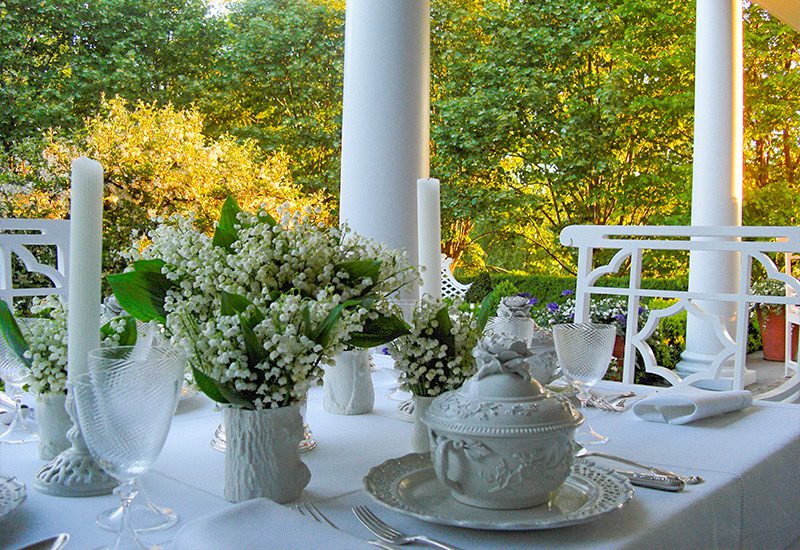
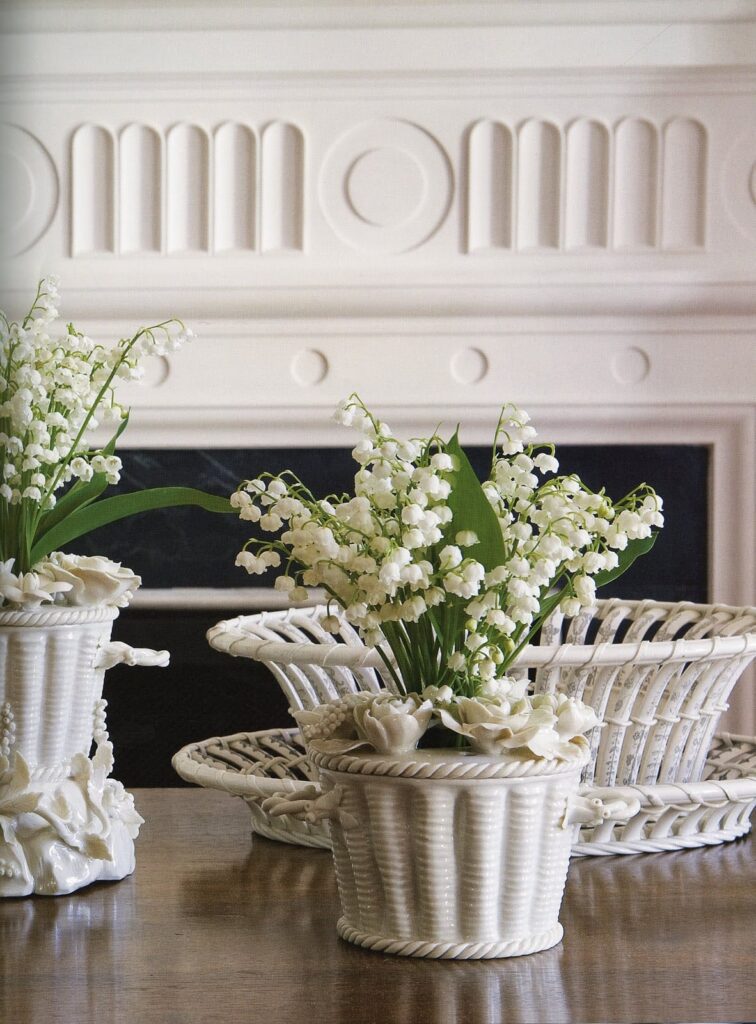
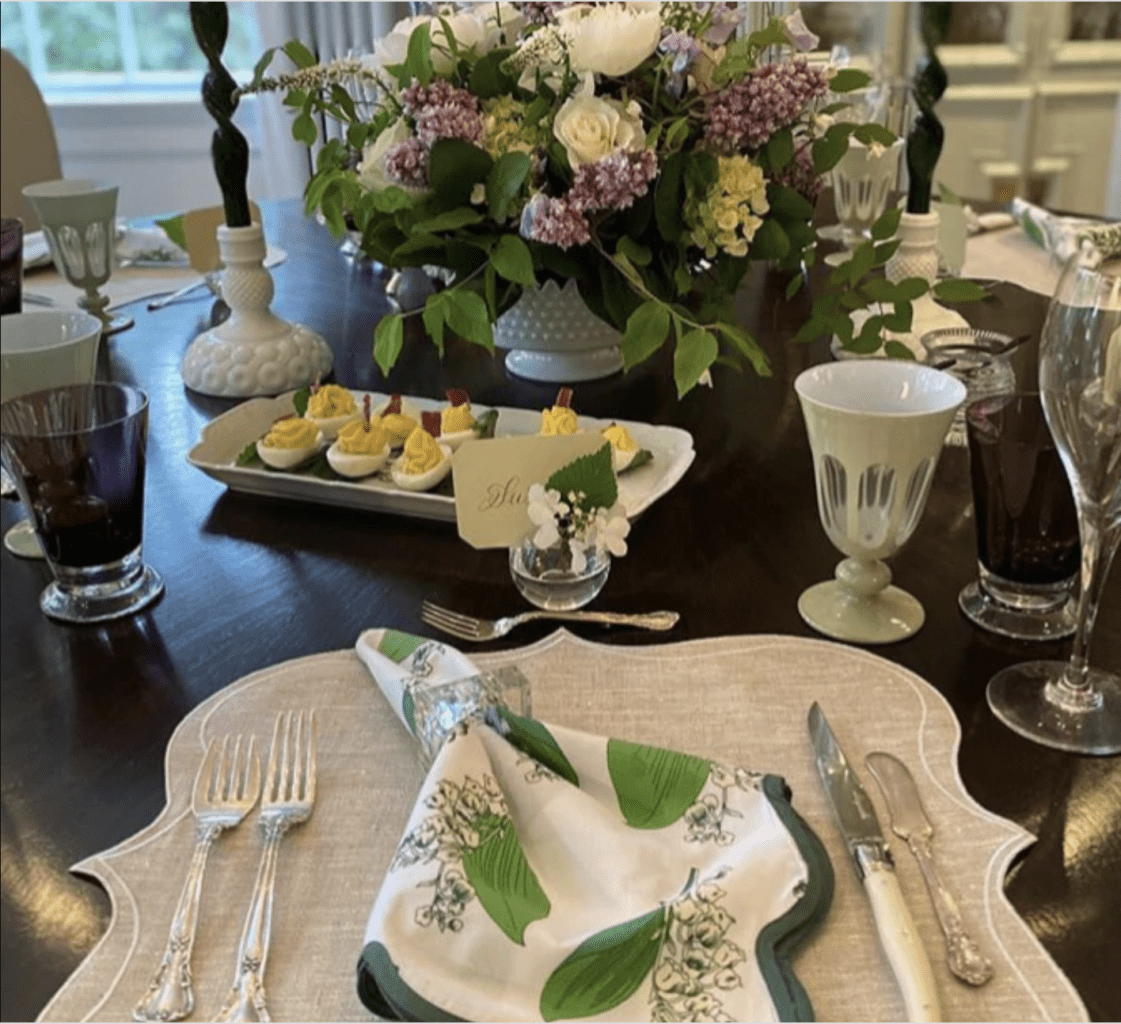
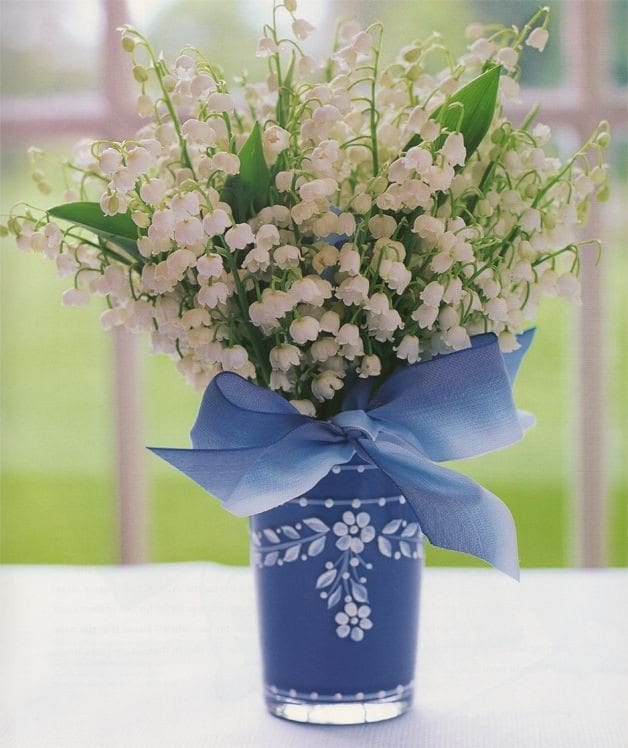
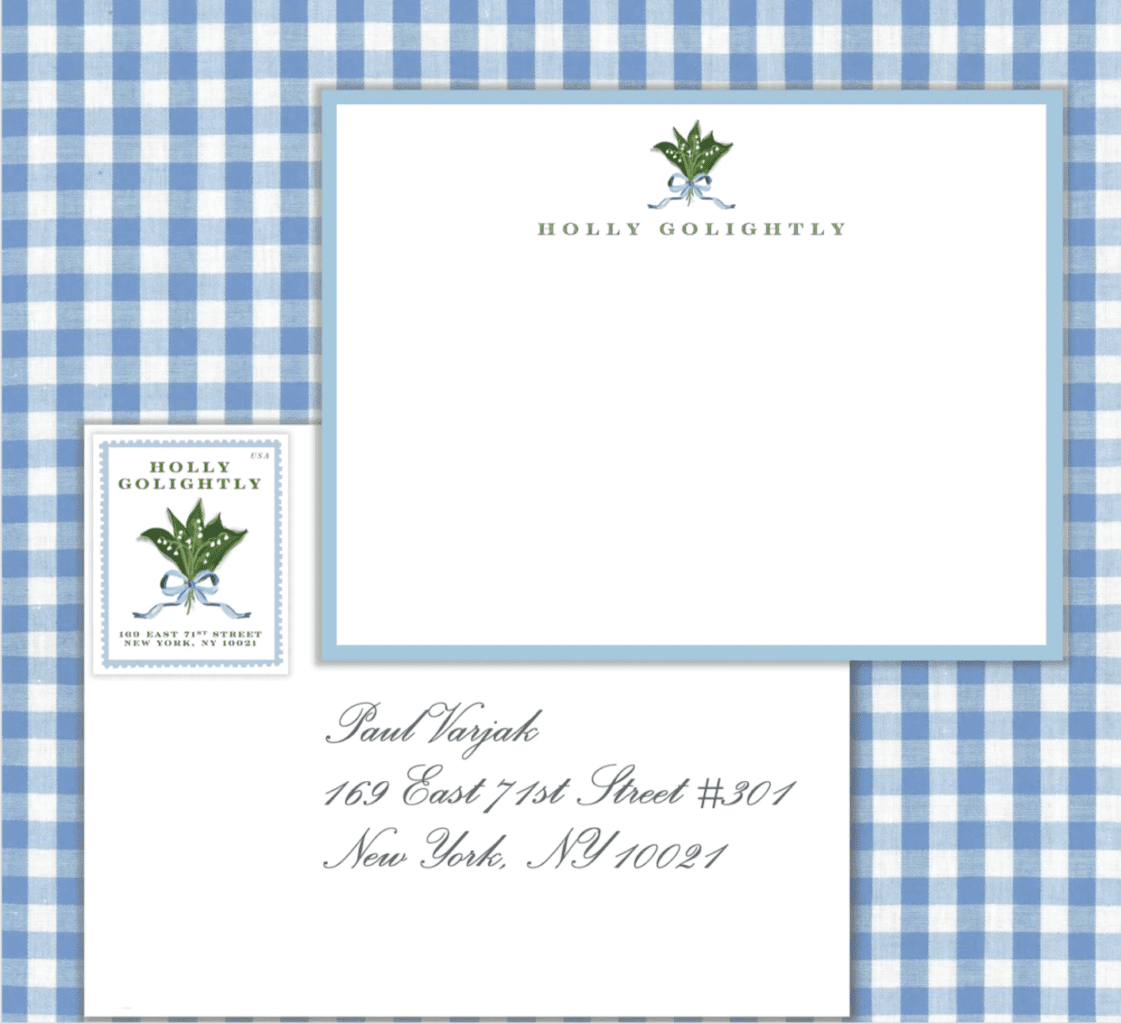
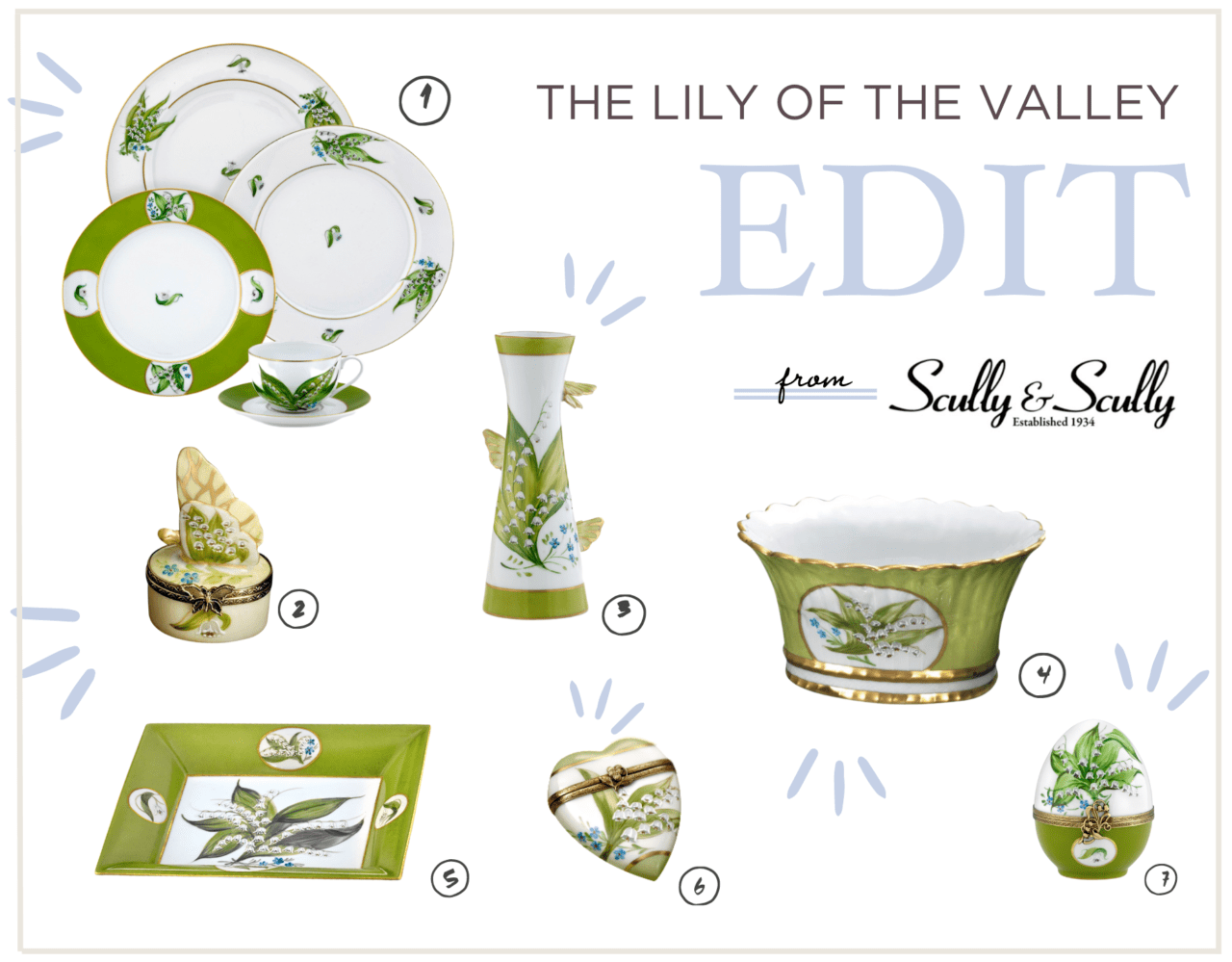
Yesterday was Lily of the Valley Day (La Fête du Muguet). This is a holiday in France celebrated by giving Lily of the Valley bouquets to friends and loved ones to wish them happiness and good luck in celebration of the arrival of spring. The story goes back to 1560 when a knight named Louis Girard gave King Charles IX a bouquet of Lily of the Valley for luck and prosperity for the coming year. From then on King Charles IX would give the ladies of his court Lily of the Valley bouquets every year on May 1st to spread this good fortune.
Lily of the Valley is supposed to bring luck in love, and has been seen in many royal wedding bouquets including those of Queen Victoria, Princess Astrid of Sweden, Grace Kelly, and Kate Middleton. It can also symbolize purity, sweetness, sincerity, youth, and motherhood. Each year, in honor of this lovely tradition, The Glam Pad celebrates by featuring ways to bring a a little lily of the valley into your life.
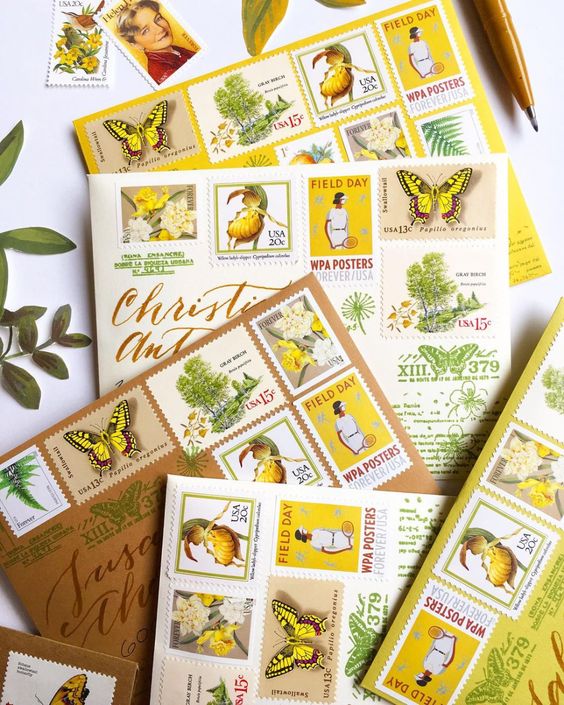
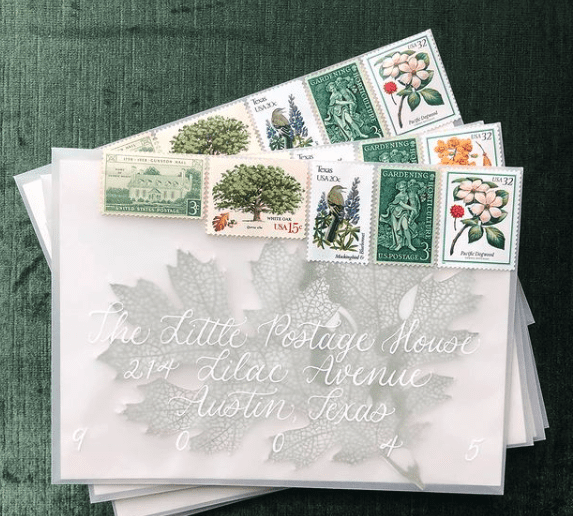
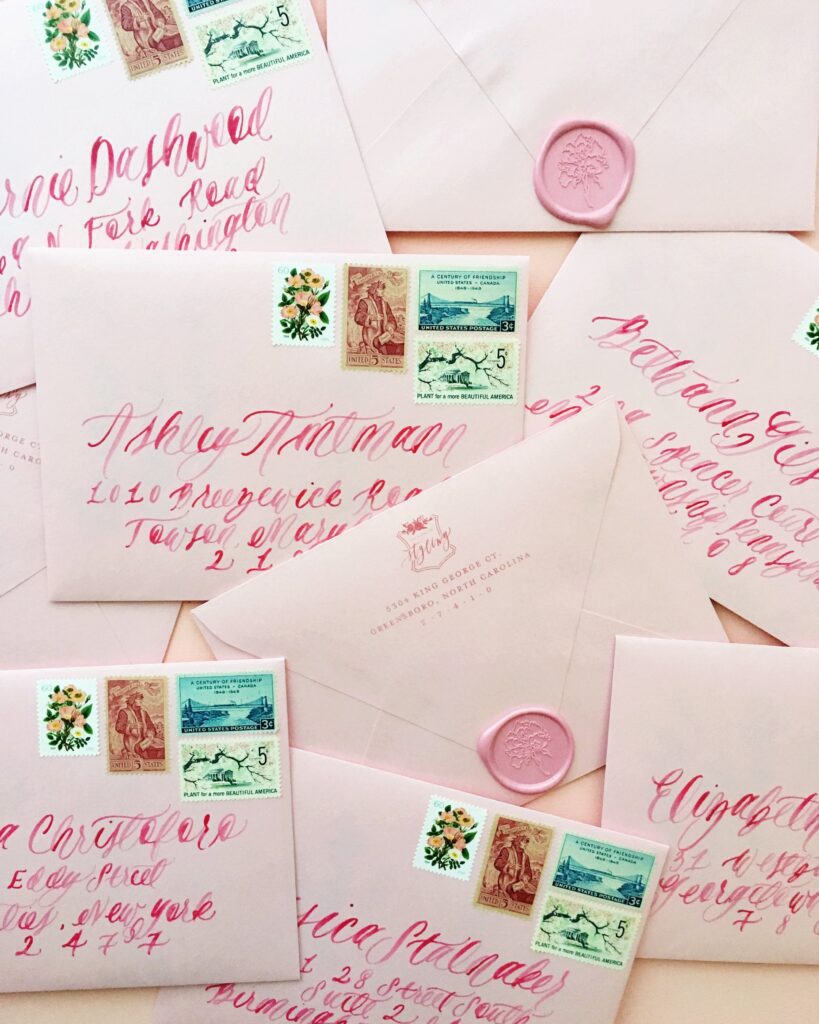
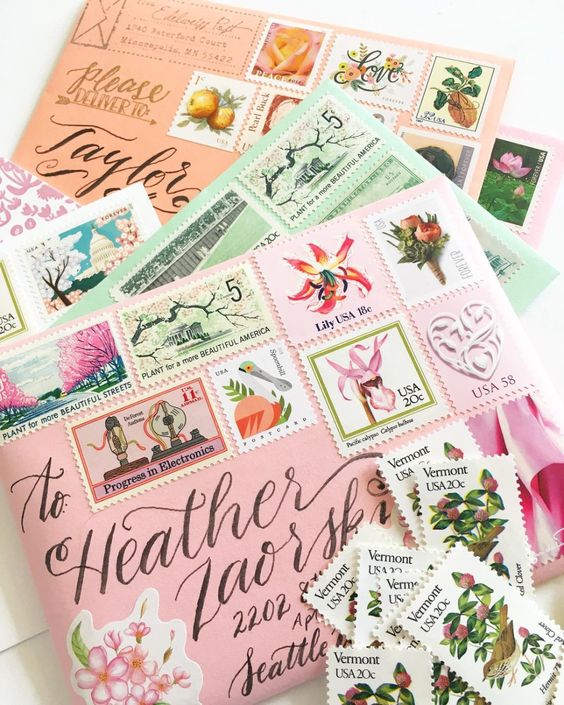
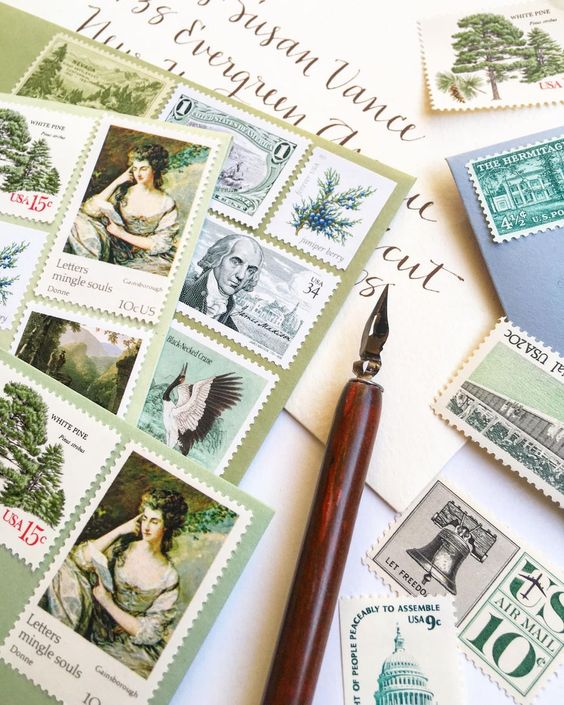
Hello, my name is Andrea, and I’m a stampoholic. In fact, my recent obsession is partly what drove The Glam Pad’s motivation for this six-week letter writing series (you can get caught up here, here, and here)! It started with a beautiful note I received in the mail from Bethany Berk, founder of Marchioness Home & Garden. On the envelope were six beautifully curated vintage stamps. Then I received Bethany’s vintage-stamped Christmas card. Fast forward to this spring when fellow Dallas blogger Albertina Cisneros of @mimosalaneblog invited me to a luncheon event at her lovely home… The charming stamps gracing the envelope were the final straw. I fell down the rabbit hole.
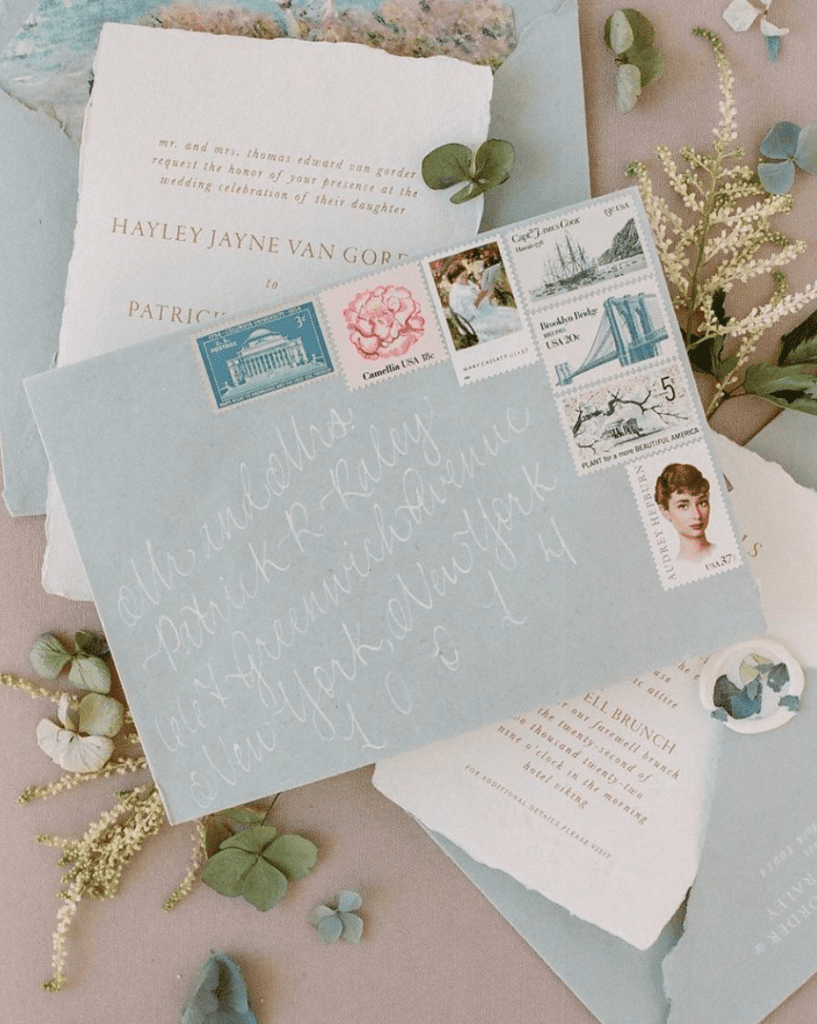
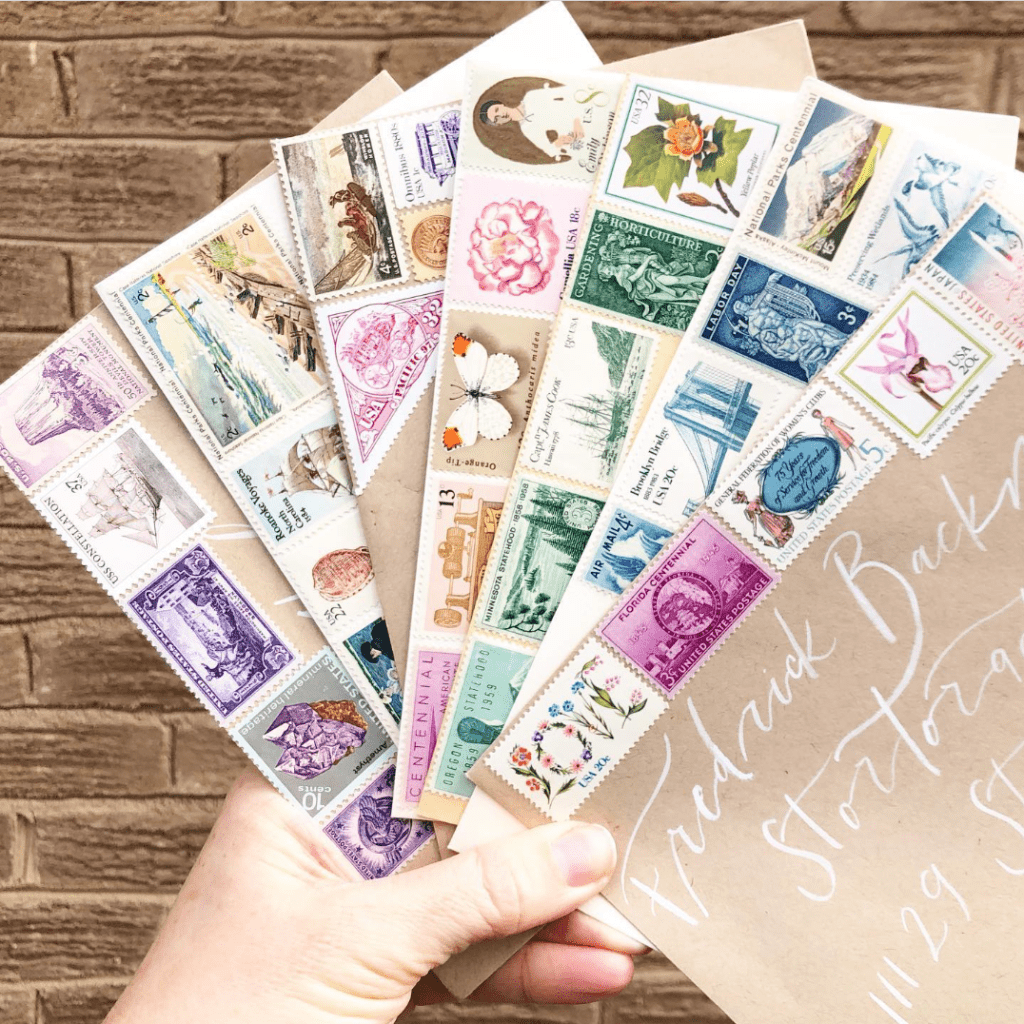
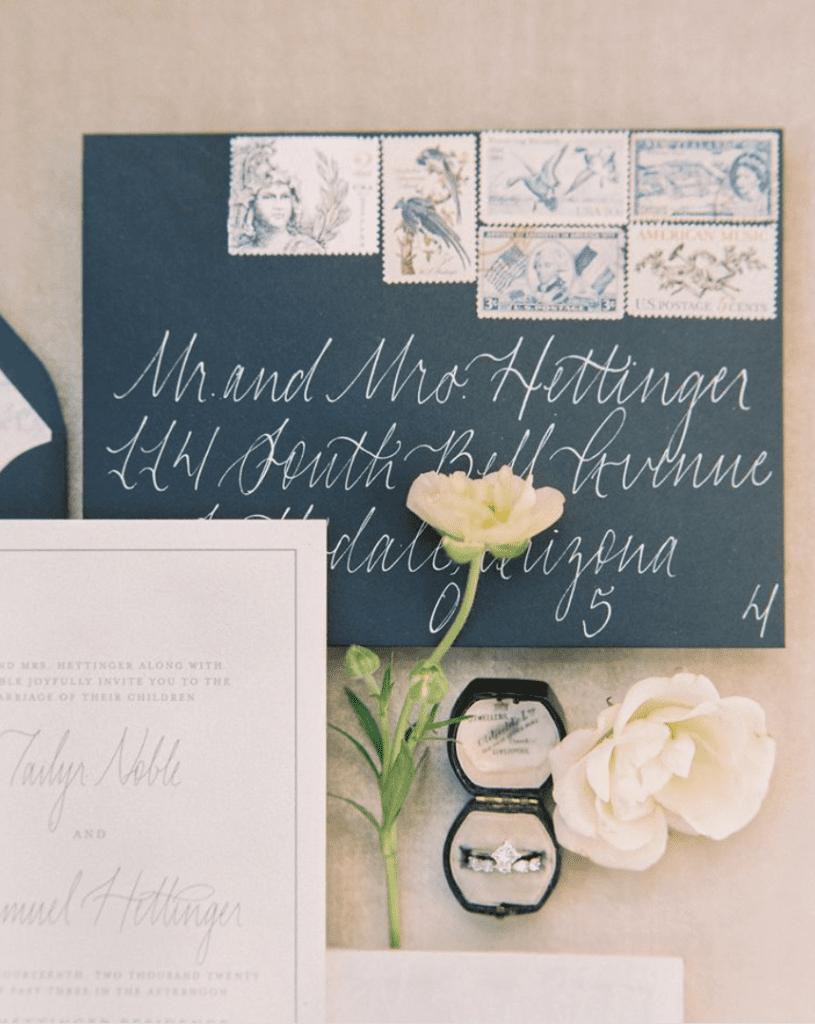
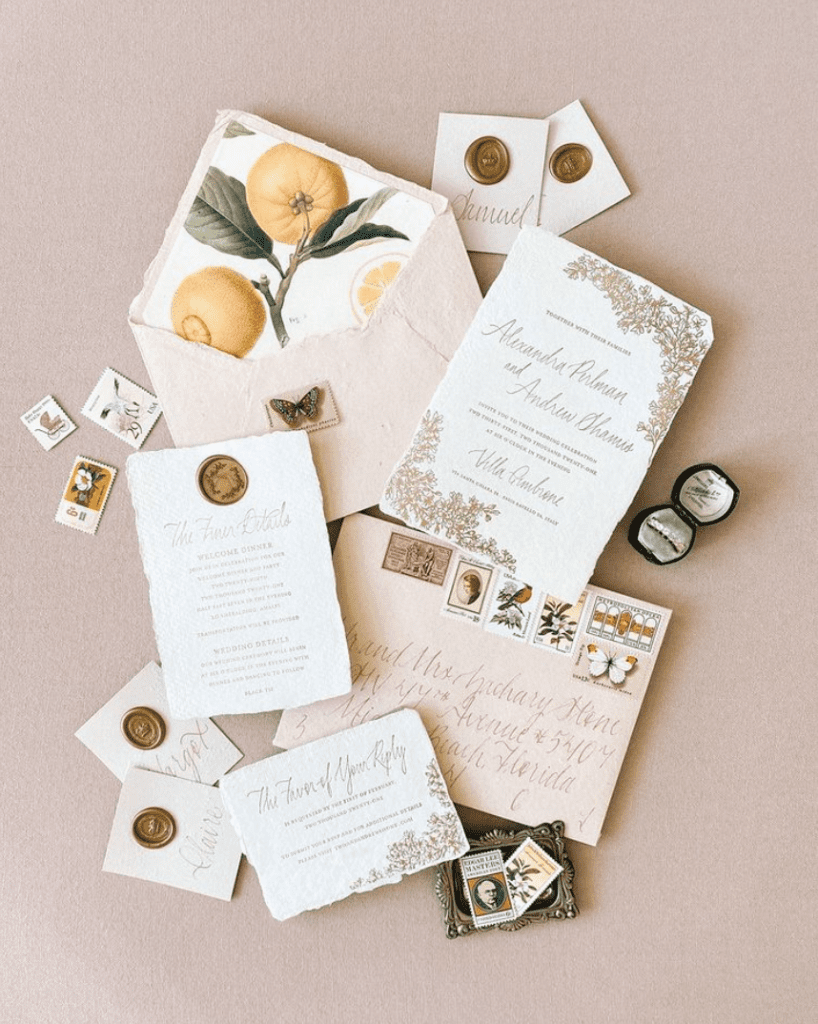
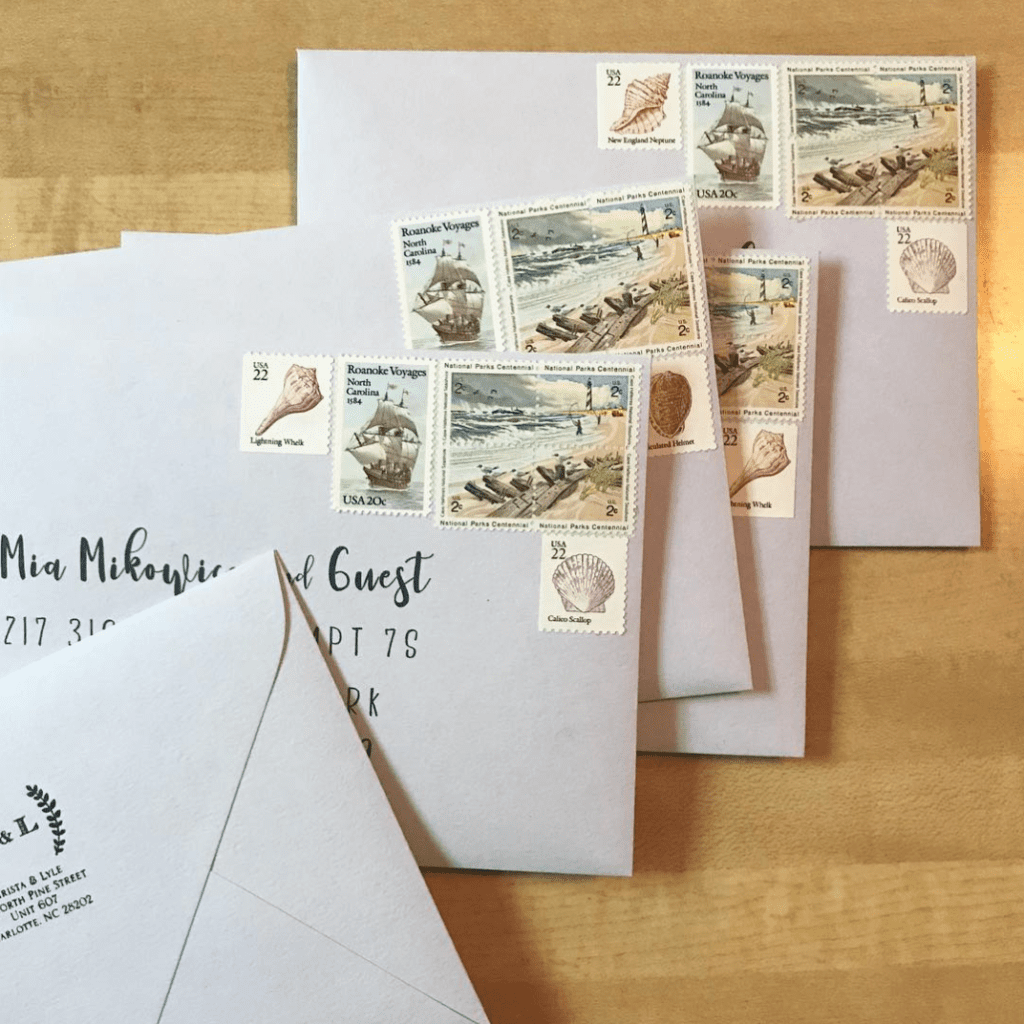
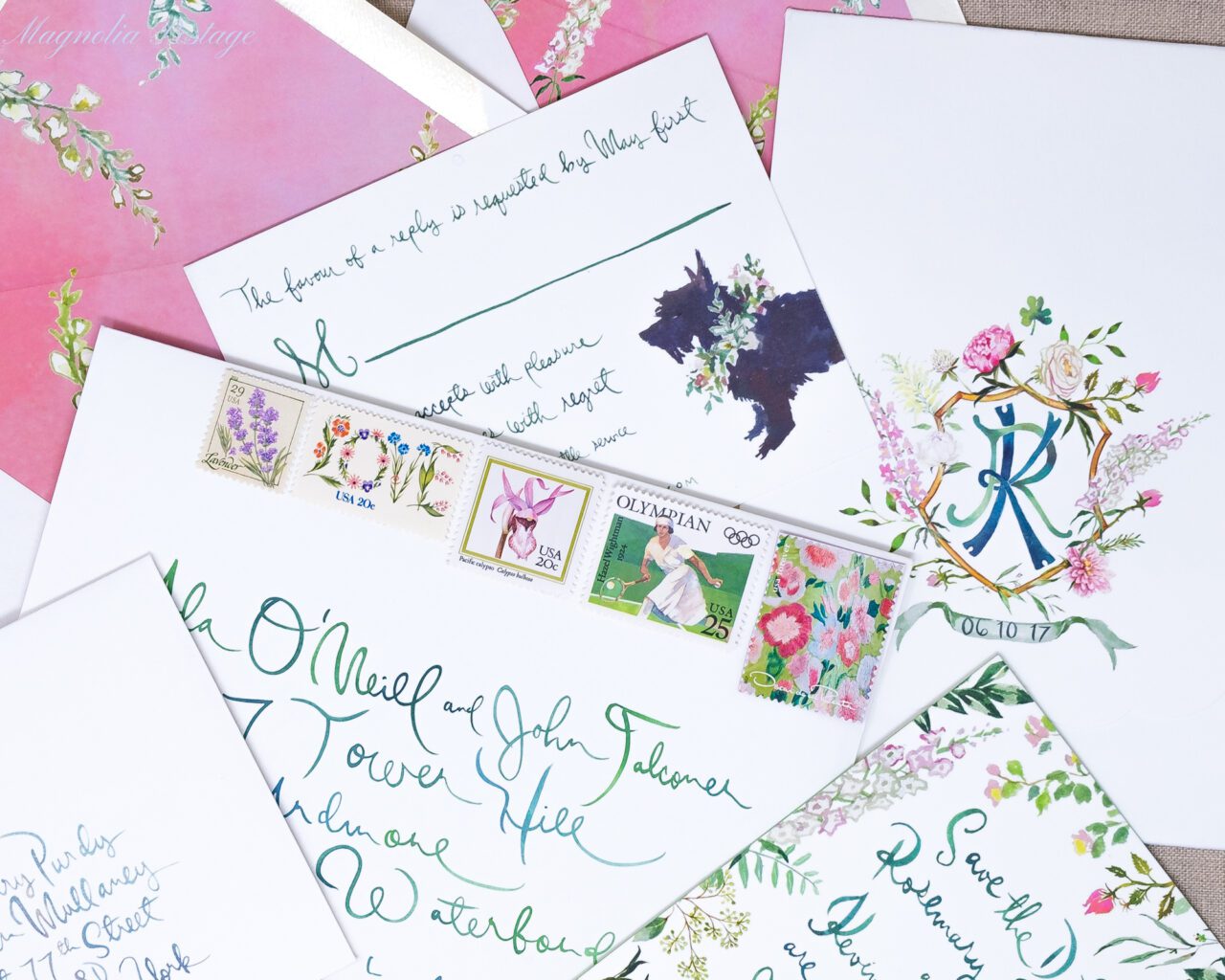
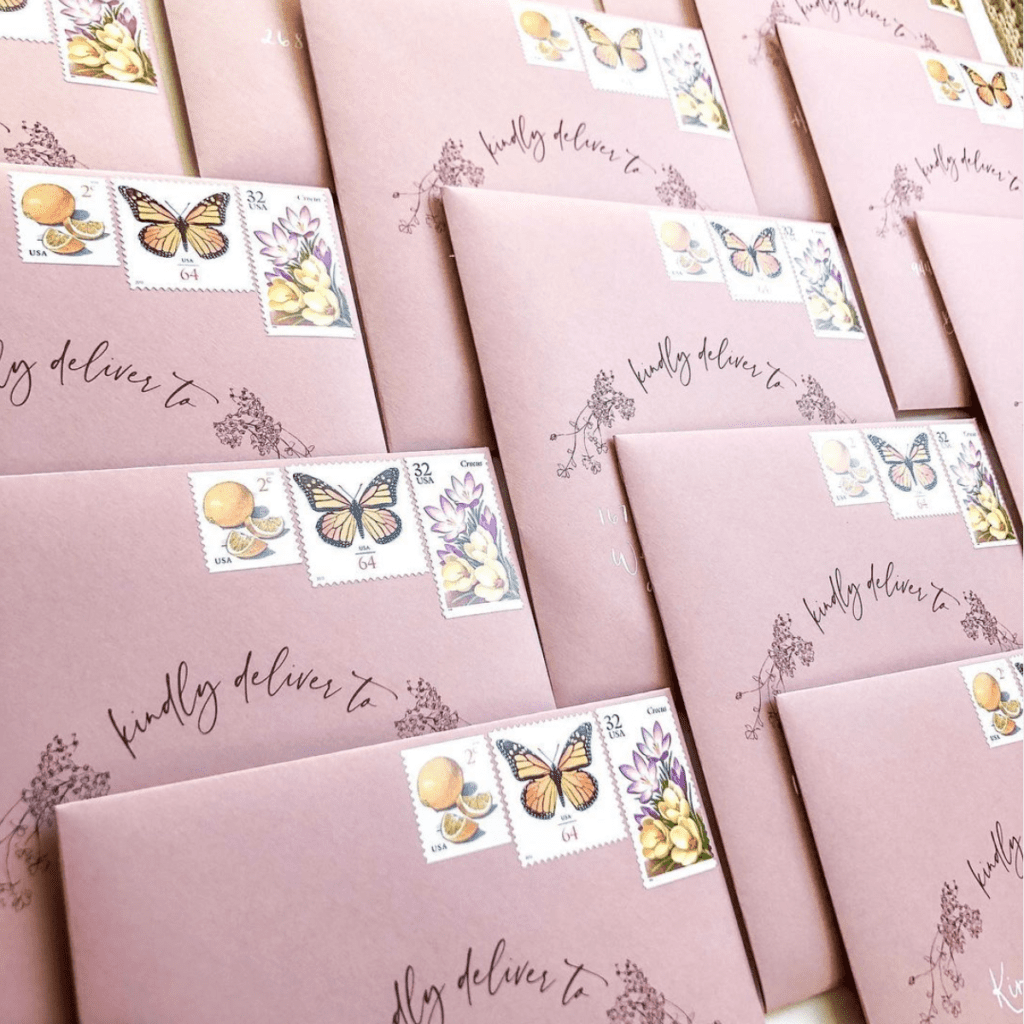
Chances are, if you spend time on Pinterest or Instagram, you have stumbled upon pictures of beautiful wedding invitations boasting exquisite calligraphy or hand-addressing and an assortment of equally delightful stamps. These intriguing images have helped inspire an entirely new generation of stamp collectors and create a chic new industry of online stamp vendors. With stationery sales on the rise largely due to Covid and renewed interest fueled by the millennial generation, vintage stamps are no longer reserved for scrap books or special announcements, but are becoming a popular trend in everyday letter writing.
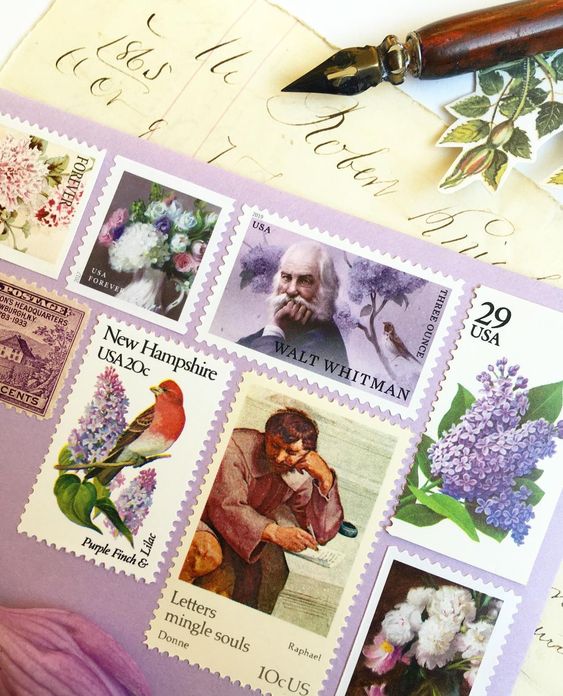
Once you have taken up the lost art of letter writing, invested in beautiful custom stationery, dusted off your penmanship skills, thoughtfully crafted your note and addressed your envelope, an assortment of carefully selected vintage stamps are the cherry on top of a sundae.
“Stamps are the very first thing you notice when receiving a piece of mail, whether it be a letter from a friend or a wedding invitation,” Patrick Dea, stamp collector and owner of Edelweiss Post, told MarthaStewart.com. “There is just something captivating about these tiny pieces of art and history. By selecting just the right stamps, you are adding both beauty and meaning to your mail.” This became even more important during the days of social distancing, he said.
Gracie Cote, founder of @enfieldpost specializes in finding and compiling sets of unused vintage postage for special occasions and everyday use. She says, “In the age of emails and texts, letter writing has become a special art. Postage stamps are mini-artworks that bring a touch of personality and charm to all the news they carry; with a well-designed envelope, wedding and party invitations, get well cards, or simple ‘saying hello’ notes become exponentially more special in a recipient’s mailbox.”
Gracie is currently working exclusively with stationers in creating bespoke sets, but she also has a beautiful selection of individual stamps available for sale via her website and Etsy. One stationer who works with Gracie in selecting stamps for her bridal clients is Mikyla Marie Manu of @inkandpressco. Mikyla said, “It is always such a joy to curate these collections together with Grace of @enfieldpost. In a way, I feel like we’re curating a mini gallery exhibit for a fine art museum that is an envelope!”
As you know, The Glam Pad is a proponent of reviving and promoting “old fashioned” traditions, and up until recently, stamp collecting (philately) was considered a dying hobby. According to the American Philatelic Society, the average stamp collector is more than 60 years old, as younger generations lost interest in stamps in favor of social media. However around 2020, things began to change. The Guardian reported a renewal in the industry stating, “Philately is gaining popularity among millennials, many of whom see the creative pursuit as an escape from their screen-based lives.” Millennial Suzanne Rae, chairman of the Philatelic Traders Society, told the publication, “Philately is tangible: it’s relaxing and unplugged. It’s also very Instagrammable. Twitter and Instagram enable young collectors to find people like them and see that it’s not only a geeky old man’s pursuit.”
This renewed interest may also be fueled by “romantic notions of pre-digital life,” continues The Guardian. Stamp collecting offers Millennials and Generation Y a nostalgic link with the past. As The Glam Pad wrote in The Resurgence of Stationery, these are the same generations snapping up vintage typewriters, vinyl records, and Polaroid cameras, all while needlepointing pillows and decorating their homes in Grandmillennial “Granny Chic” style. Everything old is new again.
Stamp collecting was at the height of popularity from the 1930s to 1970s. My mother collected stamps. So did Patrick Dea’s grandfather… and now it’s back with a fresh new twist. In closing, Patrick perfectly summarizes the modern face of philately. He states:
“But unlike Grandpa who kept his collection buried in thick catalogs and dusty boxes deep inside his study, I want to share my vintage stamps, dispatching them through the postal system and beyond, with your help. Grandpa explored the world through his stamps but I want to share my stamps with the world.
The internet, for all its efficiency and convenience, has made communication something you cannot touch, cling to, keep, and pass down. When is the last time you received a thoughtful hand-written letter, a tactile note or a party invitation in your physical mailbox?
Postage is a beautiful but dying art form. Our mailboxes have been relegated to the status of junk depositories and checking the mail has become a chore rather than the adventure it once was, fueled by anticipation. I want to help change all this in my own little way… and I’m thinking maybe you do too.” ~ Patrick Dea, Edelweiss Post
Who else wants to play along?! Below are some resources for starting your own stamp collection. The Glam Pad is encouraging the hashtag #showmeyourstamps on Instagram… Use the hashtag and tag us @theglampad, and we will post your stamp curations via our Stories! Warning… this is a highly addictive hobby! 🙂
Also, you will want this glue to adhere your vintage perforated stamps.
NOTE: U.S. postage never expires; you can use existing unused stamps indefinitely. All postage stamps issued by the United States since 1860 are valid for postage. You just need to make sure it adds up to cover current postage rates.
Shop the Look:
THE GLAM PAD’S LETTER WRITING SERIES
Below is an outline of The Glam Pad’s six-week series on the art of letter writing, and all that is related to the subject… Stay tuned next week as Natalie shares tips on cursive handwriting!
APRIL 8: Why hand-written letters and fine stationery (and calling cards!) are making a comeback, particularly among the Millennial generation. CLICK HERE TO READ
APRIL 22: An overview of resources for fine stationery. What pieces do today’s letter writing enthusiasts need in their wardrobe and why? CLICK HERE TO READ
April 29: A fabulously fun trend… Vintage stamps! How to begin a collection and use them to personalize your correspondence.
MAY 6: Why cursive handwriting is making a comeback, and what you can do to learn or improve.
MAY 13: The ultimate in customization – A bespoke monogram and stationery created by Nancy Sharon Collins.
Last month, my family and I welcomed a precious French Bulldog, Riley, into our home. It has been a while since we’ve had a puppy, and I had forgotten how much work it can be. I also forgot what a challenge it is to find pretty furnishings and accessories for pets! Over the next few weeks, I’ll be sharing some highlights from my search to bring a touch of elegance into our home to suit our new puppy.
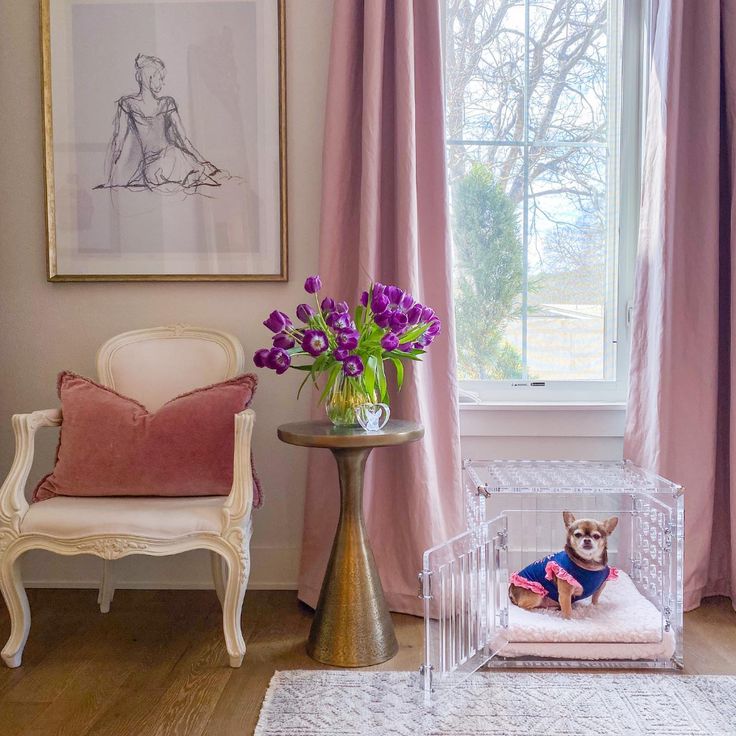
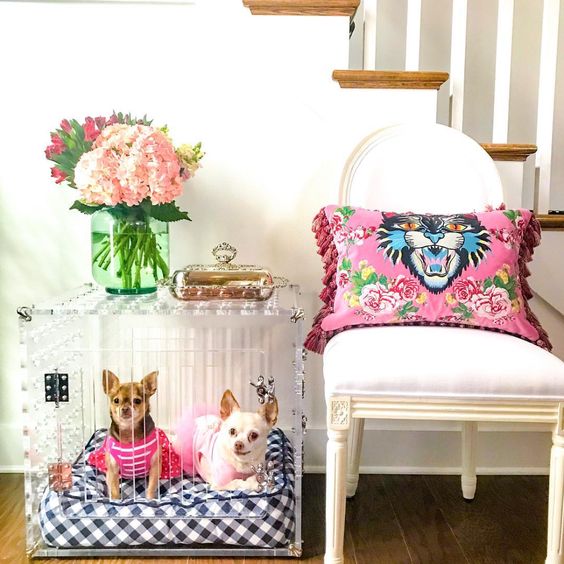
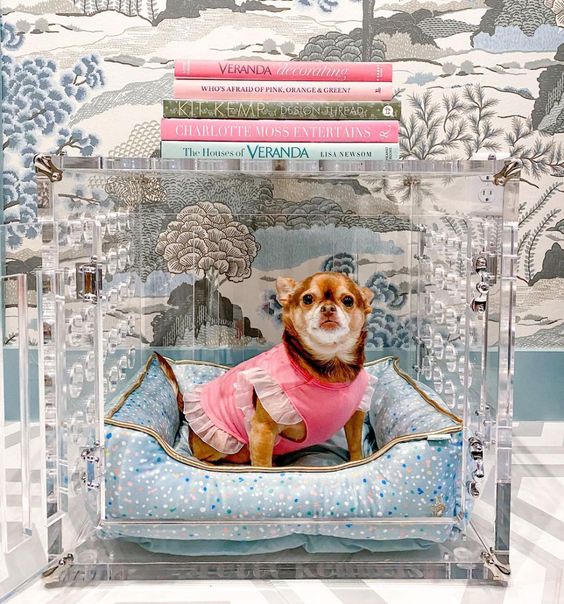
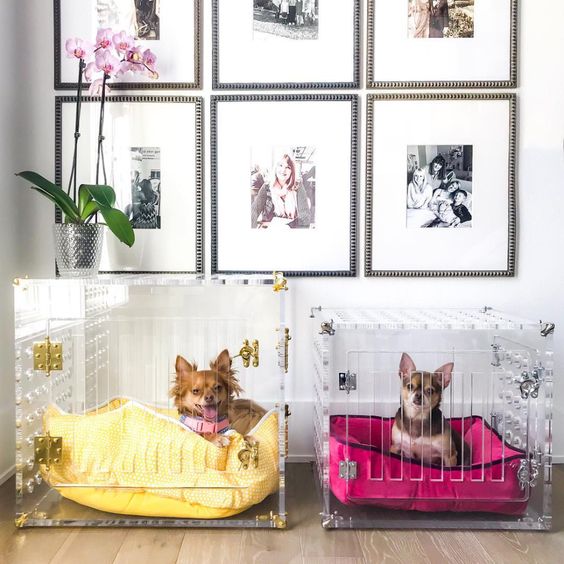
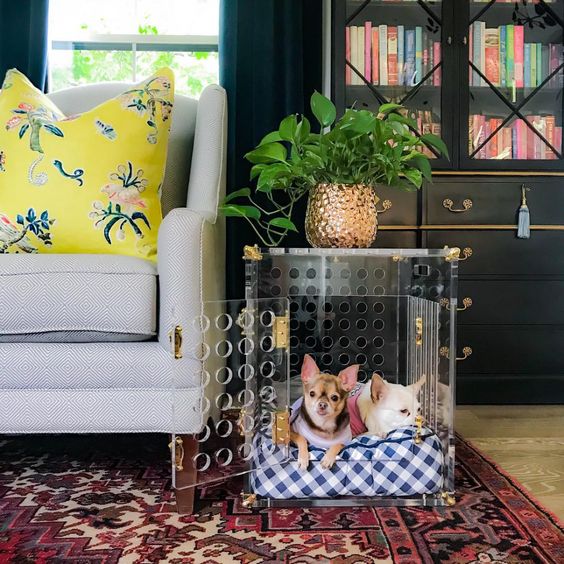
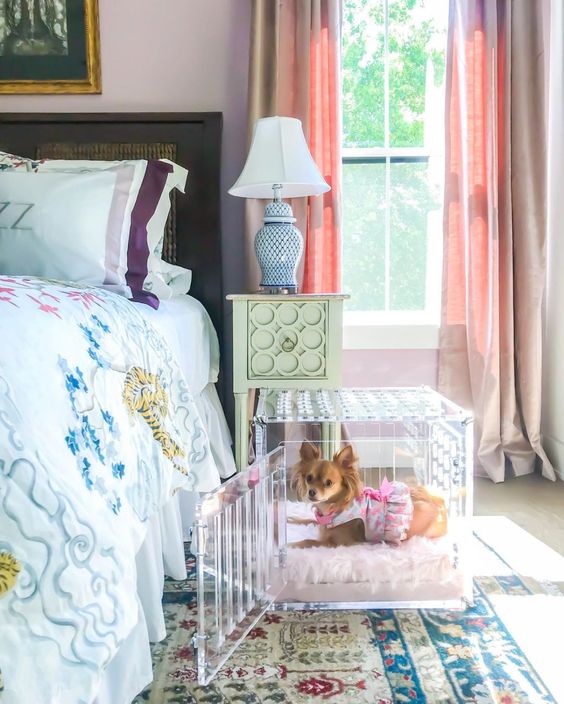
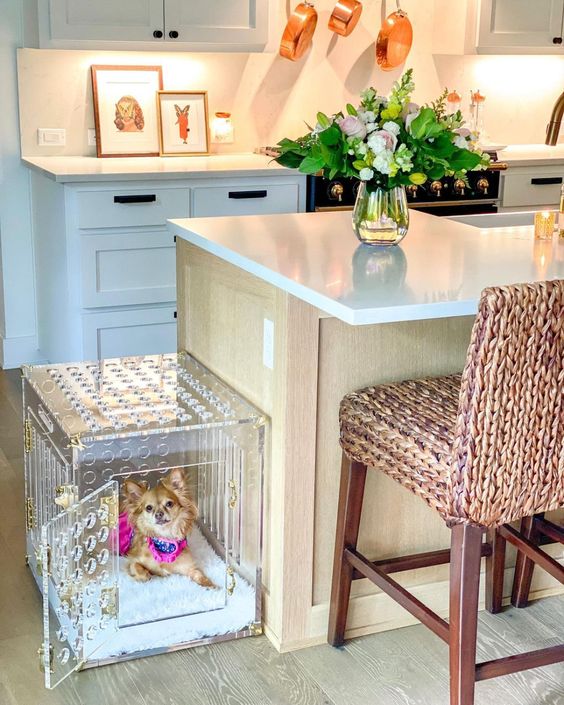
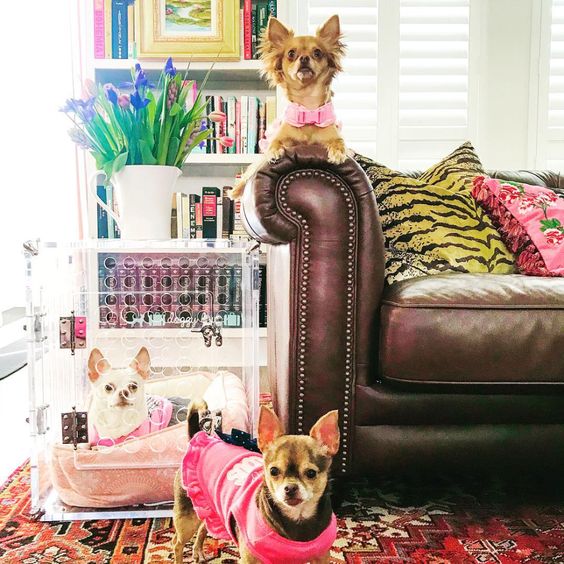
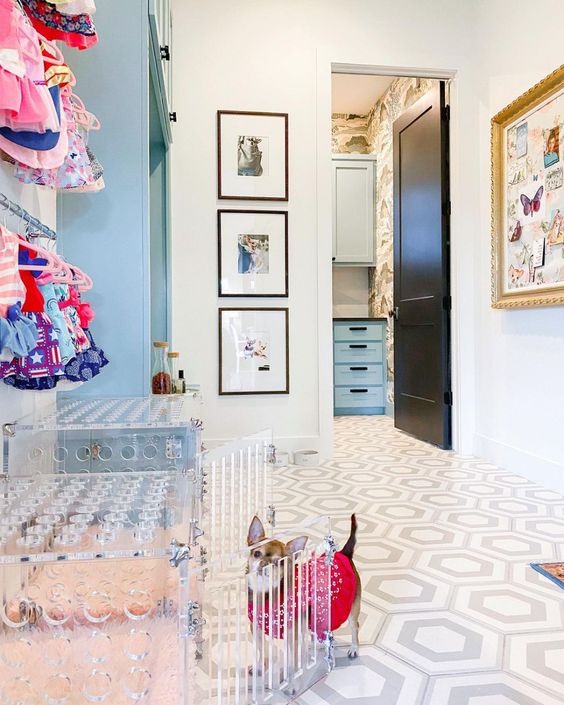
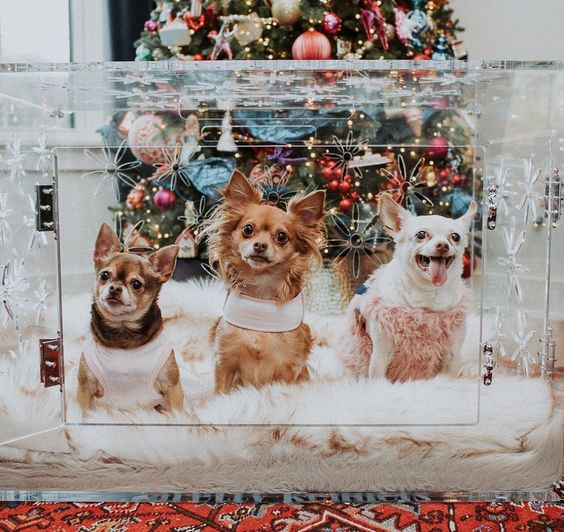
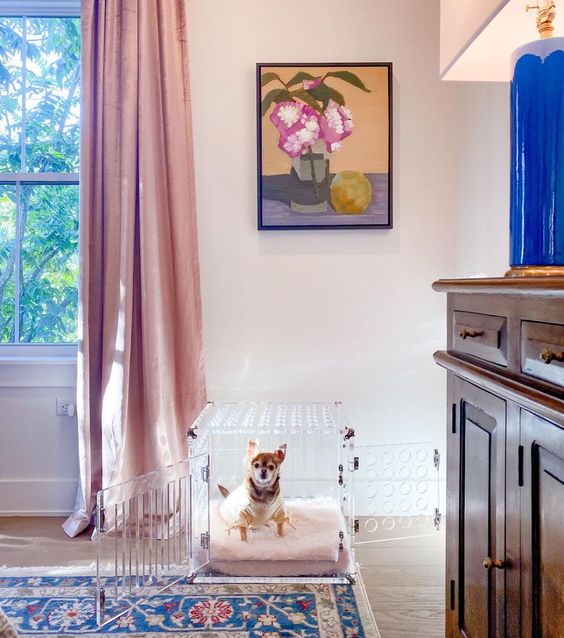
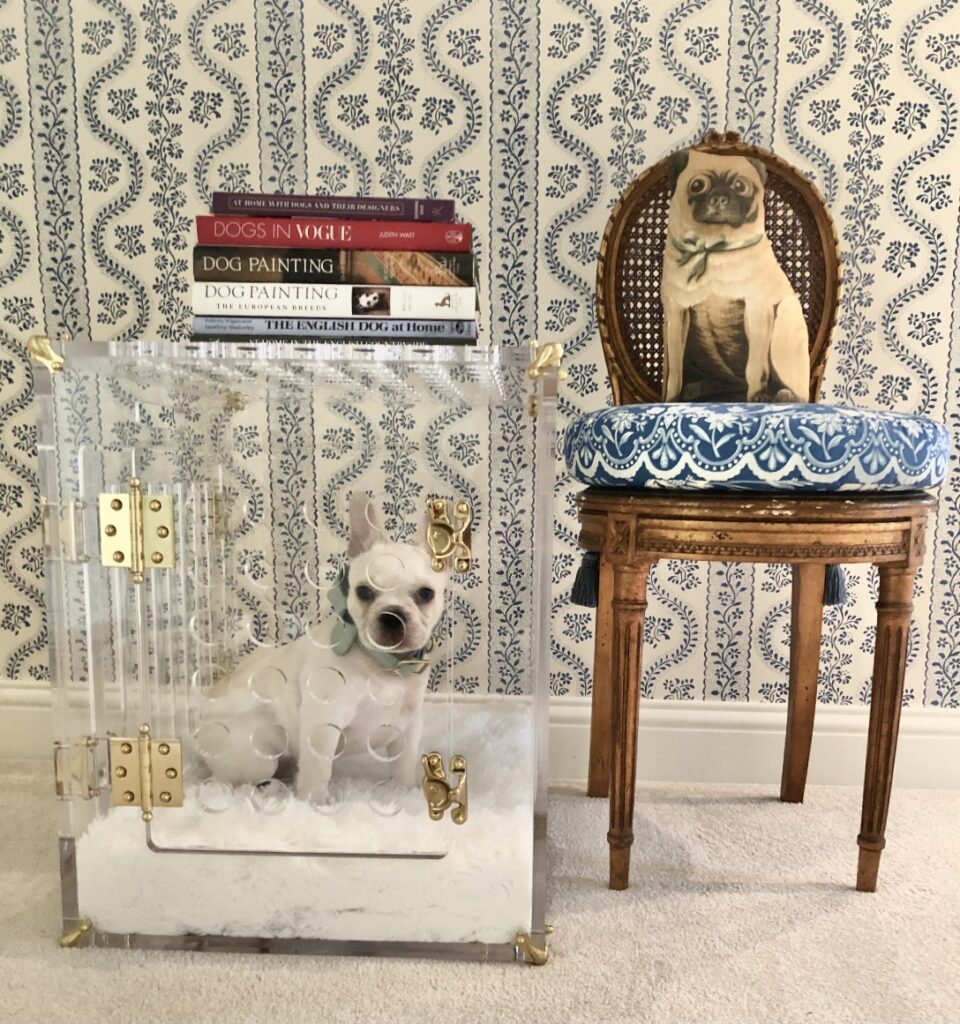
The Glam Pad always loves supporting family and women-owned businesses, particularly ones with a passion for interior design. So I was delighted to meet Paige Wilson, a fellow Texan who developed the incredibly chic Pretty Kennels in her search to replace the ubiquitous wire pet crate… Immediately, I fell for these custom Lucite creations! Beautiful and chic, they are truly works of art. Pretty Kennels can be used as furniture – end tables, night stands, etc. – throughout the home, while offering your pet a light and airy personal den. The patented, transparent kennels provide unobstructed views along with a definite touch of Art Deco Hollywood Glamour.
Today, we are delighted to welcome Paige Wilson for a Q&A and tour of her beautiful home… Welcome, Paige!
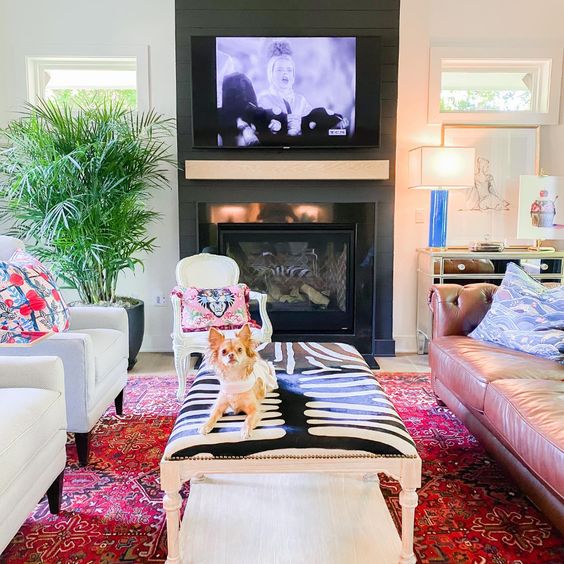
Paige Wilson with her husband, Kevin, and their three Chihuahuas
Q: What was the inspiration for creating Pretty Kennels and establishing your business?
A: I created Pretty Kennels out of necessity about 6 years ago. We have chihuahuas, and they’re definitely den creatures and love their kennels. We lived in a small house and the typical black wire crates were killing the vibe in our living room. I was inspired by Jonathan Adler who was really showcasing acrylic furniture at that time and also the Vetro crib. It was the “it” crib coveted by celebs, and my dogs are my babies, so it made sense.
Q: Your home is so beautiful! How did you become interested in interior design?
A: Thank you! I’ve always loved decorating since I was a kid! I loved going to the mall and looking at all the comforter sets in the department stores or flipping through catalogs and seeing all the princess canopy beds. When I got my first apartment in college, I painted my living room in soft yellow and green stripes modeled after a suite I once saw on “Great Hotels with Samantha Brown.” My favorite way to procrastinate was by picking up the latest copies of Veranda, House Beautiful and Elle Décor. I’d eat a bag of Twizzlers and get lost thumbing through the dreamy designer pages.
Q: How do you describe your style?
A: Fun, feminine and always evolving. I tend to lean towards a traditional aesthetic. I love color, but I can’t be tied to one when there are so many beautiful shades to explore. That’s one of the reasons why I made Pretty Kennels clear, so they’ll go with anything forever!
Q: What are some of the ways Pretty Kennels can be used throughout the home?
A: I love seeing how my clients use their Pretty Kennels…from entry ways to mud rooms, to kitchens to bedrooms! They can serve as side tables or my favorite way to use them is under a window sort of as a window sill. The light hits the laser cut edges so beautifully. They work well in small spaces because they do triple duty as a usable surface, a design element and a functional pet crate. I’ve had client’s design them into the blueprints of their new home which was fun! It really shows how dogs are becoming a more integral part of our lives, and I love that!
Q: Do you have any other tips for living elegantly with pets? Pet bowls, toy organization, shedding, etc.?
A: I think dog beds should first be comfortable with good support! I don’t think they should be precious or expensive. It will eventually get barfed on, chewed on, peed on or worse, and that’s okay! When it comes to shedding, I couldn’t live without my Dyson handheld cordless vacuum. It’s perfect for the dog hair tumbleweeds as I call them. I also use it to vacuum off my duvet in between washes. As for dog hair on the furniture, a lint roller is my weapon of choice. Dog clothes also help with heavy shedders because it keeps the hair somewhat contained. I mean it when I say #decorateforthedogs! I installed towel bars on the wall above the girls’ Pretty Kennels and used baby clothes hangers to display their best outfits as a design element. It’s just fun, and you can’t not smile when you see it.
Q: Where do you find inspiration?
A: I’m supposed to say “travel and nature,” right? Just kidding! Like most 90’s kids, I didn’t grow up luxuriating around pedigreed estates or architectural gems. My insight into design and architecture originally came from tv and movies. I loved the Manhattan townhouse in “The Nanny” and the southern charm of Villa Mare from “Designing Women,” the manicured mansions in “The Stepford Wives” and, of course, the “Home Alone” house! Which brings me to another favorite source of inspiration, Christmas! Each year I use my cherished old collected ornaments but I change up the color of the ribbon or tinsel or balls so that my tree feels old and nostalgic but also new and exciting! Throughout the year if I change the pillows or get a new rug I immediately think, how would this look with Christmas décor? Anytime the seasons change, that’s when inspiration strikes.
Q: You and I share a passion for old movies… Can’t you just see a Pretty Kennel in the home of Nick and Nora Charles from The Thin Man!? How are you inspired by old movies?
A: Yes, Asta could’ve totally rocked a Pretty Kennel! The first word that comes to mind when I think of old movies is glamour! The way they dressed and did their hair, the high drama in their voices and movement, the music and dancing! It’s all so over the top, and I guess it had to be since everything was in black and white! I think without color it took a lot more effort to set the scene so they really paid attention to every detail in the oldies. I love watching TCM while I’m doing chores or lounging because A. It’s pretty, B. It reminds me of my pepaw sleeping on the couch, snoring with that on in the background and C. it makes me look at interior style in a new way… which is the old way.
Nora and Nick Charles (Myrna Loy and William Powell) with their dog Asta from The Thin Man, 1934
Q: Who are your favorite interior designers, past and present?
A: Past is easy for me, Mario Buatta. Present is a little more difficult to say just because of the exposure through social media these days. It seems like there’s an endless pool of talent out there. I’d say Ralph Lauren which technically could be past and present! Also Janie Molster, Ken Fulk and Corey Damen Jenkins.
Q: What is on the horizon for Pretty Kennels? How do you see the company growing over the next five years?
A: I want Pretty Kennels to continue to grow organically and most importantly be a source of joy for me. People always say to me “You should go on Shark Tank!” but I feel like I know where that path would lead, and it’s not for me. People have tried to imitate my product to make it more affordable or available to the masses but not without tremendously sacrificing quality. I love that Pretty Kennels are made right here in Austin, TX and that I still have a hand in making them. I love getting excited when an order comes in and it’s going to a really cool address or aspirational residence! I feel honored when people who can have anything in the world choose my product and just as honored when people say I’ve had this in my cart for years and I’m finally ready to buy a Pretty Kennel! In five years, I hope I’m lucky enough to still be making and selling pretty kennels and giving back more to dogs in need.
Q: Anything else you would like to add?
A: Thank you for this opportunity! The Glam Pad really is a source of education, preservation, inspiration and joy for so many people including myself! Thank you for showcasing traditional design and keeping it cool in a modern world.
Riley in his Pretty Kennel
Thank you, Paige, for joining us today and for sharing your beautiful home!
I am obsessed with Riley’s glamorous Pretty Kennel, and I cannot more highly recommend investing in one for your pampered pet! To learn more and to place an order, please visit prettykennels.com and Etsy. For ongoing inspiration, please follow @prettykennels on Instagram.
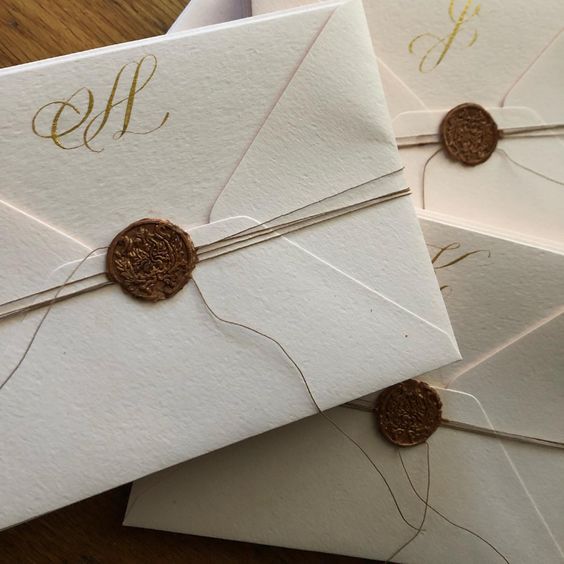
Investing in a stationery wardrobe can be a daunting task as there are so many variables to take into consideration. Do you prefer notecards, sheets, fold-overs? And what size? Should you engrave, letterpress, emboss, or print your name, monogram, or logo? What colors should you choose? And of course, there is budget to consider. The options are endless! Personalized stationery can be pricey, so you want to make decisions that will suit you for years to come.
Today is the third installment of our series on letter writing and stationery, and we have asked some of our favorite stationers to weigh in on this subject. Below are a few tips from the experts!
Take a cue from your closet
“When working on stationery with a client, I usually chat with clients about 15 minutes first. I take cues from the way they are dressed,” say Margaret Jones, founder of Scriptura in New Orleans. “People tend to wear colors they favor. Some people wear blues and greens, others prefer reds, pinks and oranges. Many are quite classic and wear whites, taupes and neutral colors. These non verbal clues tell me a great deal about the samples to present.”
Margaret Jones also asks clients to write a few words on a piece of paper so she can see the size of their hand writing. “For instance, mine is very large and bold, consequently I prefer oversized cards, and letter sheets,” she says.
“I also like to ask how clients are going to use the stationery,” says Jones. “Different situations require different approaches. For instance, brides usually prefer a small folded note due to the large number of thank you notes they will be writing. I also like to know if we will be creating the only set of stationery the client will be using. If so, I want it to be versatile and appropriate for a variety of purposes – thank yous, sympathy and business. The real fun begins when we can create a few different types – a classic one for restrained circumstances, and kicky one with bright colors for happier missives.”
Engraving, Letterpress, Thermography, or Hand-Lettering?
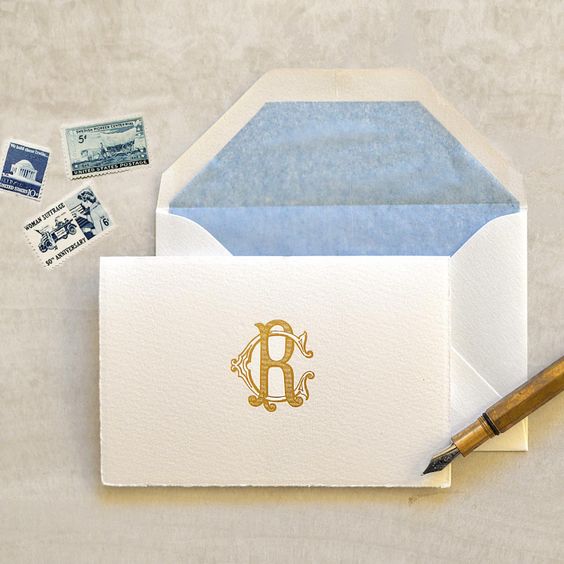
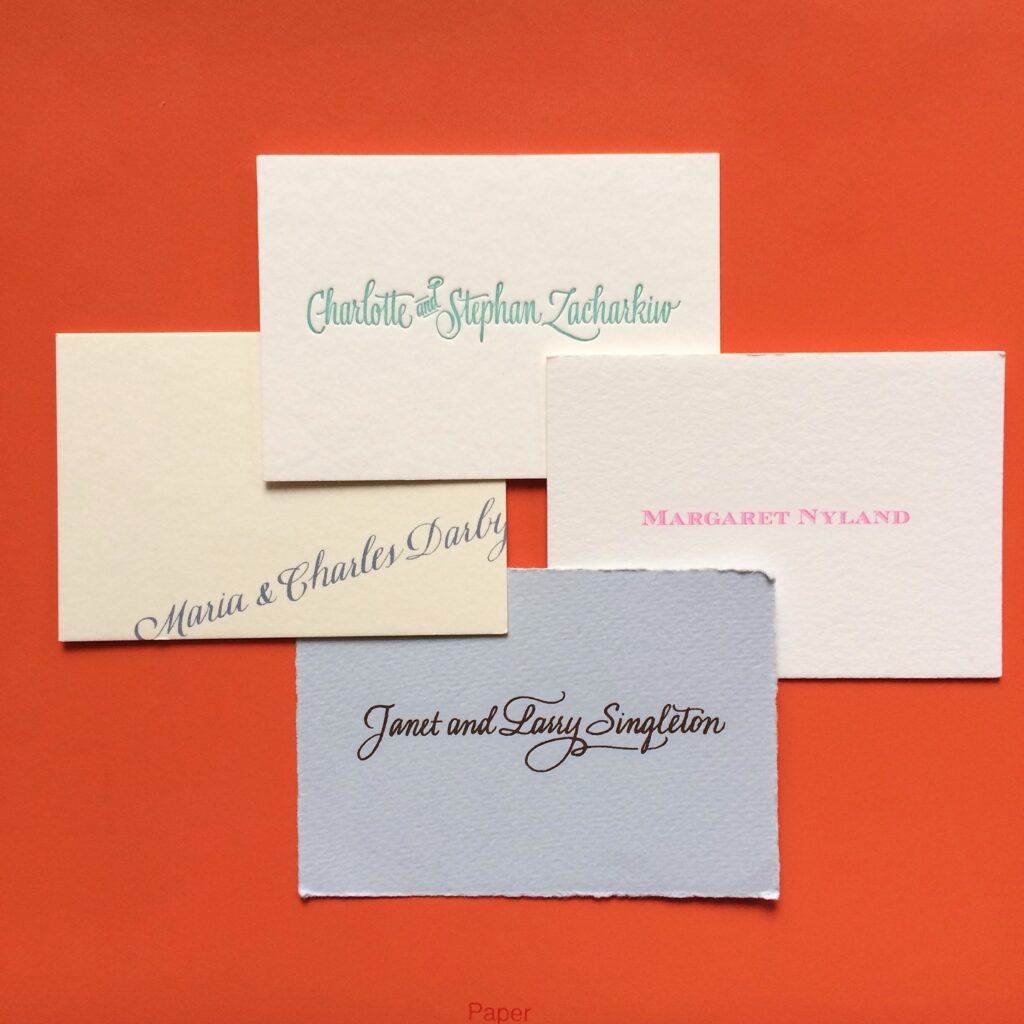
“For men and women, there is nothing like a beautiful engraved or letterpressed correspondence card, whether it is with a monogram or a name,” says Nancy Smith, founder of Walton Street Stationers. “It suits so many occasions, and the color of the paper and ink can make it more or less formal. We strongly believe the quality of the paper matters, and with that, thermography can also be nice when it is on good quality paper. For children, it is so fun for them to have something with their name on it, and sometimes, depending on their age, a fun motif that reflects them. We work with vendors who have some absolutely adorable motifs and we can also have them custom made, which is really fun!”
Emilie Dulles, owner of Dulles Designs, says, “Engraving is the most luxurious form of printing and it stands out in a sea of quickly printed, lower-end, online papers. I have seen an increased appreciation for engraved stationery over the last few years, especially with clients who are very color conscious and want to have their stationery reflect their level of taste, sophistication, and style.”
“Hand-lettering artwork for your name and hand-drawn monograms are also highly sought after by clients who appreciate a bespoke stationery concept from start to finish and are interested in having a font for their name that might be used by a family member or friend,” says Dulles.
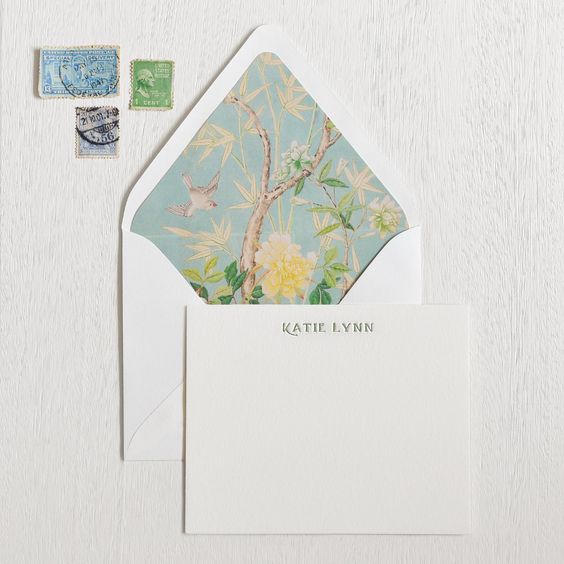
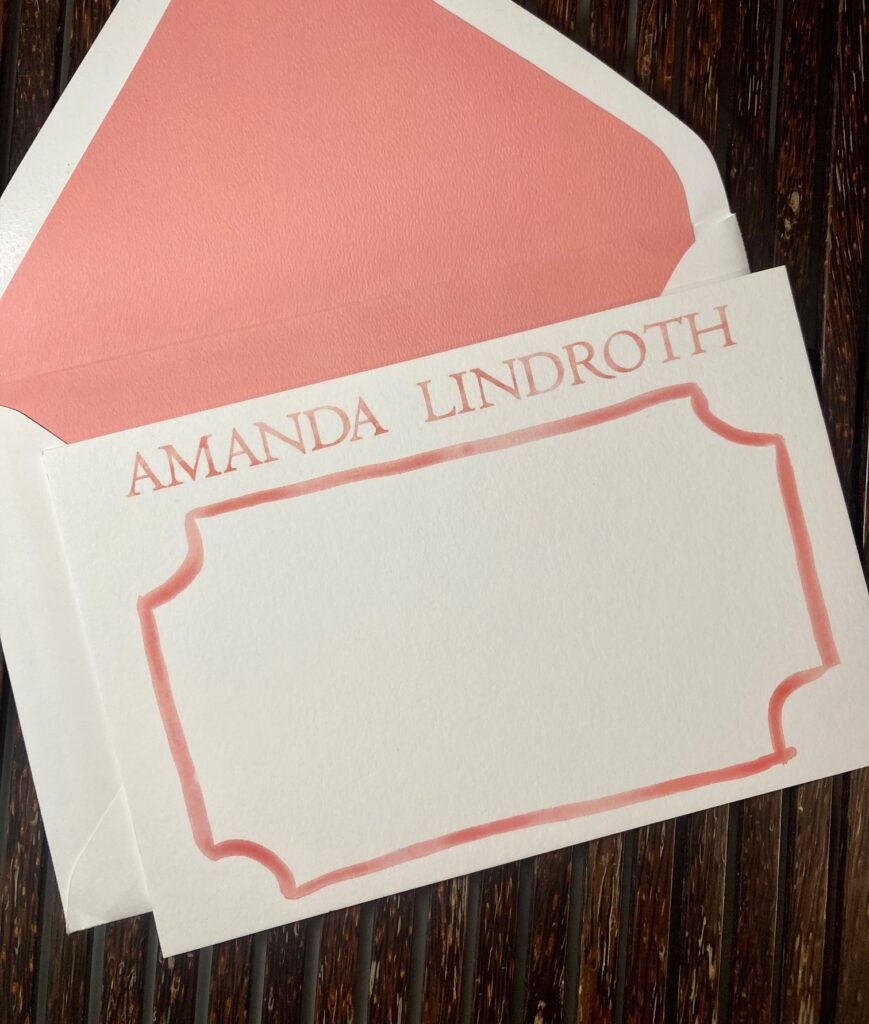
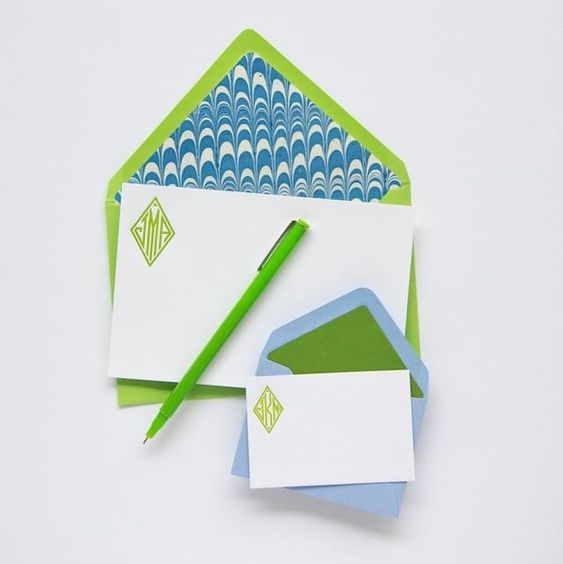
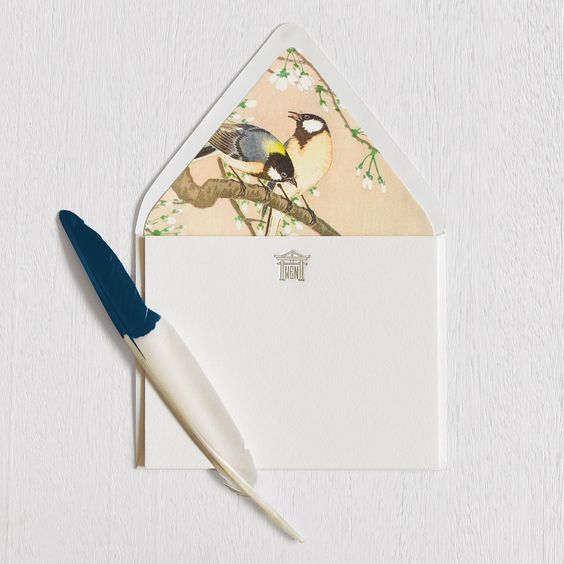
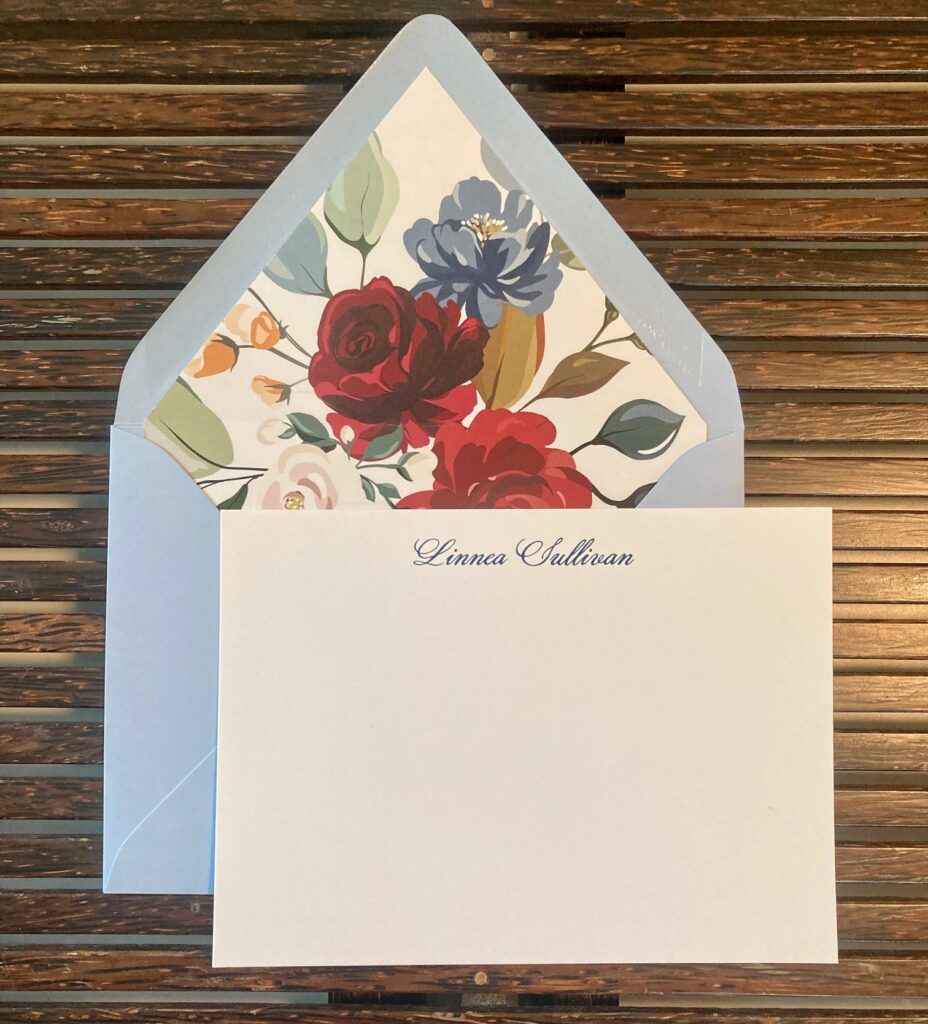
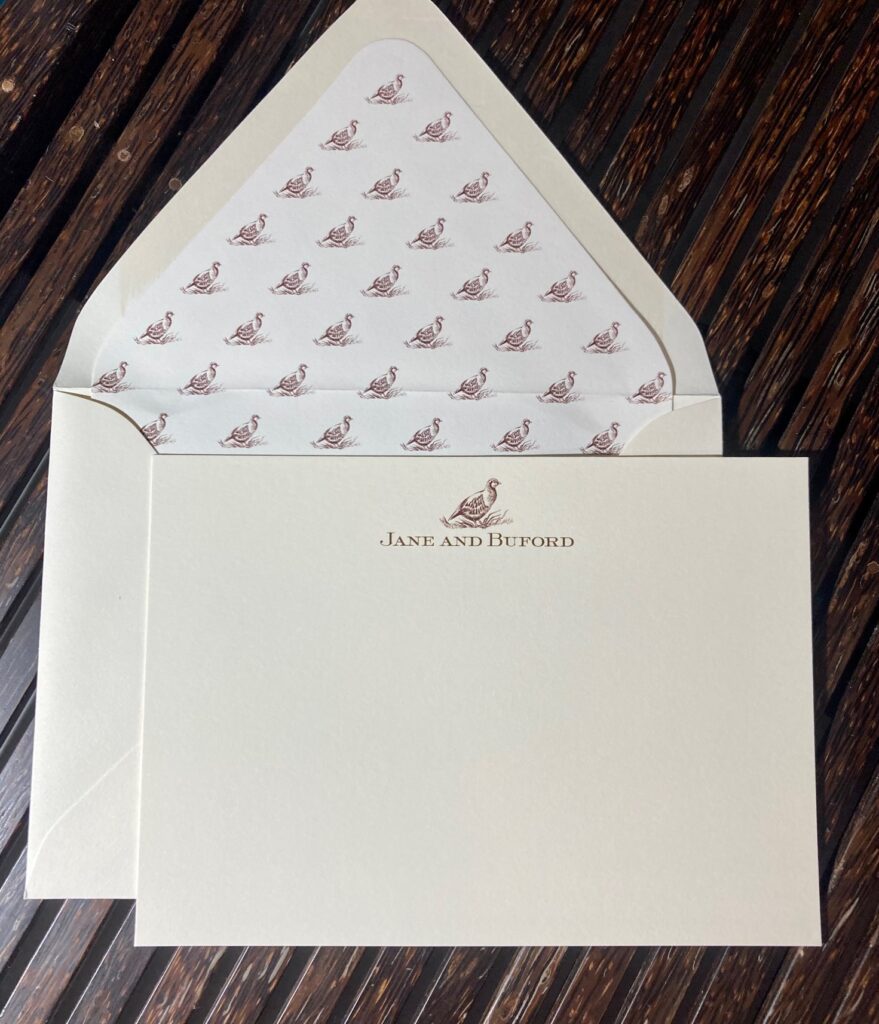
Dulles says “Our custom printed patterned envelope linings – using florals, stripes, motifs, and watercolors – are a trend that is here to stay as they are the essence of bespoke stationery and embellish any envelope and message delivery with distinction and panache! Hand-painted edges, bevels, and borders are sumptuous embellishments to dress up any note card and elevate stationery to a work of ‘mailable’ art!”
Smith says, “I love a printed return address, as it just gives the stationery a polished finish. But, if you have moved and still have envelopes that you don’t want to waste, you can get nice return address labels that will cover the old address without having to order new envelopes. Another thought, if you think you might be moving, is to order an embosser or a stamper with the return address, and then you can update those with a new address. We sell the stampers with many different setups as well as ink colors, so it will still give your stationery a finished look.”
Dulles says, “Lastly, don’t forget to pick pretty and on-theme stamps and PLEASE affix them squarely and carefully in the top right corner of your envelope. A crooked or boring stamp can ruin a first impression, so it is critical to put in a little extra effort in gathering lovely stamps to finish off your stationery or invitations.”
Perfect Pens and Ink Colors
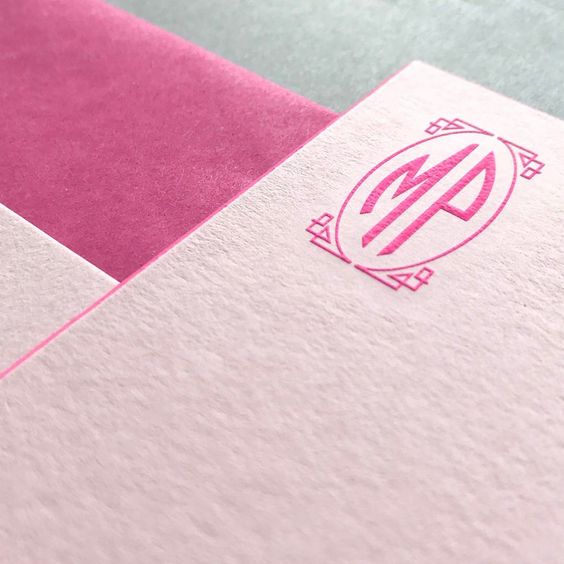
Nancy Smith with Walton Street Stationers says, “I am a big fan of different ink colors. While blue and black are always good choices, it can be fun to bring out some other colors, depending on the nature of the note. One of my personal favorites was a light gray correspondence card that we did, with a white border, and white engraved name….suitable for serious correspondence, including sympathy notes, with blue or black ink but such fun with turquoise or hot pink ink for something happy. Another fun option can be a monogram in two ink colors, and then play up those colors with your ink.”
Emilie Dulles says, “All pen selections are very personal! I prefer the fluid application of ink to paper that comes from using a fountain pen or a roller ball, but I’m also apt to use a ballpoint pen if the right tip feels right on certain papers – also depends on the texture and finish of the stock.”
Dulles continues, “I always recommend buying a number of pens in different colors to complement your stationery and to test them out before committing to writing out a full letter or note. It is important to not give up on using stationery just because you don’t love writing on it with a certain pen. Just like a certain pair of shoes can make or break an outfit, the right pen can make all the difference with bespoke stationery.”
“In terms of ink colors for pens, you always want to make sure your selection looks intentional,” says Dulles. “Black, navy, and charcoal are safe bets to go with most stationery designs, yet there are some lovely pen colors that can really pop and elevate a more muted look as long as the tones are consistent and don’t clash.”
Nancy Smith says, “Calling cards are such a great things to have for all ages… when you meet someone and want to be able to connect, you can just give them a nice calling card. For 20+ somethings, they are fabulous as they are entering the work world and meeting with people, networking, etc…it is a great way for that person to be able to follow up with you, and, along, with a hand written thank you note, a great way to stand out in the crowd.”
“The elegant world has grown tired of email and texts and Zoom communication. Calling cards are not only terribly chic and refined, but they are also wonderfully discreet and useful for today’s networking and socializing,” says Dulles. “Not only can a calling card be designed to each person’s aesthetic and reflect their unique tastes in ways that a text or email never could, but they can also include as much or as little personal information as they desire to share. You can hand-write any necessary contact details on a need to know basis, which allows both ladies and gentlemen to be discerning about who will have their private cell phone number or email address.”
Building your Stationery Wardrobe: Tips from Dulles Designs
GENTLEMEN
Gentlemen who wish to make a distinctive impression socially and professionally should have a well-adorned stationery wardrobe.
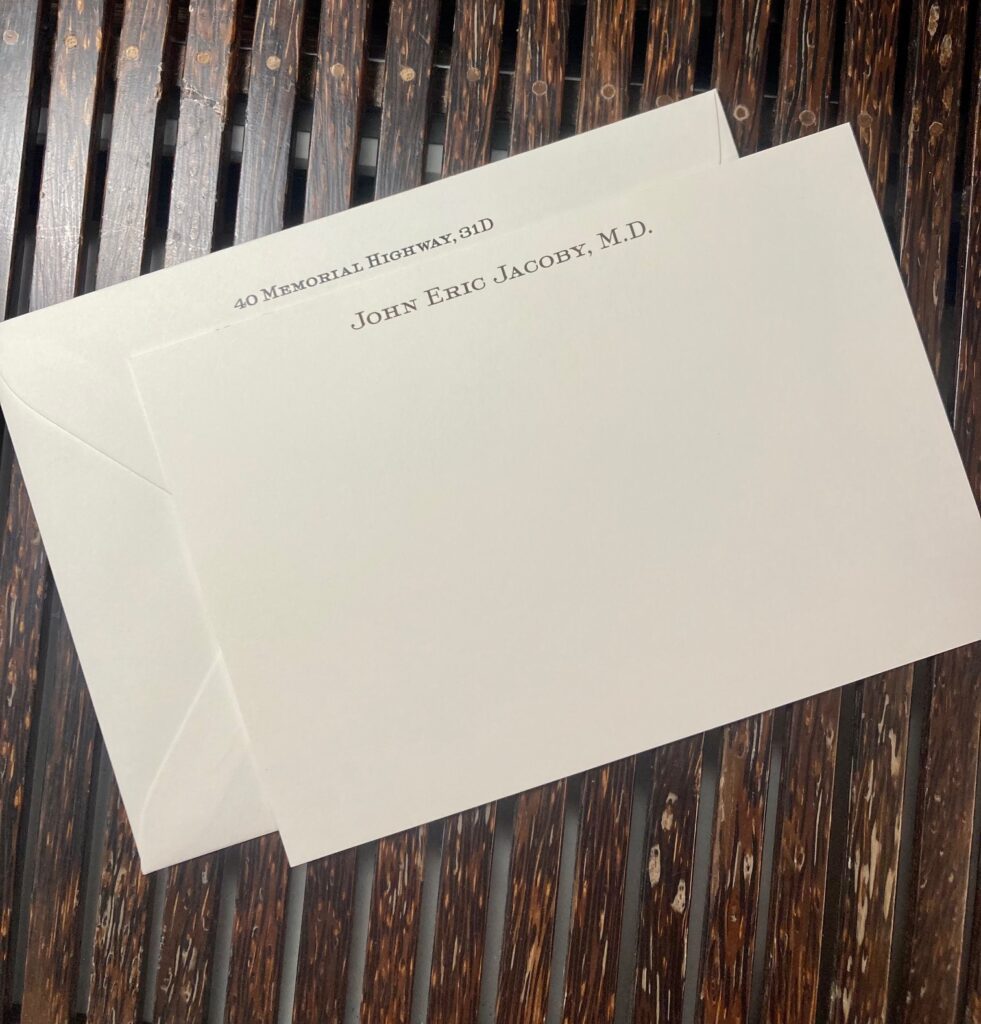
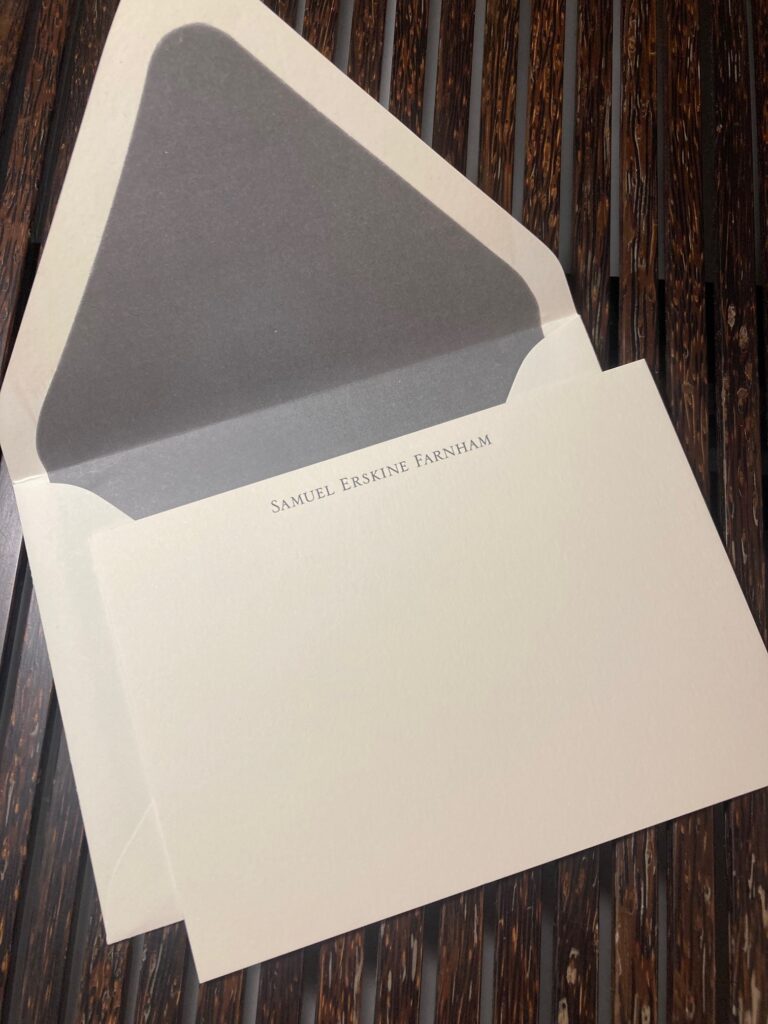
It starts with a classic note card, either soft white or ecru paper, engraved in a handsome ink color with their full name in a timeless block font, of which there are many in our collection.
Charcoal, indigo, navy, hunter green, and chocolate brown are always handsome ink colors for gentlemen –– akin to having a bespoke navy blue blazer or dark grey suit for all occasions.
One strong Dulles Designs recommendation is to include a letter sheet that is twice the writing area of a note card, for writing longer missives whilst sharing the same envelope size as their note card.
Lastly, every gentleman should have a personal calling card that is not his career business card, to match his stationery wardrobe. Calling cards can also be as traditional as stating his full name only, or include his cell phone and/or email address.
My husband insists on presenting a couple’s calling card, one that has both of our first names, cell phones, and emails, to be sure recipients know full well that he is happily married!
A woman’s stationery wardrobe can be as aesthetically driven and customized as their clothing wardrobe or jewelry collection.
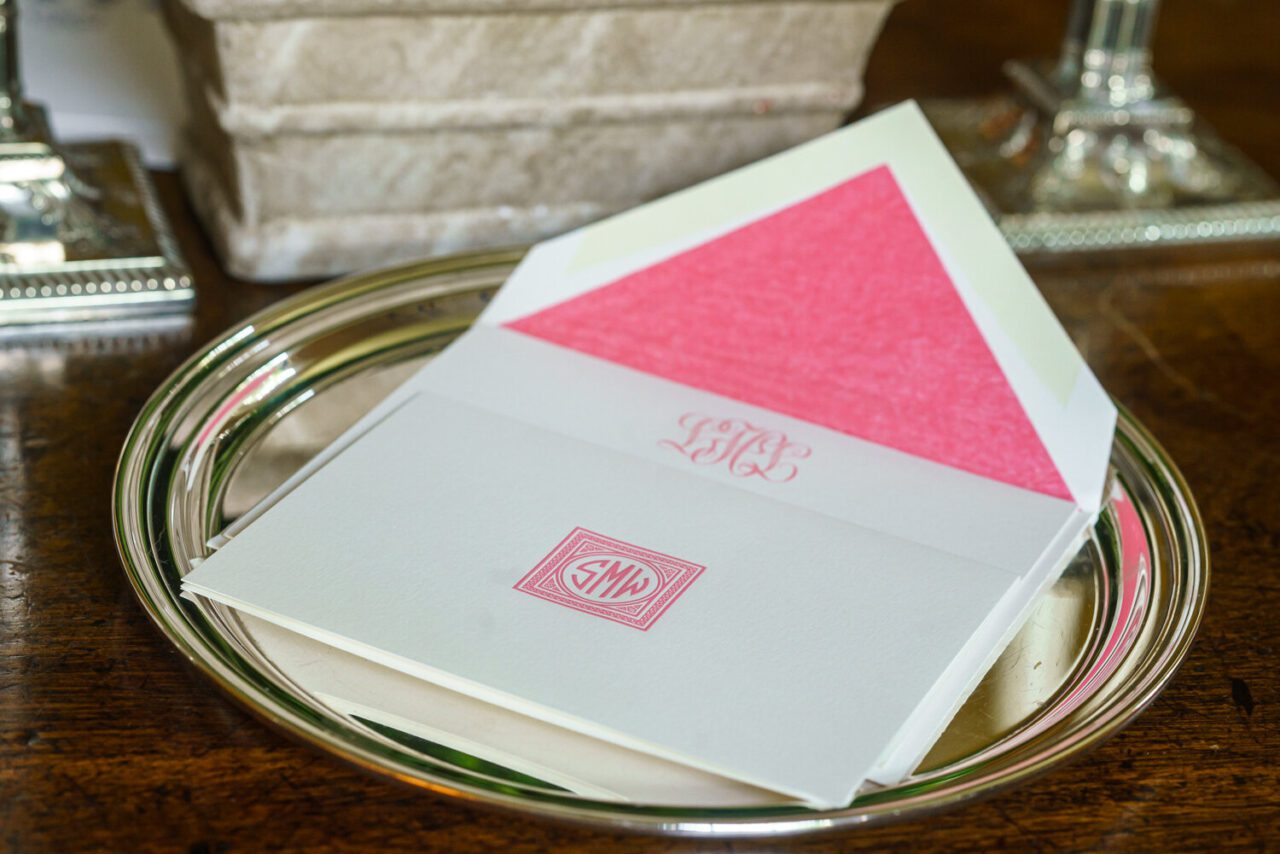
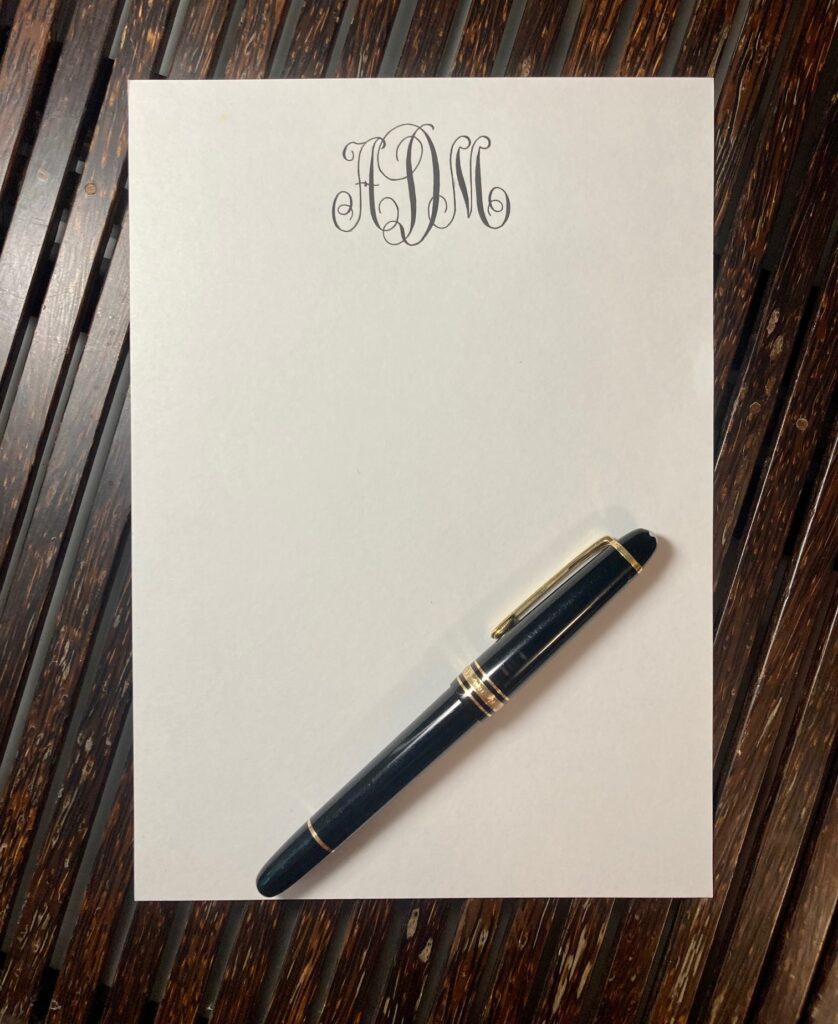
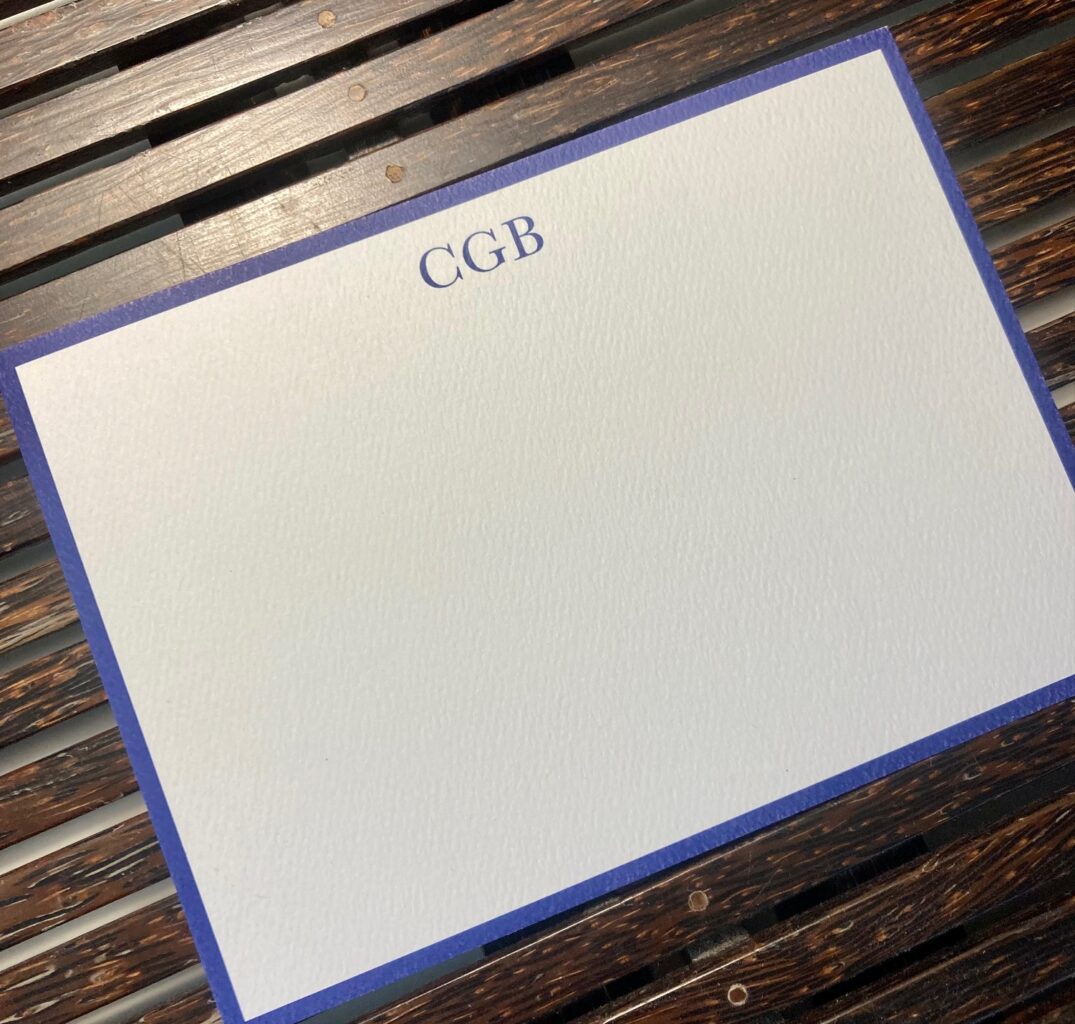
All ladies, at the minimum, need a classic note card personalized with their full name or monogram to handle a variety of messages akin to a LBD. A soft white or ivory card engraved in a chic timeless ink color is ideal.
Hermès orange is a neutral for some ladies, yet it wouldn’t be appropriate for writing a condolence note, so best to stick to metallic gold, navy, grey, taupe or hunter green for example.
Then ladies need a letter sheet and/or fold-over note for longer messages. Both formats are lovely for more traditional notes and it is up to personal preference as to which is added to their stationery wardrobe first. These can be engraved with their full name or their monogram.
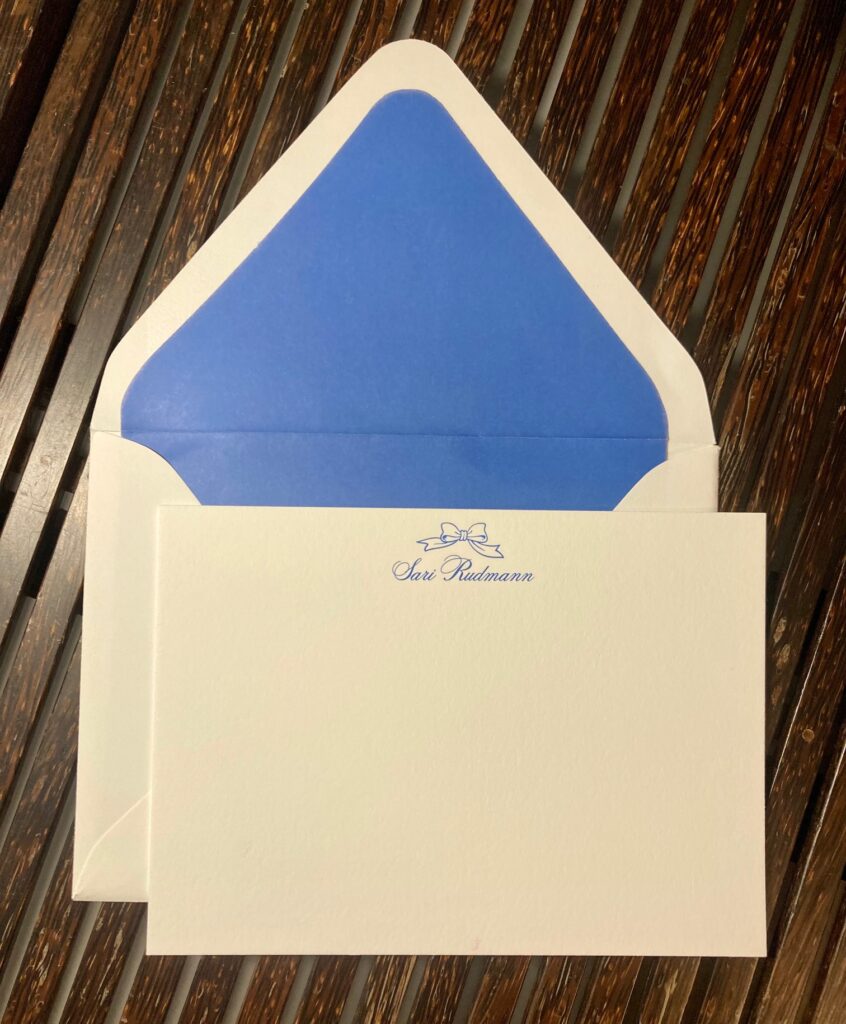
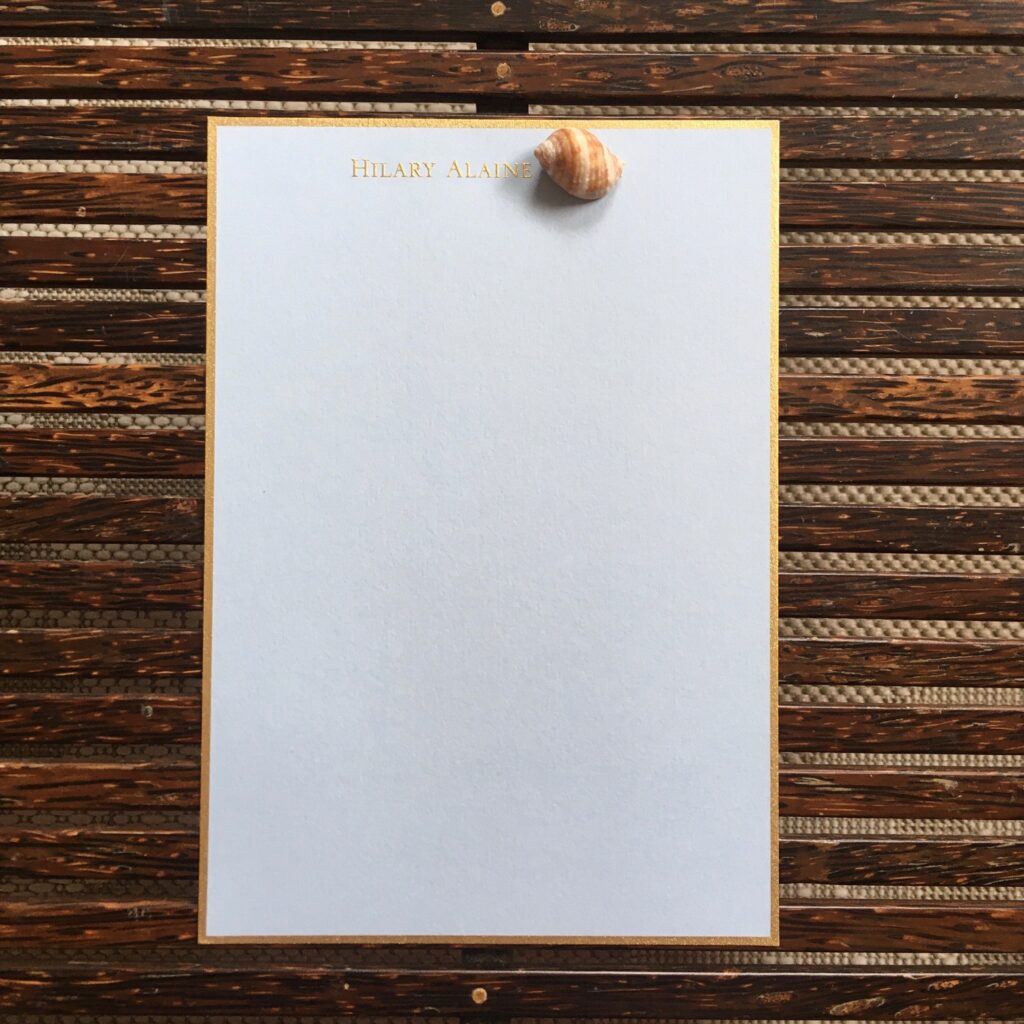
A fun set of note card with a bold color is a must for the fashion forward writers! I love a bright card stock engraved in white or gold ink paired with a colored envelope and unique lining inside. Think of the favorite room in your home or the outfit that makes you feel amazing, then draw inspiration for your stationery that makes a stylistic splash!
Calling cards are always a must for a lady – much more elegant and distinctive than a text message – and if they include just your name, then they can double as a gift enclosure.
Otherwise, the most thoughtful of gifts includes a lady’s gift enclosure with can be paired with a darling petite lined envelope.
The art, tradition, and joy of hand-written notes are ideally shared with children from a young age. The best way to instill this gracious habit in younger generations is for children to have their own custom stationery, even before they can write the notes themselves.
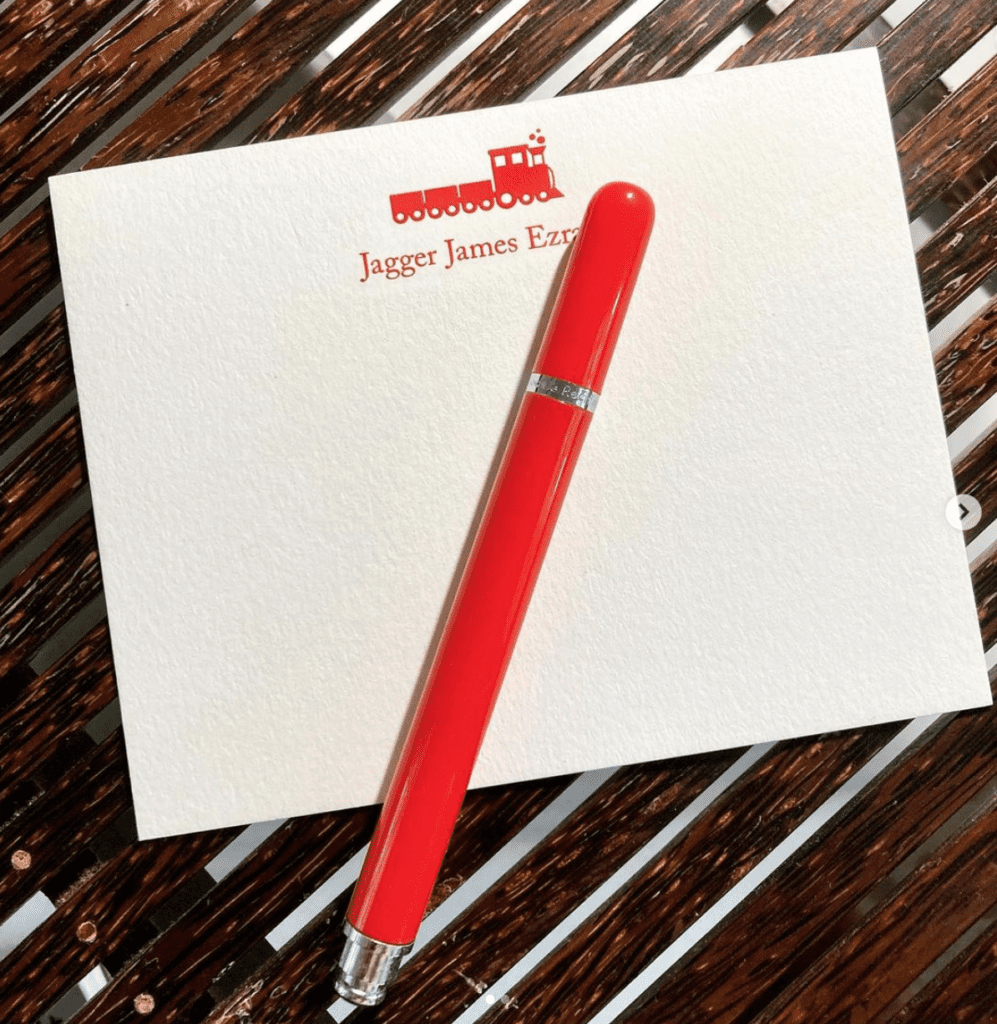
A small note card printed with their name in a cherished ink color and an age appropriate motif is a favorite for children.
Gift enclosures are also a must in a beginner paper lover’s stationery wardrobe, because they are so helpful for the many birthdays and events that little ones attend.
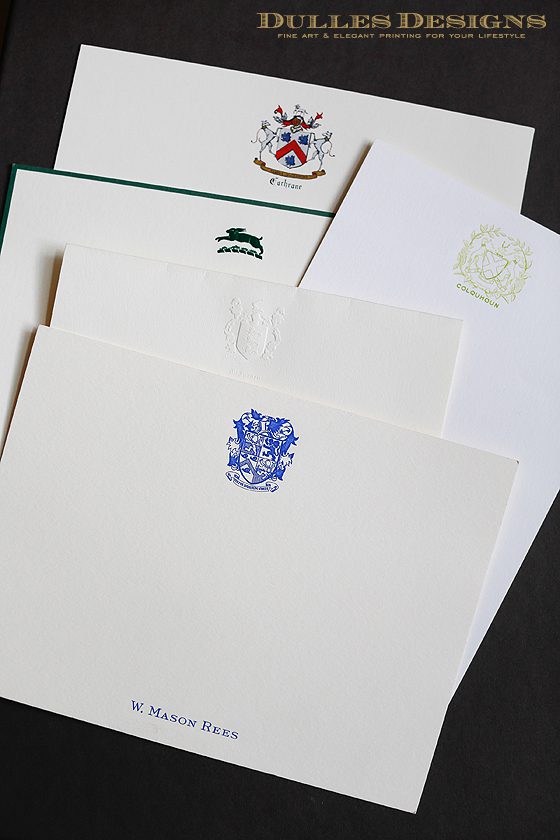
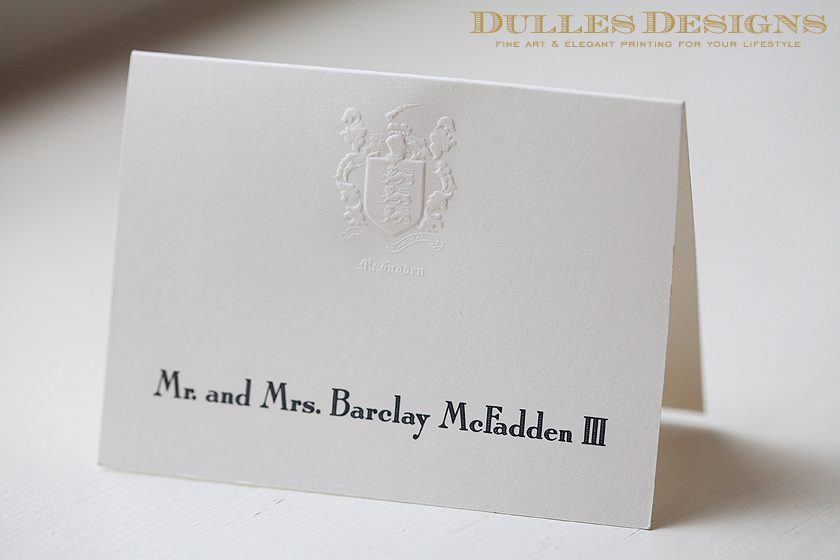
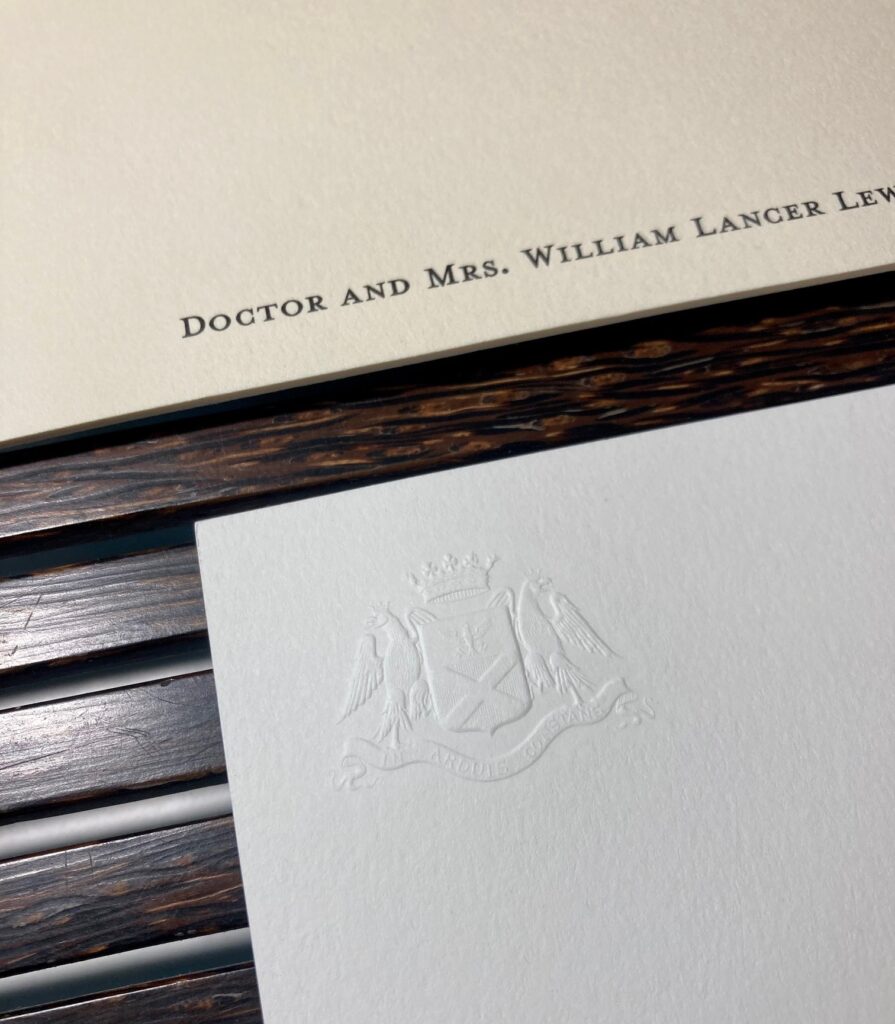
Family crest stationery, either embossed or engraved or full-color printed, is an elegant option that can be used by every member of the family.
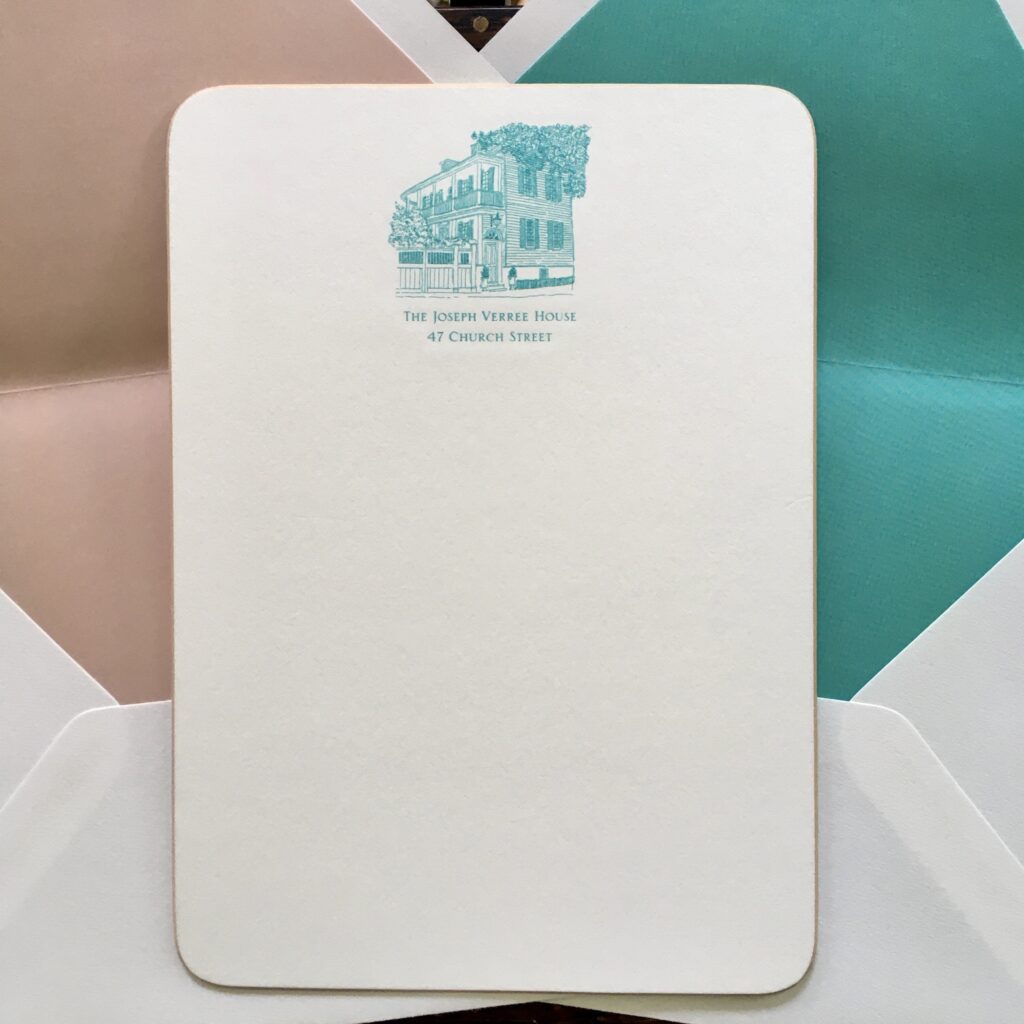
Estate or seasonal home stationery with a bespoke rendering or watercolor artwork of the façade or the property name can also serve as thank you notes, as well as for hand-written invitations to planned or impromptu cocktail parties or an intimate dinner party – so chic!
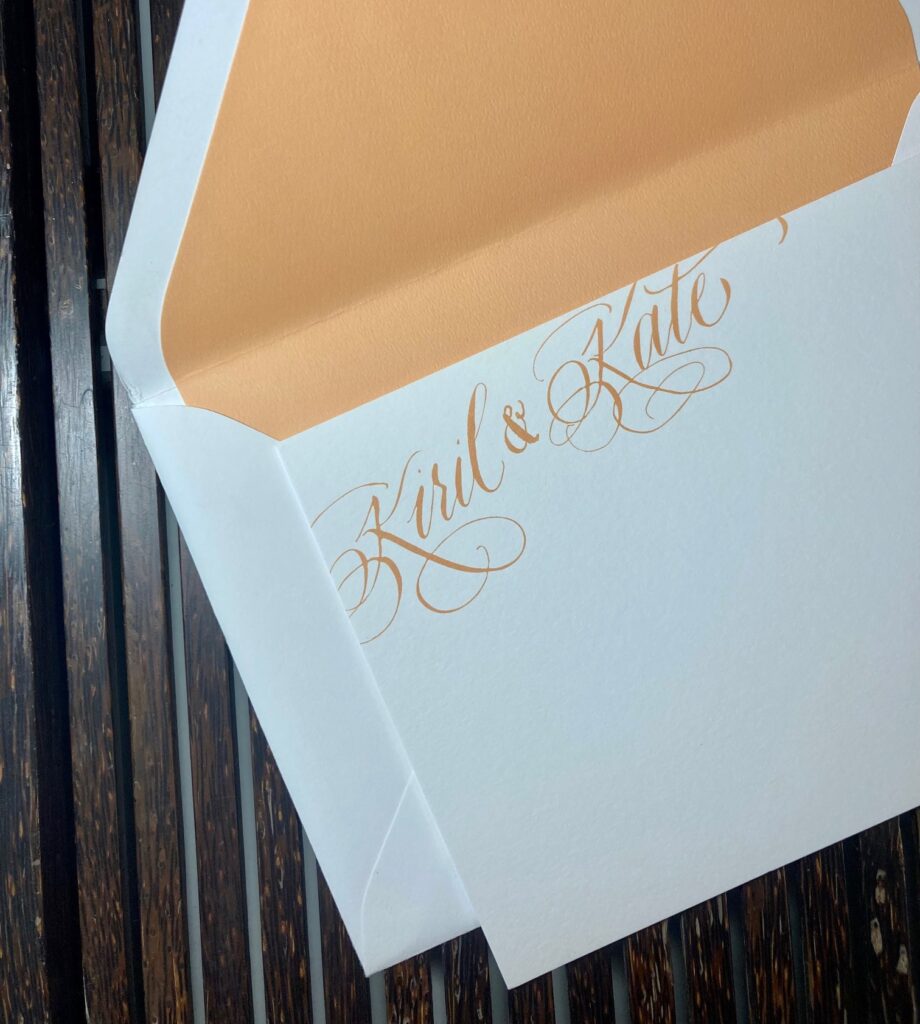
Couples stationery is perfect to thank for a dinner party invitation or to reply to a formal event or to send in lieu of a pre-printed greeting card. This can range from the formal with full “married names” to the more casual with first names only.
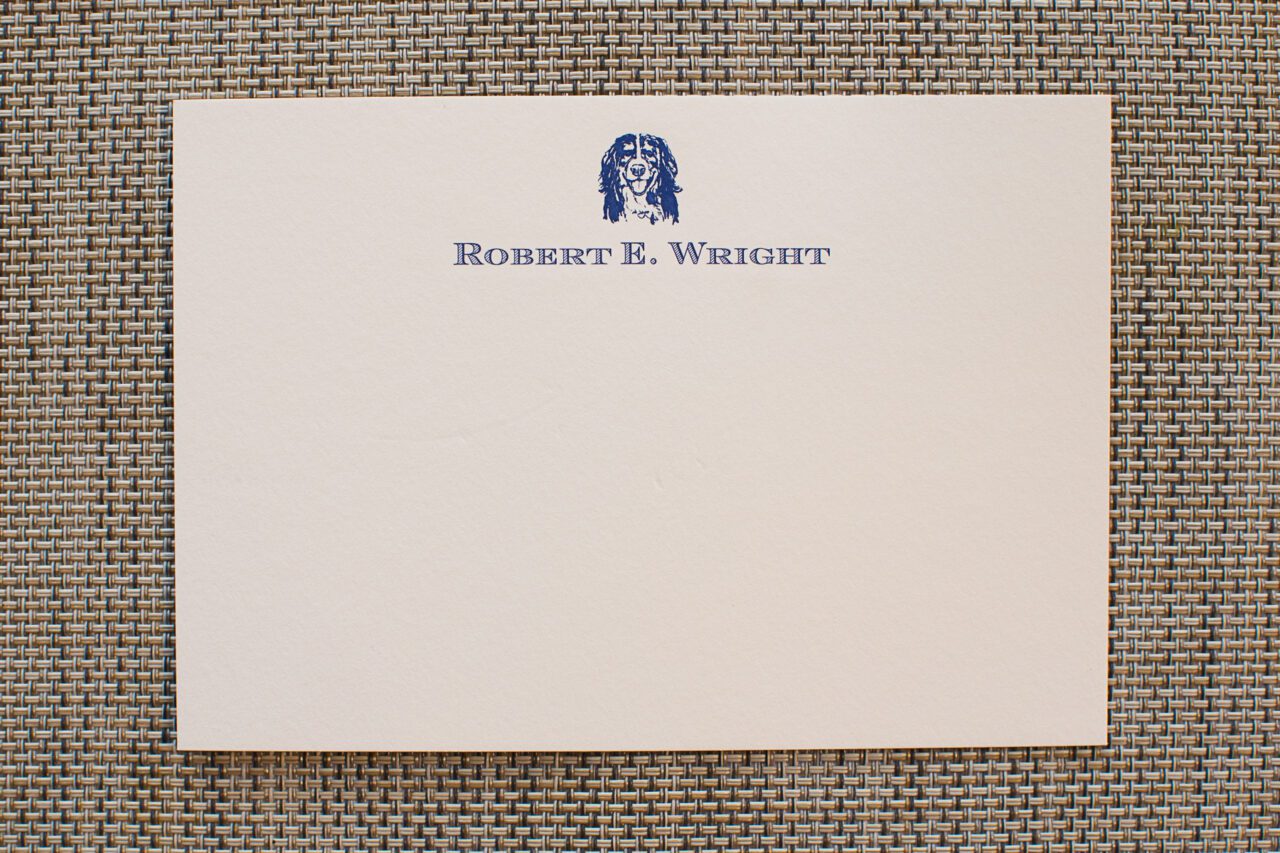
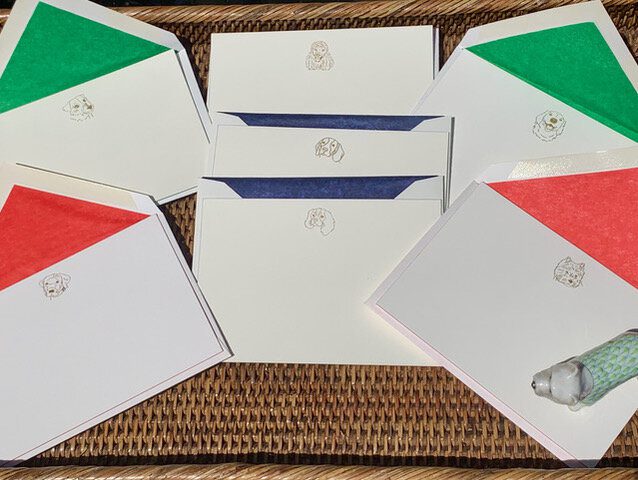
Pet stationery is also a fun family favorite that includes a rendering of your furry friend.
All of the above pieces also make fantastic gifts for engaged couples or newlyweds or on the occasion of an anniversary.
Are hand-written letters still relevant in today’s digital world?
In closing, we asked our experts to weigh in on why it is more important now than ever to take the time for handwritten correspondence…
Emilie Dulles, Dulles Designs:
Stationery sales have definitely been going strong the last few years as we all realize the importance of staying in touch and also reconnecting with our loved ones in meaningful ways! Stationery is the perfect tool and gift to reach out and also stand out when so much of our world is going digital.
Stationery, hand-written envelopes, and custom printed invitations also have the advantages of discretion and distinction. You can’t hack or forward or “reply all” to a piece of mail! Our stationery and event printing clients at the highest levels appreciate that their formal correspondence, invitations, and celebrations are kept safe and secure via bespoke papers and a postage stamp.
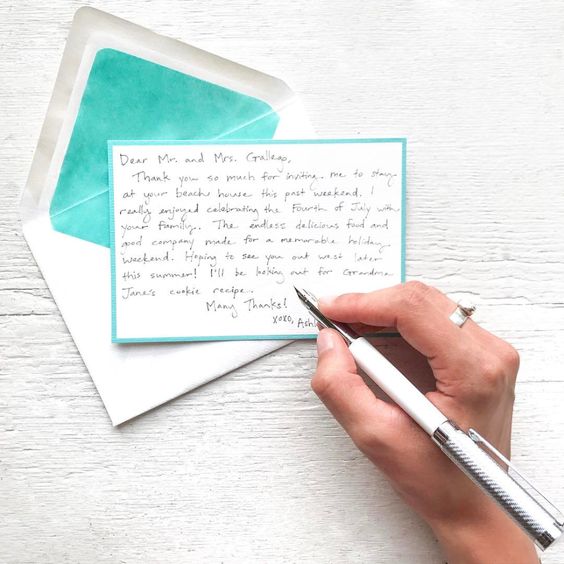
Writing is an integral part of the human experience for gracious living and communicating. It is also good for our mental health. Writing by hand forces us to slow down, carefully select the piece of paper we want, take out a favorite pen, and then gather our thoughts before putting pen to paper.
Writing words of gratitude –– be they for a joyful occasion (birthday, gift, anniversary, wedding, graduation) –– help anchor gratitude into our spirits or for more somber occasions (illness, grief) they help us to process emotions in a tangible way and remember the love and support that surrounds us.
There is also an element of romance to sending hand-written correspondence that connects us to how our ancestors stayed in touch with loved ones regardless of geographic distance.
When you hand-write and mail thoughts of love, gratitude, and wisdom, you make them even more real and they become part of your personal history to be revisited by and shared with generations to come.
Margaret Jones, Scriptura:
We are all in such a hurry these days, sometimes so much so that sitting down to write a thank you note seems unimaginable – especially with the ease of typing a text or shooting an email. This however, defeats the purpose of genuinely expressing thanks. Out of respect for the individual who hosted a dinner party, referred a client or sent a present, we owe them the gift of our time and consideration in composing a thoughtful note of thanks. There is something satisfying about sitting down, writing on a carefully selected card or piece of personalized stationery and finding just the right words of appreciation. Doing so honors the recipient and helps maintain the bonds of friendship in an elegant and lasting way.
Your mother was right, there simply is no substitute for a hand written note.
Nancy Smith, Walton Street Stationers
Stationery sales are strong…I think there is a real connection that people are having with an actual hand written note, as opposed to something fleeting like an email or text. During the height of Covid, it was a wonderful way to “be with friends”, if you will. Hand written notes are heartfelt. Writing a note, can also be meditative, and in this fast paced world, slowing down to write on nice stationery, is a wonderful way to relax.
I just discovered a book, The Lost Art of Handwriting by Brenna Jordan, and in her introduction, she says “The value of handwriting in relation to our interactions with others is immense. Handwriting is a slowing down, a connection to one another, and the history of our complex humanity. And because there is an in exhaustible craving within us for beauty and creative expression, handwriting is getting noticed in our fast paced culture.”
I am very happy to see the ‘grand millennials’ embracing beautiful stationery. It bodes well for the future. Since cursive writing is no longer being taught in schools, I would recommend the book mentioned above for anyone looking to improve their handwriting as she has wonderful tips to practice penmanship.
Thank you, ladies, for these wonderful and inspiring tips. I want to order one of everything! For additional information or inquiries, please visit the following:
Below is an outline of The Glam Pad’s six-week series on the art of letter writing, and all that is related to the subject. Below is an outline of topics are covering:
APRIL 8: Why hand-written letters and fine stationery (and calling cards!) are making a comeback, particularly among the Millennial generation. CLICK HERE TO READ