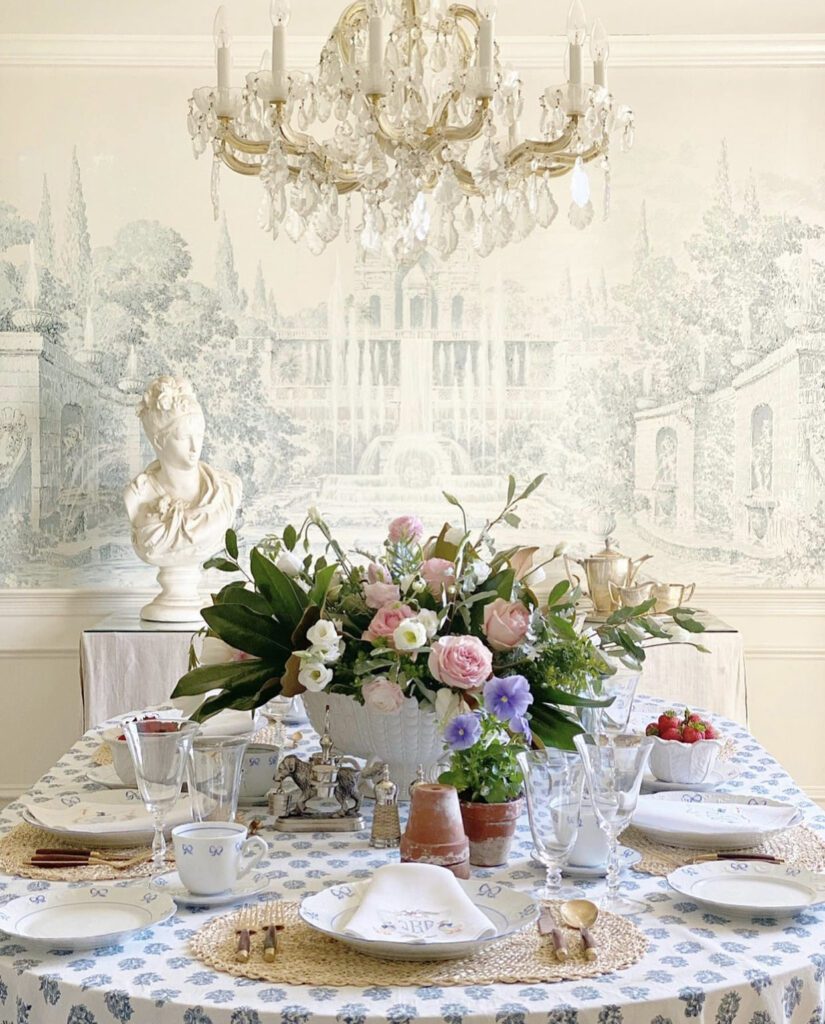
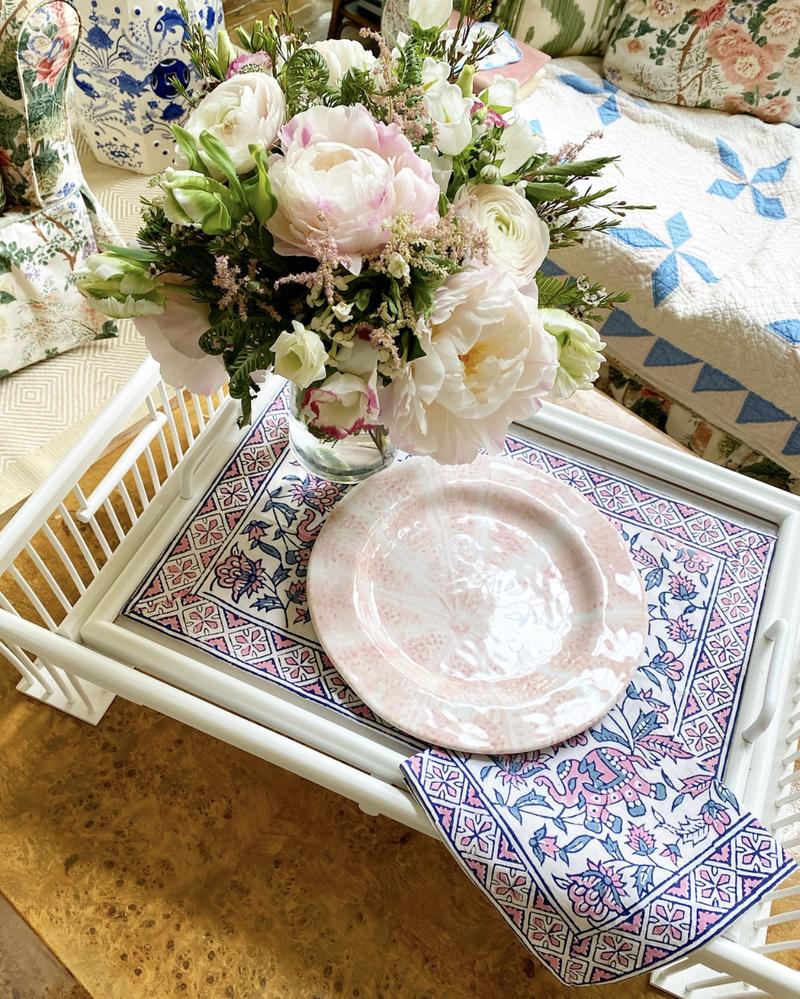
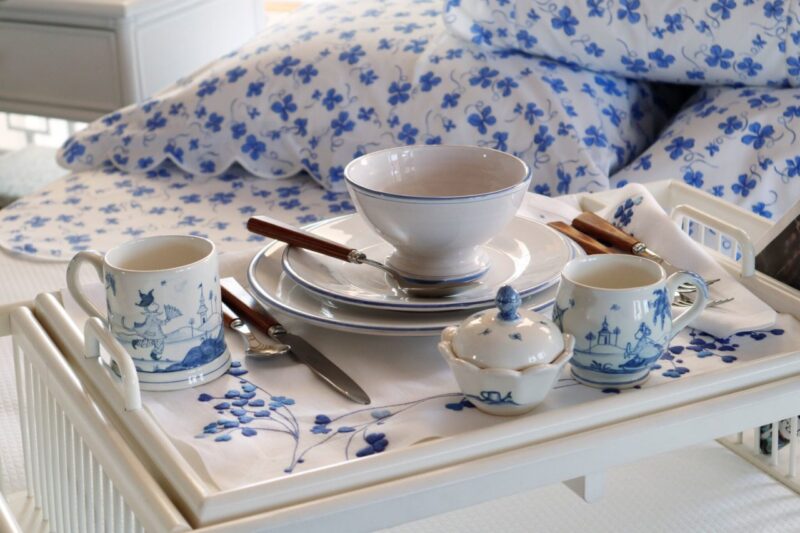
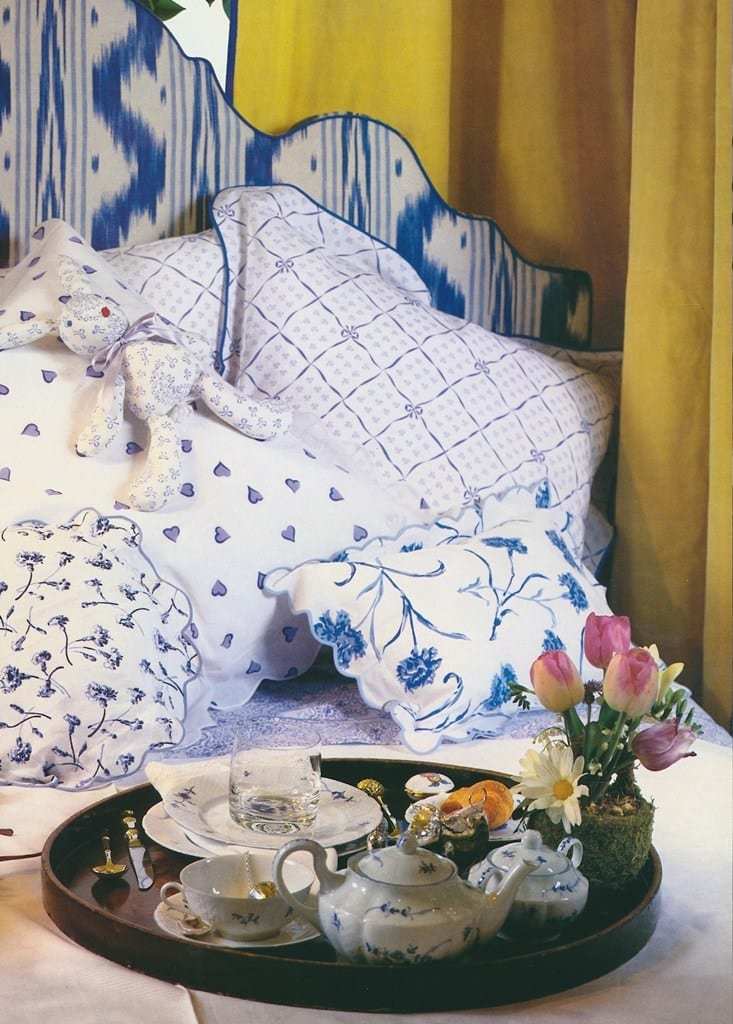
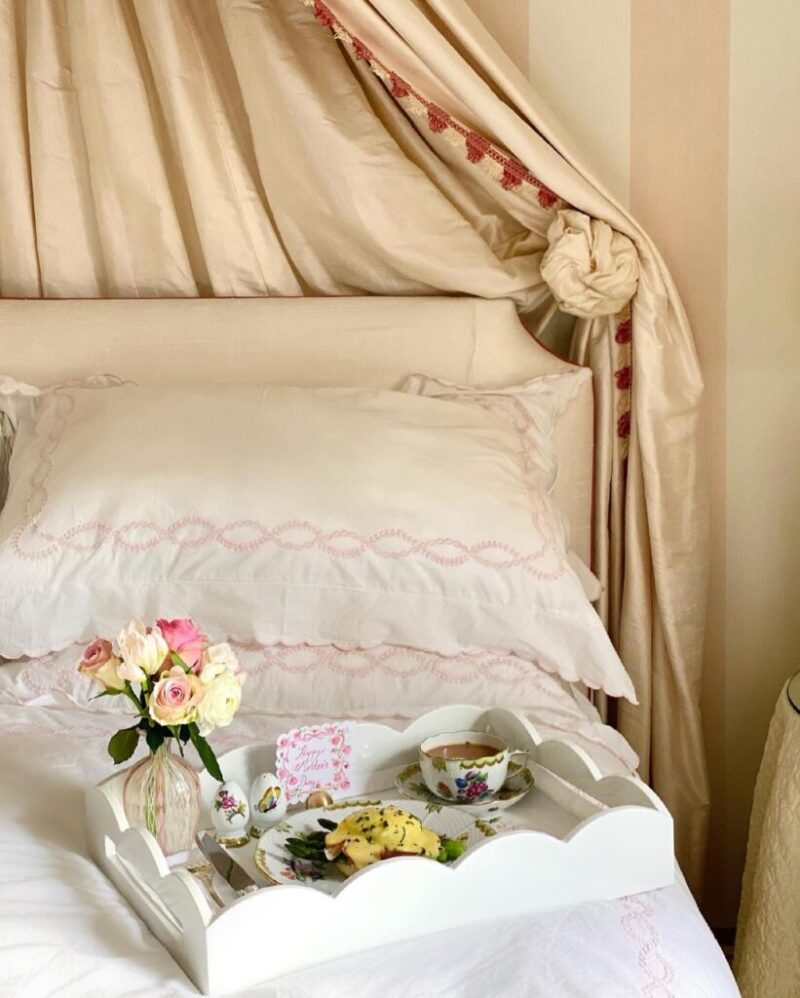
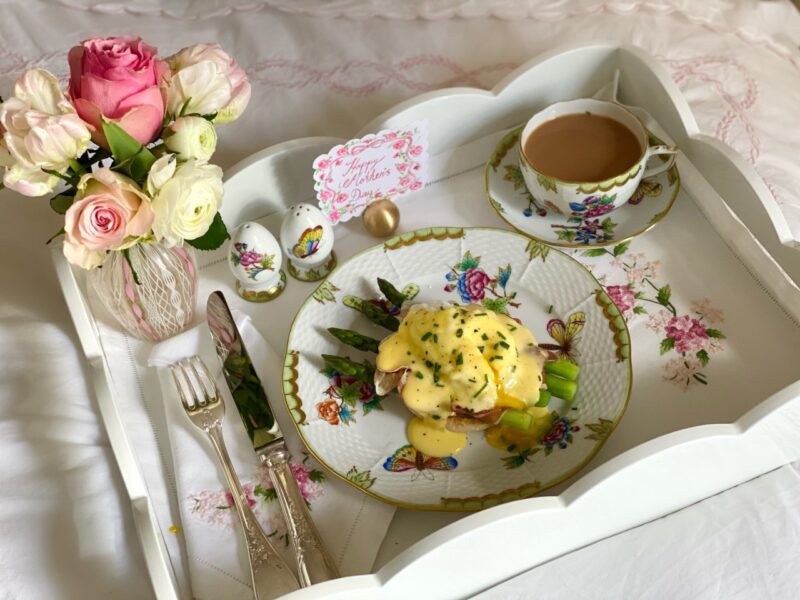
According to a 2020 survey, only 9% of moms really want breakfast in bed for Mother’s Day. At the top of the list? Some much-needed alone time. But lately, the latter is harder to come by than a freshly-dropped Nap Dress (hurry, there are still some left at time of writing!), so if you’re at a loss for where to begin shopping for mom, we have curated a cache of Mother’s Day cadeaux at every price point to help you on your way.
At the end of the day, it’s true: there’s nothing better than a hug and a homemade card from y-o-u… but for those asking, here’s a list of little luxuries that are lovely, too! (And to any dear readers who just so happen to be husbands, consider this a BIG hint, hint… Mother’s Day is May 9, 2021!)
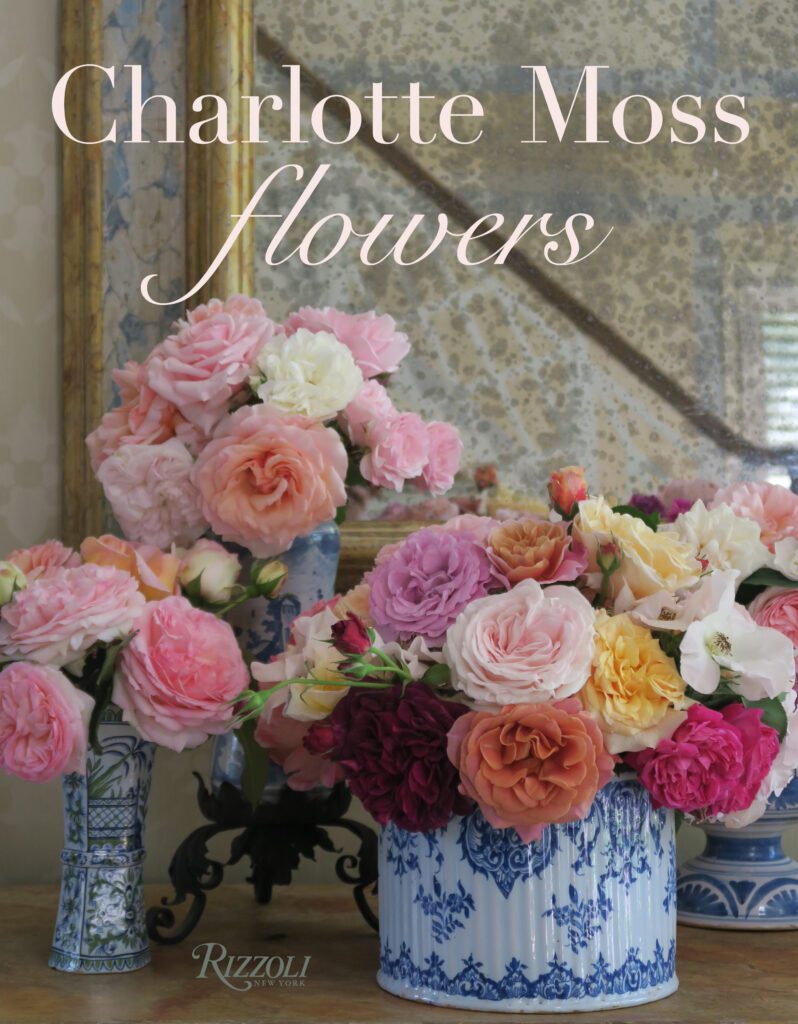
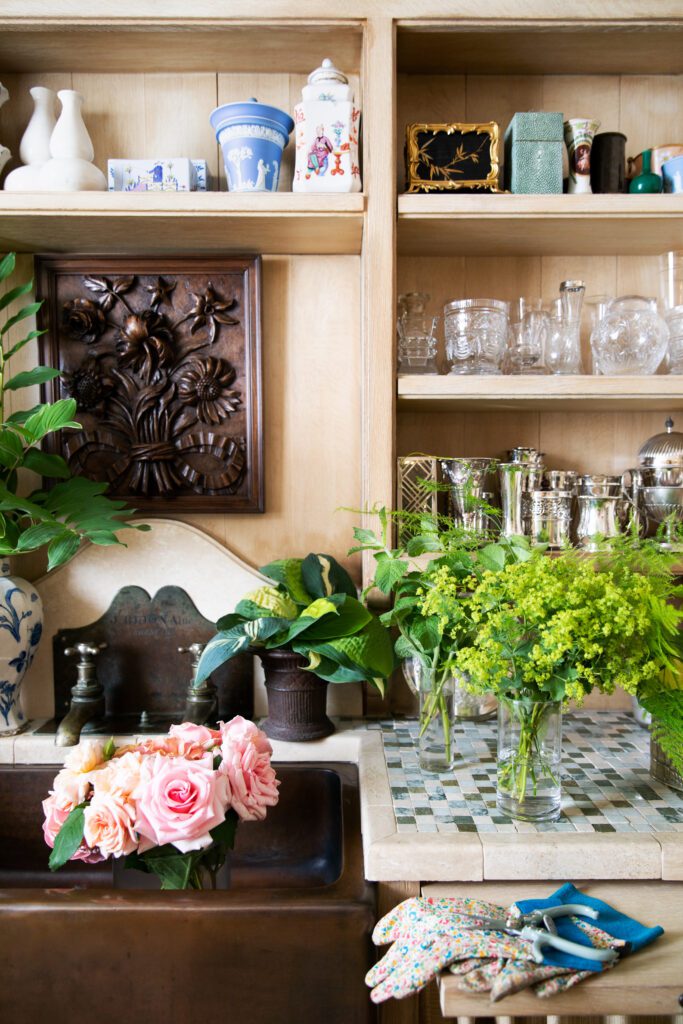
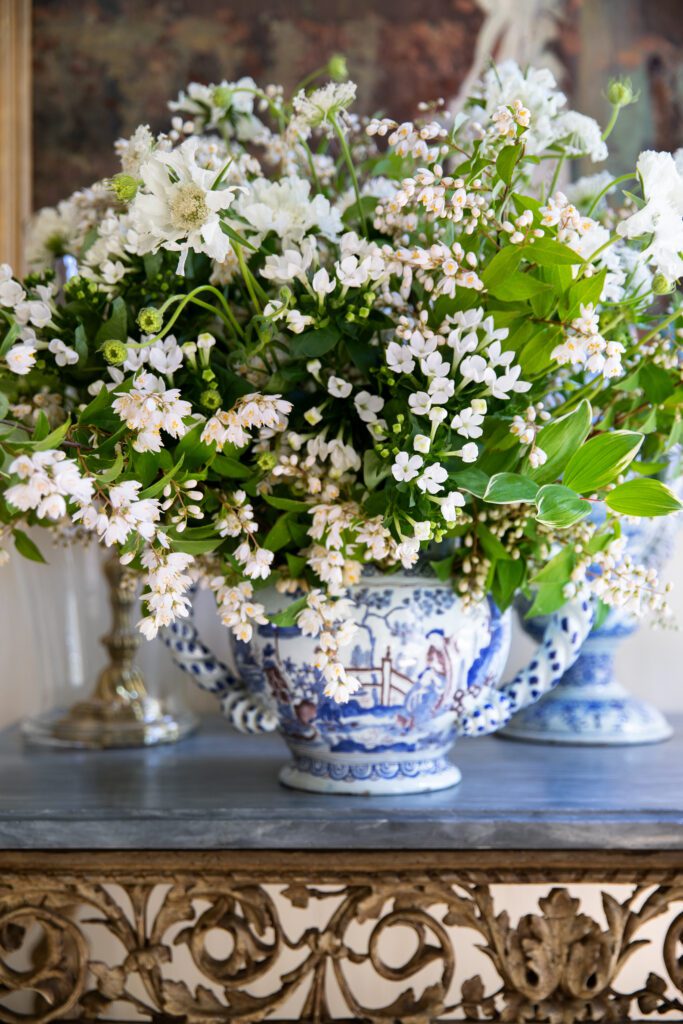
Charlotte Moss has been one of my favorite interior designers for decades, and I own every single one of her books… so naturally, it was a delight to receive her latest, Charlotte Moss Flowers, published by Rizzoli and released this month.
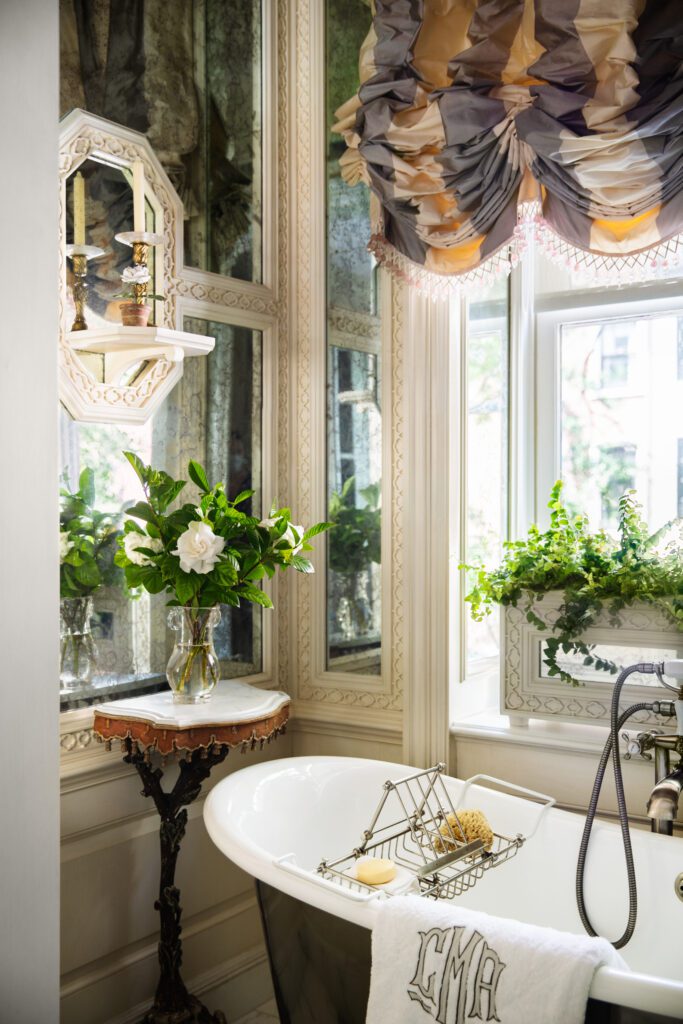
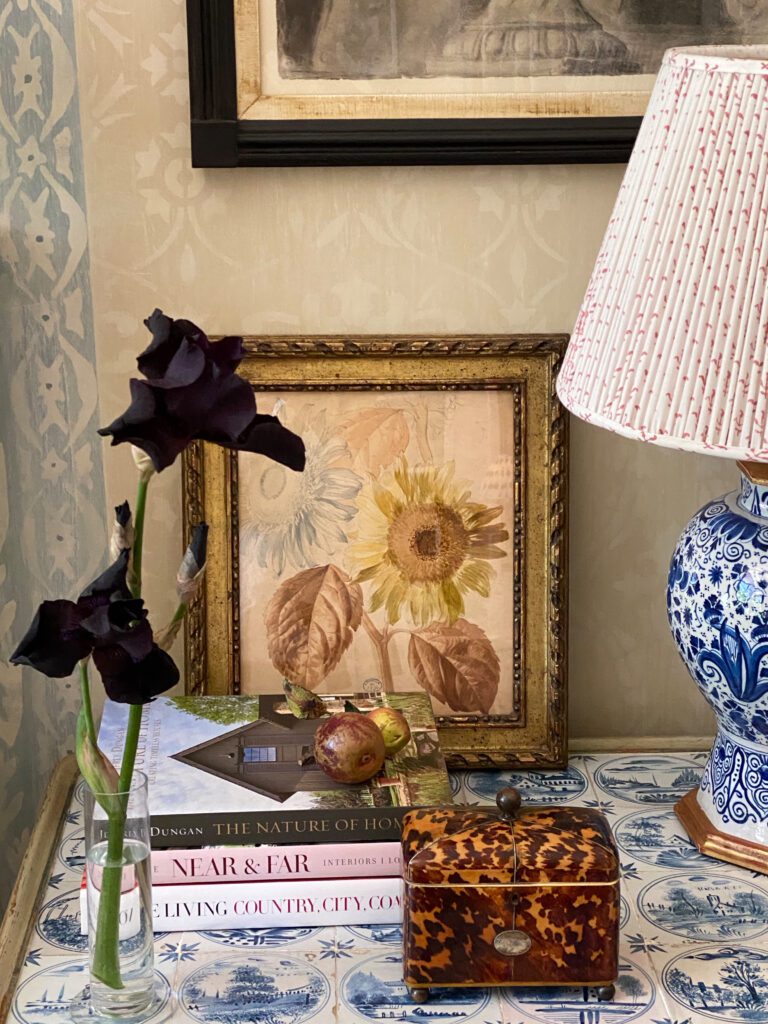
Charlotte has been documenting her floral compositions for over a decade and shares in these pages a scope of arrangement types, from an intimate and welcoming cluster of blooms on a guest room’s bedside table and a single perfect stem in a quiet corner of a room to lavish floral displays for the celebrations and holidays. She encourages readers to bring the garden indoors with ideas for arranging flowers, selecting containers, and placing blossoms around the house.
From Charlotte’s grander displays in the city to her more informal creations at home in the country, as well as in the refined interiors of her clients, the result is a vivid chronicle of how flowers provide visceral pleasure indoors and out. Readers will be further motivated as Moss describes the contributions of past tastemakers: Gloria Vanderbilt’s ingenious use of flowers in her licensed products and as complements to her iconoclastic interiors, Pauline de Rothschild’s fantastic tablescapes, Bunny Mellon’s signature topiaries and embrace of the simplicity and elegance of baskets, Constance Spry’s use of inventive containers and for her ground breaking artistry, and C.Z. Guest’s passion for orchids and roses.
Charlotte and her stepson James Friedberg, a glass artist based in San Francisco, have collaborated on a collection of vases to launch simultaneously with the book. There are six vases in the collection inspired by the women in the book. A small Venetian-style swirled-stripe vase is named for Fleur Cowles, a fluted opaline vase for Gloria Vanderbilt, a chic asymmetrical raindrop shape for Lee Radziwill, and a classical amphora for Colette. With the garden as her muse, Charlotte gives the reader tools to add botanical artistry to the tapestry of a life well lived, imbuing every day with the beauty and elegance of nature.
Charlotte Moss Flowers proves that flowers are not just for special occasions, but are best enjoyed as one of the loveliest elements of every-day living. Charlotte has authored ten books, most recently Charlotte Moss Entertains, published by Rizzoli in 2018.
The Glam Pad also adores “The Flowers of the Month” collaboration between Charlotte and Tommy Mitchell, available for purchase through Bergdorf Goodman. Initially inspired by William Furber’s “Twelve Months of Flowers,” Charlotte and Tommy worked together to create a collection of studies and standards that celebrate the twelve flowers of each month. From the sublime sweet pea to the everlasting honeysuckle, every month is thoughtfully created in wonderful detail. Each piece is crafted in metal and one of a kind. These would make an excellent Mother’s Day, which is just around the corner!
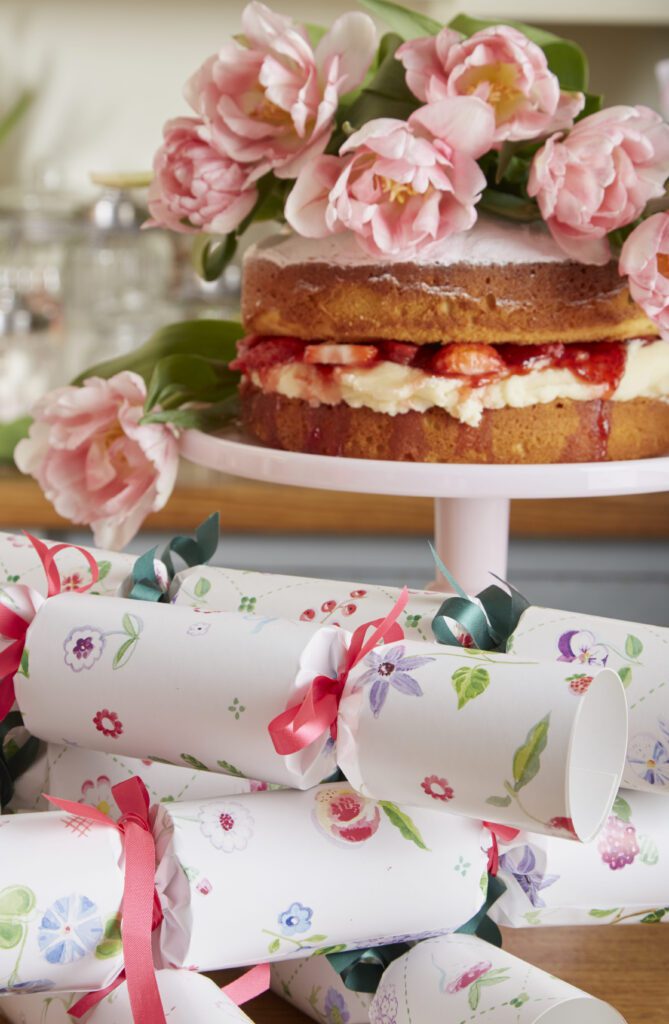
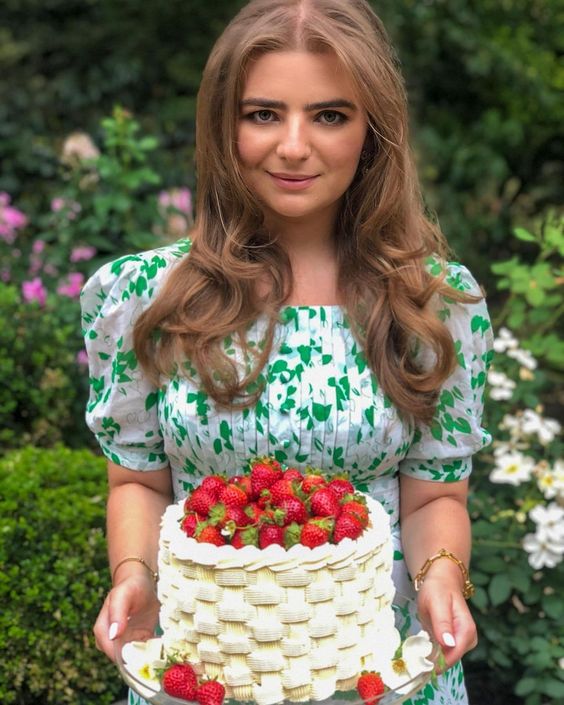
Amy-Beth Ellice has been cooking since the age of three. She became Britain’s youngest published cookery author in 2014 at just 16 years of age when she published her first book, Amy’s Baking Year. The book journeys through the seasons with delightful treats for all occasions, featuring everything from back-to-basic and traditional classics handed down through generations – such as a classic Victoria sponge and English madeleines – to Amy’s own creations that will take your breath away.
Amy-Beth Ellice grew up in a creative family in a small village in Essex, where the kitchen was the heart of the home. She developed a passion for cooking and baking as a toddler, inspired by her mum Gillian (a former interior designer) along with the TV cooks whom she loves to watch such as Nigella Lawson, Martha Stewart, and Ina Garten. At age 13 she set up her own cupcake and cake business, attracting several celebrities among her clients.
Following requests from friends, family, and teachers for baking tips, Amy started to record her recipes. She was featured in the Sunday Express newspaper and her first recipes were published in the paper’s magazine S Mag when she was just 14. Amy then selected her most gorgeous recipes and collected them in her stunning book, Amy’s Baking Year.
“Baking gives me the chance to express my creativity, inspired by my garden, the flowers, and the changing seasons,” she said. “Whether you are baking for a birthday celebration, fundraising event, or as a gift for family and friends, it is special because it has been homemade with fresh ingredients, and baked with thought and love.”
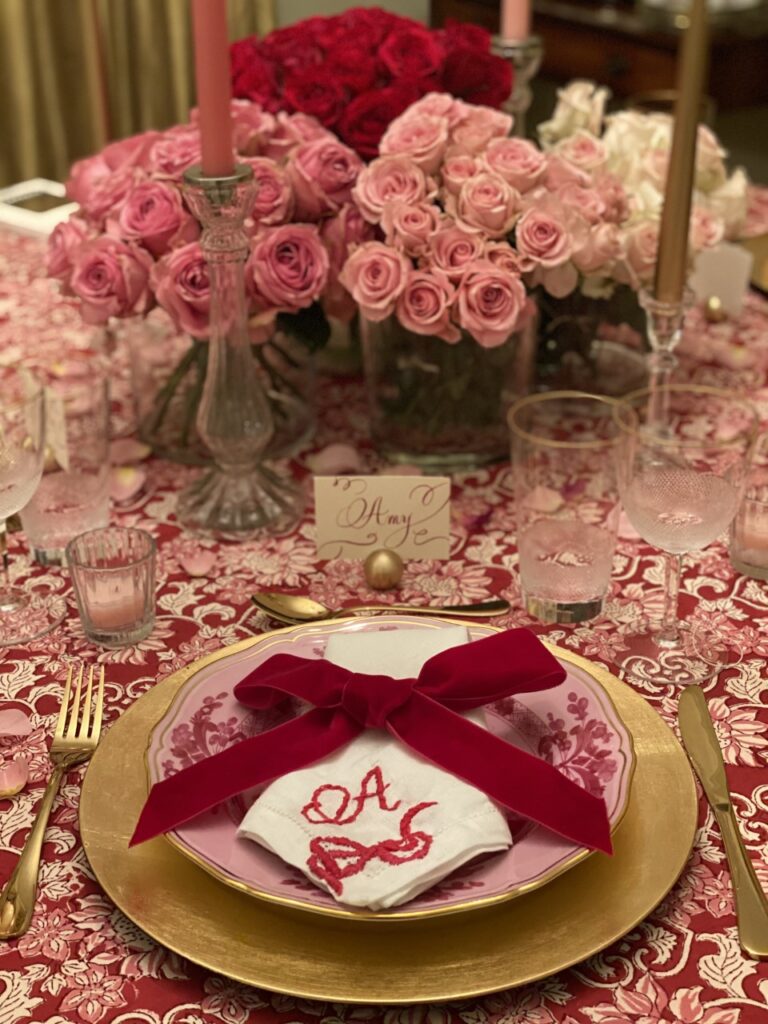
Today we will take a peek inside Amy’s book along with snapshots from her beautiful home and Instagram account, which is a mouthwatering feast for the eyes!
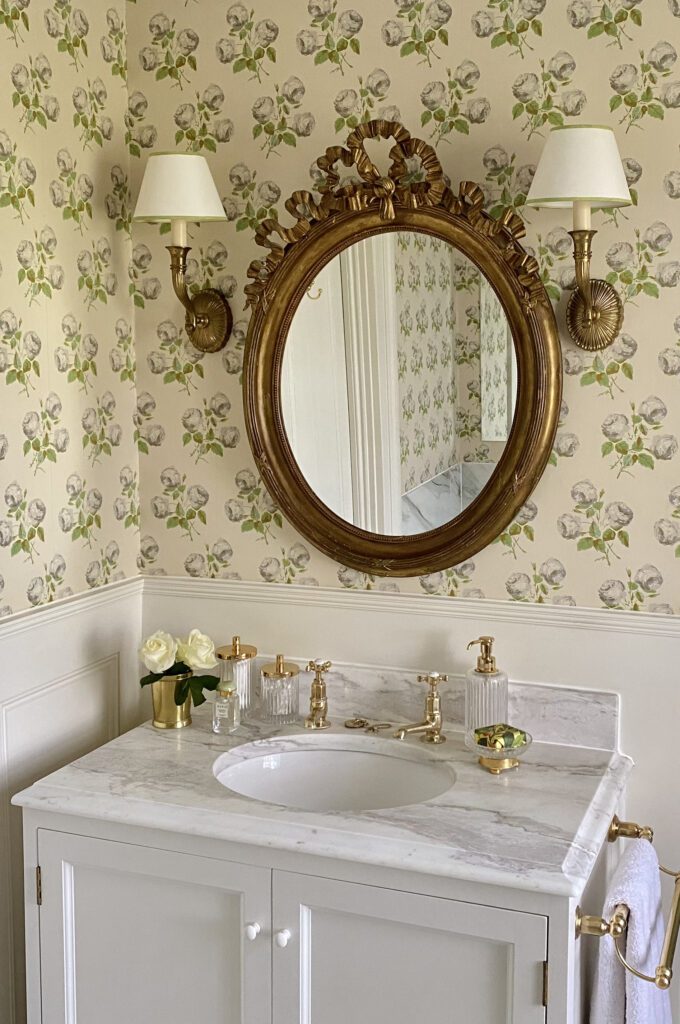
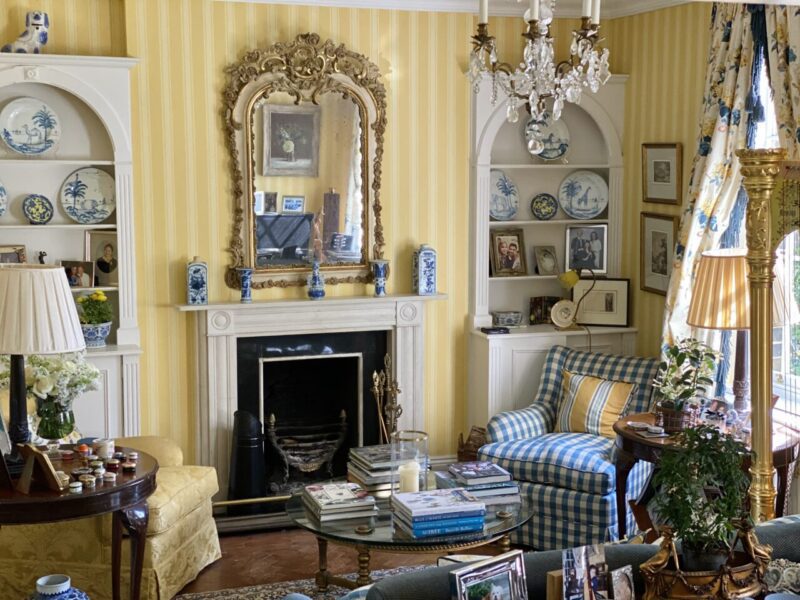
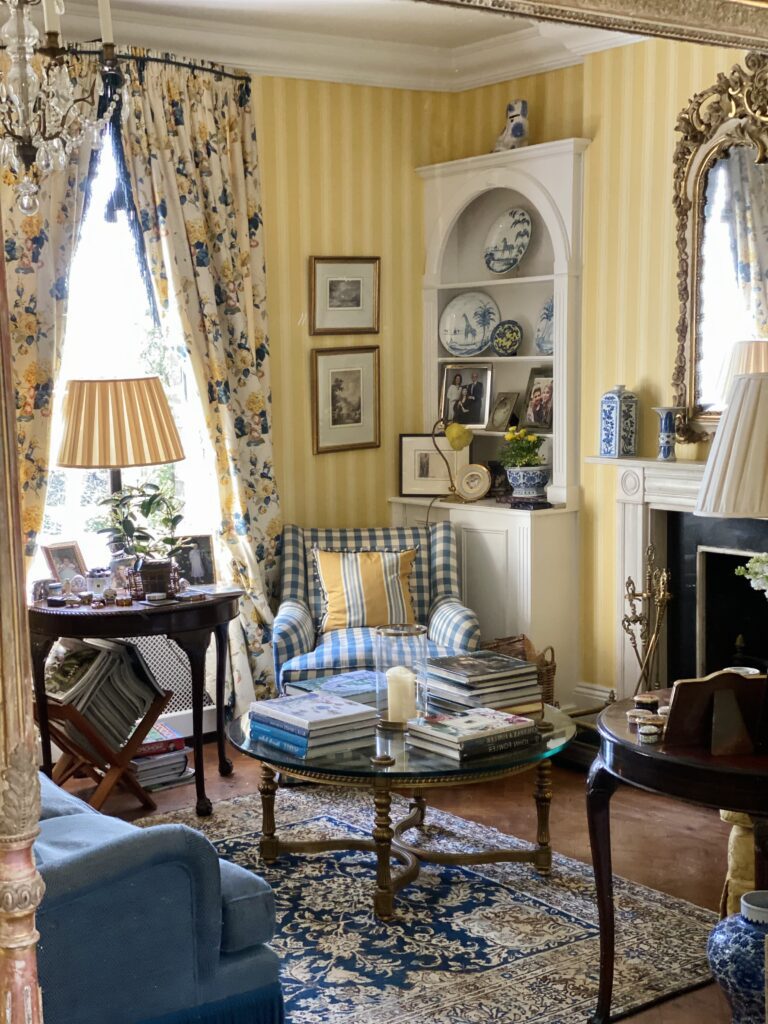
Amy says, “My mum has always had amazing taste and ideas, and she designed the yellow drawing room with fabrics with Colefax and Fowler. She used to have an interior design business before she had my older sister and gave it up to bring us up, but her taste and creativity has rubbed off on me! And now we decide on things together like the Bowood bathroom which we designed together. Most of our fabrics in the house are from Colefax and Fowler and my mum has worked with Janie Money from Colefax in Fowler on some of the other rooms in the house over the past 15 or so years. We’re both huge lovers of interiors design!”
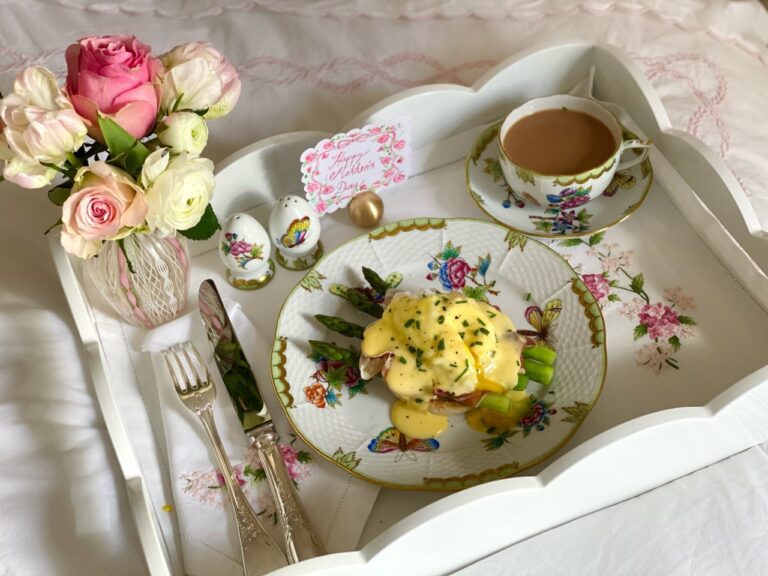
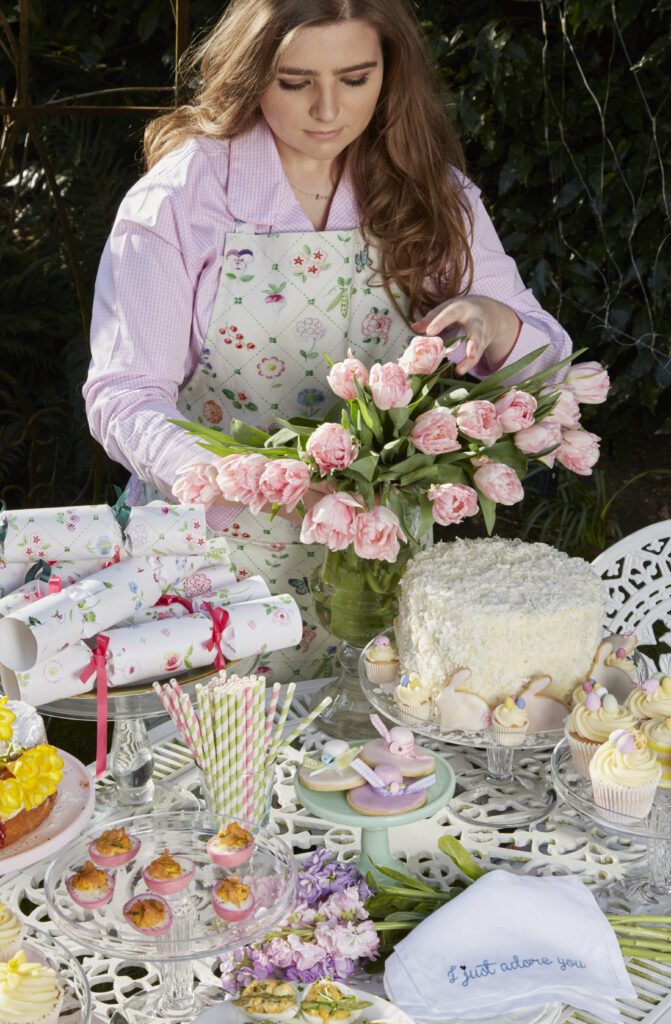
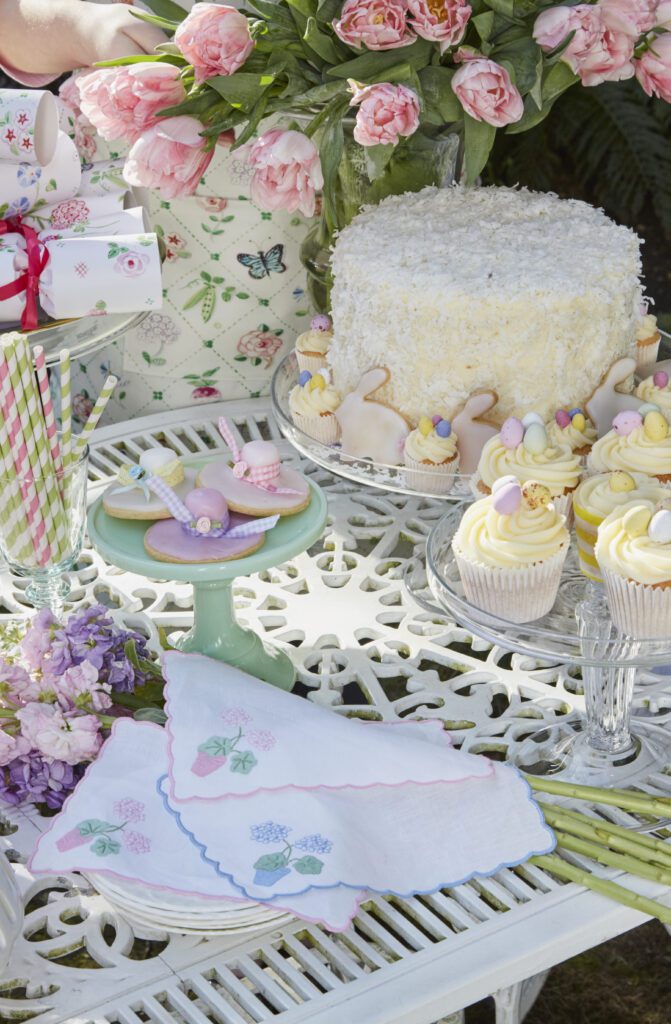
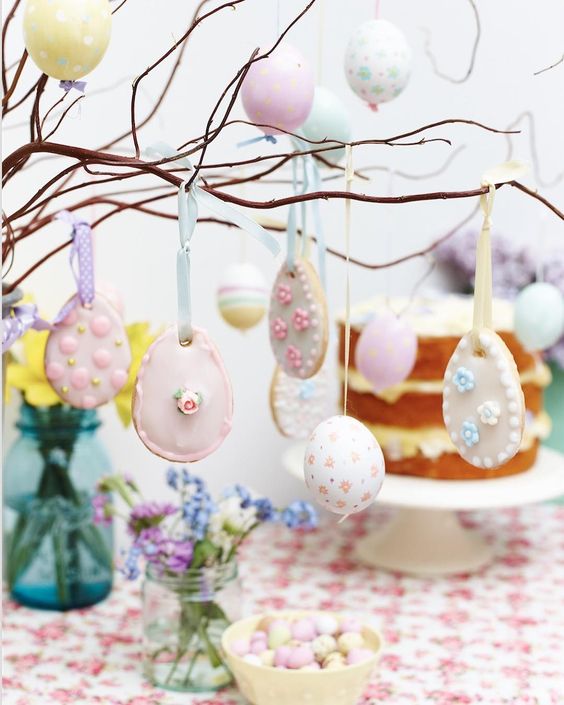
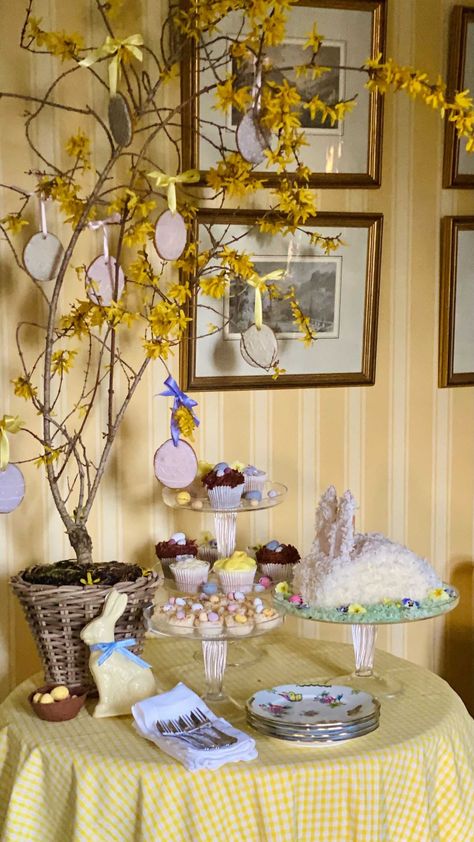
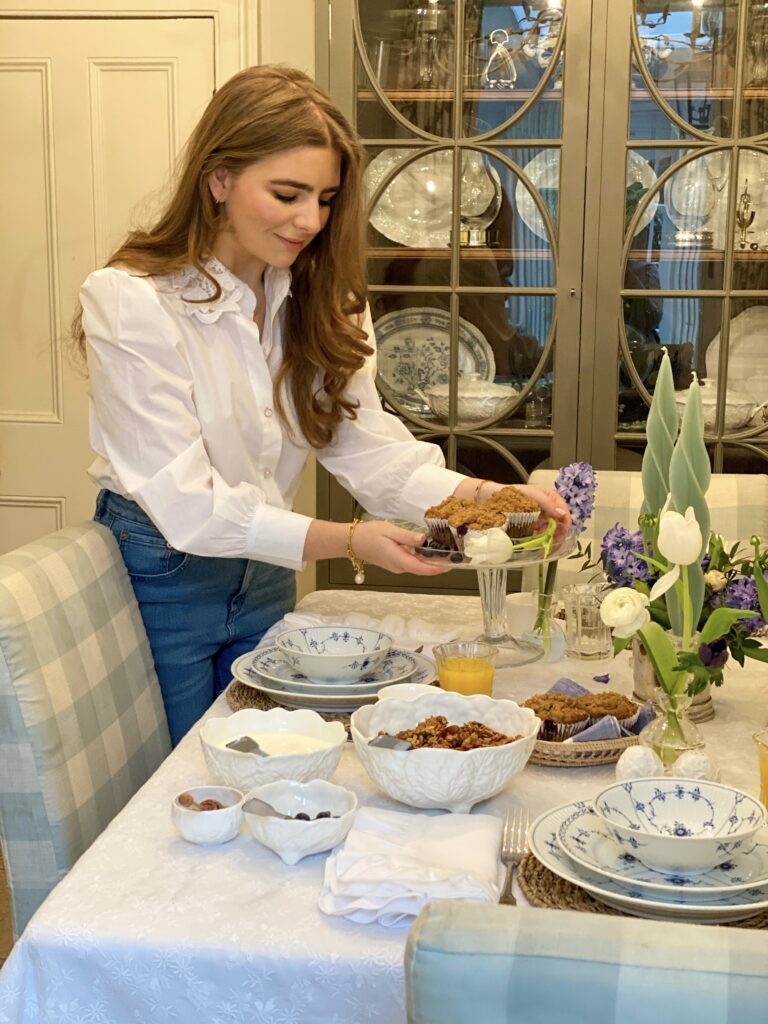
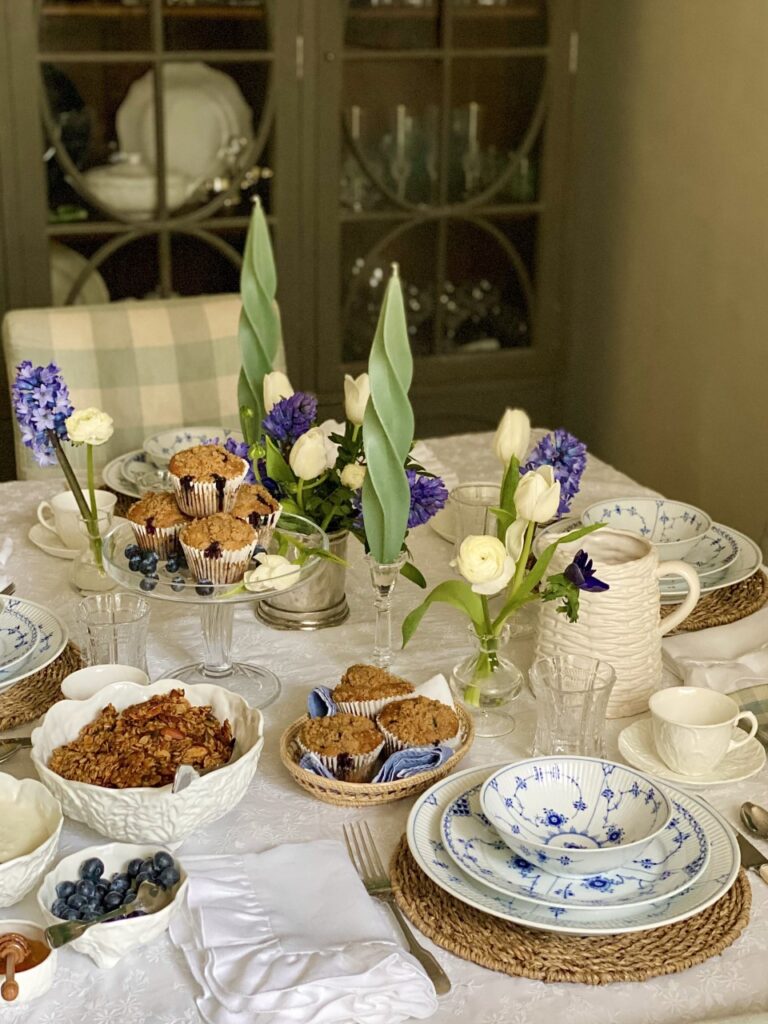
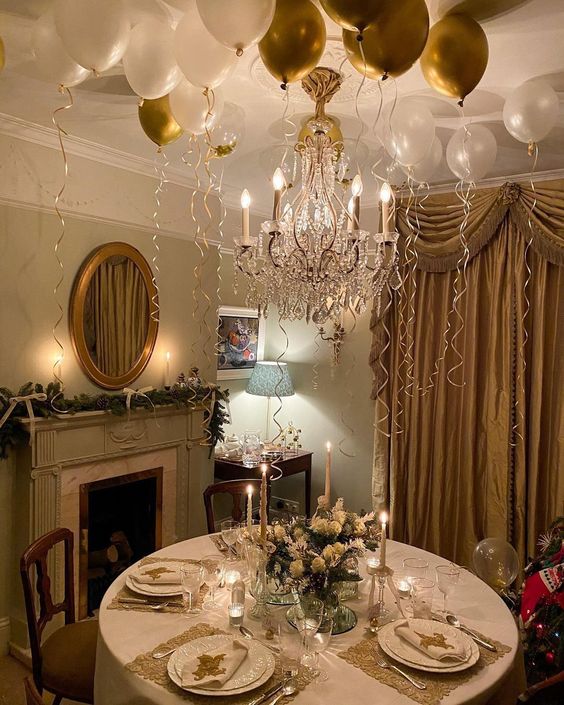
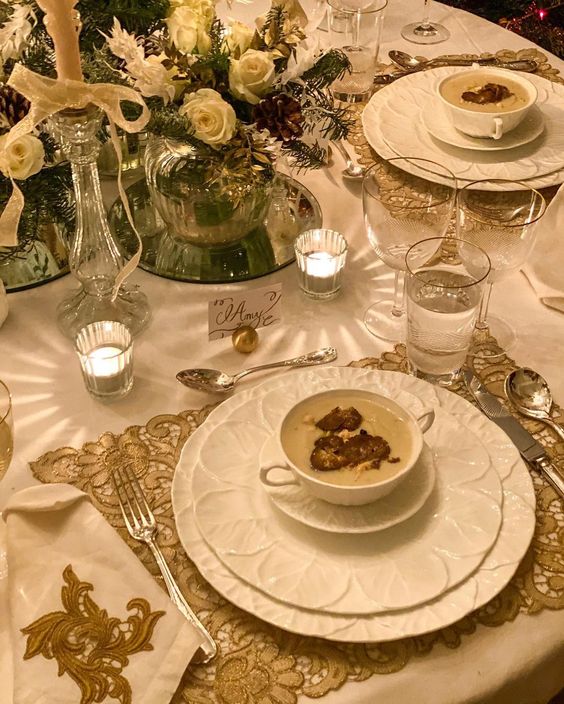
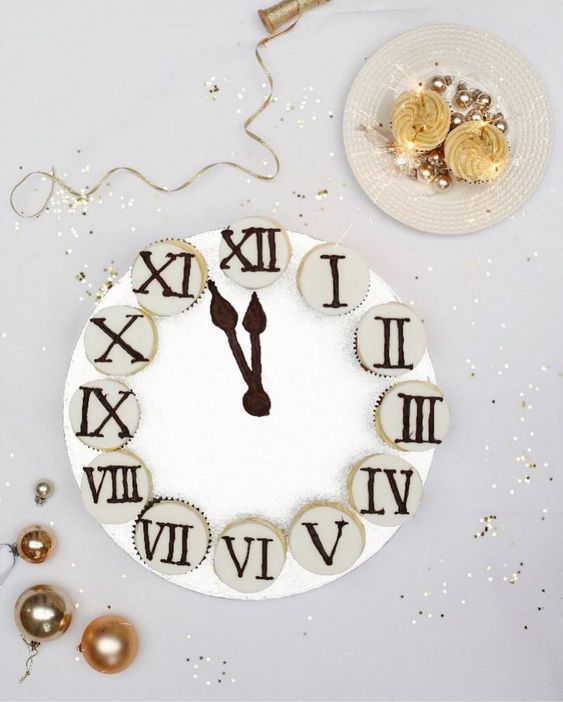
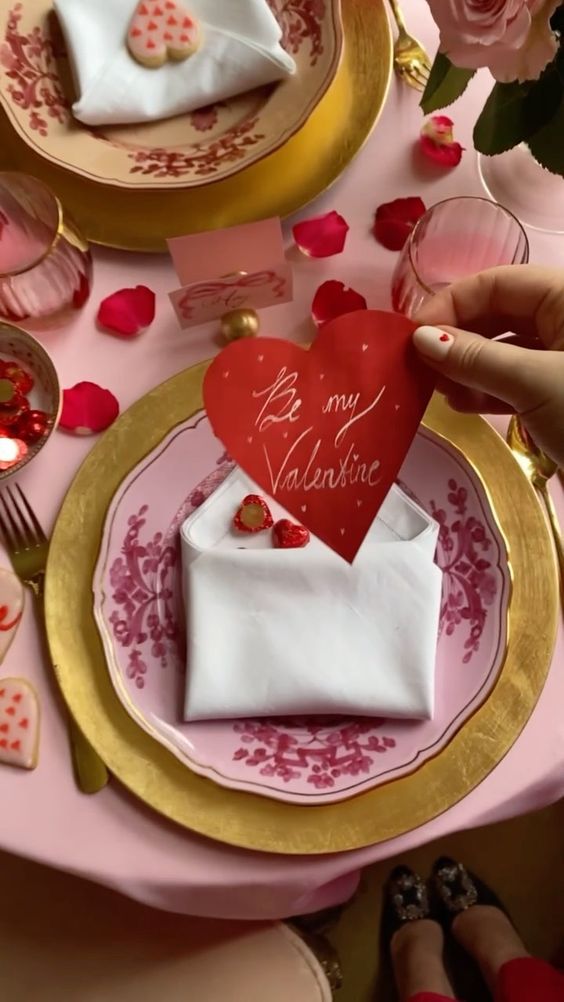
From elegant New Year’s Eve parties and romantic Valentine dinners to charming picnics, Easter treats, and breakfast in bed, Amy’s Baking Year has you covered! Now 23, Amy is working on her second book, which is about entertaining at home throughout the year, while studying classical singing and opera at The Royal Northern College of Music. She also enjoys fine art, playing the harp and piano.
For daily inspiration, please follow @amybethellice_ on Instagram!
Today is the final installment of The Glam Pad’s week-long focus on the illustrious artist, Hunt Slonem. To get caught up, you can read Part 1 here and Part 2 here. Slonem may be one of the world’s most celebrated living artists, but his most ambitious project has been his mission to save America’s often forgotten historic buildings.
Realizing too many of the country’s architectural gems have fallen into disrepair, Slonem has found himself drawn to these national landmarks, inspired by the depth of their age and old-world beauty. Among his accomplishments are the restorations of Cordt’s Mansion in Kingston, New York; the Lakeside and Albania mansions of Louisiana; and the Scranton Armory and Charles Sumner Woolworth’s mansion in Scranton, Pennsylvania. His sixth and latest endeavor is Belle Terre, a storied property in South Kortright, New York.
“When I was young, I learned that Picasso collected chateaus, and I dreamed of doing something like that my whole life. Having reached that goal with these historic homes, I would like them to become part of my legacy, where people use them as study centers that can educate and inspire new generations of artists,” Slonem explains.
Slonem usually owns seven houses at once, and today we will take a peek inside some of the beautiful interiors!
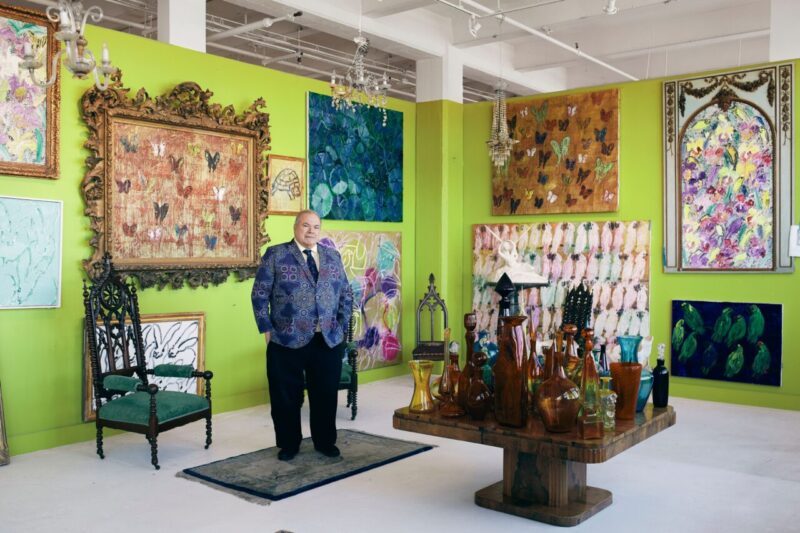
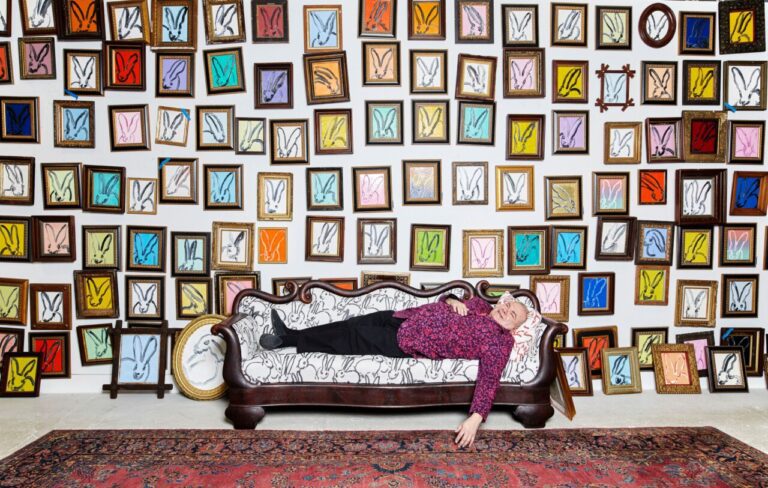
Hunt Slonem in his 30,000 square-foot studio in New York City – Photo by Brandon Schulman
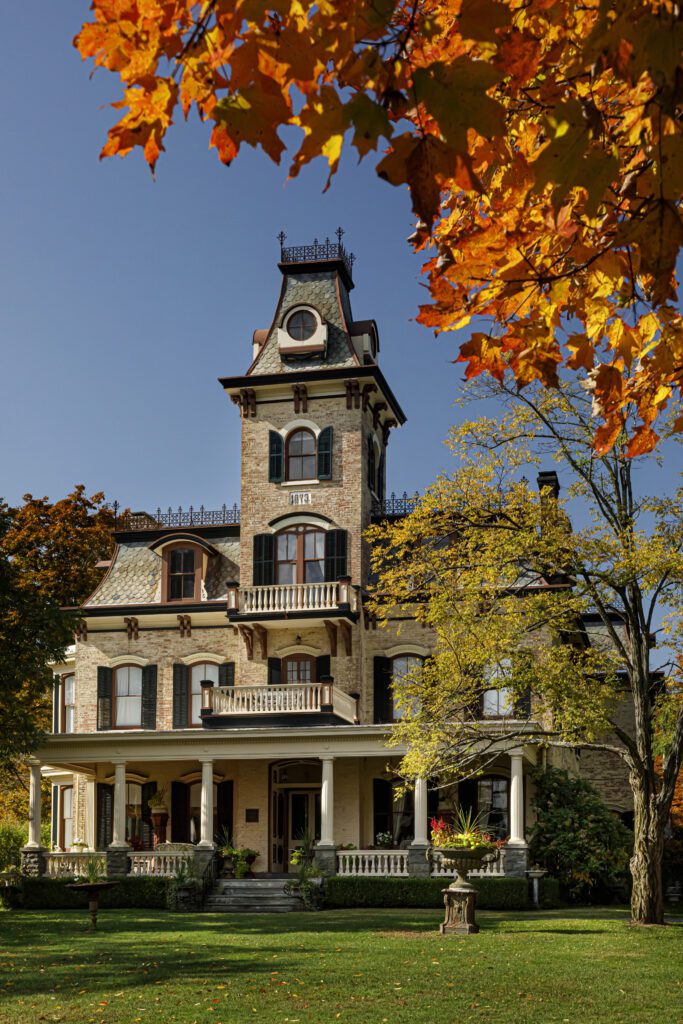
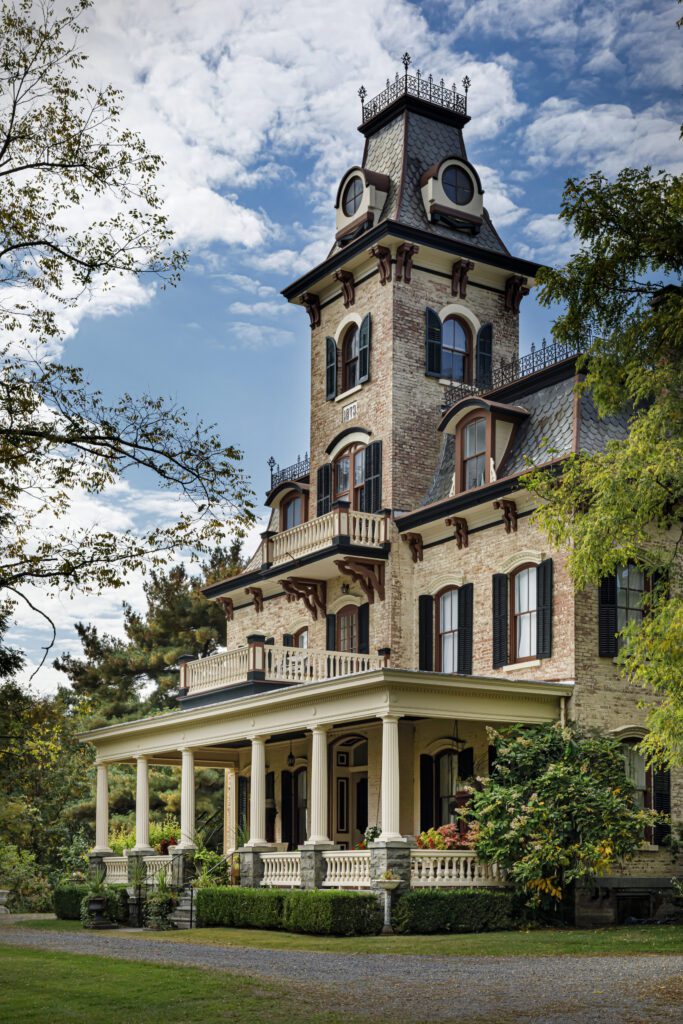
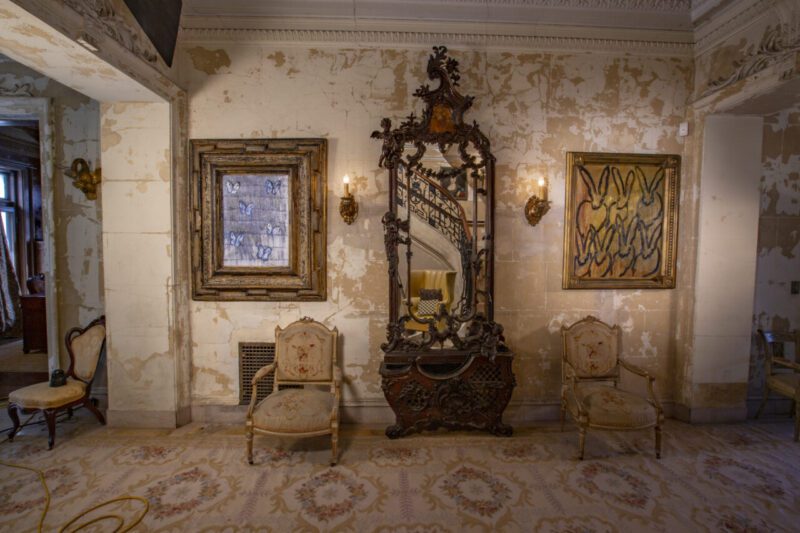
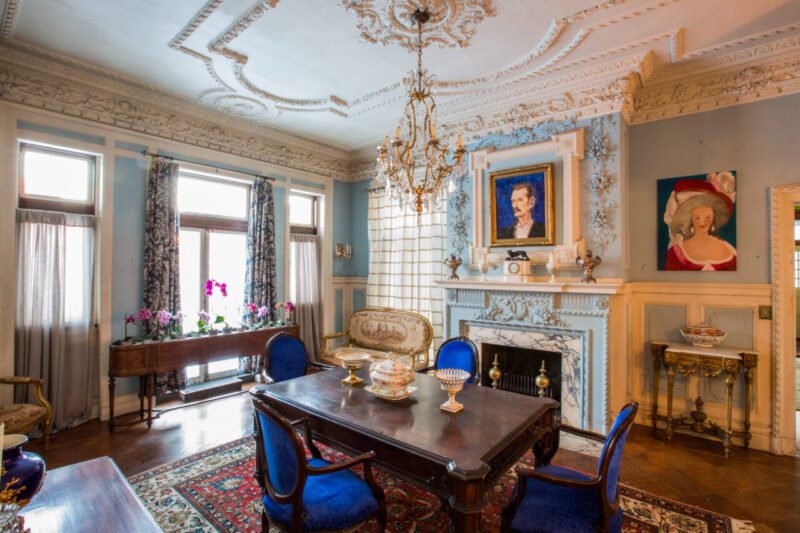
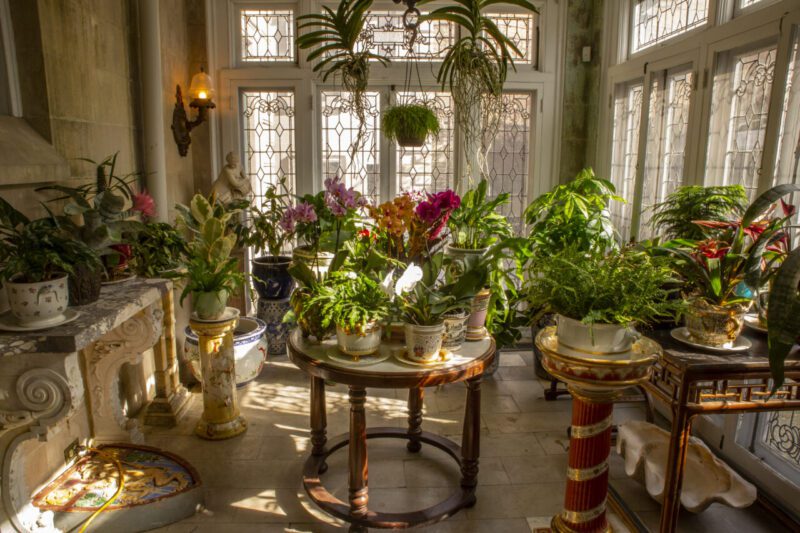
A looming 19th-century titan was the first historic property Slonem purchased, in 2001. Built by a German merchant from Prussia, this Second Empire gem sits perched atop a hill overlooking the Hudson River, with a palpable history that Slonem says stunned him when he first set foot on the property. The original gazebo and carriage house remained intact, while the four-story tower stood out as a distinguished centerpiece.
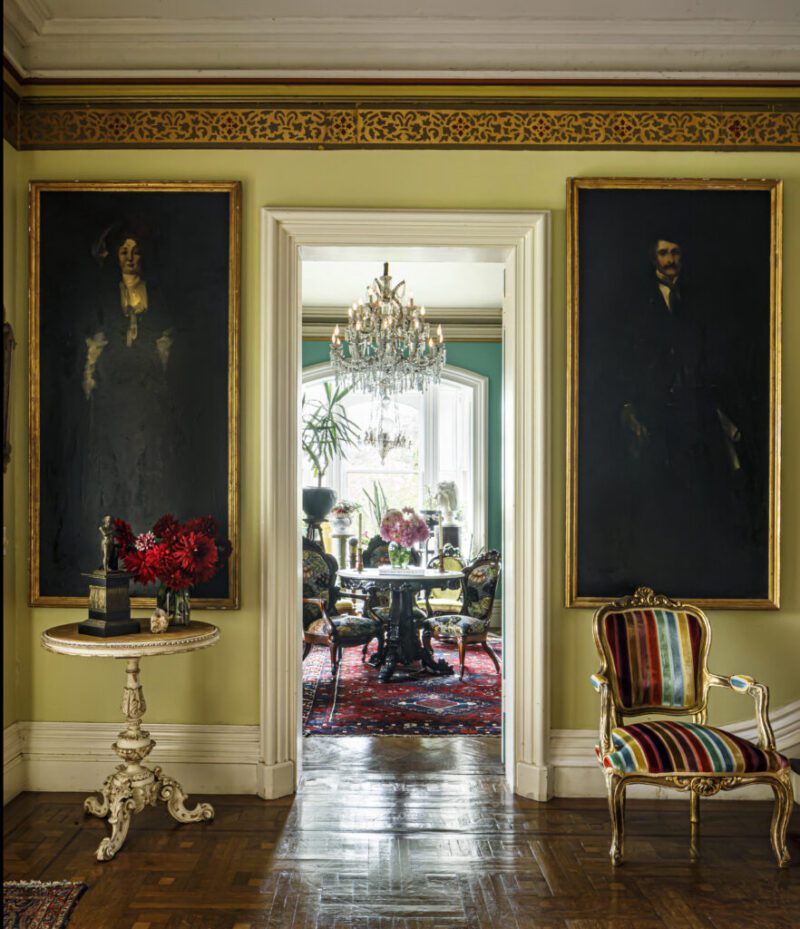
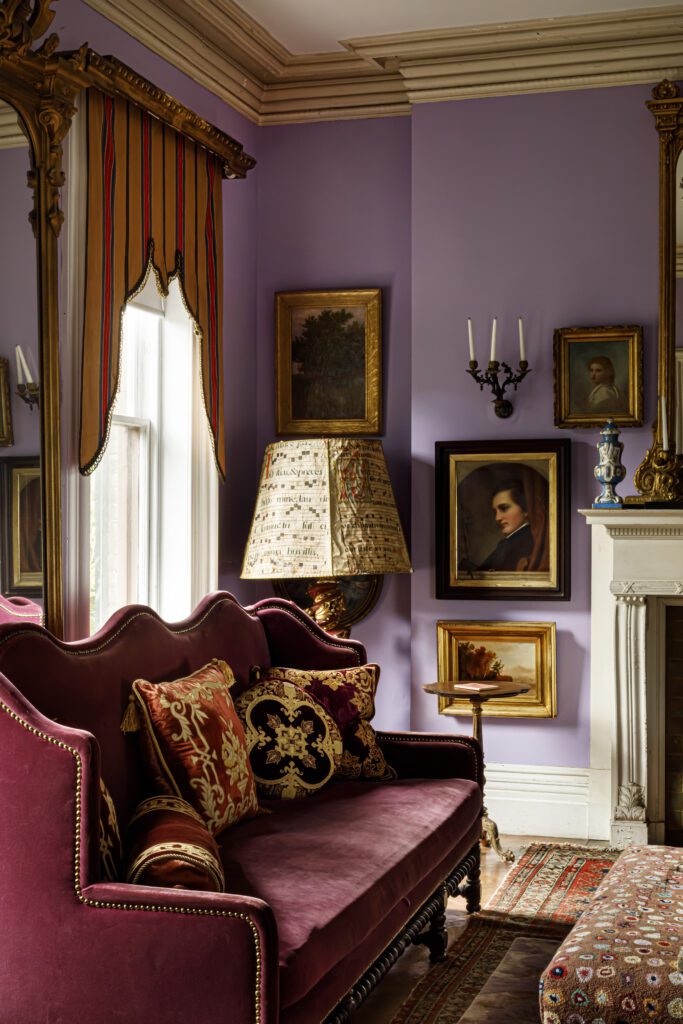
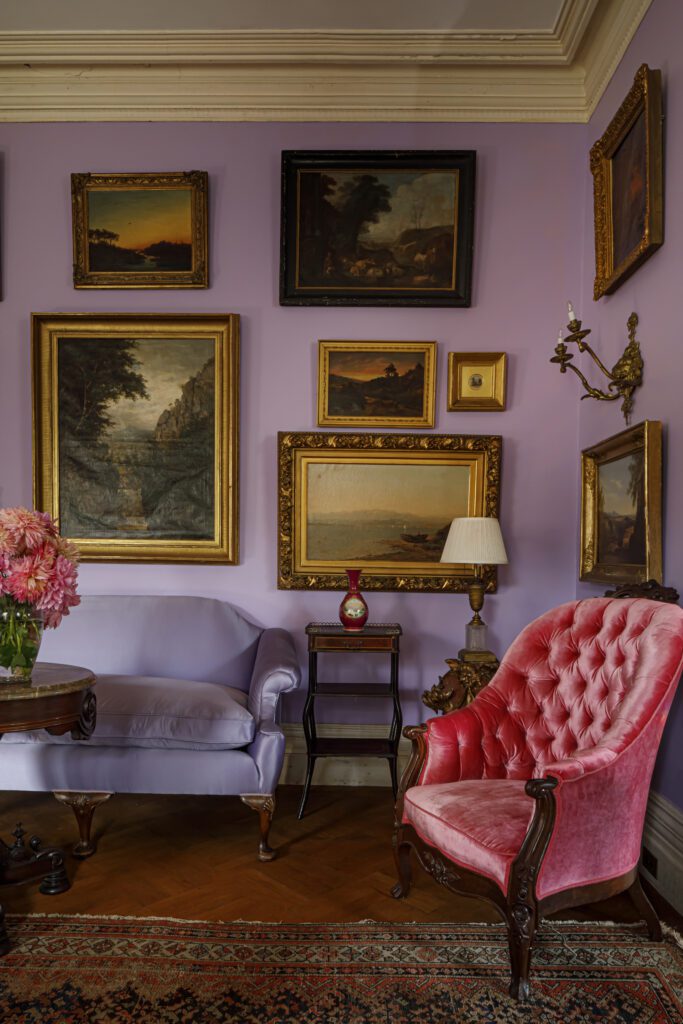
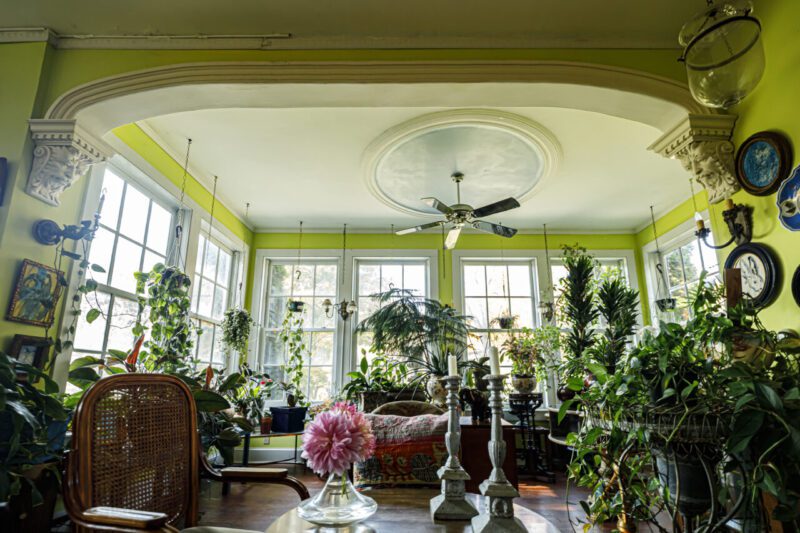
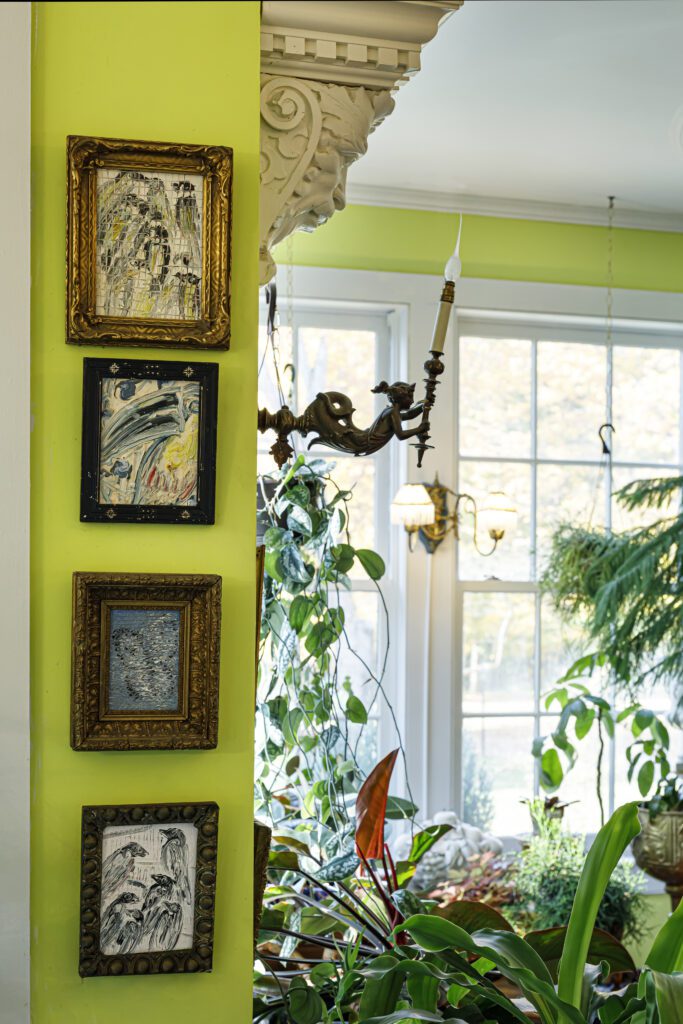
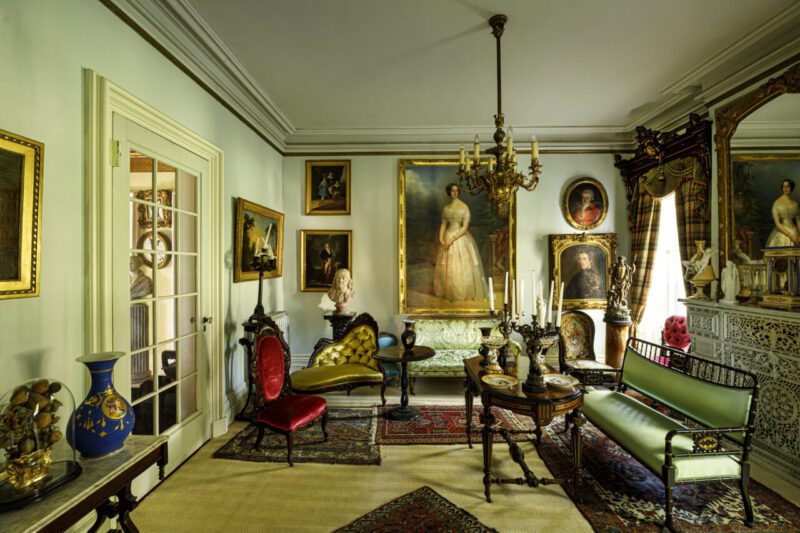
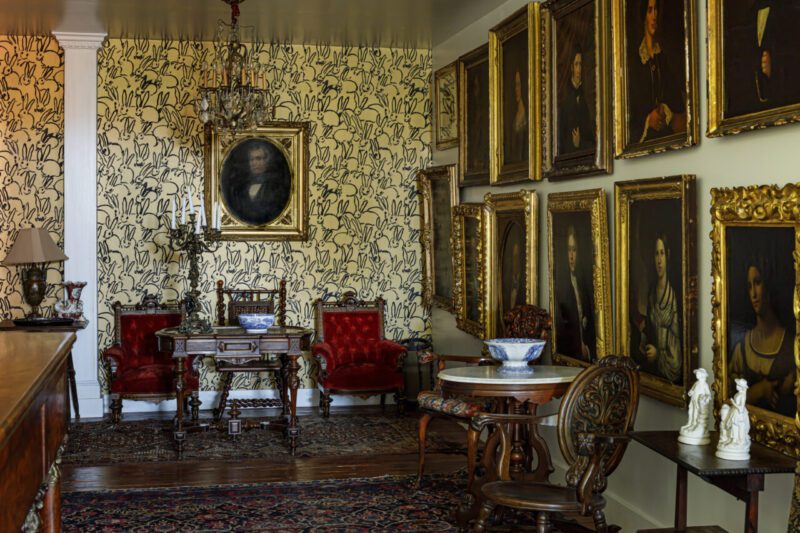
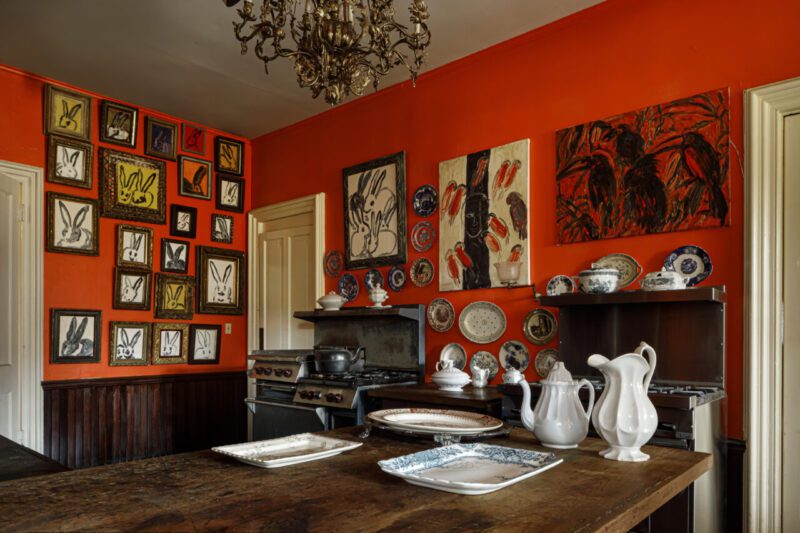
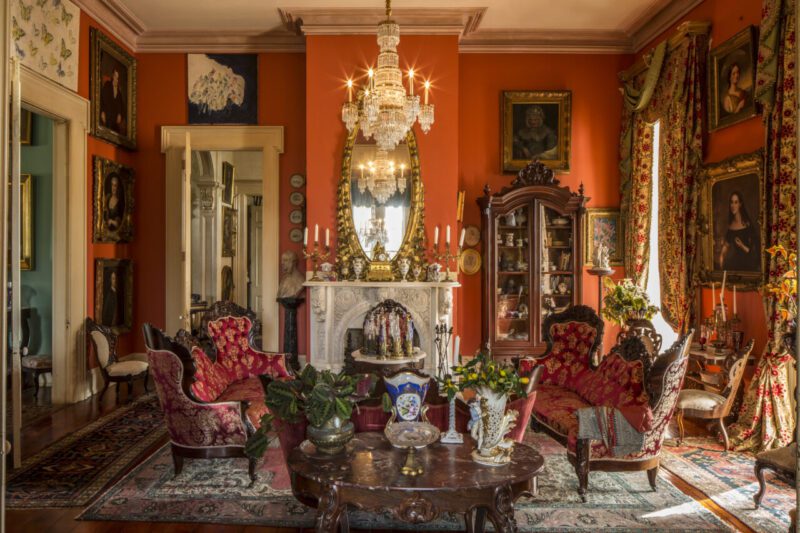
Slonem has worked hard to maintain the classical atmosphere of Cordt’s Mansion: he has refurbished the amenities; repainted its walls with brilliant reds, yellows and greens; wallpapered rooms in his own designs; installed new chandeliers; and hung photos of the Cordt family, whose presence still lingers through the halls.
Cordt’s Mansion, photo by John NeitzelCordt’s Mansion, photo by John NeitzelCordt’s Mansion, photo by John NeitzelCordt’s Mansion, photo by John NeitzelCordt’s Mansion, photo by John NeitzelCordt’s Mansion, photo by John NeitzelCordt’s Mansion, photo by John NeitzelCordt’s Mansion, photo by John NeitzelCordt’s Mansion, photo by John NeitzelCordt’s Mansion, photo by John NeitzelCordt’s Mansion, photo by John Neitzel
WOOLWORTH MANSION, 1910, SCRANTON, PENNSYLVANIA
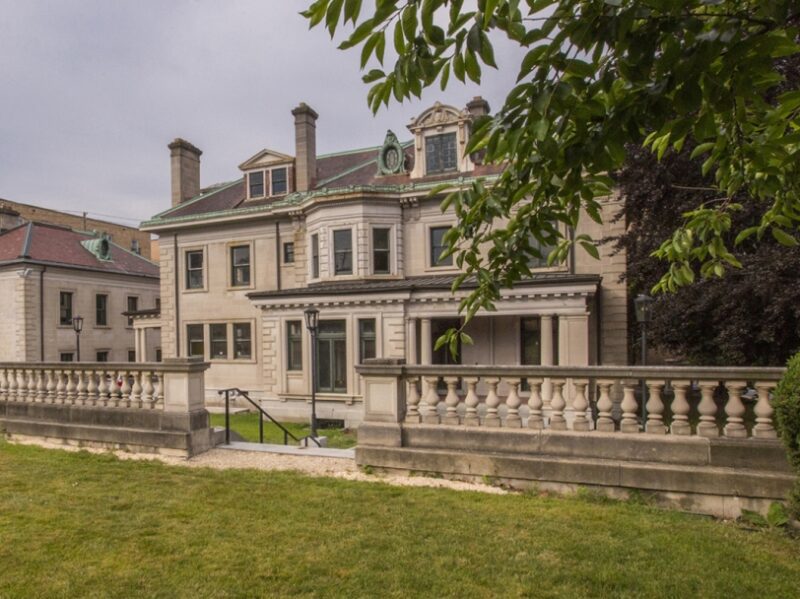
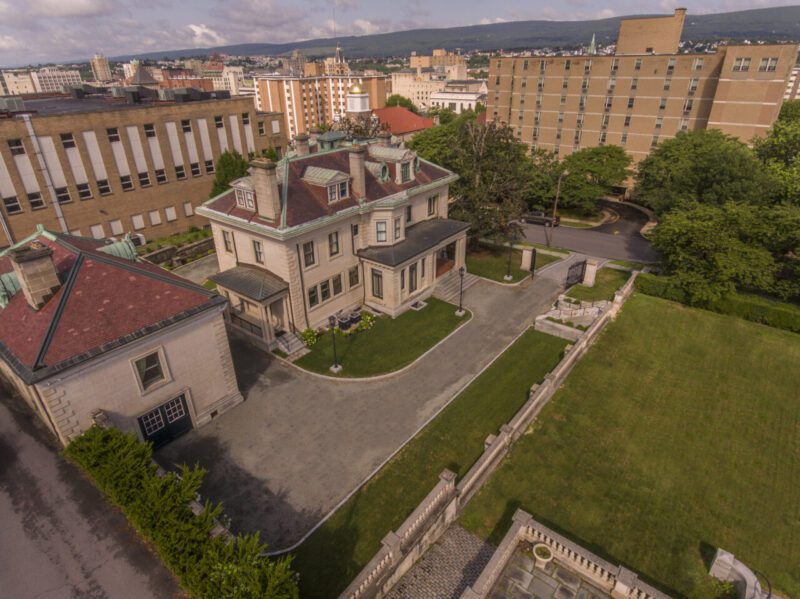
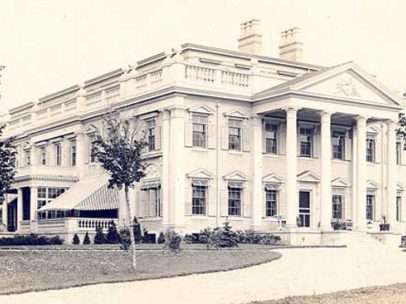
This magnificent Beaux Arts home, built by the department-store entrepreneur Charles Sumner Woolworth, looms large like a diamond in its neighborhood. But while its stately limestone exterior and a three-story carriage house mesmerized Slonem upon first sight, this reclamation project would turn out to be his longest, toughest yet—and also the most rewarding.
He has put in the driveway, recreated a missing wrought-iron balcony, ordered specially crafted moldings and wood carvings, and handpicked the classical light fixtures. Slonem’s meticulousness recalls the expert craftsmanship that went into creating this majestic beauty more than a century ago.
Woolworth MansionWoolworth Mansion
“You can see that I leave the patina in the hallway. I did not repaint the grand, French, heavily plastered motif in the hallway. It looks like a chateau from the 1700s,” Slonem said. “You can always repaint. You can’t recreate the way it looks now.”
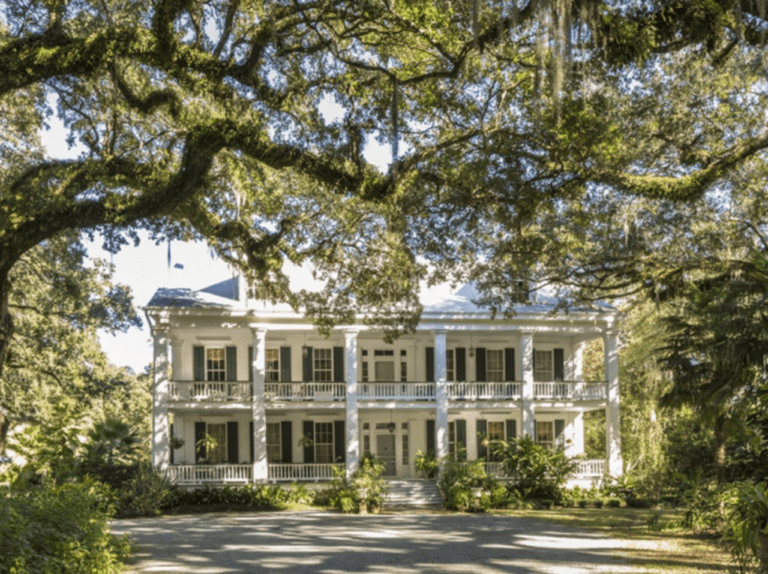
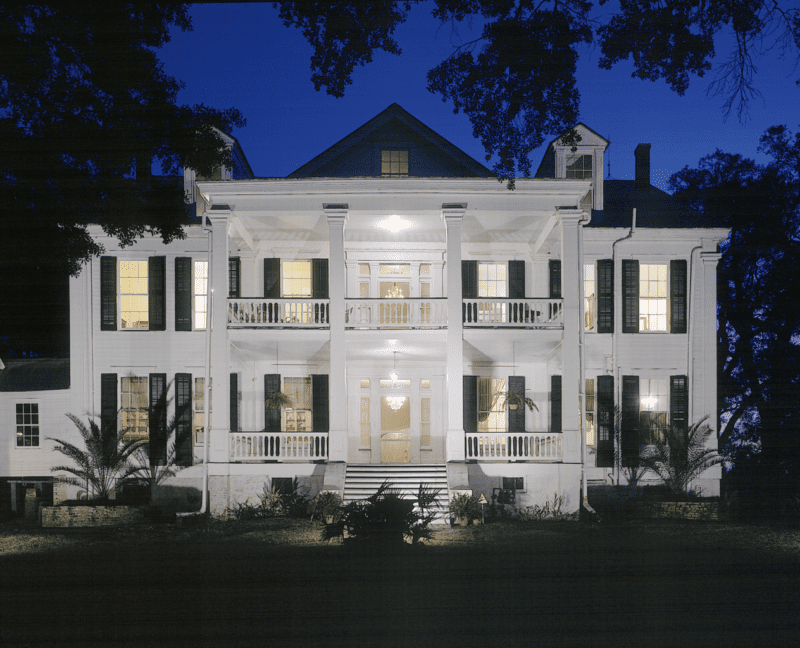
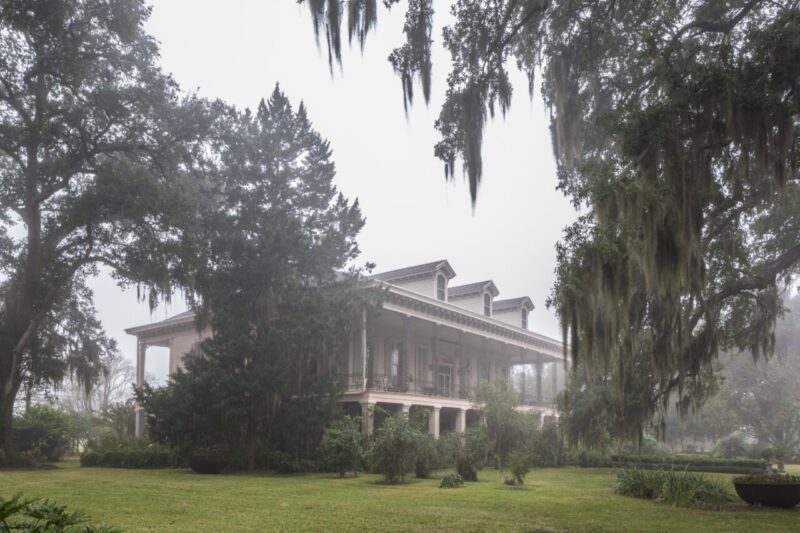
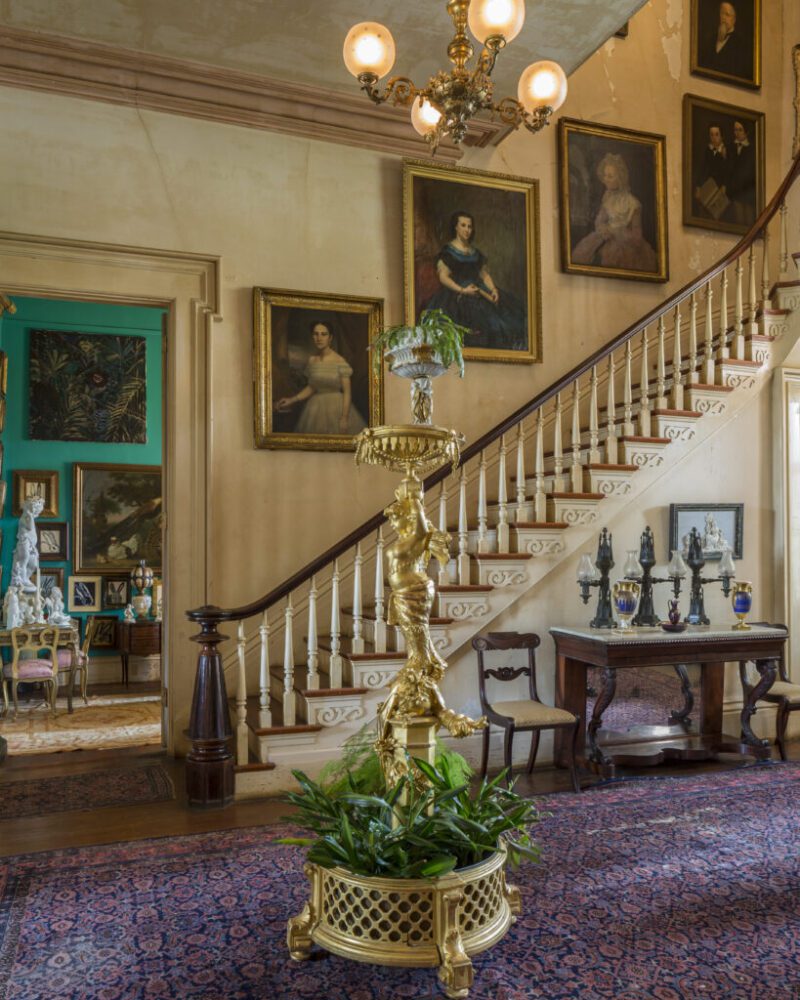
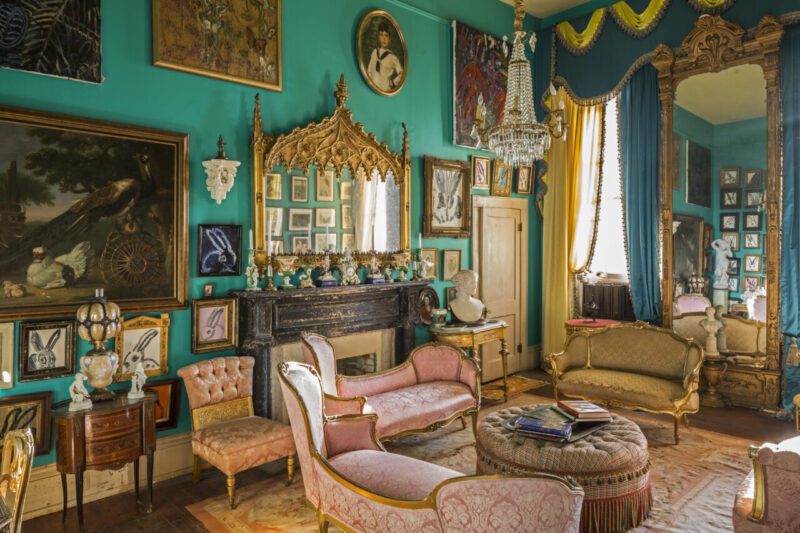
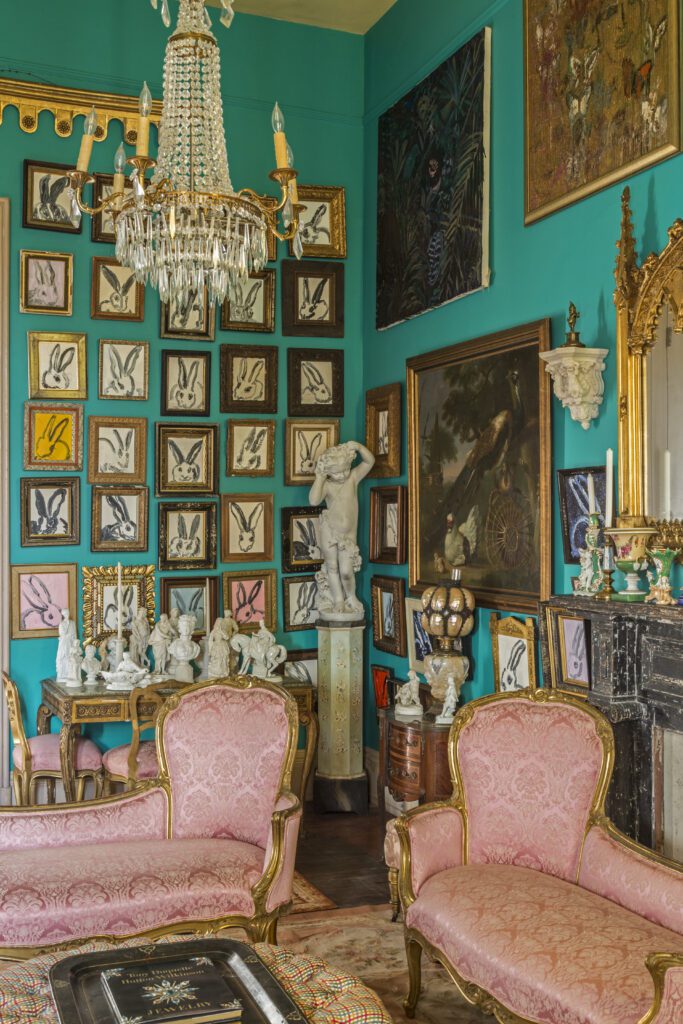
This mansion once spanned 6,500 acres, the core of an empire founded by Charles Grevemburg. The hefty all-white building passed hands several times over the next hundred years, including a time when it was owned by the founder of the New Orleans Museum of Art—a fitting precursor to Slonem’s purchase. With gently curving staircases and dark-wood floors, Slonem has accented the rooms with gold-framed mirrors, swooping furniture and modern works of art. Direct links to its past can be found in subtle ways: the name of Matilda Grevemburg, Charles’s long-deceased daughter, can be found scratched into one of the windows.
AlbaniaAlbaniaAlbaniaAlbaniaAlbania
LAKESIDE MANSION, 1832 – BATCHELOR, LOUISIANA
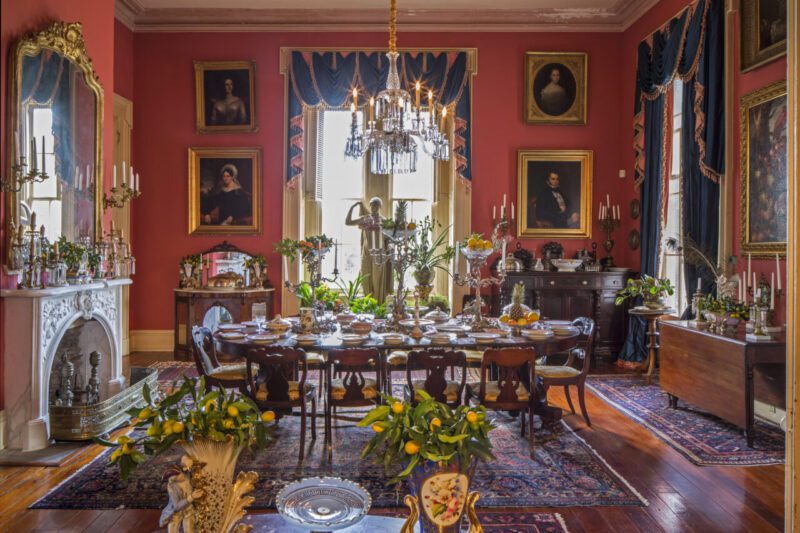
Built upon land once given to the Marquis de Lafayette from a grateful Thomas Jefferson during the Louisiana Purchase, Lakeside mansion’s distinctions are myriad. Beyond its famously pink-painted exterior, there is a unique wrought-iron balcony, imported from Paris in the early 19th century; an elaborate series of gardens; and a ground-floor room with deep red walls and matching velvet sofas.
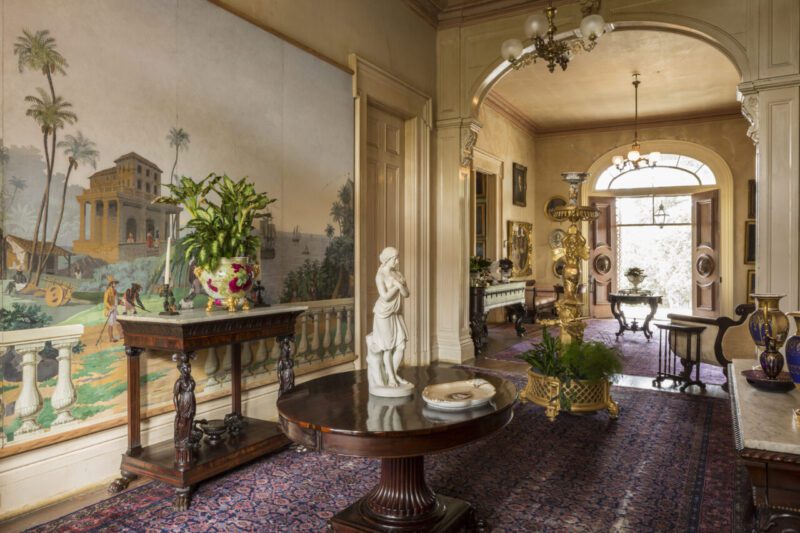
The antique furnishings, which Slonem has handpicked from markets and dealers, feel at home among the 18-foot-tall ceilings and Zuber wallpaper. As he puts it, this is a “primordially remote, quintessential romantic antebellum house.”
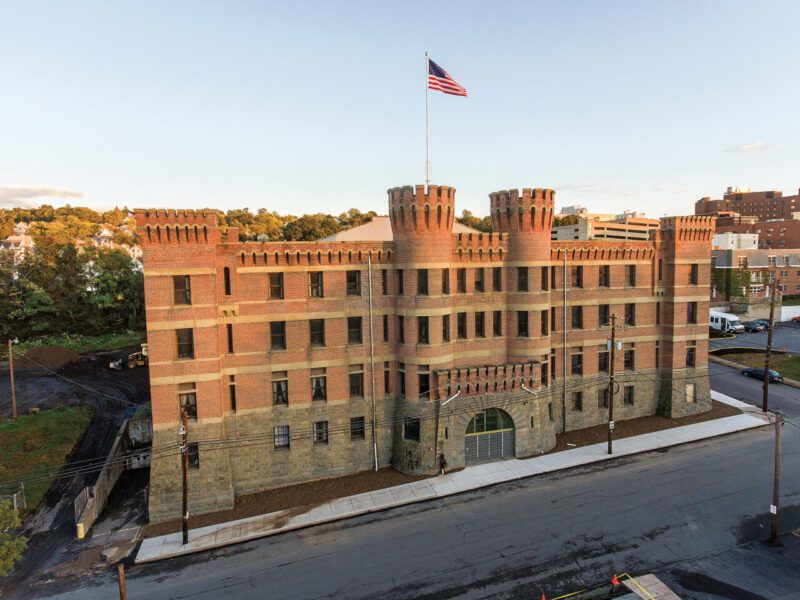
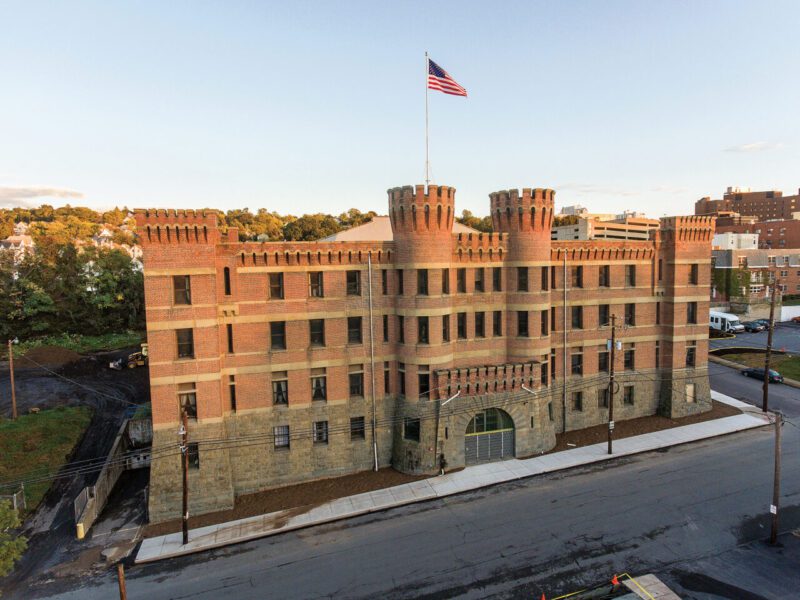
The Colonel Louis Watres Armory, built in 1900 and listed on the National Register of Historic Places, is Slonem’s latest project that showcases the artist’s novel take on interior design— matching vibrant, multicolor interiors with a bricolage of historically potent and rare items found from around the world. This system of “collectorating,” or collecting and decorating, has become Slonem’s trademark and can be found across the artist’s multiple historical properties around the country. Through the course of its century-old lifetime, the 102,000-square-foot space has served not only as an armory, but a performance hall for Russian composer and pianist Sergei Rachmaninoff, a whistle-stop for campaigning presidents, and even briefly as a clinic.
When Slonem first heard about the Armory, he was not thinking of adding it to his collection—it was a largely vacant space he rented in between moving studios in New York. But when he stepped inside this massive Romanesque Revival structure, he found an opportunity to preserve a crucial piece of American history: five presidents have stood at the armory’s drill hall, delivering campaign speeches to local voters.
The property is equipped with a unique series of underground tunnels and original swimming pool, and Slonem has since furnished the armory’s plentiful rooms with period furniture, new artworks, and refurbished chandeliers.
Watres Armory, Scranton, Pennsylvania – Photo Chris BoltonPhoto by Marco Ricca for World of Folly, courtesy of Assouline. Gatekeeper: World of Folly walks readers through the Amory room-by-room, object by object, filling us with the sense of wonder for which the artist is so well-known.
Others Not Pictured
BELLE TERRE, 1906, SOUTH KORTRIGHT, NY
The sprawling Belle Terre estate was first built as a summer home by copper baron James McLean. The estate embraces well beyond 30,000 square feet of quiet wilderness by the Catskills Mountains, complete with a private lake and rolling hills—ideal for fox hunting, which is what McLean had in mind when building it.
Eleanor Roosevelt, a frequent guest and friend of McLean’s daughter, once hosted a party on this site for 6,000 guests—an event that inspired Slonem to paint and hang several portraits of the former first lady around the property. The house’s Georgian architectural style marked a new direction in Slonem’s acquisitions, and his ongoing design emphasizes its original moldings and carvings while recapturing the elegant gilded age, selecting appropriate furniture to recreate the mood of its origins.
Belle Terre
MADEWOOD MANSION, 1846, NAPOLEONVILLE, LOUISIANA
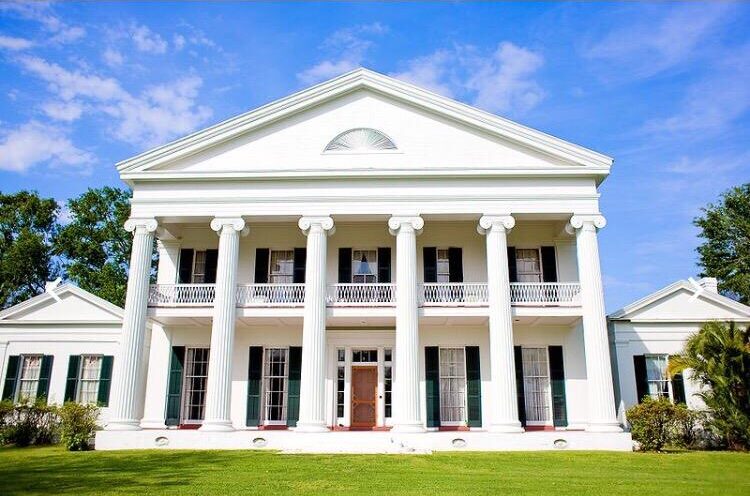
This 10,000 square-foot mansion is located on Bayou Lafourche, is a National Historic Landmark. Architecturally significant as the first major work of Henry Howard, Madewood is one of the finest Greek Revival mansions in the American South. Each doorway is signed by the artist, Cornealieus Hennessey.
Madewood
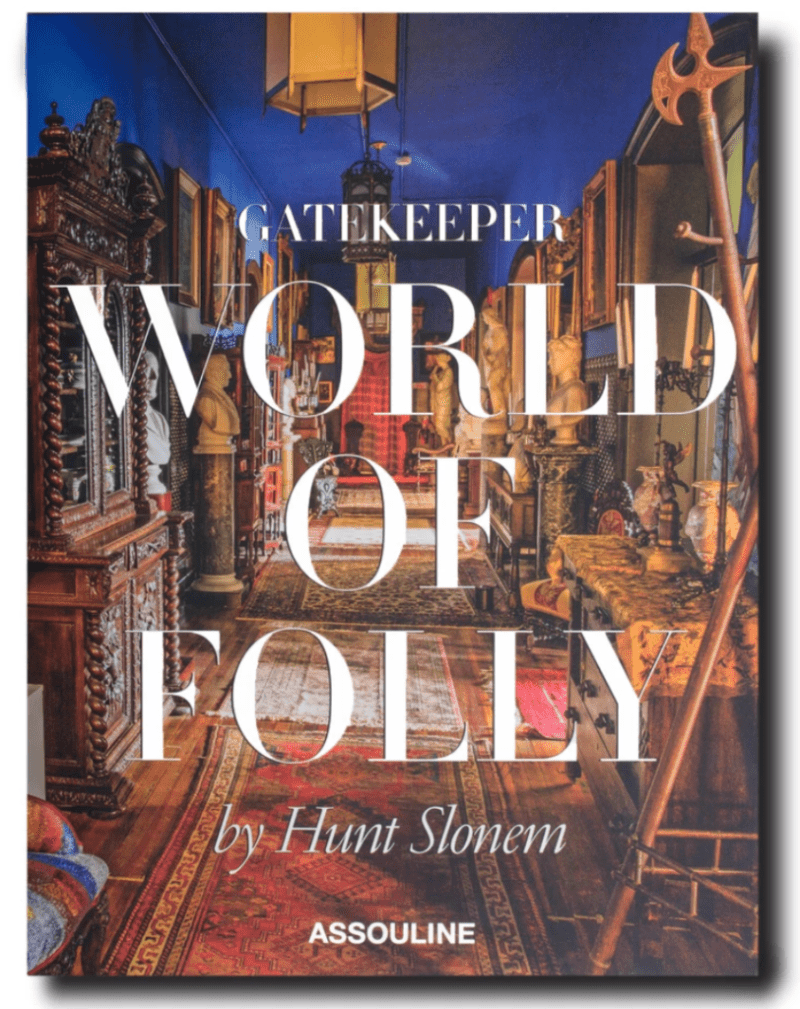
We hope you have enjoyed this journey into the magical world of Hunt Slonem! For more, you might be interested in his many books including Bunnies (Glitterari Inc., 2014), Birds (Glitterati Inc., 2017) and Hunt Slonem: An Art Rich and Strange (Harry N. Abrams, 2002). His studios and homes have been profiled in such books as When Art Meets Design (Assouline Publishing, 2014) and Pleasure Palaces: The Art and Homes of Hunt Slonem (powerHouse Books, 2007), among others. His latest is Gatekeeper: World of Folly (Assouline Publishing), showcasing his reclamation of the Scranton Armory, and its transition “from arms to art.”
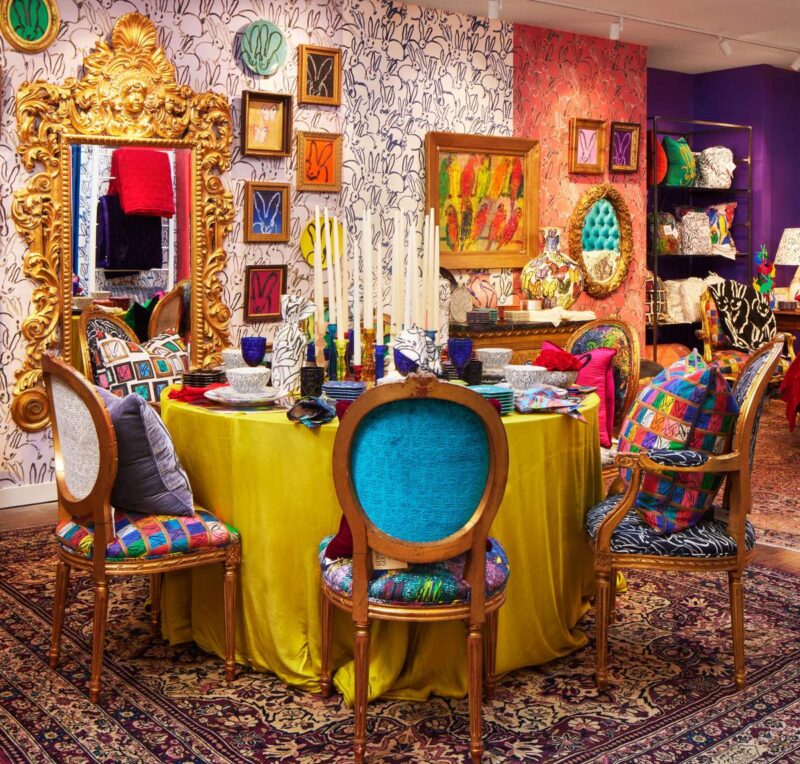
To purchase his paintings and sculpture, please visit visit huntslonem.com or 1stDibs. You can also shop Slonem’s new “Hop Up Shop” (online and via Bergdorf Goodman) for a lovely assortment of tabletop, housewares, fashion, and accessories featuring his iconic subjects.
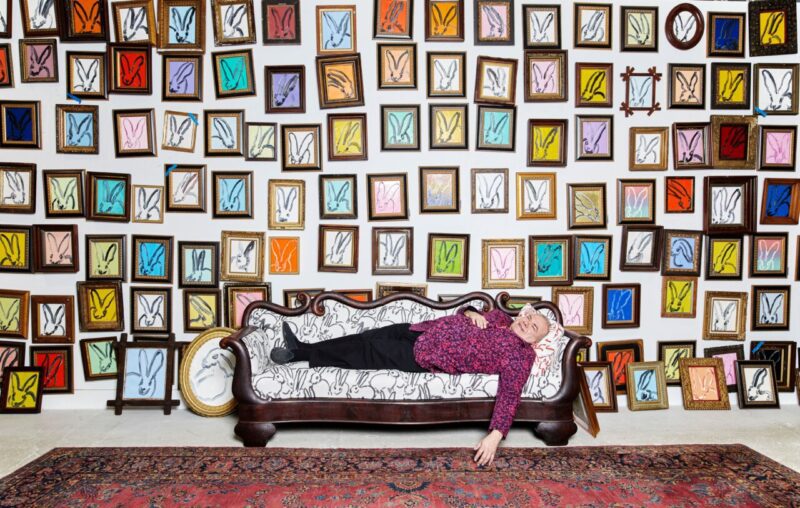
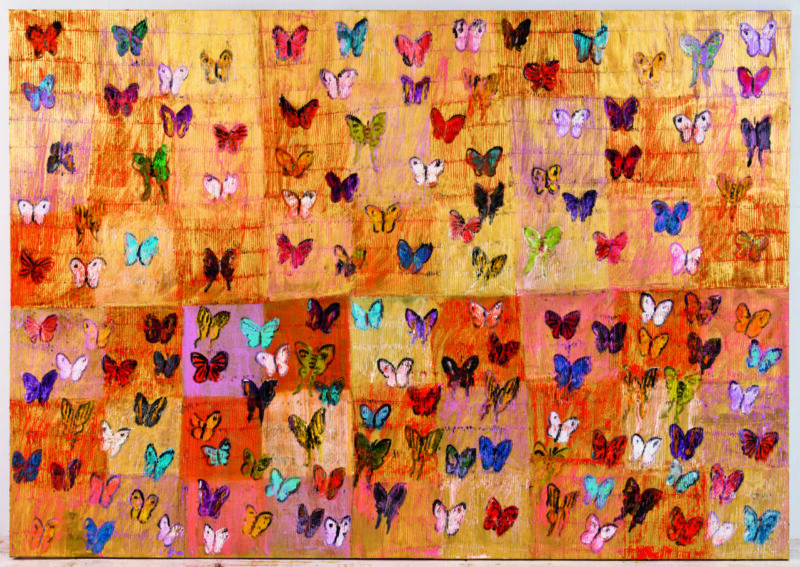
Today is Part Two of The Glam Pad’s week-long series on Hunt Slonem, the celebrated artist best known for his Neo-Expressionist paintings of butterflies, bunnies, and tropical birds. Slonem’s works are included in many important museum collections all over the world, and he exhibits regularly at both public and private venues. Slonem has received numerous honors and awards, and he is one of the most renowned artists of our time.
My original plan was to do an Easter feature on Slonem’s illustrious bunnies and his delightful new Hop Up Shop collaboration with Bergdorf Goodman, but I quickly fell down the rabbit hole researching this legendary master of the art world, and I decided a series would be the perfect way to explore the many facets of this most intriguing gentleman. On Monday, we highlighted Slonem’s incredible career, and Friday we will conclude with an in-depth feature of his collection of old homes. And now, I am honored to welcome Hunt Slonem to The Glam Pad for an exclusive interview!
Hunt Slonem, Brandon Schulman Photography
Q: When did you first recognize your passion for art, and how old were you when you sold your first painting?
A: My passion for painting started around 6 years old and the very first piece I sold was a sculpture for a nickel. I think it was a made out of Play Doh.
Q: How did Andy Warhol influence your career?
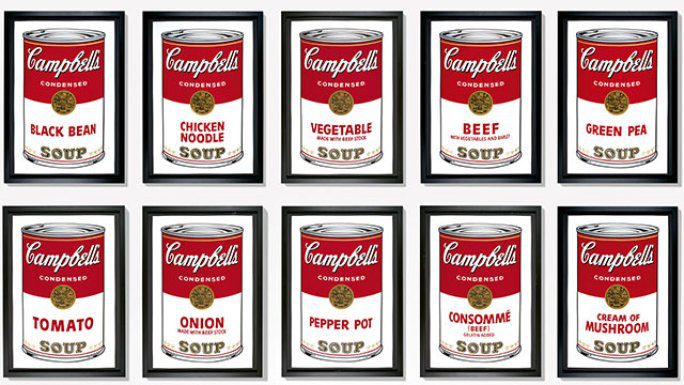
A: I used to see him a lot, my cousin [best-selling author Tama Janowitz] was very close to him. My brother worked for Interview magazine [a publication founded in 1969 by Warhol] and he was even mentioned in Warhol’s Diaries. My cousin wrote the book Slaves of New York, and Warhol was going to make it into a movie. He died right before Merchant Ivory produced it, and there were a lot of my paintings included. I used to go to Studio 54 all the time… I went to dinners and night clubs with Andy and people periodically not in a big big way, but I was very enthralled with his world and have known most of the people that he knew. Paige Powell just did a big book on his world for Gucci and there is a picture of my brother and me in it. I loved his work, it was very influential. I helped make diamond dust paintings with his printer early on, and I have been using diamond dust tremendously in the last few years. There have just been so many things that have affected me over the years. The repetition – I of course use nature as my jumping off point rather than a soup can or a stamp – but there are a lot of comparative notes. I was very close to Sylvia Miles and Mamie Van Doran who were considered his bookends. They both died this year. We were close for over 40 years and used to spend holidays together.
So just the whole thing with the magazine and his awareness of and pulse on so much of what was happening. I remember how he wanted everyone to be famous for 15 minutes. He just had a way of promoting things and people that was amazing. There’s not much of that left to my way of thinking anymore. It was such a mixing pot of people in those days, everybody sort of went to the same places, and there was a melting pot of all the arts, kind of meeting under this one nightclub world thing that went on. And there was the influence of fashion and color and form – it was quite a thing.
My brother was very swept up in that world. He interviewed celebrities for a living, and we met a lot of great people. It was just a really out there period of time. I don’t know if it’s Covid or what, but I feel like New York has changed a lot. But I’m working hard here in the middle of all this, and I find that New York still has a tremendous energy and intensity that’s a great place to do your work.
Alex Katz was a big mentor of mine and a friend. He was more of a painter’s painter. He is still living at 90. Warhol died very young. There is so much myth around him and that period of time. There is hardly anybody whose life he didn’t touch. It was a very glamorous time. I guess that’s the word that I’m not feeling anymore here – a sense of glamor that was so fresh and exciting in those days to me. There’s not a day that goes by that I don’t think about some aspect of his work.
“Campbell Soup” by Andy Warhol via Sotheby’s“Wanderlust” by Hunt Slonem via 1stDibs
Q: The diamond dust you have begun to incorporate into your work fascinates me. What inspired you to try this, and can you tell us about the process?
A: I once helped diamond dust a print with Warhol print maker, Rupert Smith. Later I was given diamond dust by my dealer, Ted Vassilev who had given it to me, Damien Hirst, and Mark Quinn, and suggested we should use it in our art. At first it was hard to figure how to use it. Finally we arrived at a great solution where it is incorporated into a resin and I paint on top of it. It’s changed the way I’ve applied paint onto the surface. It adds a dimension to viewing the art, it glistens when the light hits it.
(Click here to watch a video of Hunt applying diamond dust!)
Q: Can you tell us about the collection of old homes and buildings you have restored? How did your love of history develop?
A: My grandfather had a big house in Tennessee, which was torn down six months before I was born and I always fantasize about it. I bought my first house right before 9/11, and it led to my love for old homes that needed tender loving care. I have wound up with seven of them at this point, loving every one of them. Filling them with antiques and my work thrills me. Picasso’s collection of chateaus mesmerized me as a child… seeing him fill up these chateaus and then locking the door and getting another one.
Q: Will you be purchasing any more soon?
A: I am under contract on a castle in Massachusetts by Stanford White… 68,000 square feet on 70 acres. I have usually seven houses at once.
Q: Have you ever sold any of them?
A: One. I sold the Cordts mansion recently. I’m trying to tighten it up a little bit.
Q: Well you will have your hands full with the 68,000 square foot castle in Masachusetts!
A: Oh yes. Well my Armory is 150,000 square feet. So space doesn’t intimidate me.
Hunt Slonem’s Albania Mansion in Jeanerette LouisianaWatres Armory, Scranton, Pennsylvania – Photo Chris Bolton
Q: How do you integrate your art into your homes and interior design?
A: I mix my art with other artist works throughout my homes. I love saving what I do for the future. At the Armory, I was able to unroll 30 years of paintings that had been hidden because I didn’t have enough room for them prior to having such large spaces. I was able to restore and re-stretch earlier works of mine that didn’t see the light of day for 30 years.
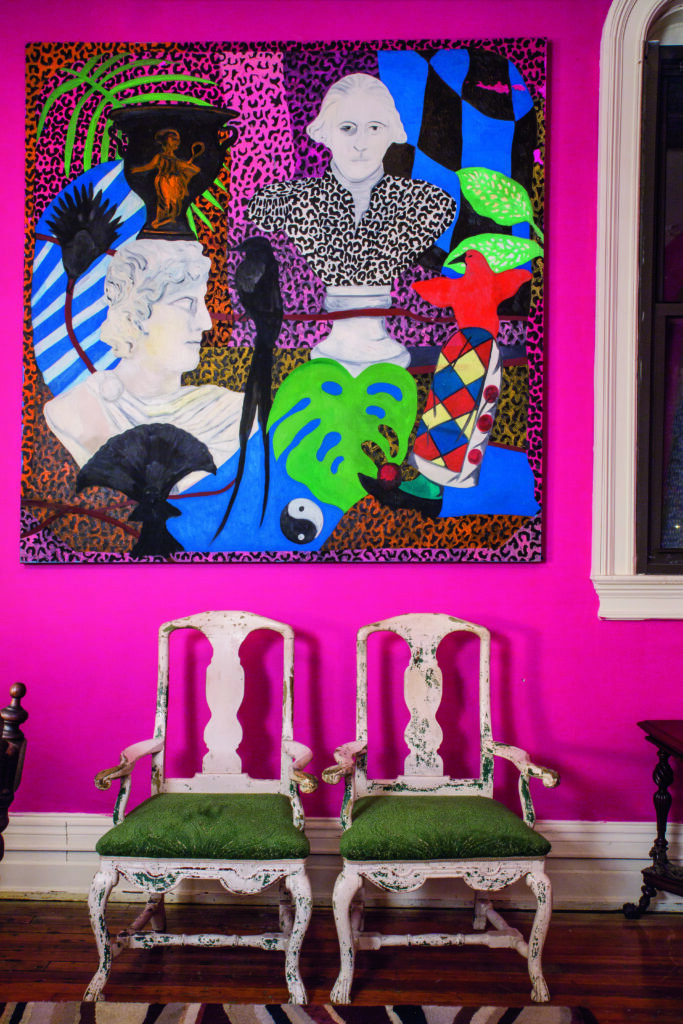
The armory provided space to showcase hundreds of canvases spanning the many decades of Slonem’s career. Here, a painting of George Washington and Alexander the Great from 1988-1989. Photo by Chris Bolton for World of Folly, courtesy of Assouline. “Guardians and Butterflies,” another of Slonem’s early works. Photo by Chris Bolton for World of Folly, courtesy of Assouline.
Q: What is your favorite subject to paint? When did you start painting bunnies, and when did they really start to take off?
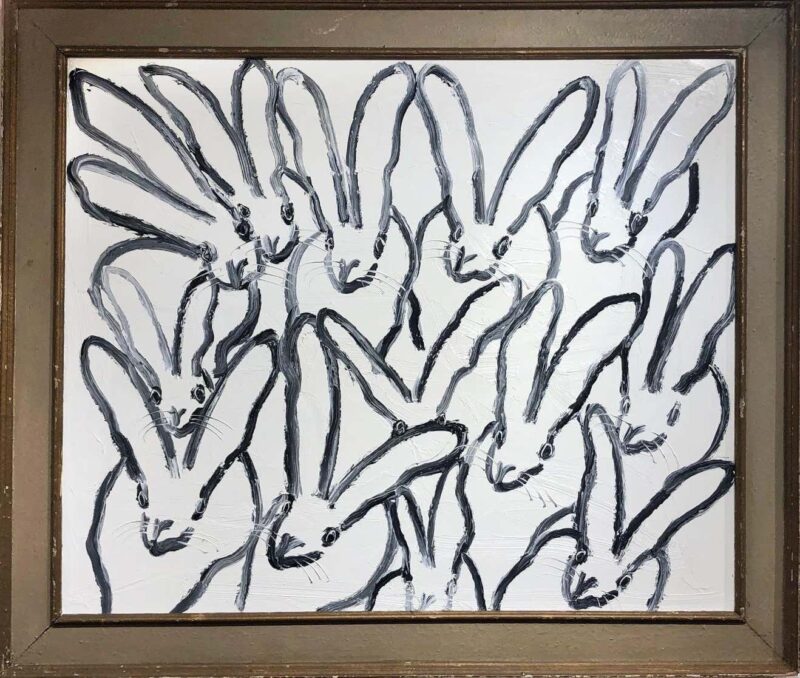
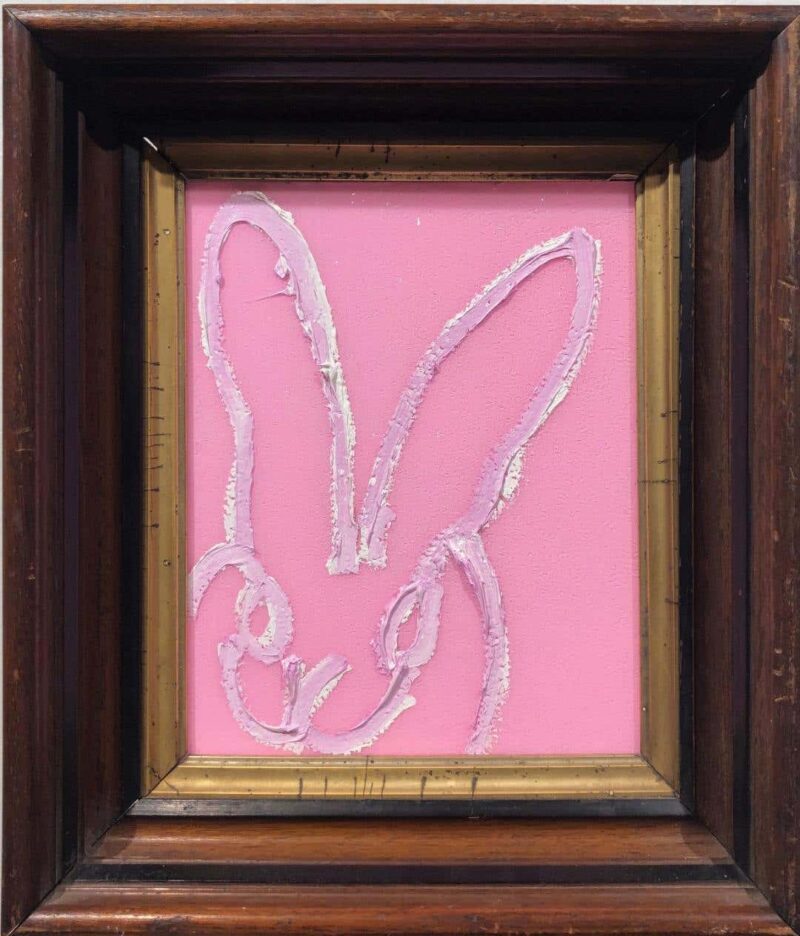
A: Whatever I’m working on at that moment but mostly nature. In the 70s I started painting bunnies at the bottom of my Saint paintings and eventually they evolved into the 10 x 8 bunnies you see today. I would say they really started to take off in the mid 2000s, especially in the last six-eight years. The bunnies are taking me places I could never have been otherwise. They all have huge personalities, and they are all different. So they have a mission.
Q: Are there any particular bunnies that have inspired you over the years?
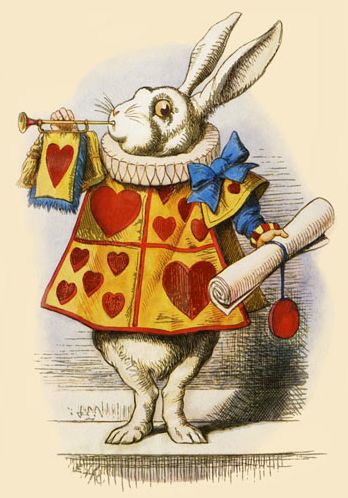
A: Well you start with Durer – that’s probably the most famous rabbit image of all time and was shown to us endlessly in art school and art history. I’m very interested in Through the Looking Glass, Alice in Wonderland and the Mad Hatter. There’s Harvey and the Pooka. Bugs Bunny would be my least favorite adaptation.
Alice in Wonderland is a magical and mystical journey where nothing is as it seems. It is a world of nature where fairies exist – which they do, these are all real things that are not talked about, not observed much. It is a world where these great states of mind and nature exist, full of wonderful images like the Cheshire Cat and the Dodos. It is “through the veil” which is a title I use for my paintings, it is not of this limited reality that we have. It is very magical and funny… I love the Mad Hatter tea parties. And you know they were all based on real things. Hatters were mad because of the chemicals they used. There is reality to it all.
The White Rabbit, illustration from Alice in Wonderland by Lewis Carroll
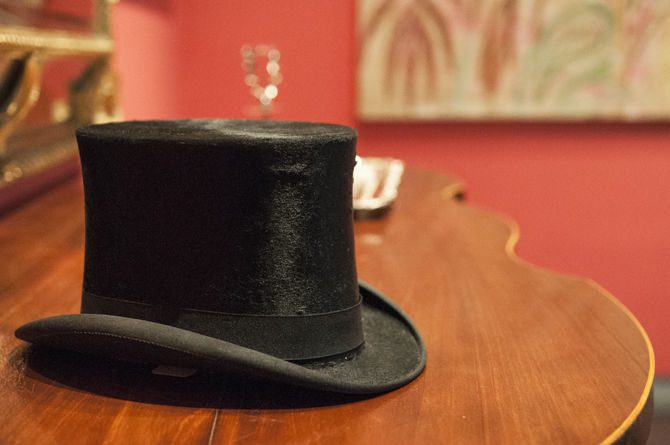
Q: And I understand you have a collection of top hats, was that inspired by the Mad Hatter?
A: Well who knows, probably! I just noticed that they were for sale in flea markets and shops, and I had these closets in my southern homes, so I started filling them up with top hats. They are very fun to be around and play with. When you go to Ascot you see what the world once looked like, and it was pretty terrific.
I used to wear a lot of fun jackets and things, but the opportunity to do that is so limited at the moment… so we have to dwell on this unseen world of “through the looking glass.” I like the idea of time travel. In my homes I use all these antiques, and I save them for the next centuries. And I appropriate my fabrics and bright colors to make them relevant today. So that has been a fun thing to recreate other worlds, piecing them together like a mosaic of shards of color and form that I find.
A top hat on display at the LSU Museum of Art in 2016. The show was the first full-scale museum exhibition to display not only Slonem’s work, but a recreation of his home.
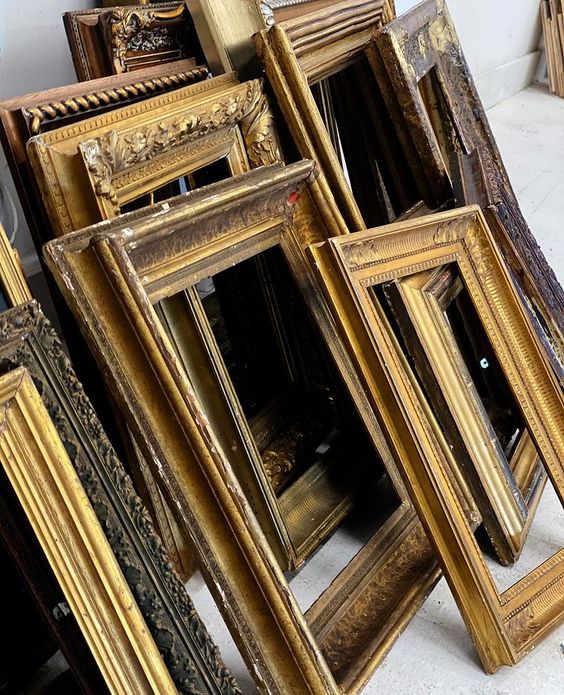
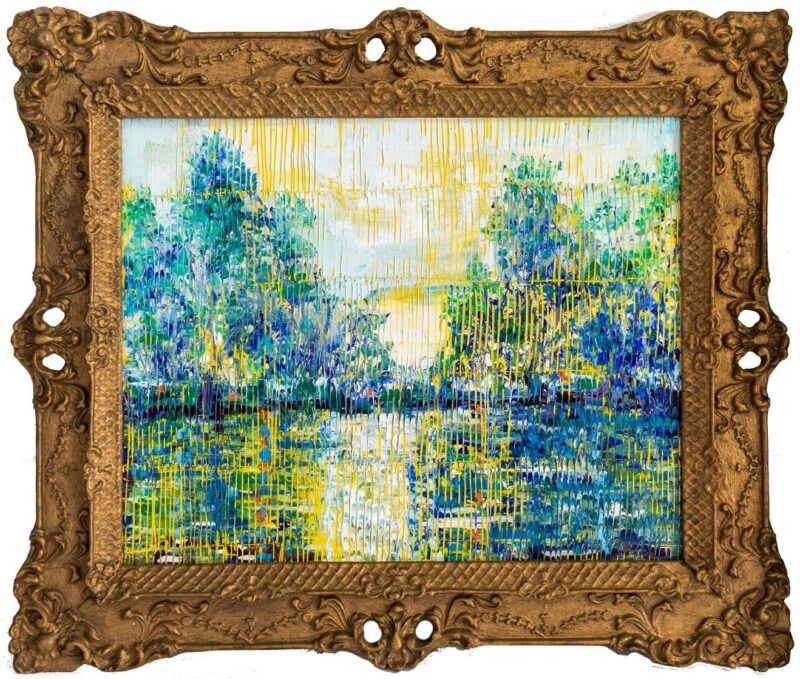
Q: I love that you often salvage antique frames for your paintings. What inspired you to do this, and how does it add to the intrigue of your art?
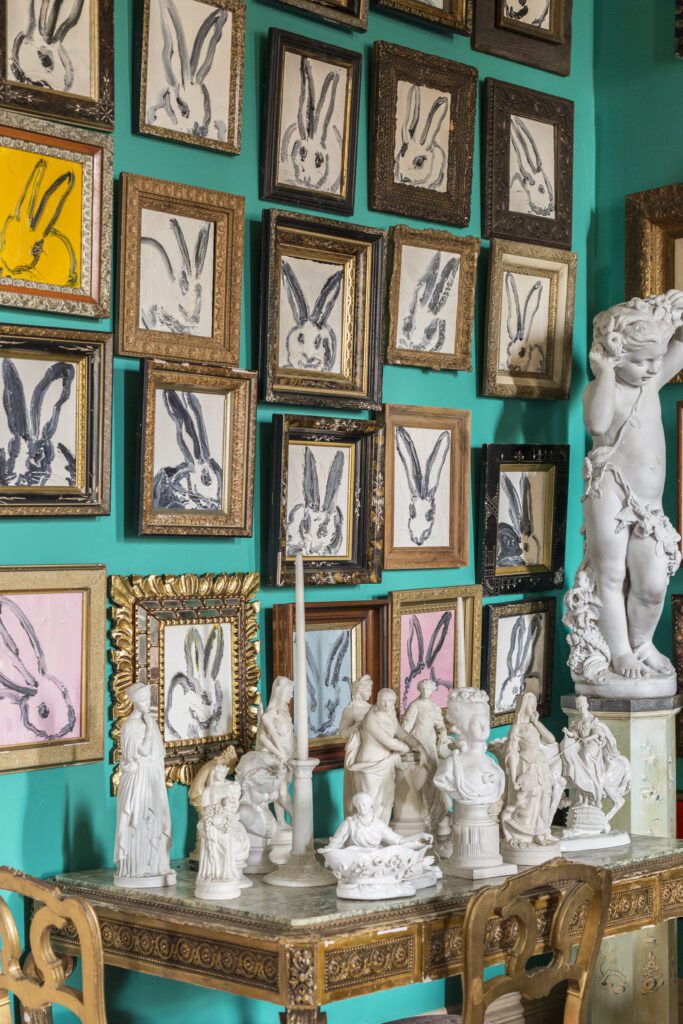
A: I’ve always loved old frames since I was a child. I was asked to frame a show that I was having at Virginia Common Wealth University years ago, and they wanted me to frame it and I couldn’t afford contemporary frames at the time. I discovered at a flea market that there were lots of frames that fit my paintings; particularly 10 x 8 and they seem appropriate to the pieces. It led to incredible passion of collecting frames and trading with frame dealers. Its an on going passion of mine – it reminds me of the gilded cage, it gives an ageless quality of what I’m doing. It’s not completely of this world and time but it’s a reference to the interiors I admire the most. Collecting the frames is a huge part of my art making.
“I have been a devotee of flea markets in New York since the early 70’s, and I discovered that many antique frames fit the painting sizes I was using, particularly 8×10’s. It is part of my art form to collect, and collect rare, antique, and unique frames.” – Hunt SlonemHunt Slonem “Bayou Teche” Landscape in an antique frame
Q: Your antique frames are so symbolic of your passion for incorporating the new with the old. I just love that!
A: I have a real passion, I have always had it. You know in the 19th century, you could identify an artist by the frame – they all used particular frame styles – Sargent loved the persimmon pattern, Whistler had his own frames – They all had their own. It was very obvious whose paintings were what; we don’t have that now. Frames were kind of thrown away in the 1960s as an anti-modernist thing. That’s another thing that I have done, that was inspired by Warhol, where he did shows called “Raid the Refrigerator” where he would borrow from the collection of museums and use other things too, and I have done that many many times. I am always so horrified by the treasures in museum basements and shelves that never see the light of day. I dig them out.
Q: Do you have an example of something you have done recently?
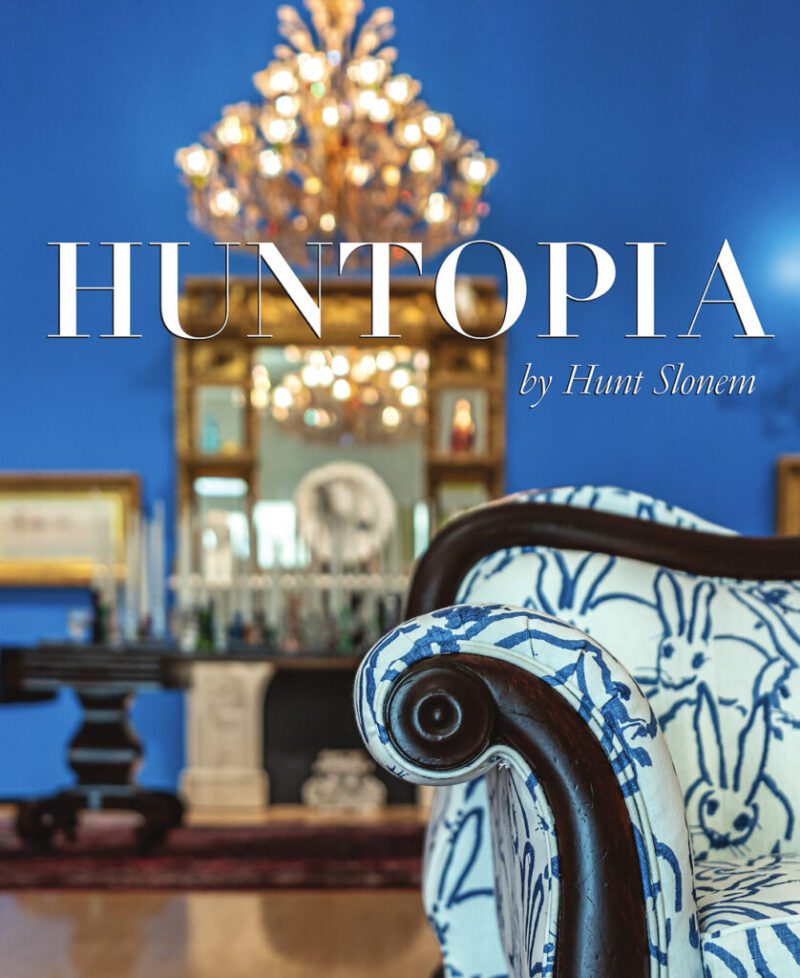
A: I just did a show called Huntopia at the Taubman Museum of Art in Roanoke, Virginia. I’ve done quite a few. I did a show at the Ogdon in New Orleans years ago with all the furniture, art, and photographs – a complete installation. There was also the Colby Museum in Maine, the Hilliard Museum in Lafayette, Louisiana, K Contemporary in Denver, one in Kazakhstan, and the Rothco museum in Latvia. I have quite a few projects ready to go, but Covid has kind of stopped them.
An ode to Slonem’s passion for “Collectorating”—the artist’s term for his signature style of collecting and curating— the HUNTOPIA exhibition in Roanoke, Virginia featured Victorian-era paintings and antique furniture alongside a survey of Slonem’s own paintings dating from 1983 to present day. Much like Andy Warhol’s Raid the Icebox exhibitions, Slonem expounds on the artist-as-curator concept.
Q: When did you decide to begin sculpture, and what inspires you?
A: I’ve been doing sculptures for 40 years, a lot of monumental sculptures in the state of Louisiana where I have homes. I recently did one for a butterfly park that was 22 feet. I’m now working with Idlewood Union who approached me with something I’ve always wanted to do – I’m working with glass and bronze, which are fresh mediums for me. It’s been an expansive and creative experience that I have never had the opportunity to work with before. It’s very exciting for me!
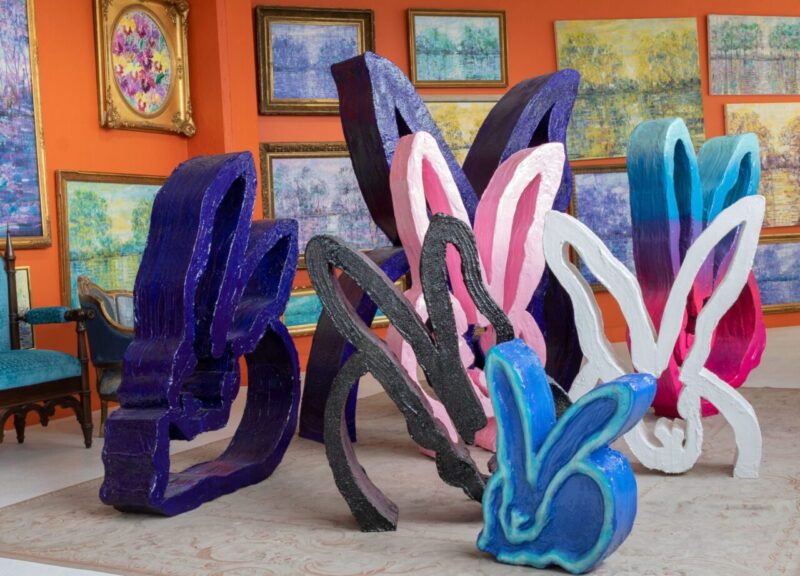
Hunt Slonem’s bunny sculptures
Q: Can you tell us about your current collaborations and Hop Up Shop? Are there any new partnerships in the works?
A: There were socks that I saw at 4 o’clock in the morning, when I first moved to New York, that had Edward Hopper’s “Nighthawks” on them, and I just thought that was terrific. Everybody has always put art on t-shirts and whatever. There’s been a real run of fashion and art collaboration, Keith Haring had the Pop Shop.
It was not considered something you should do when I first came here, but now a lot of galleries have products and things that their artists have done. And usually for people, this happens to them after they die. So I’d rather have my 2 cents put in while I’m alive and make a total environment out of it.
Penelope Kernen, one of my gallerists, asked if I was interested in creating a stand-alone collection and I loved the idea of going in a new creative direction.This collection is a reflection of my world, but it’s something I’ve always wanted to do. I’m thrilled with the vibrancy and I love mixing time periods, styles and colors. I like to think of it as time traveling. I’m happy to share my world in this way because it’s more accessible.
Thank you, Mr. Slonem, for joining us today and for allowing us to travel into your enchanted and magical world! To read Part 1 of this series, please click here, and stay tuned for a feature on Slonem’s collection of historic homes on Friday! For more information, please visit huntslonem.com.
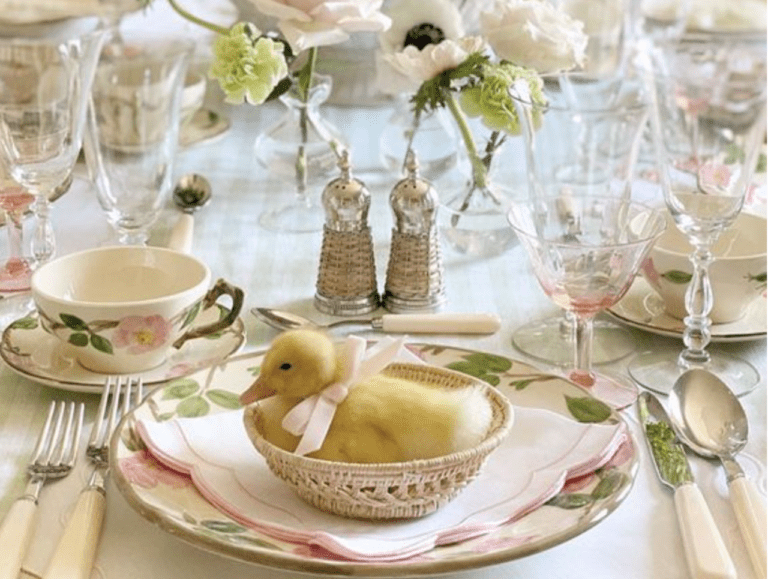
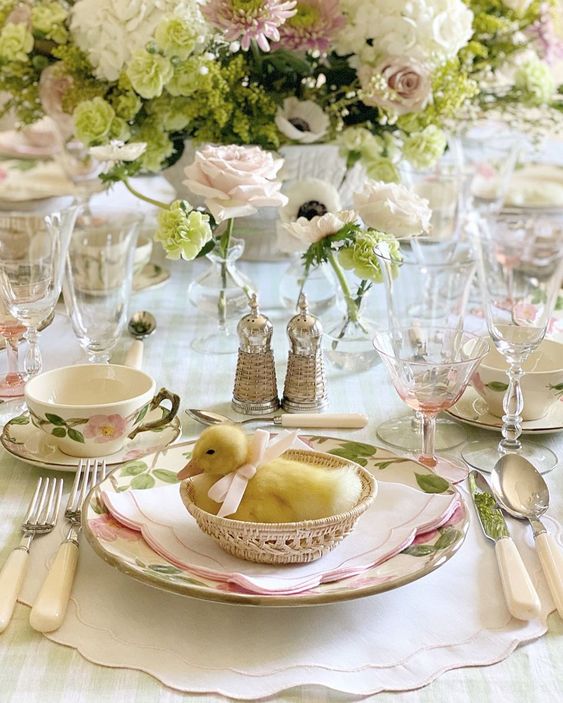
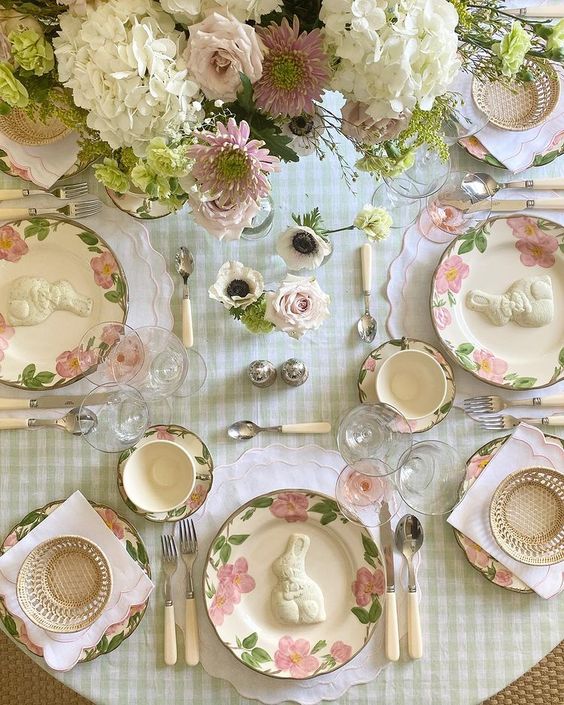
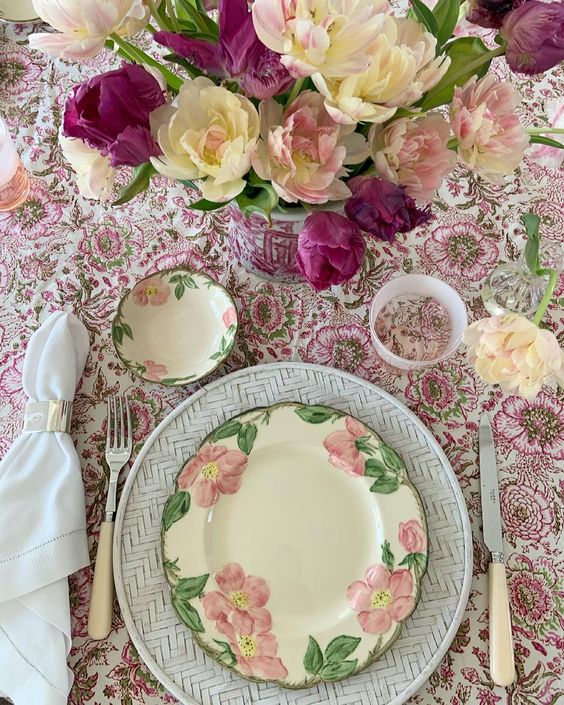
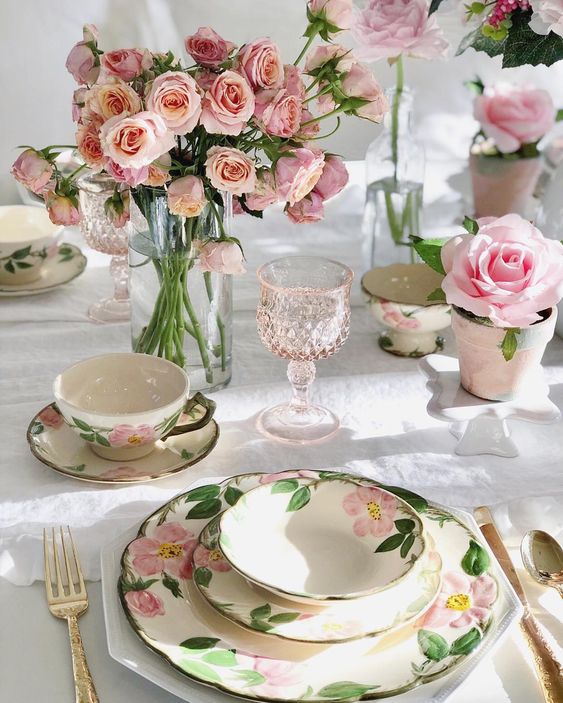
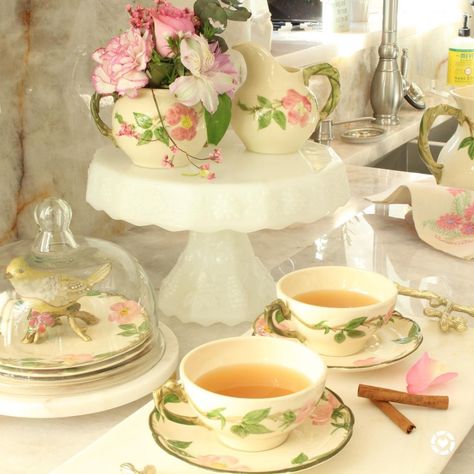
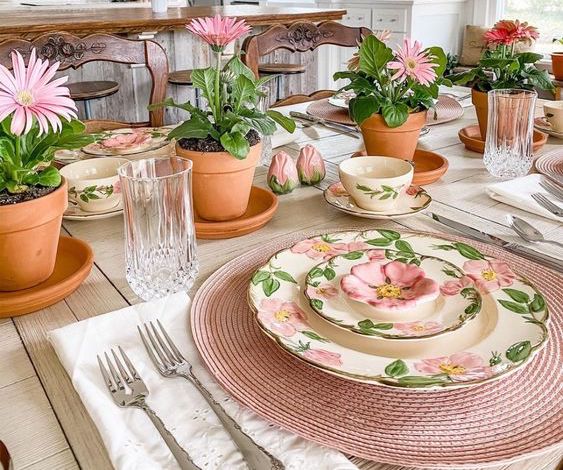
It has been a delight to see so many of the things I grew up loving brought back into the limelight, thanks in large part to the Grandmillennial movement. Recently, I have noticed a classic pattern that I had not seen in years beginning to pop up in fresh and chic new ways… Desert Rose by Franciscan. The Desert Rose pattern was first manufactured in the early 1940s, and it is the best-selling American dinnerware pattern in history. Chances are someone in your family had this lovely pattern at one point or another. My Nana and Mother both have had this pattern, and it brings back such fond memories. Originally produced in California, you can learn more about how the dishes and production location have changed over time here, and this website will help you identify the back-stamp if you are interested in beginning a collection.
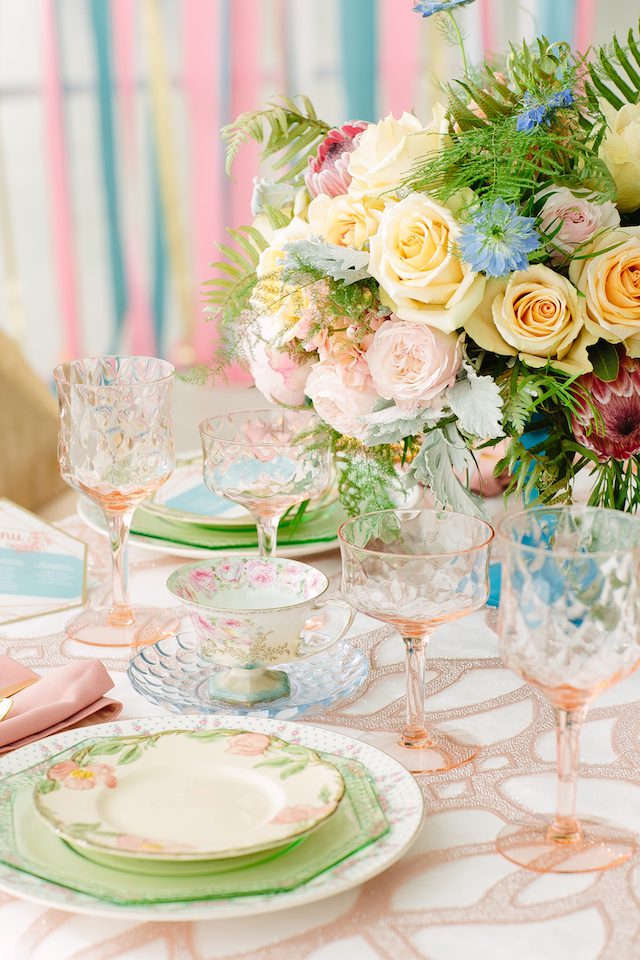
Today we will enjoy some lovely tablescapes featuring Desert Rose. If you have this pattern, we would love to see how you use it, please tag #desertrosechallenge on Instagram… This hashtag was created by @simplysoutherncottage, a brilliant idea!
Prices on Desert Rose are currently quite low, so now is the time to scoop up some of this pretty earthenware. With Easter and Mother’s Day just around the corner, it is perfect for the spring and summer months!