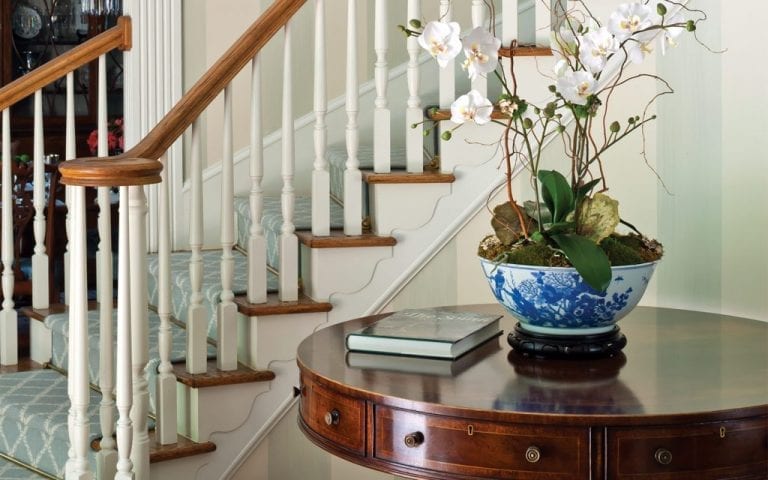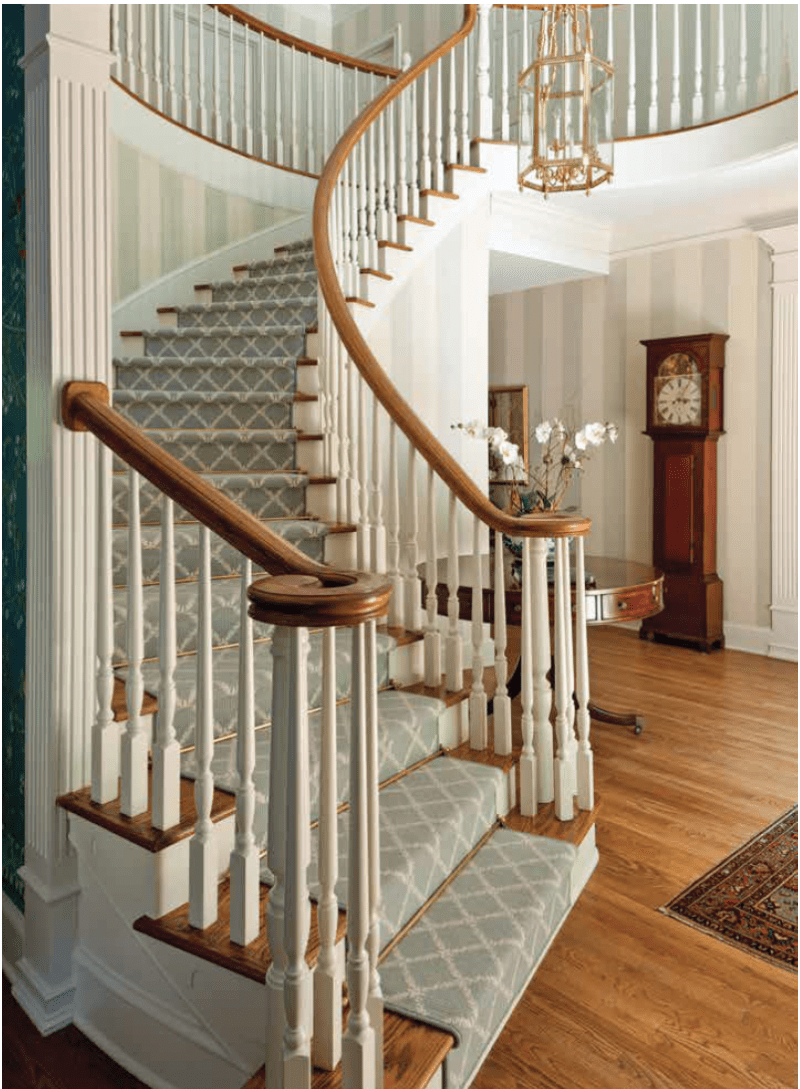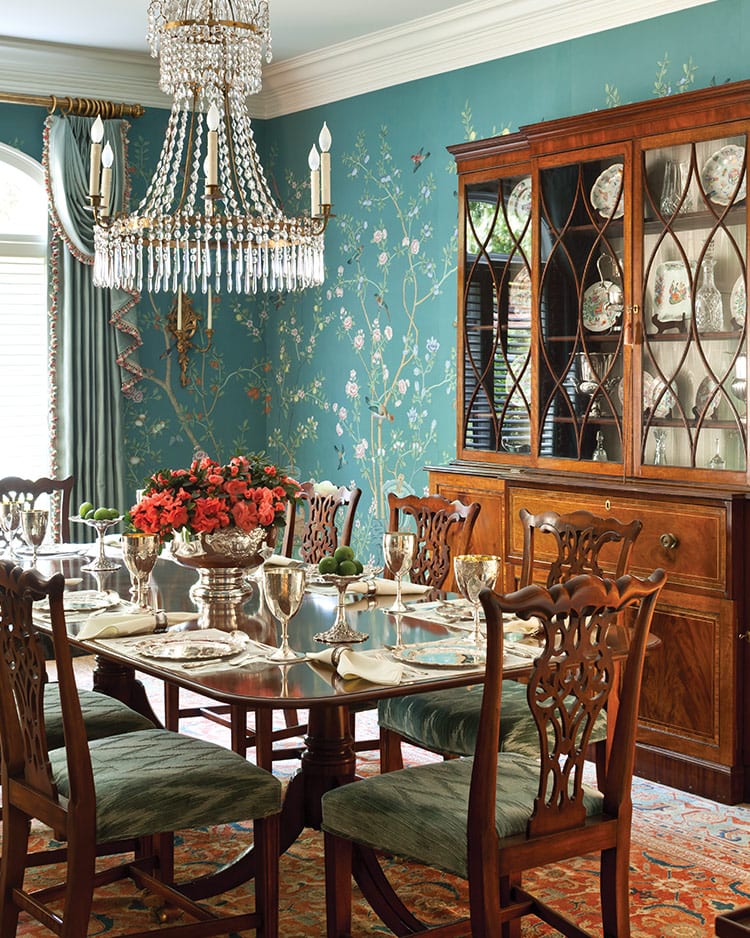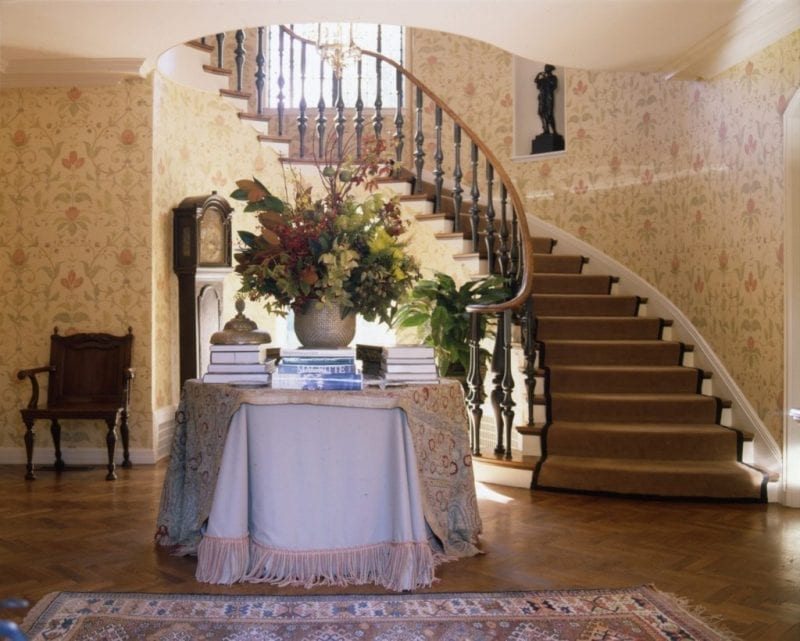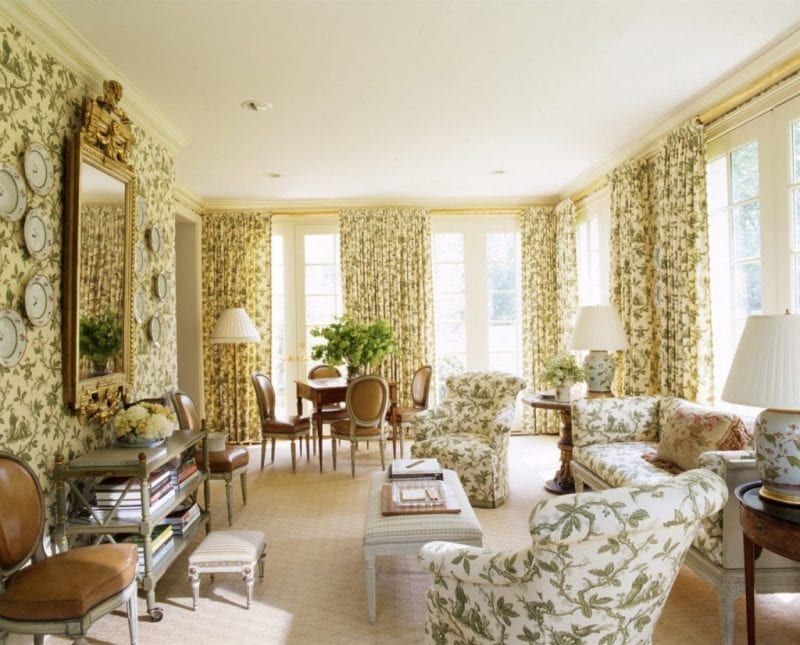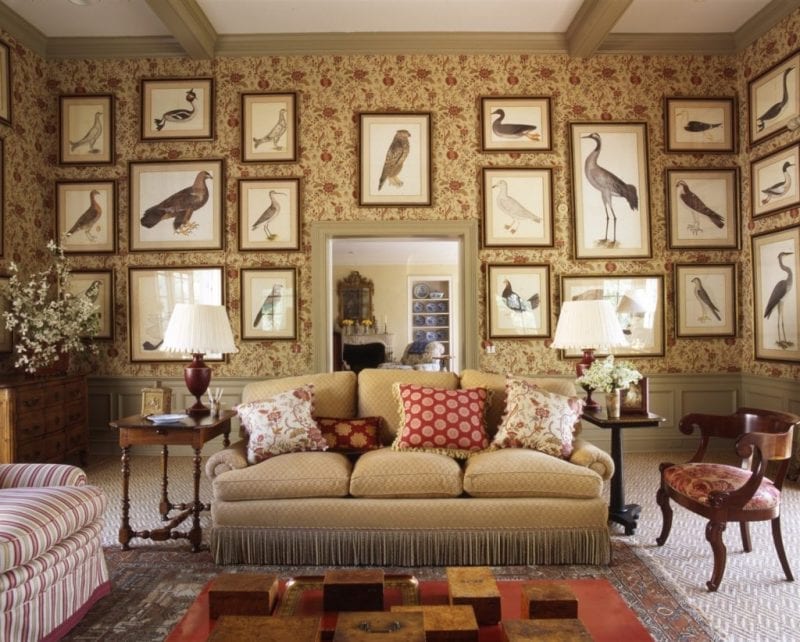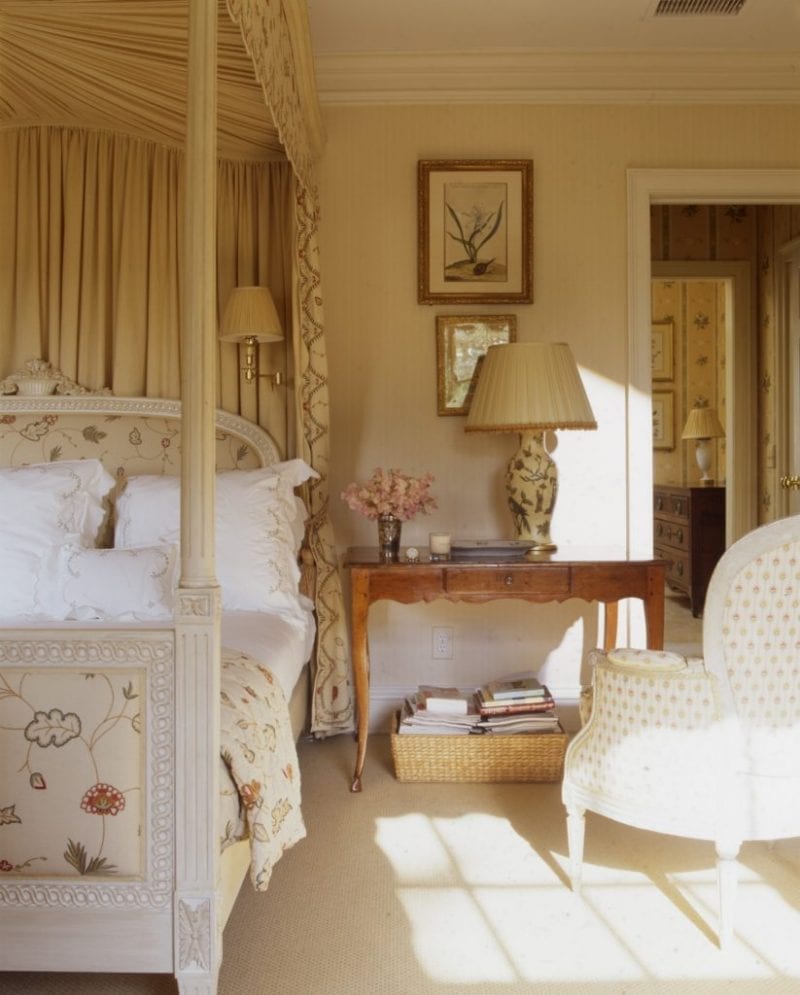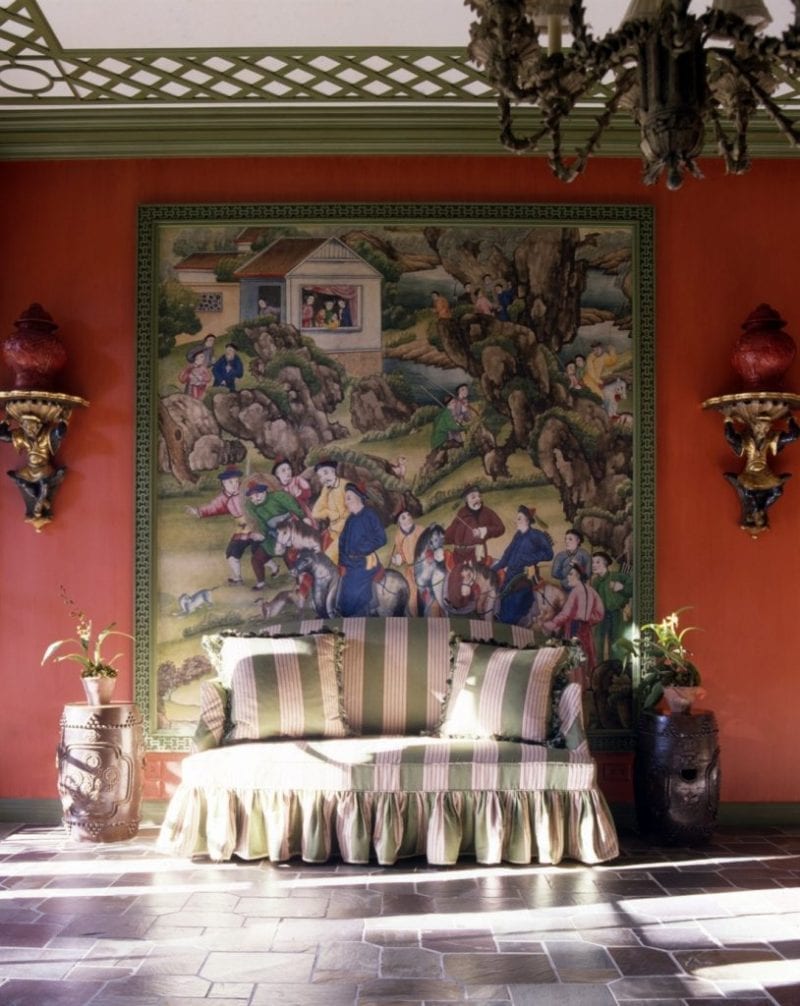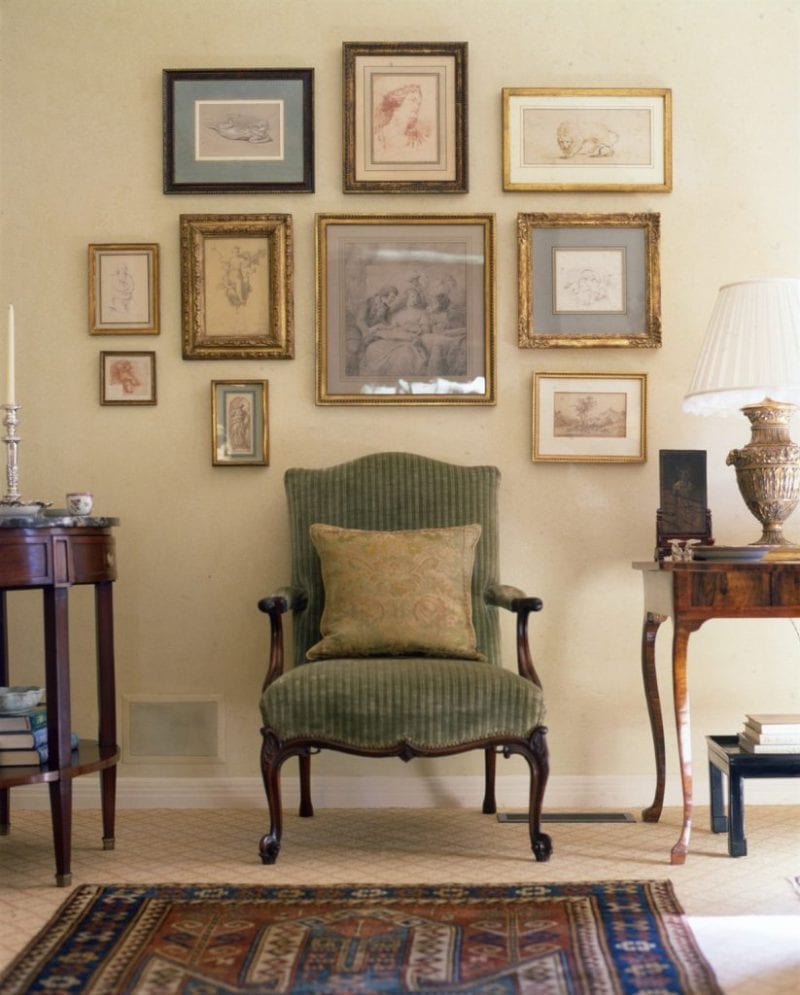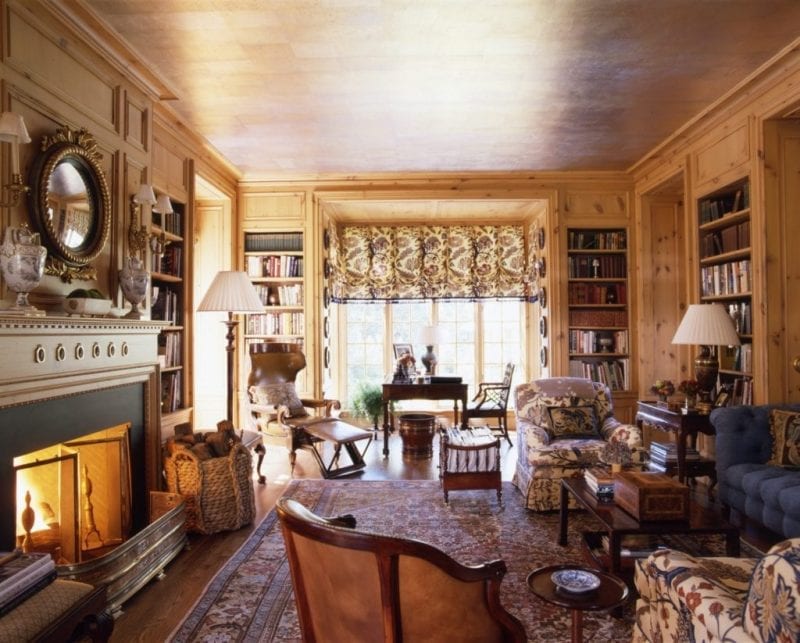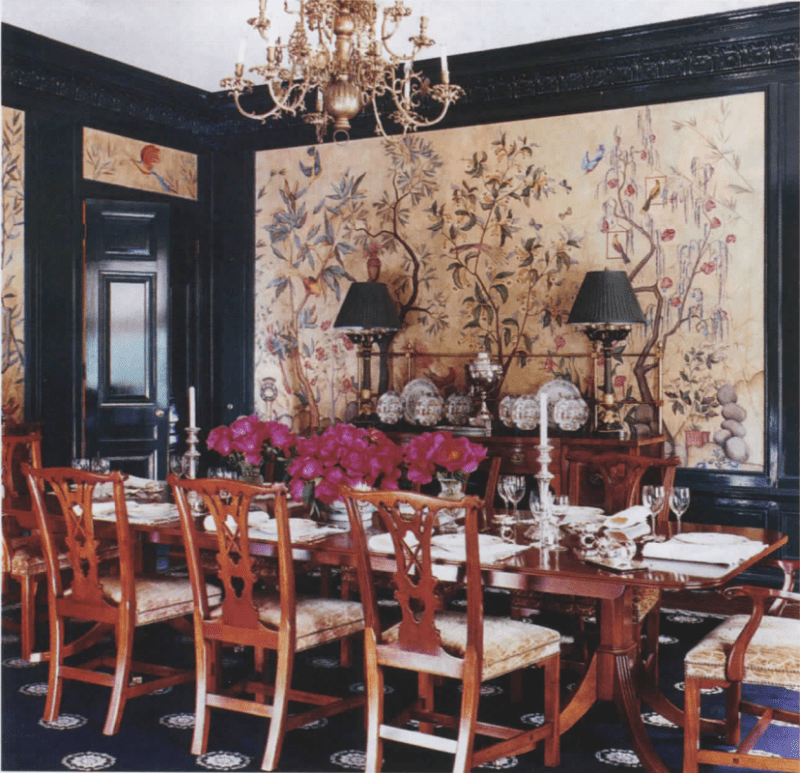


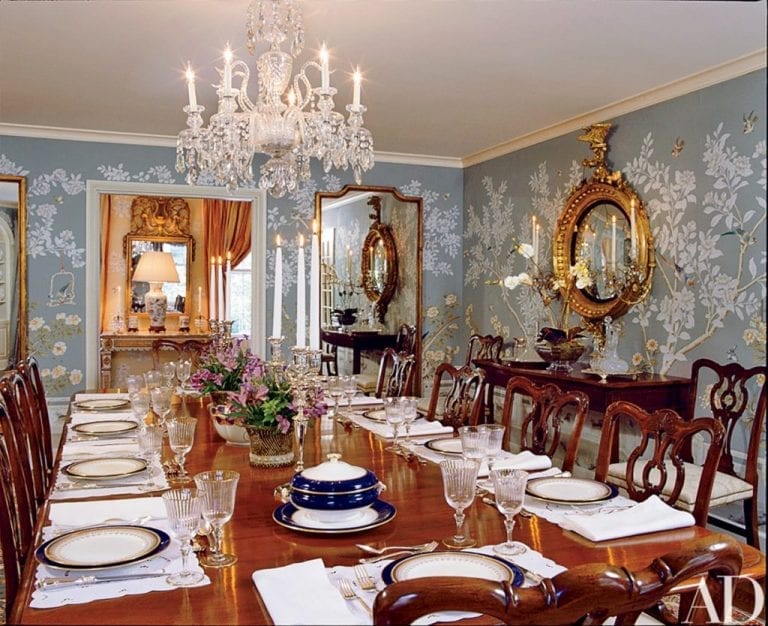
In his latest book, Classical Principles for Modern Design, interior designer and historian Thomas Jayne discuses how fundamental principles of traditional design are applicable today, and what we can learn from the treatise on the subject – The Decoration of Houses, written by Edith Wharton and Ogden Codman Jr. in 1897. “It is not an overstatement to say that it is the most important decorating book ever written…” he said. “The Decoration of Houses is like scripture; it is sometimes called the Bible of interior decoration.”
Classical Principles for Modern Design is Jayne’s response to Wharton and Codman’s work in which he makes a new case for traditional design. “I define traditional decorating as contemporary decorating using historic models,” he said. “We use them not because we lack imagination, but because their core elements have been perfected over two millennia.”
The book traces contemporary ideas about interior design back to Wharton and Codman showing where the new approach coincides and where it diverges from their views. “Wharton and Codman advise us to avoid the ‘Athenian thirst for novelty,’ and that is good advice in our own age,” said Jayne. Following the same organization as The Decoration of Houses with chapters on walls, doors, windows and curtains, ceilings and floors, etc., Jayne’s book also adds new perspectives on the design of kitchens and the use of color, important subjects that Wharton and Codman did not address.
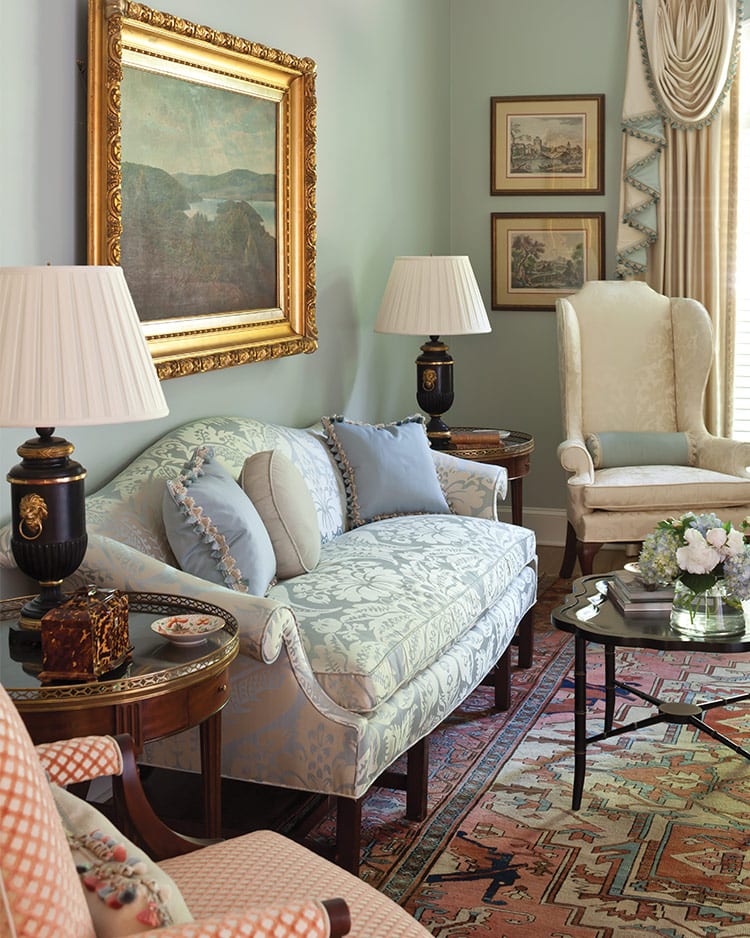
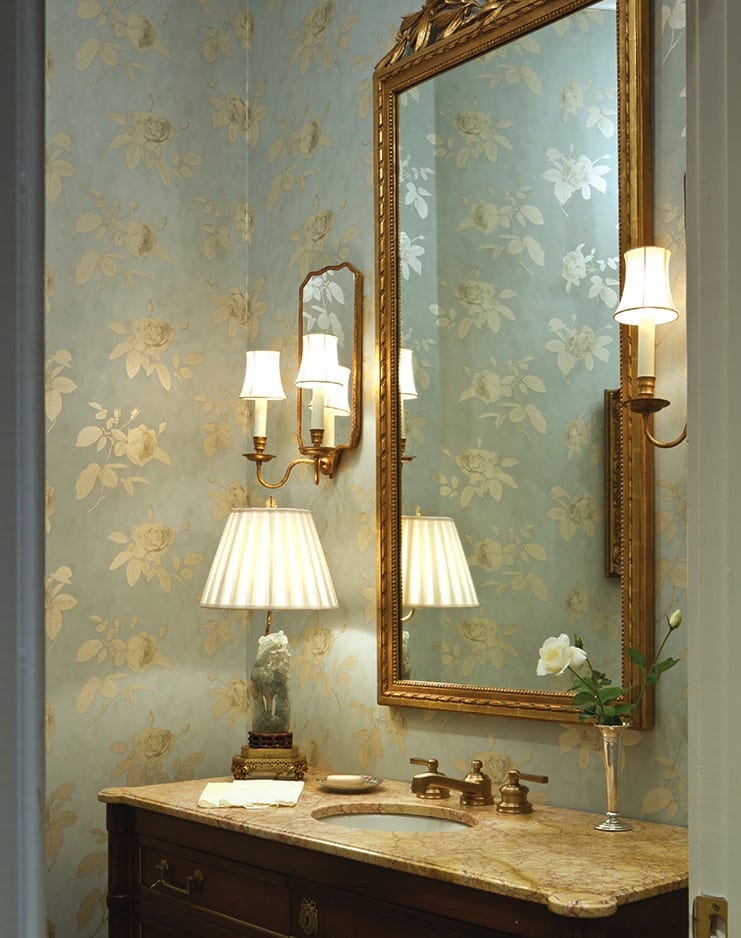
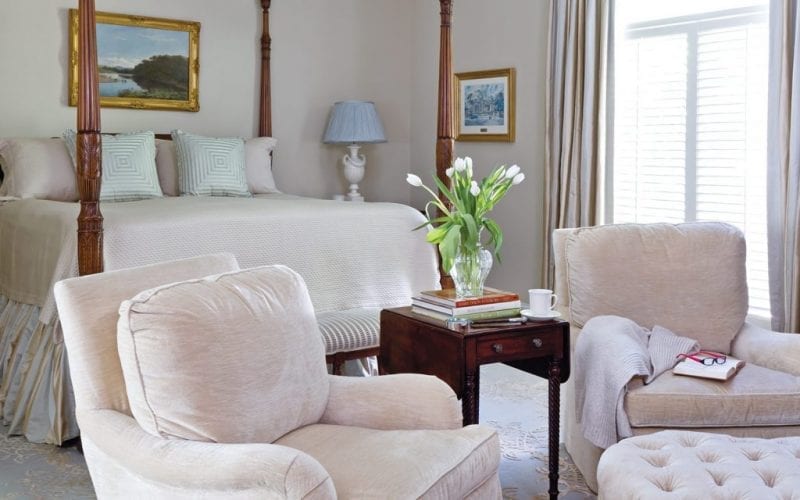
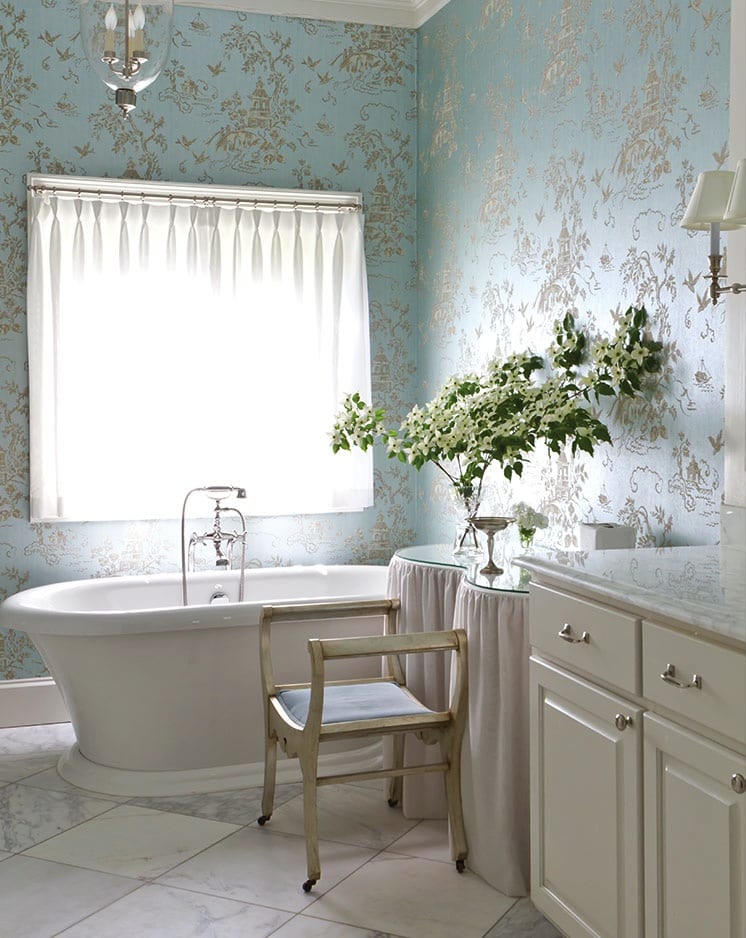
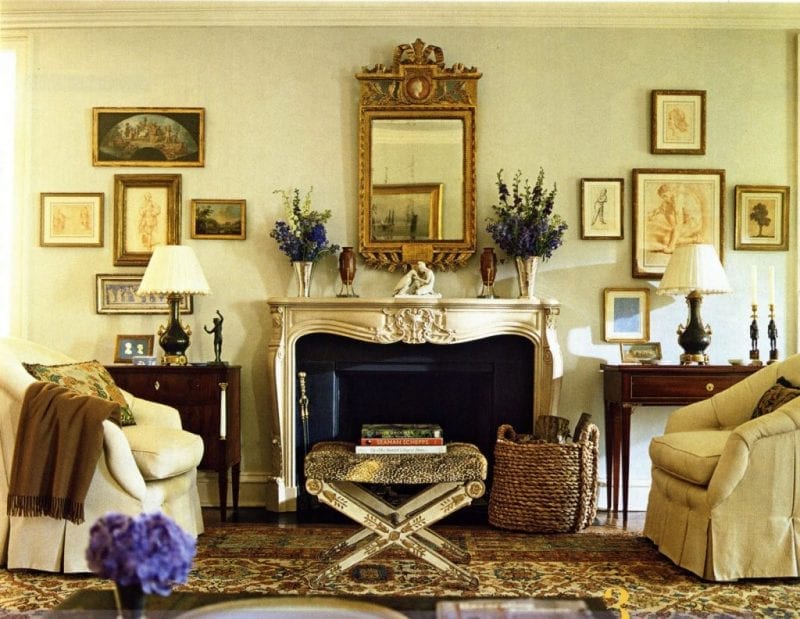
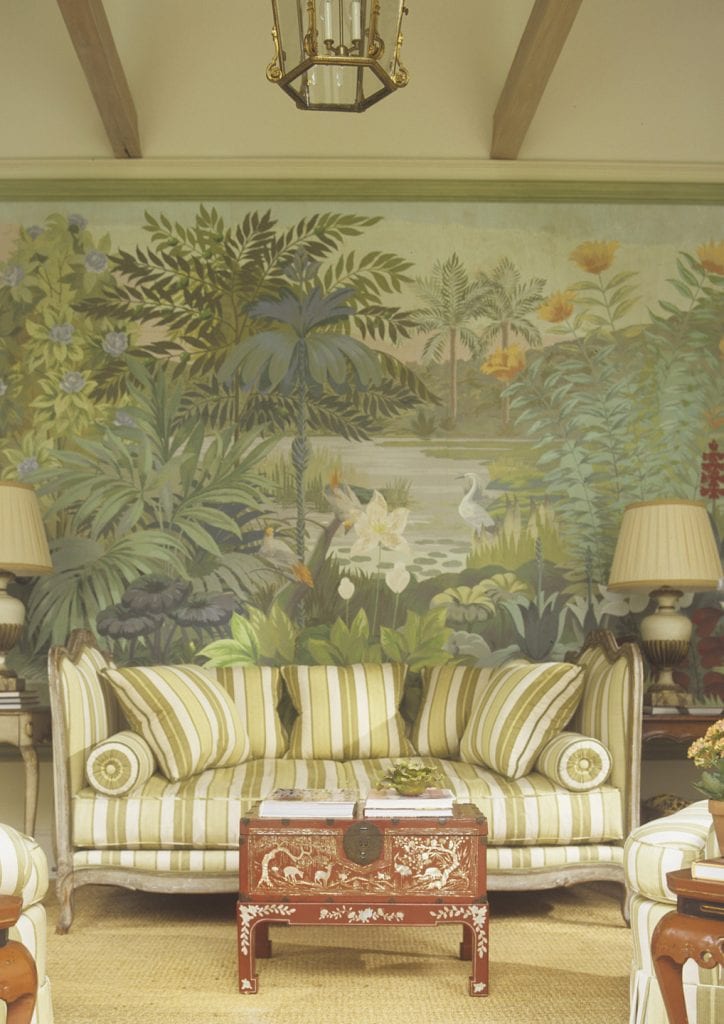
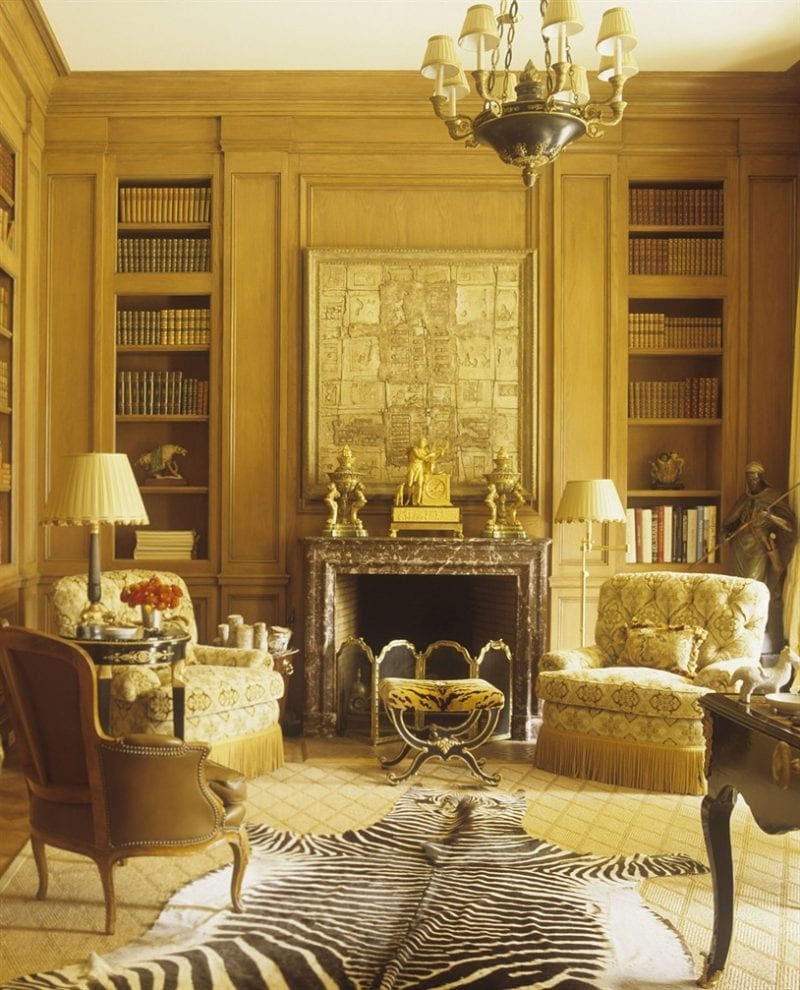
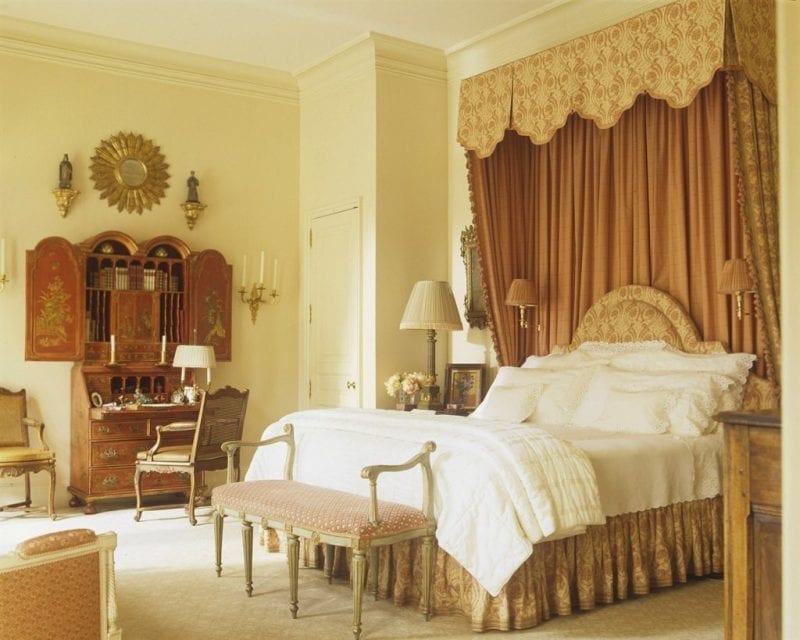
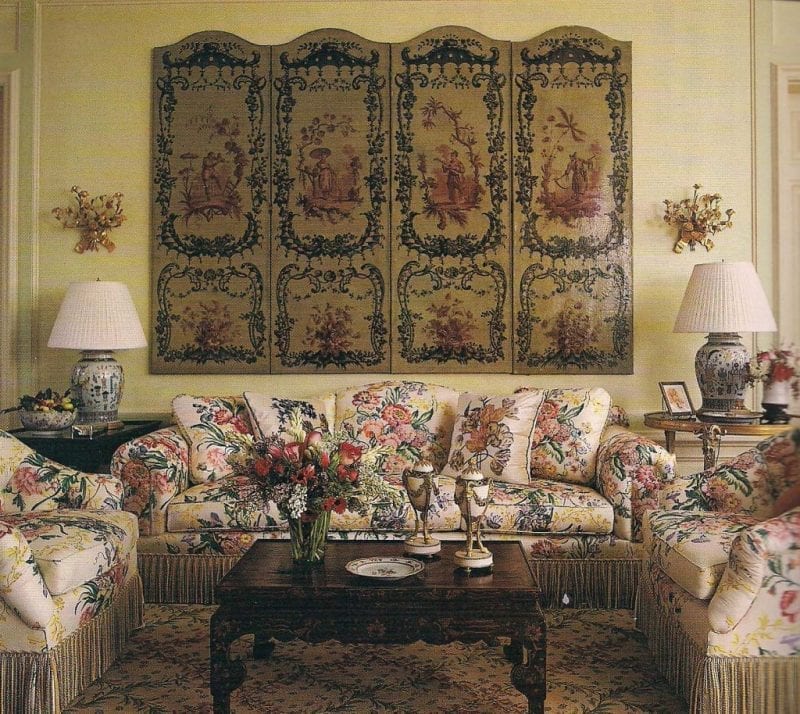
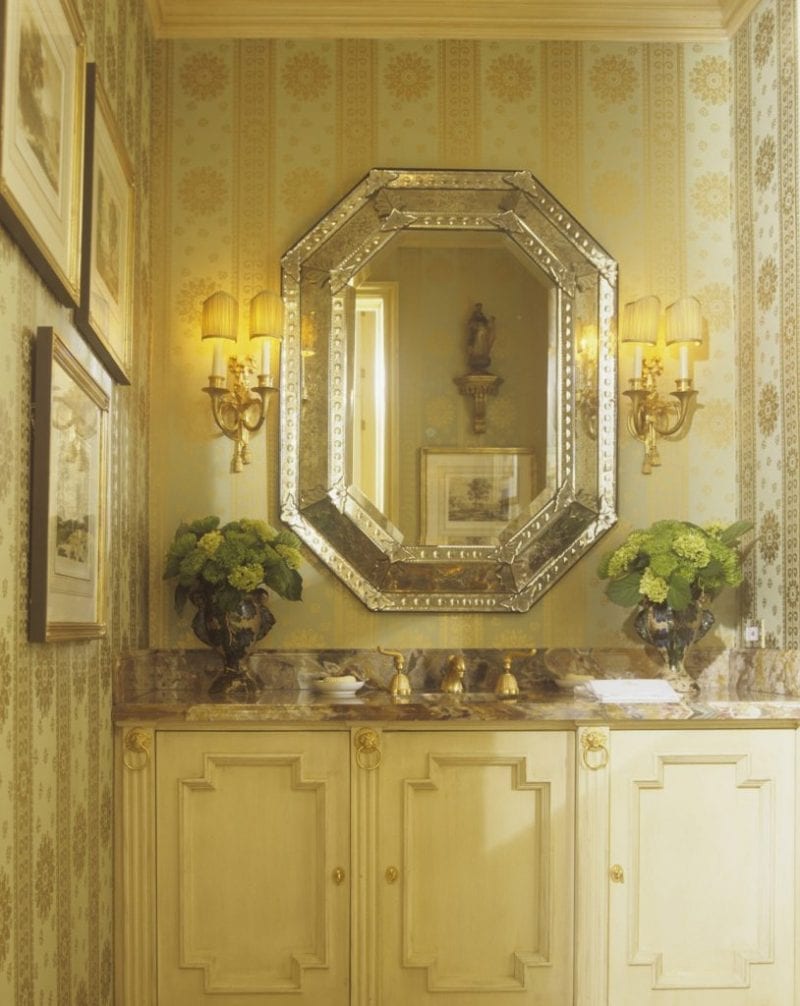
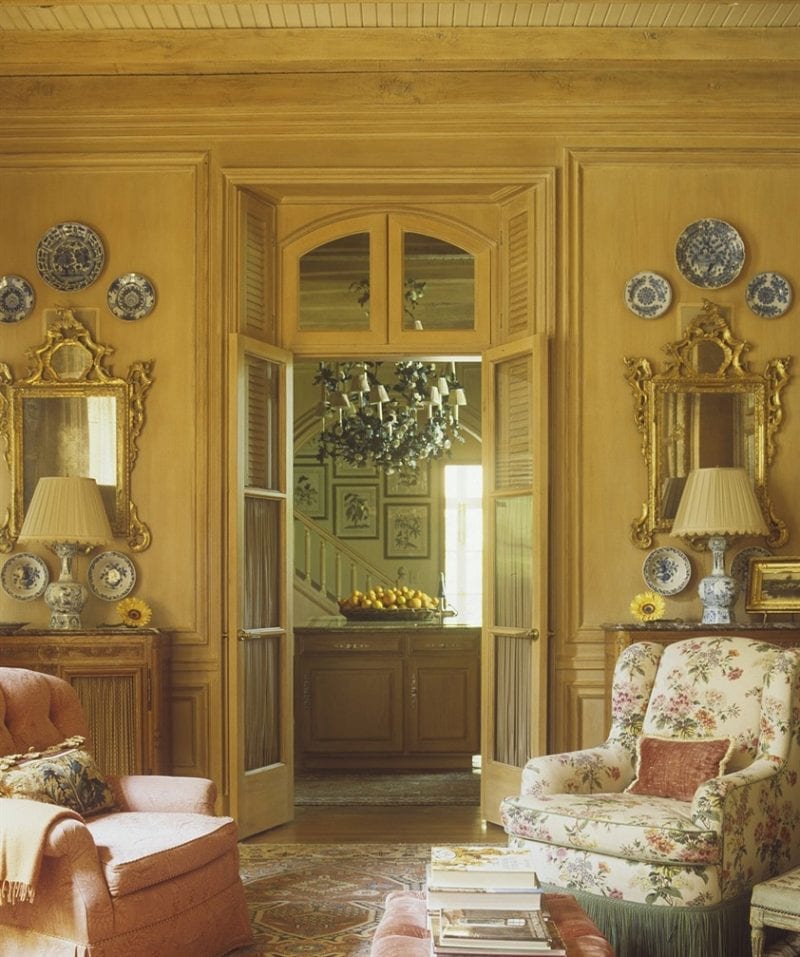
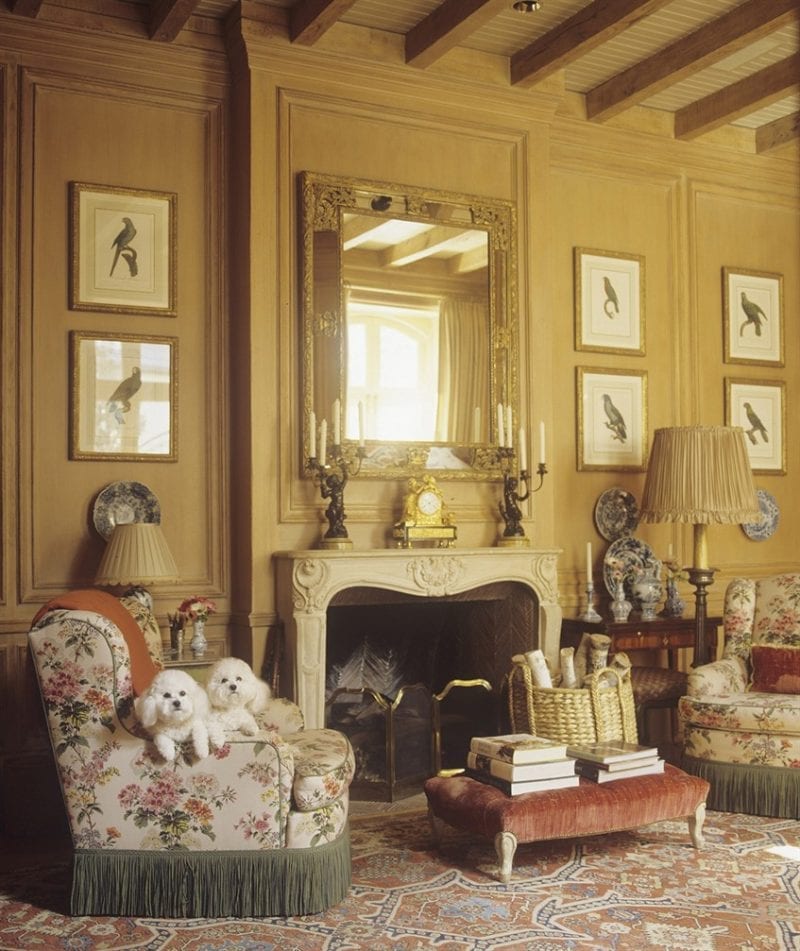
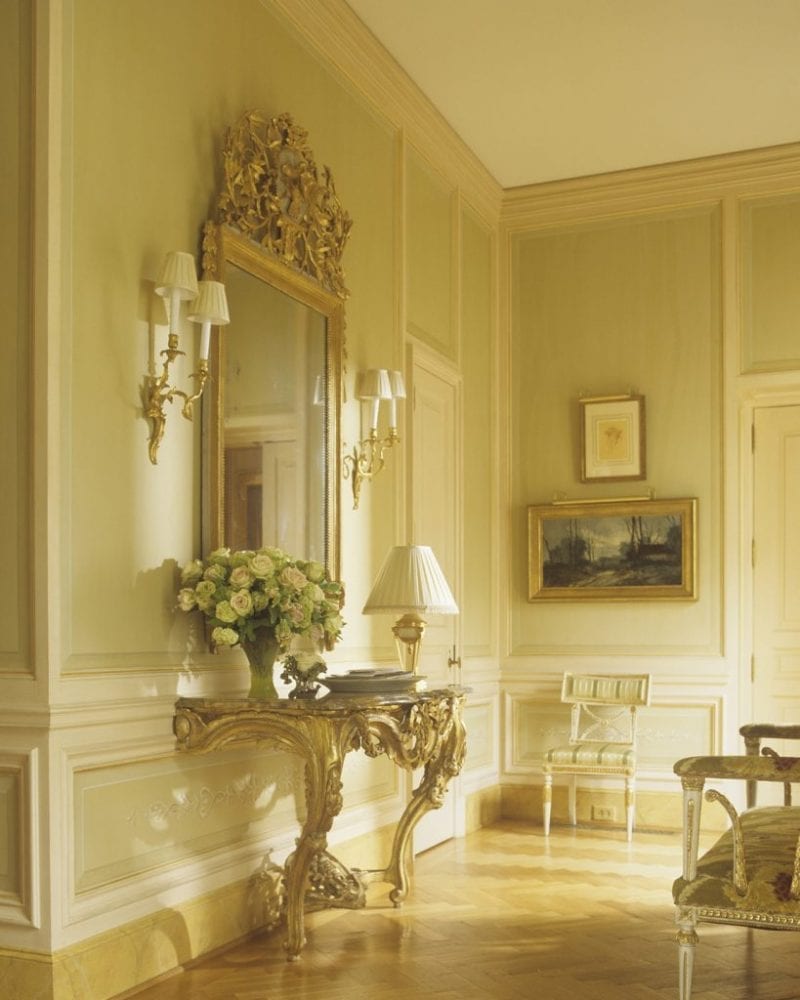
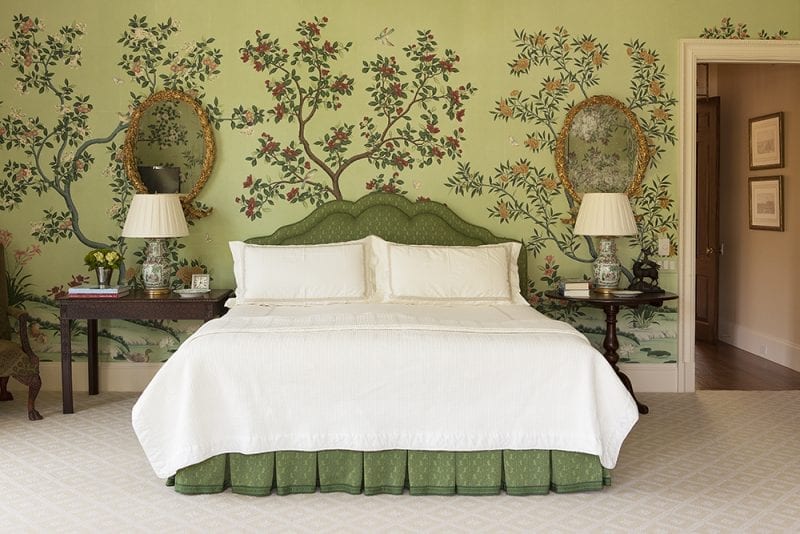
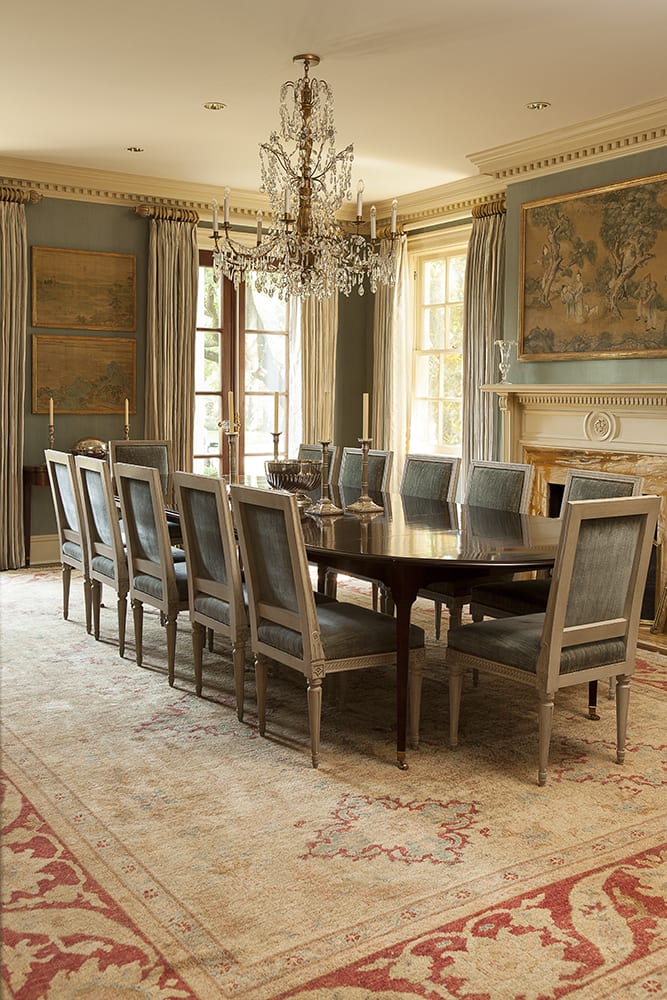
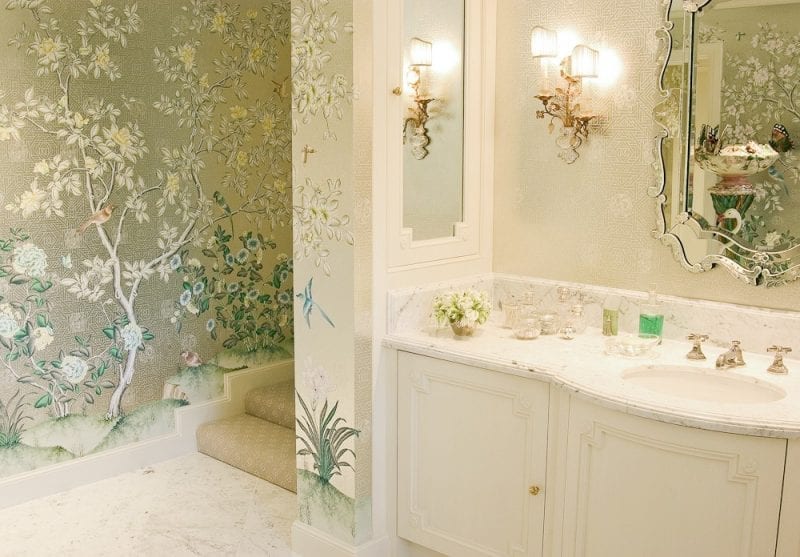
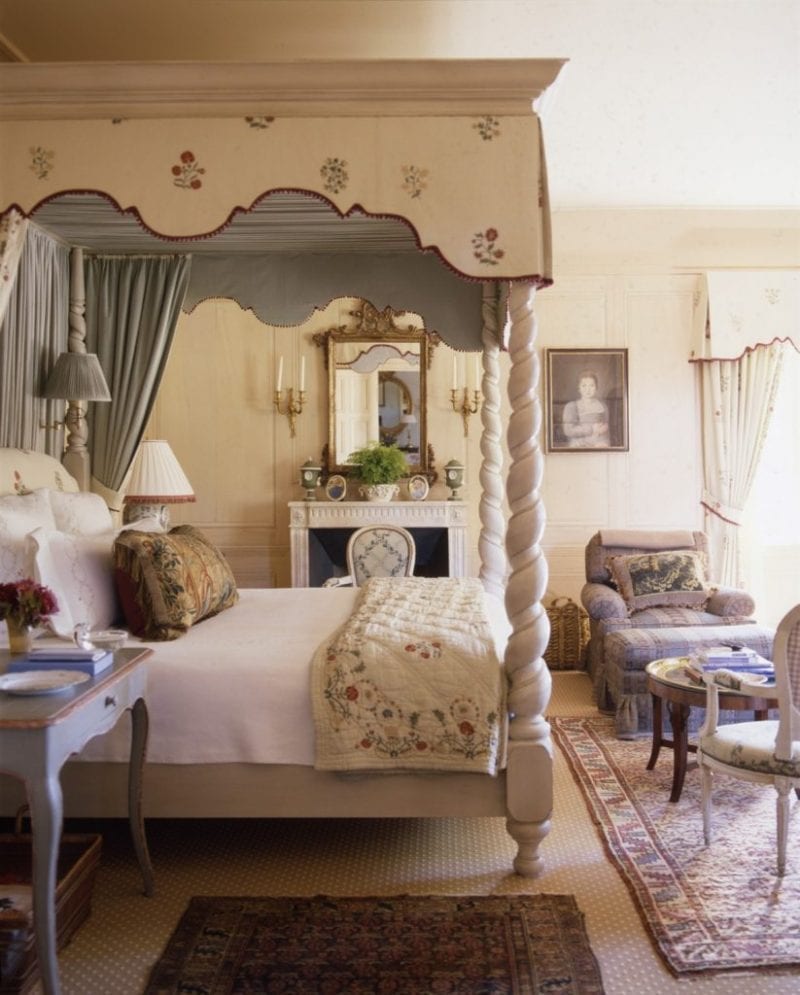
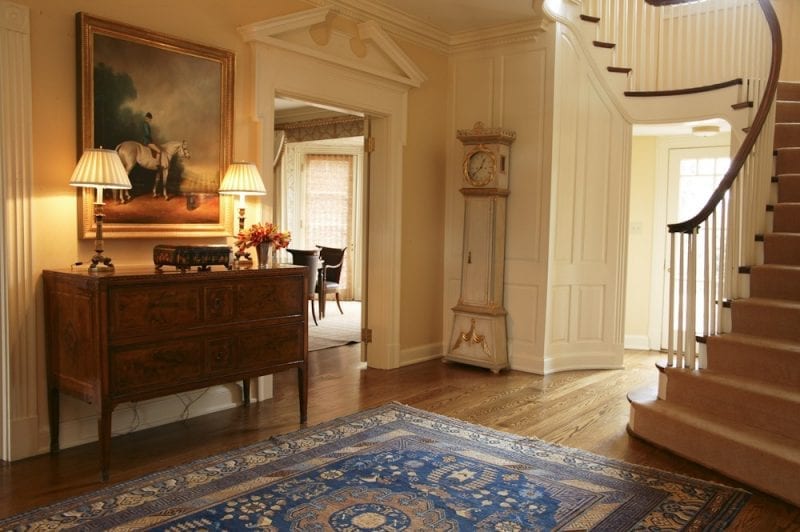
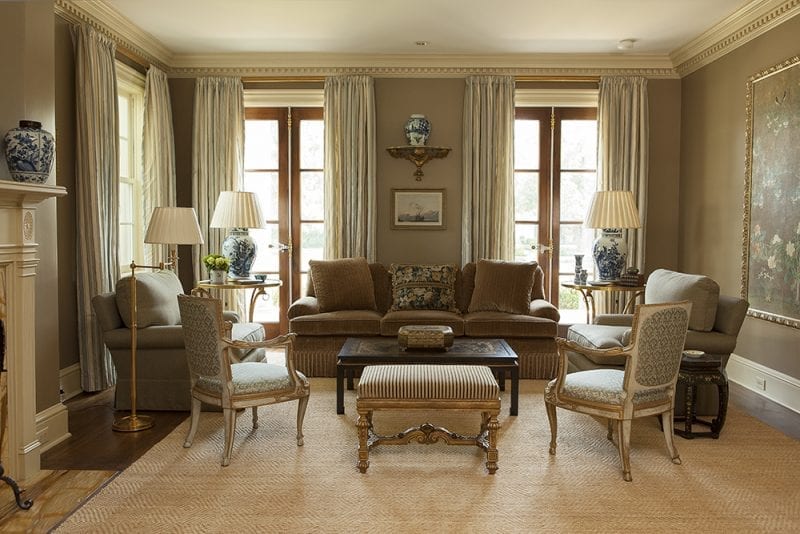
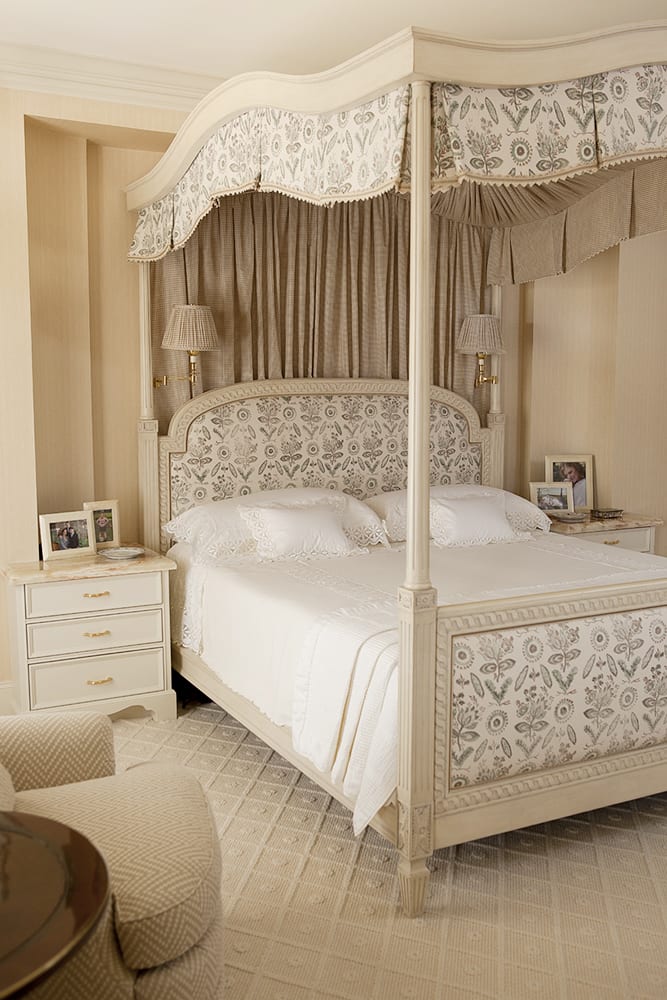
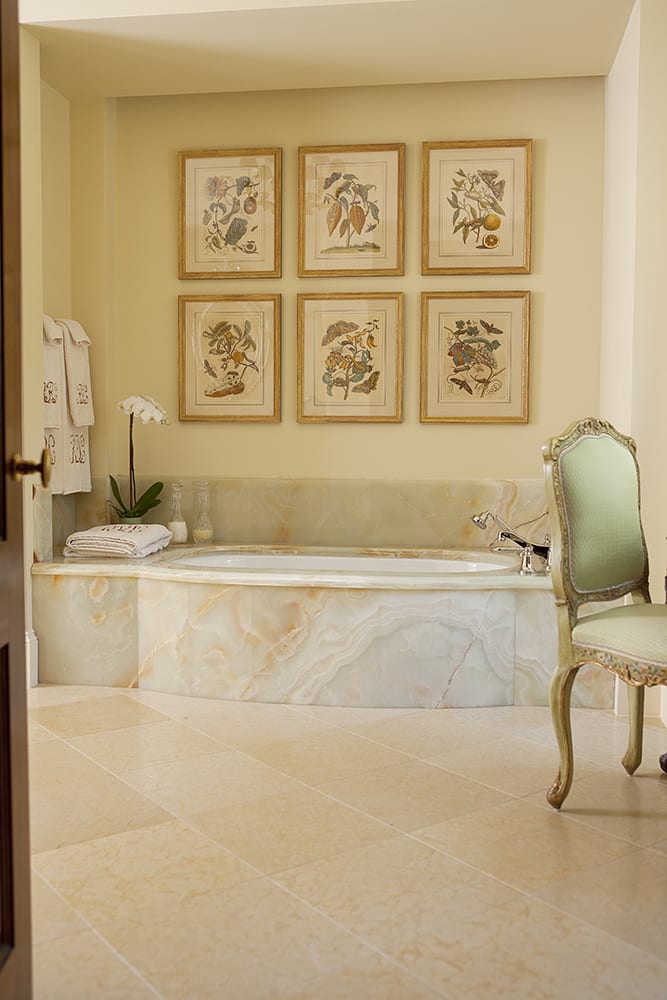
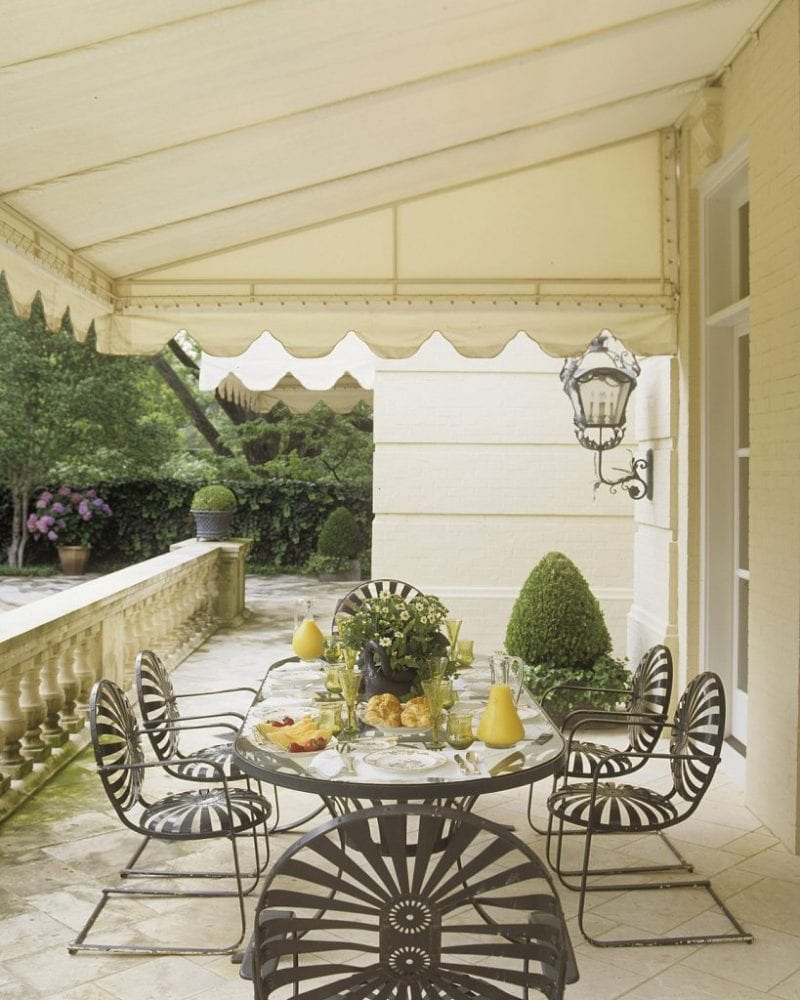
Drawing on his own work at Jayne Design Studio, Jayne has selected elegant, traditional interiors to illustrate these principles. Projects include a restoration of historic eighteenth-century public rooms in Crichel House in Dorset, England, a mountain retreat in the wilds of Montana, an array of luxurious New York City apartments, and country houses in the Hudson Valley…
Not only have Edith Wharton’s design principles stood the test of time, but so have her novels including The Age of Innocence, The House of Mirth, and Ethan Frome. It is interesting to note that The Decoration of Houses was published before she had written a single novel, and Codman (Wharton’s distant cousin) was just beginning his illustrious career as an architect. Self educated, Wharton’s blue blood background provided an abundance of inspiration for her Pulitzer-prize winning novels and for The Decoration of Houses. Just as her novels depict her disdain for the upper crust society of the late 19th century, The Decoration of Houses advocates classic simplicity and balance in contrast to the ostentatiousness of the Gilded Age.
For the past 25 years, Thomas Jayne has found inspiration in history; incorporating details – both ancient and modern – that bring texture, richness and depth to each room he designs. As he says, “Tradition is not about what was. Tradition is now.” Jayne holds a master’s degree in American decorative arts from Winterthur and completed fellowships at the American Wing of the Metropolitan Museum of Art and the J. Paul Getty Museum. Before opening Jayne Design Studio in 1990, he worked in two of the most influential design studios in America–Parish-Hadley & Associates and Kevin McNamara, Inc. He is the author of the highly successful The Finest Rooms in America: Fifty Influential Interiors from the Eighteenth Century to the Present and American Decoration: A Sense of Place, a monograph on the work of Jayne Design Studio.
Named among the 20th Century’s most influential interior designers by House Beautiful magazine, Leta Austin Foster established her design business in Palm Beach in 1975, which she expanded in the 1990s to include offices in Los Angeles and New York. Foster believes that decorating should be fun, whimsical, not taken too seriously, and that any room can be beautiful and comfortable at the same time. Foster also believes in creating interiors that will stand the test of time.
“And that brings me to my philosophy,” Foster stated on her fabulous blog, Decorating With Sheets. Houses are NOT fashion. They are not done with tricks. No matter how many cunning articles (“101 ways to Use Aqua in Your House” “Fun Tricks with Aqua as shown by a Master”), a house should be decorated to last a l-o-o-o-ng time. Decoration, especially good decoration, is just too expensive to try and be fashionable.”
I could not agree more! Foster is one of my all-time favorite designers, and today I am delighted that she is sharing with The Glam Pad her 10 tips for creating timeless interiors…
10 Tips for Creating Timeless Interiors
by Leta Austin Foster
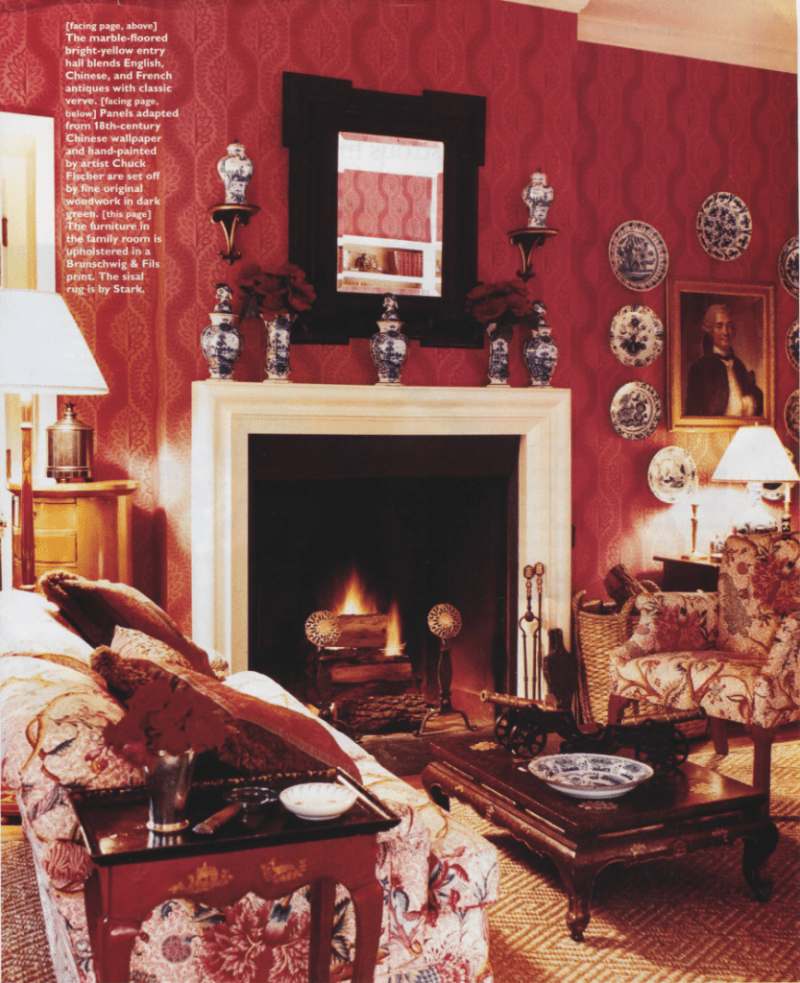
1. I love and use wallpaper, and wallpaper is your biggest bang for the buck – and I don’t mean those plain slubbed silk or linen – those are wallcoverings, and as much as I may love and even use them at times, you still have to have pictures, architectural, and decorative elements. I mean wallpaper with lovely designs and colours. We used a beautiful Chinese flowered paper for a bedroom overlooking the sea on Jupiter Island and then literally left the walls blank. The view of the ocean and the wallpaper design was enough. It also allowed me to use a much less expensive fabric for the curtains.
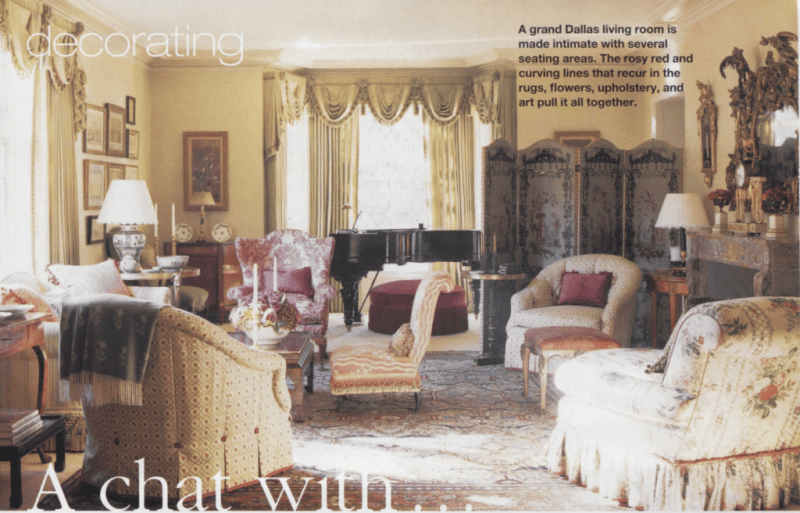
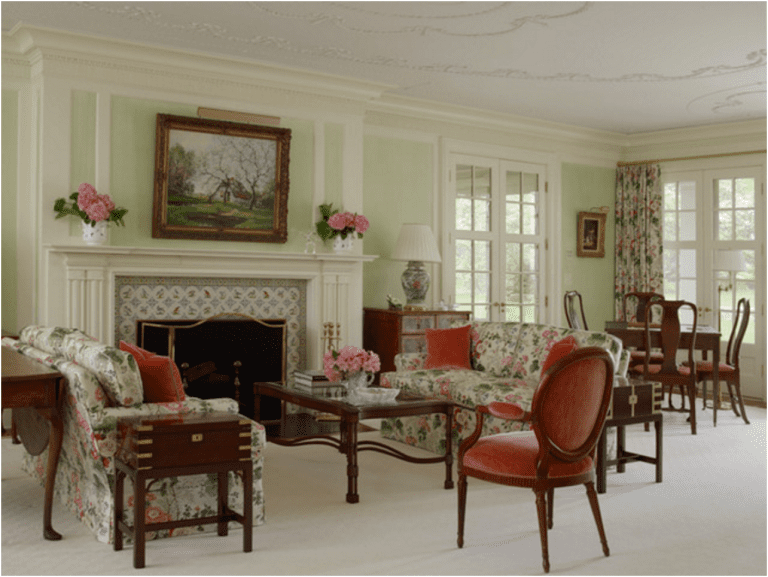
2. Billy Baldwin used to stress that you should have a 60/40 rule for how furniture is finished off. What he meant was that 60% of the furniture in a room should have skirts and 40% show their legs. This new trend of having everything with legs leaves a room a little cold and does not add to the feeling of comfort. Get some skirts – and be very, very careful in their details. I interline my skirts if my fabric is not thick enough (i.e. chintz and thin silks).
3. Have books. You don’t have to be traditional to want to have books, but books add charm and add interest to a room. I have always used them – and I don’t mean fabulous incunabula or matched bound leather sets. I mean walls of books and books in heaps; I mean books people read and also books which they cherish for their illustrations (I have collected for almost 40 years books with Arthur Rackam illustrations which I look several times a month, as they intrigue me). And don’t artfully stack up the coffee table books on low table. Stacks that are too perfect discourage anyone from anyone ever picking one up and looking through it.
4. Use classical shapes in your furniture. There’s a reason people keep coming back to these beloved shapes. Not only are they immensely comfortable (if made well), but they are pleasing to the eye. Look around at your local craftsmen – there are so many good ones. You need to give them small things to do at first, learn how accomplished they can be, and then use them. Why would you order furniture from a catalogue – no matter how beautiful that catalogue may be – and then have to settle for furniture made half a world away with staples and glues which may well be poisonous. Buy local.
5. Forget the colour of the year! What an advertising gimmick that is, beloved by paint companies who would love for you to feel you needed to repaint all the time. But you want to decorate for the ages, not just today. Choose colours which you love and can live with. They needn’t match your fabrics – in fact, I almost never match fabrics to the paints, but of course, you would like them to look good together. And don’t tell your friends the colours you have chosen. Usually what is your favorite is not their favorite.
6. Have a pleasing melange of prints and weaves, not forgetting the rugs. This way you will live with these choices for a long, long time. Animal prints work very well with chintzes, and they have been around forever.
7. Put moldings up on plain bare walls to create the look of panelling. Then they can either be painted as the walls or be filled in with wallpaper or fabric or be, as the English say, “pointed” which merely means having little lines of a contrasting colour.
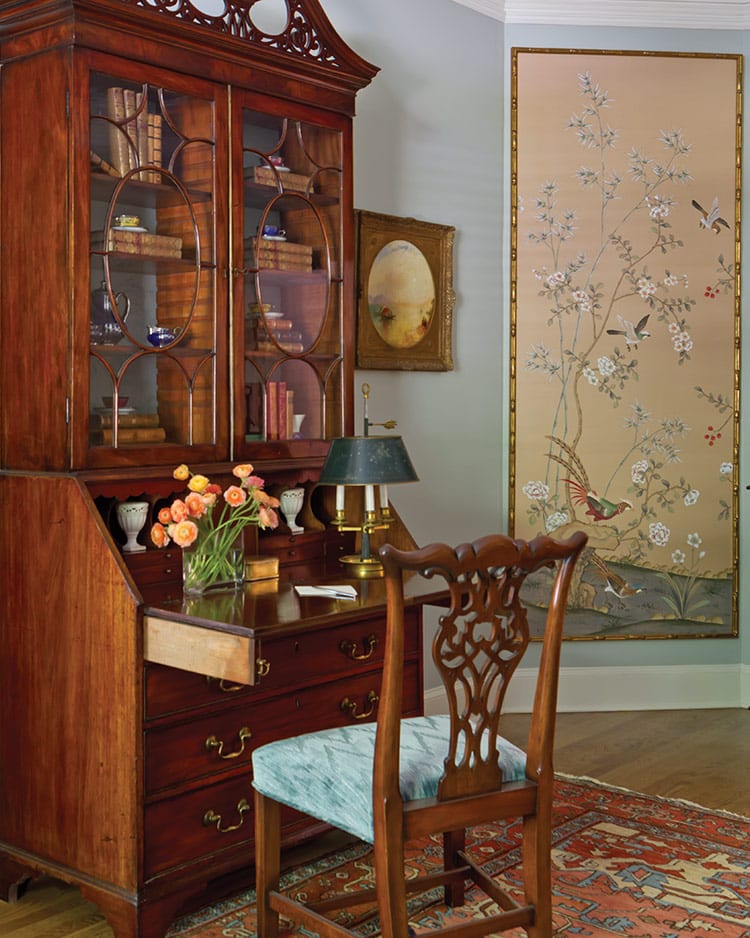
8. Forget your fear of brown furniture. Most antiques are brown furniture and the brown looks wonderful when it is contrasted with painted furniture. and chintz. and wallpaper. and beautiful curtains and rugs and so on and so on and so on. Look at Winterthur or the Metropolitan Museum and see how masterfully print fabrics and beautiful rugs, and painted furniture look with brown furniture. Get over it! And make friends with antique dealers. They can be such a learning experience for you, and if they are good ones, they will let you know when they get in something that would be right for you and in your budget. But do your homework too – learn about things so that when a dealer says “Hester Bateman” or “Thomas Seymour” or “Ebonite” to you, you know what in the world they are talking about.
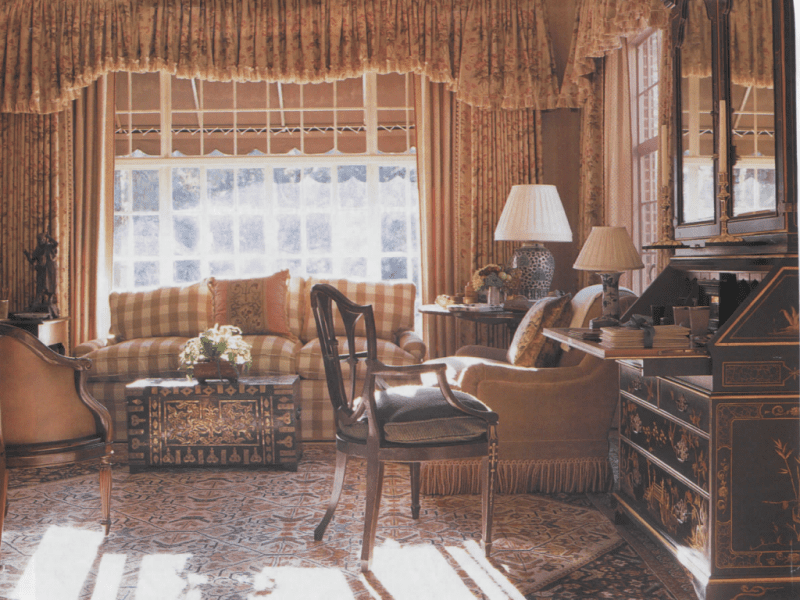
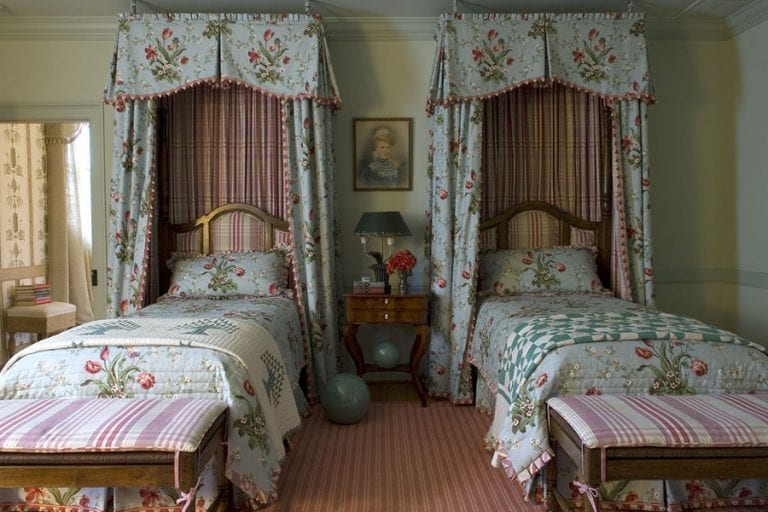
9. Take time with your details – Don’t go cheezy with curtain trims, go for real silk rather than rayon or cotton or linen or even wool. Tapes along the bottom of skirts, lovely gimps delineating the inset fabrics of chairs and settees, contrasting welting on chair covers and upholstery, smocking on curtain tops and dressing table skirts, wonderful wastepaper baskets, thermoses by the bedside with a little tray and a glass, beautiful bedlinen – these are just some of the details that make a traditional house special.
10. Lamps and lampshades. Don’t just be generic here – You might love the single or double gourd for its organic purity, but there are tole lamps and wooden lamps, and pottery lamps and lamps made from figurines. There are lamps of decalcomania and bouillotte lamps of painted tole, big lamps and small lamps, and most of them need shades. Get a good lamp store with whom you can work so that your shades will fit your lamps perfectly. Sometimes you can buy what you need right off the floor, but sometimes you will have to make your shades, so you want your lamp store man to help you with your measurements. I love to work with a man here named Alan, and he makes sure that my lamps are wired properly for safety and fitted with the proper harps. Them we measure the lamp together, and I order my shade from one of my many different shades makers – sometimes paper, sometimes silk, sometimes pleated down the sides or ruched at the bottom, sometimes with tiny inset contrasting fabrics around the base between the bottom band and the field, sometimes smocked. Casual, very dressy, plain, or grand, lamps are one of the most important things in the room. And their light is so important too. I was once privileged to work on a beautiful large modern house with the absolute king of lighting design, and I asked him what was the best form of lighting in a room. Do you know what he told me? “A lamp with a shade.” So there.
Thank you so much Leta for these wonderful tips! As a side note, I was intrigued to learn that Foster interned with Colefax & Fowler in London in the fall of 1982. You may recall from Friday’s interview with Mario Buatta the instrumental role John Fowler played in his career. “I love Imogen Taylor [a partner with Colefax & Fowler] who still has a wonderful influence in my mind when I come to needing a decision. ‘What would Ms. Taylor do?'” Foster said. So many of my favorite designers are connected to this firm! More on Foster’s English influence can be read here.
When I think about interior design, I find myself constantly asking “What would Leta do?” She has truly created some of the most beautiful rooms I have ever seen. For more inspiration from Foster, I highly recommend her book Traditional Interiors (mine is tattered and torn from use!) in which she describes in detail the key elements for creating your own traditional, timeless rooms. The book is divided into four main subjects that illustrate and explain the often complex design process – Curtains, Walls, Upholstery and Trim, and The Details. I reviewed her book here. You can tour a classic Florida home she designed here, an ocean front home here, and a historic Virginia home here. For daily inspiration, please follow @letaaustinfoster on Instagram, and when in Palm Beach you must visit the Leta Austin Foster shop in Palm Beach, which she opened to satisfy her meticulous search for the ideal accessories such as linens, tableware, silver, and furniture.
When I think of classic design, I immediately think of Holly Holden. In 2013, Holly published The Pretty and Proper Living Room in which she shares “old-school secrets for timeless elegance and… the no-no’s to know.” Her book changed my entire perspective on interior design, re-routing me back to the traditional style I have always loved but had somehow forgotten. I became more and more aware of the fleeting nature of trends, realizing that with traditional design, you only have to decorate once…. it never goes out of style! Her book became my design bible, and Holly has since become a treasured friend.
January is “anti-trend” month at The Glam Pad, and I am thrilled to have Holly kick off the series. In her book, Holly reveals the recipe for creating a graceful, genteel living room (and home) with timeless understatement. Today she is dishing on four mundane current design trends… and how to get them right. Welcome Holly!
Four Mundane Current Design Trends …and How to Get Them Right
by Holly Holden
photos by Dean Greenblatt
Trends by their very definition come and go. So, to make your design dollars stretch further, classic design is the smart choice. And… as an added bonus, it’s prettier too!
Classic design, like good manners, never goes out of style. Classic design is timeless, which means you only have to decorate once, sparing yourself the extra cost and frustration. But what is classic design? To me classic design is like a good hostess: elegant, graceful and above all, excellent at making her guests feel comfortable. Classic does not mean all antiques, nor does it mean everything matches. Classic simply means that you have invested in pieces that will not go out of style, and you have arranged them tastefully. So here are four examples of timeless design advice that my mother taught me and I have taught my children.
1. Walls: Hello Yellow
There was a time in the mid-1970’s when avocado green and harvest yellow were the trendy colors of choice for appliances and cookware. People looking at those colors today describe them as “retro” and “kitsch” but few people want those colors in their homes. Today we are in the midst of monochromatic madness as white, black, gray, and beige are the trendy colors. Designers have even come up with the portmanteau “graige” (from gray and beige) to describe today’s sad state of affairs. Mark my words: a few decades from now the designers of the future will be steering clients away from the cliched color pallets of 2017.
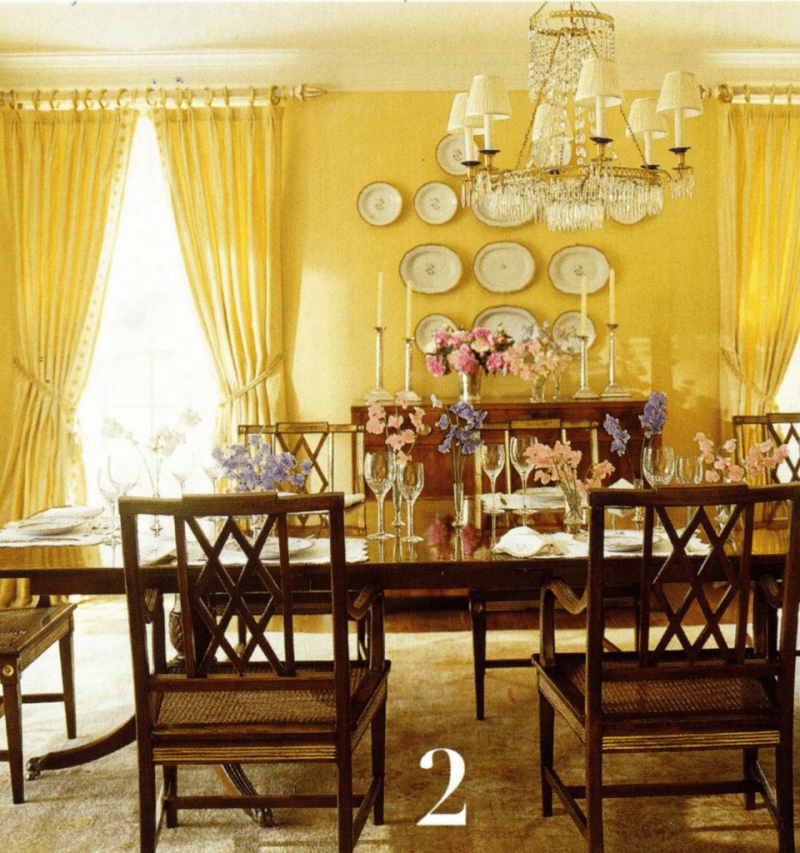
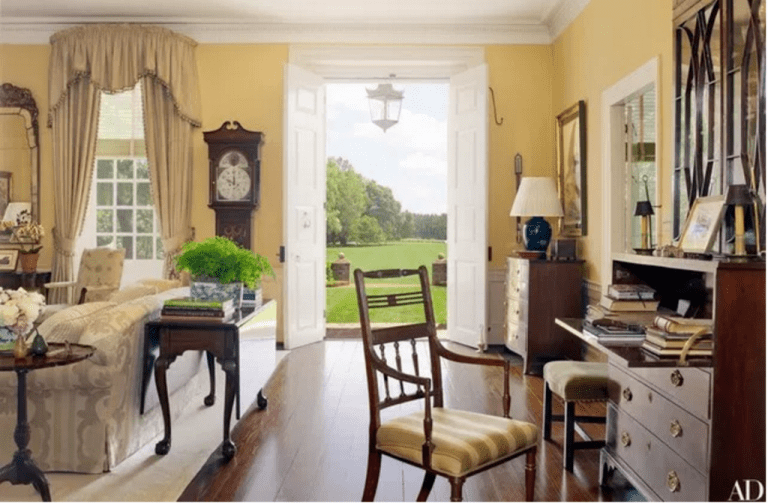
Allow me to introduce you to the anti-graige. The one, the only: Yellow! I like to say, “When in doubt, just use yellow!” Yellow always creates a warm and sunny atmosphere. Yellow makes wood pieces, particularly mahogany, really pop. Use paler lighter hues for larger rooms, and bolder punchier shades for smaller spaces. Buttery yellow is my favorite timeless color for paint.
2. Furniture: The Power of Pillows
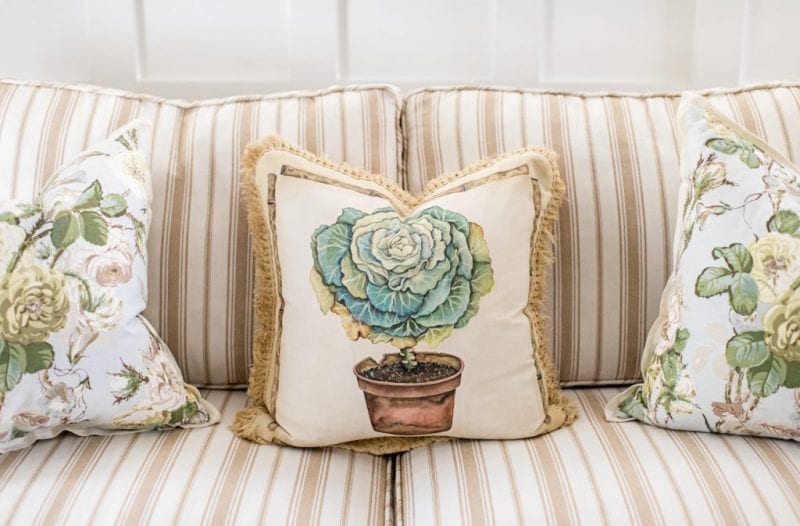
The current trend towards sofas and chairs with no throw pillows is definitely a classic design no-no. Throw pillows are not just for decoration. They make furniture more comfortable and invite guests to have a seat. The power of pillows should not be underestimated! A comfortable guest is a happy guest.
If you don’t already have a needlepoint pillow, you should start your search for one today. The right needlepoint pillow is like a dash of sofa spice adding wit and whimsy.
3. Accessories: Serve from Silver
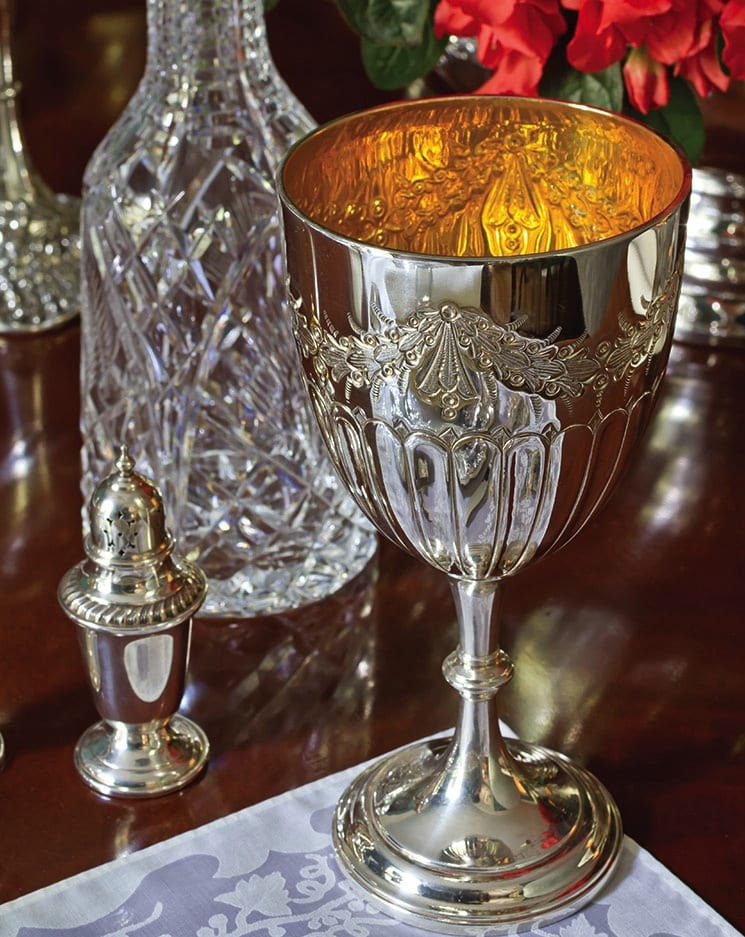
The trend now is towards square, white plates and platters. Try to avoid the siren song of square serving pieces. Steer your ship instead towards silver. My mother always said everything tastes better when served from silver and I agree. My experience has taught me that hors d’oeuvres served from silver platters are twice as likely to be plucked by peckish party-goers.
4. Lighting: Revere The Chandelier
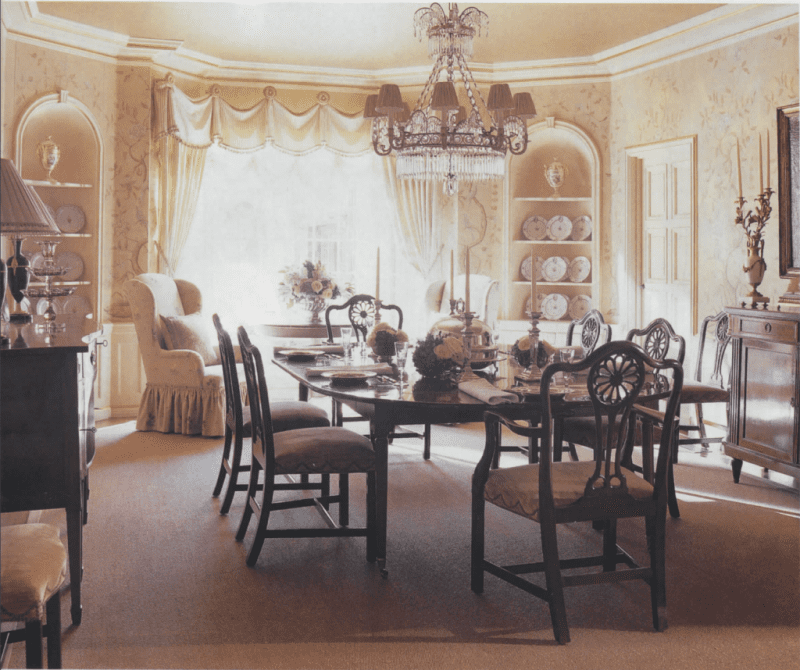
Dome lights are everywhere these days but, when it comes to classic design, chandeliers are the light and the truth. No light fixture is more classic and timeless than a chandelier. It goes without saying that you need a chandelier over a dining room table. But don’t forget: chandeliers come in all sizes and petite ones will fit in any room. It is a myth that you need high ceilings for chandeliers. Halls, living rooms, kitchens and even powder rooms are all excellent locations for a chandelier. I even have one in my closet!
I hope I have given you a small taste of what classic design is and how it can benefit your interiors. Remember to think long term. Trends come and go but there are themes in design that have been prevalent for centuries. Sticking to these themes will keep your rooms relevant for decades to come. For more design advice and also the faux pas to avoid, consider my book, The Pretty and Proper Living Room, and my Classic Design Channel on YouTube.
Thank you dear Holly for sharing your wisdom with us today! I could not agree more with these tips. For more on Holly Holden, you can read my past blog posts here and here. I reviewed her book, The Pretty and Proper Living Room, here. You can follow her on Instagram for daily inspiration, and you won’t want to miss her Classic Design Channel.
Please stay tuned to The Glam Pad this month for more “anti-trend” classic design! On Friday, I am honored to share my interview with design legend Mario Buatta whose consistently elegant interiors have set the gold standard for the industry for more than 50 years. And guess what? Mario also loves the color yellow!